Local authorities have prioritised changing mindsets among ethnic minority communities, where poverty rates remain high and living conditions challenging. Persistent communication campaigns and grassroots engagement have focused on eliminating passive attitudes and encouraging initiative among residents.
Village elders, community leaders and local officials have played a central role through direct outreach, including door-to-door visits to explain policies and build consensus. This approach has helped foster trust and promote self-sufficiency across villages.
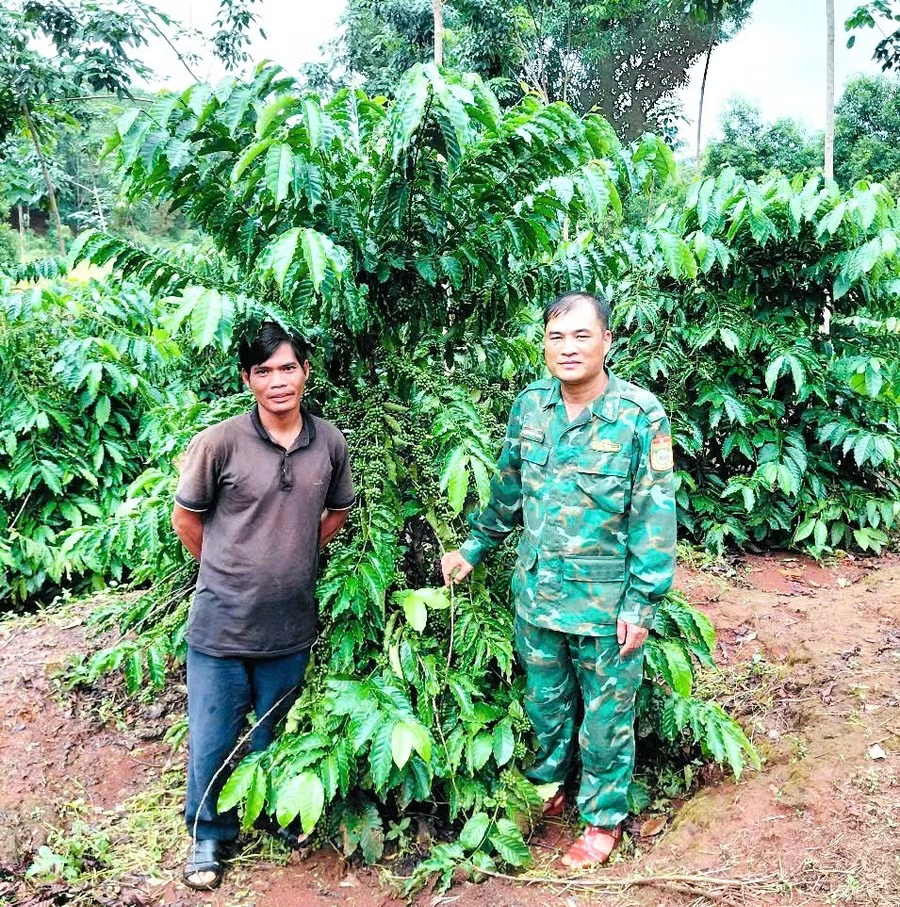
Alongside awareness campaigns, targeted livelihood support has been expanded. Measures include providing livestock and crop breeds, facilitating access to preferential loans, delivering technical training and offering vocational education aligned with local needs. Military units stationed in the region have also contributed by supporting households and connecting residents to employment opportunities.
The impact is evident at the household level. In Ia O commune, Puih Líu’s family escaped poverty within a year after receiving breeding cows and applying improved farming techniques. Similar progress has been recorded in other communes, where livestock support and agricultural improvements have strengthened incomes and stability.
Housing conditions have also improved. In Ia Pnôn commune, families that previously lived in temporary shelters have moved into permanent homes, reinforcing confidence and motivation to build sustainable livelihoods.
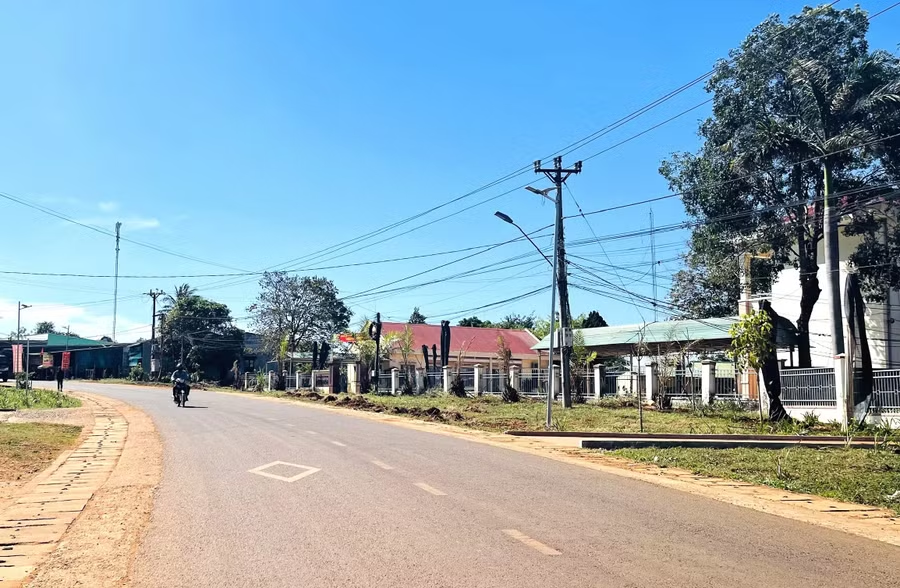
As a result, poverty rates have declined across several communes, including Ia Dom (2.28%), Ia Nan (2.55%), Ia O (3.97%) and Ia Chia (5.13%), while higher-poverty areas such as Ia Pnôn (10.93%) are also seeing gradual improvements.
Authorities are now setting specific targets for 2026, focusing on reducing poverty while preventing relapse. Plans emphasise integrating resources, expanding production and improving access to essential services. Poverty reduction is being embedded into rural development criteria, particularly in income, employment, infrastructure and production organisation.
Ia Pnôn commune aims to cut its multidimensional poverty rate by 3.76%, equivalent to 50 households, through targeted support and vocational training in fields such as construction, garment production and farming. Meanwhile, Ia Chia is addressing structural barriers by reallocating land to households lacking production resources, while Ia Púch is mobilising funding from national programmes to support livelihoods.
Despite achieving new rural standards in 2021, Ia O commune continues to address gaps under updated criteria, maintaining a focus on income growth, employment and infrastructure improvements.
Officials say the key lesson is a transition from direct support to unlocking internal capacity. Poverty reduction policies are most effective when combined with changes in awareness and behaviour, enabling households to take ownership of their economic future.
The ongoing effort in Gia Lai’s border areas highlights that sustainable poverty reduction depends not only on financial support, but also on empowering communities and building long-term resilience.