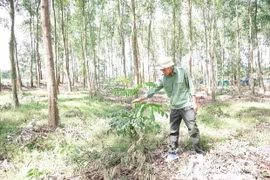
According to the provincial Border Guard, 43 village elders are now actively supporting border management. Their involvement, ranging from patrols to community mobilization, has strengthened cooperation between local authorities, the Border Guard and residents, bolstering what officials describe as a “people’s defense posture” along sensitive border zones.
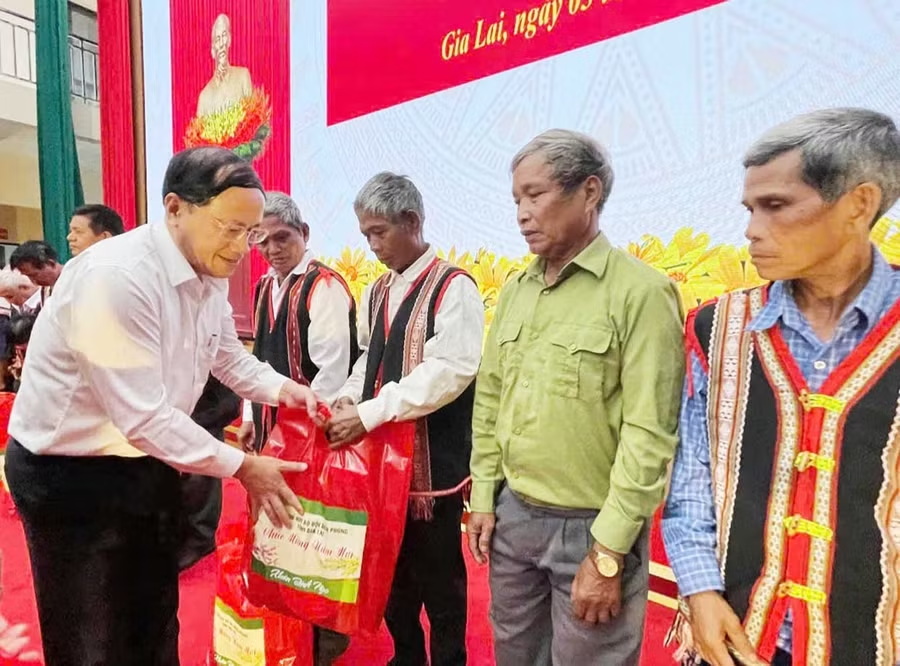
Senior officers say targeted training has enabled these elders to become effective intermediaries. Programs have focused on legal education, national defense awareness and communication skills, allowing them to act as a trusted bridge between the state and local communities. Hundreds of legal awareness sessions have since been held, drawing thousands of participants and enhancing public understanding of border laws.
Their standing in the community has also proved critical in resolving disputes before they escalate. In 2025 alone, village elders helped settle 46 family and land conflicts, and intervened to prevent 26 child-marriage cases, helping authorities curb social risks often linked to instability in remote areas.
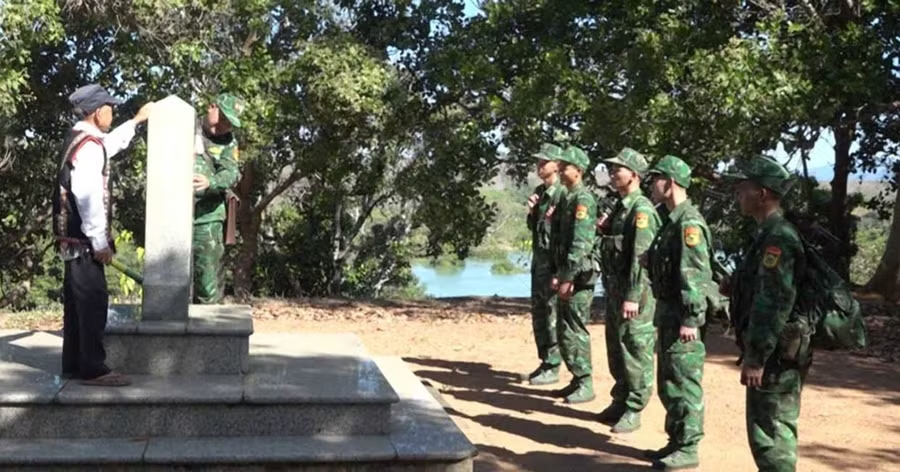
All 43 elders have additionally joined Border Guard units on patrols, contributing to regular checks along border markers. They also helped encourage 43 households to shift crop patterns and 164 households to build livestock and poultry shelters, supporting economic development initiatives aimed at reducing hardship in border villages.
Village elder Rơ Mah Blơih of Triêl village said persistent dialogue has helped younger residents understand and follow the law, gradually eliminating outdated practices and improving community stability. Elder Ksor H’Blâm of Krông village added that even when unable to join regular meetings, she makes use of every opportunity to educate villagers about legal compliance and the role of the Border Guard in community support programs.
Local officials say the partnership has become essential to safeguarding sovereignty. Trần Quyết Thắng, chairman of Ia Mơ commune, noted that elders routinely accompany soldiers “on every patrol route and at every border marker”, reinforcing residents’ sense of responsibility for protecting national territory.
Authorities credit the presence of these community figures with helping maintain security, strengthen unity and uphold border integrity. Their work, they say, has become a quiet but vital force behind today’s stable borderlines, achieved not only through patrols, but through trust built within the community itself.