Following the province’s administrative merger, Gia Lai’s transportation system now spans national highways, provincial routes, inter-commune roads, rail lines and inland waterways. Traffic from trucks, cargo carriers and long-distance buses has surged, posing challenges to enforcement and traffic order.
Concentrated patrols on key corridors
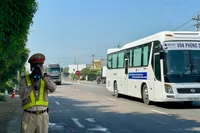
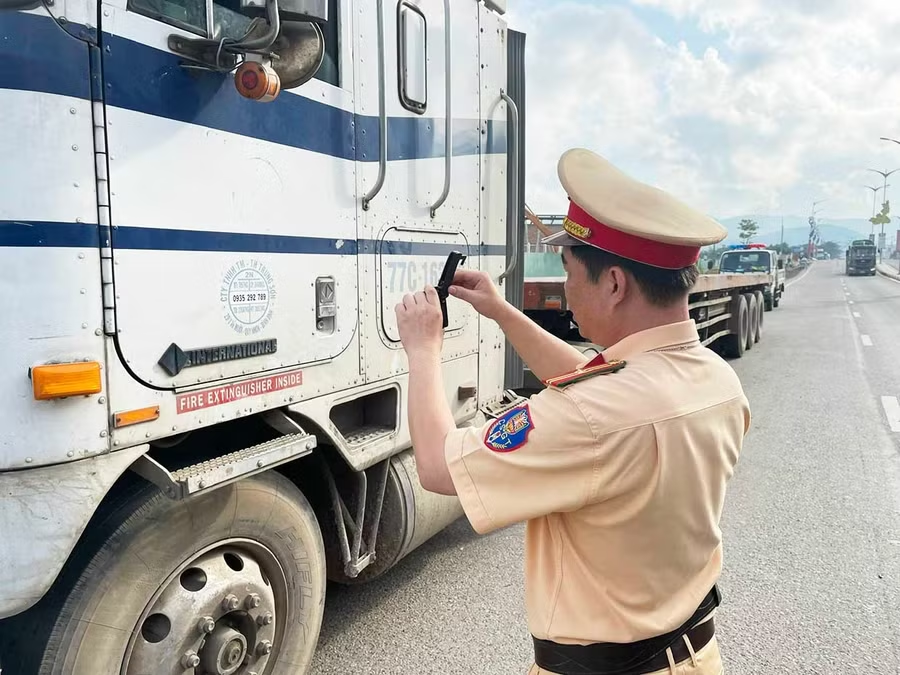
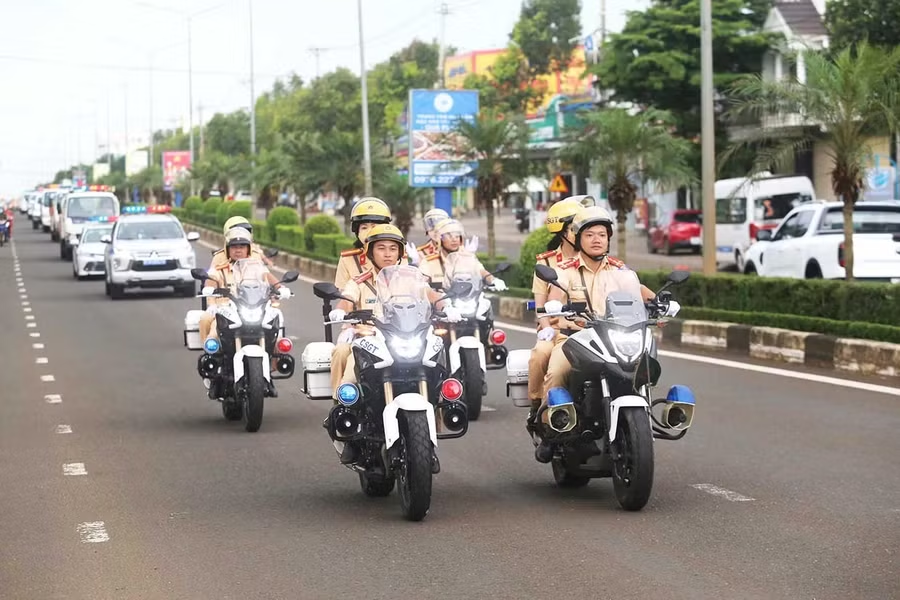
To avoid overstretching personnel, the Traffic Police Division has reassessed traffic patterns and deployed forces strategically to high-risk corridors. Patrol strategies combine fixed checkpoints at critical points with mobile units covering broader areas, along with on-site public awareness campaigns to prevent violations early.
On National Highway 1, officers at the Tuy Phước Traffic Police Station focus on violations closely linked to accidents while coordinating with local police to monitor feeder roads and residential zones during peak hours. Lieutenant Colonel Tô Hồng Phúc said regular field surveys help adjust patrol plans based on vehicle density, peak travel periods and driving habits.
On National Highways 14 and 25, where hilly terrain, limited visibility and heavy truck traffic heighten risks, Road Traffic Police Team No. 1 stations officers at long slopes, blind curves and border areas. Patrols also extend to inter-commune routes and cargo gathering points to curb violations promptly.
Coordinated oversight on waterways and rail
Traffic police also conduct safety checks at docks, wharves and anchorage points, targeting violations such as overloading or missing lifesaving equipment. Along the North–South railway line, they work with local authorities to inspect unauthorized crossings, address corridor infringements and propose remedies for potential hazards.
Senior Lieutenant Colonel Lương Thị Thu Quỳnh, Head of the Traffic Police Division, said the rapid increase in vehicles and transport diversity requires innovation in management methods and stronger discipline within the force.
Digital transformation to streamline enforcement
The Traffic Police Division is digitizing records for driver’s licenses, vehicles, testing and licensing, integrating them with platforms such as VNeID and VNeTraffic. Digital connectivity reduces administrative time and costs for citizens while improving monitoring and enforcement efficiency.
Long-distance driver Nguyễn Công Toàn said integrated digital documents and timely notifications help make procedures clearer and safer for those working on extended routes.
Building a professional, tech-ready force
Regular training is underway to improve officers’ technological competence, professional skills and public-interaction standards. The division aims to build an elite, community-oriented force capable of meeting the demands of expanded jurisdiction and modernized traffic management.
With renewed focus on prevention, modernization and disciplined service, the provincial traffic police continue efforts to ensure safety and order across Gia Lai’s roads, railways and waterways, supporting stable socio-economic development.