Border villages in Ia Nan and Ia O have reported steady declines in poverty as national target programmes deliver loans, seedlings, livestock and farming equipment to poor and near-poor households. Local authorities say the support has helped residents diversify production and secure more stable incomes.
According to Ngô Hữu Phước, Party Secretary of Ia Nan Commune, hundreds of households have received preferential credit and agricultural inputs under the 2021-2025 national sustainable poverty-reduction initiative. “By targeting the right beneficiaries and addressing real needs, living conditions have markedly improved,” he said.
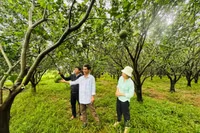
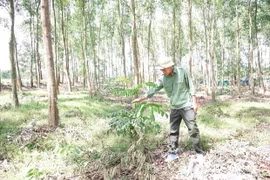
For many families, the assistance has been transformative. In Son Village, farmer Hlăh said his new grass tiller, acquired through state support, has eased farm work and created new income as he offers services to neighbours. “My wife and I long dreamed of owning one but could never afford it. Now our income is more stable”, he said.
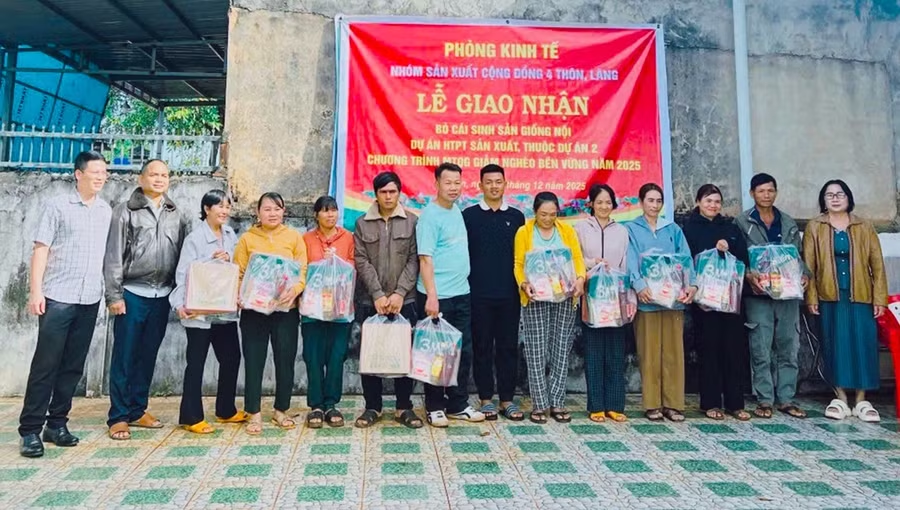
Communal officials have also increased on-site guidance, encouraging residents to embrace new techniques. Recent livestock-support projects have supplied breeding cattle to households in Ia Boong, Đức Hưng and Ia Kle, with villagers building barns, following veterinary protocols and improving herd management.
In Ia Boong Village, near-poor resident Trần Văn Bình received two breeding cows in October 2025. After months of care, the mother cow produced a calf, helping the family move above the poverty line by year-end. “This Lunar New Year will certainly be much warmer”, he said.
Similar gains are seen in Ia O Commune, where livelihood projects promote crops suited to local soil, such as coffee and cashew, and the raising of cattle, goats and pigs. In Mít Kom 2 Village, farmer Puih Qui used support for one breeding cow as a foundation to purchase two more animals. Though they have yet to yield profit, he considers them a form of savings that stabilises household expenses and supports his children’s education.
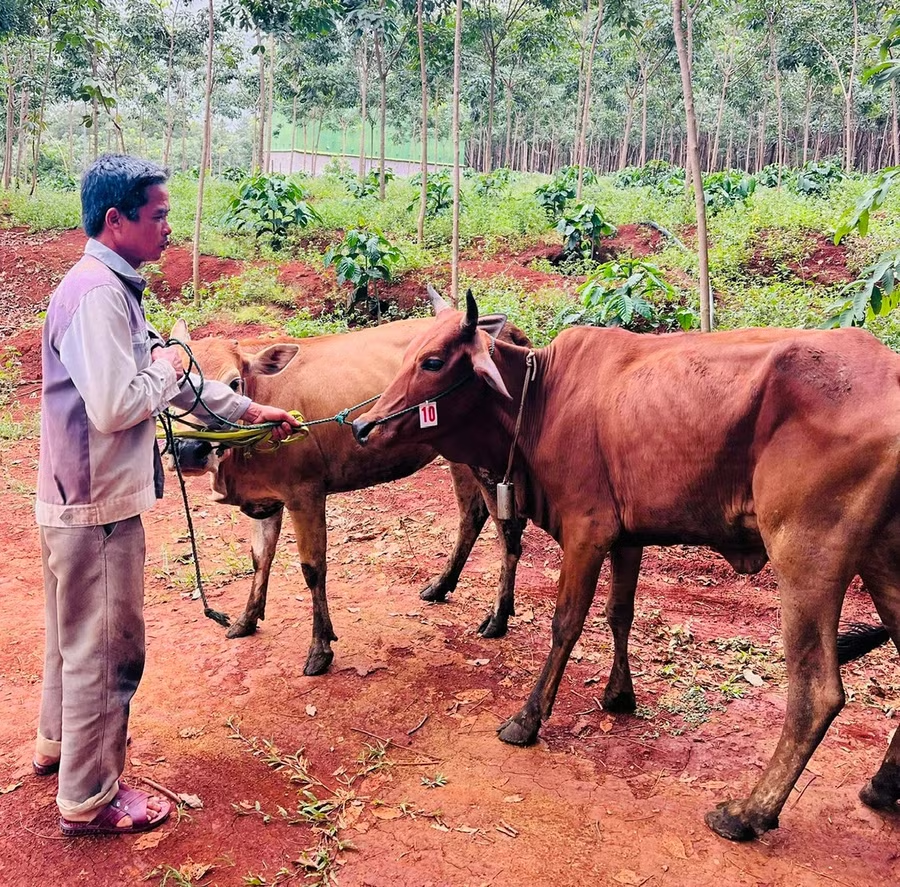
In Klong Village, Puih Thoa’s family also saw its breeding cow produce a calf after a year, providing financial security alongside seasonal work and income from rubber tapping.
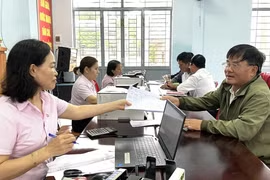
Nguyễn Xuân Tuấn, Vice Chairman of Ia O Commune, said all poor and near-poor households now receive health-insurance cards, as well as access to preferential credit, vocational training and housing and electricity support. He said upcoming priorities include expanding technology transfer, supplying appropriate crop and livestock varieties, and strengthening residents’ financial-management skills. Transparency and accurate beneficiary identification remain central to programme implementation, he added.
Local officials say the progress brings not only economic benefits but also strengthens national defence. As livelihoods improve, residents are increasingly committed to protecting border markers, maintaining security and contributing to stability in the frontier region.