While no fixed timing or quantity is required, the tradition remains a meaningful expression of kinship and in-law relations.
According to Rơ Mah Hêng, Vice Chairman of the Ia Tôr Commune People’s Committee, the practice has declined over time but is still maintained in several Jrai villages of the former Ia Băng commune.
Where the custom endures, families continue to follow each step attentively, from gathering and preparing the wood to transporting and arranging it at the groom’s home.
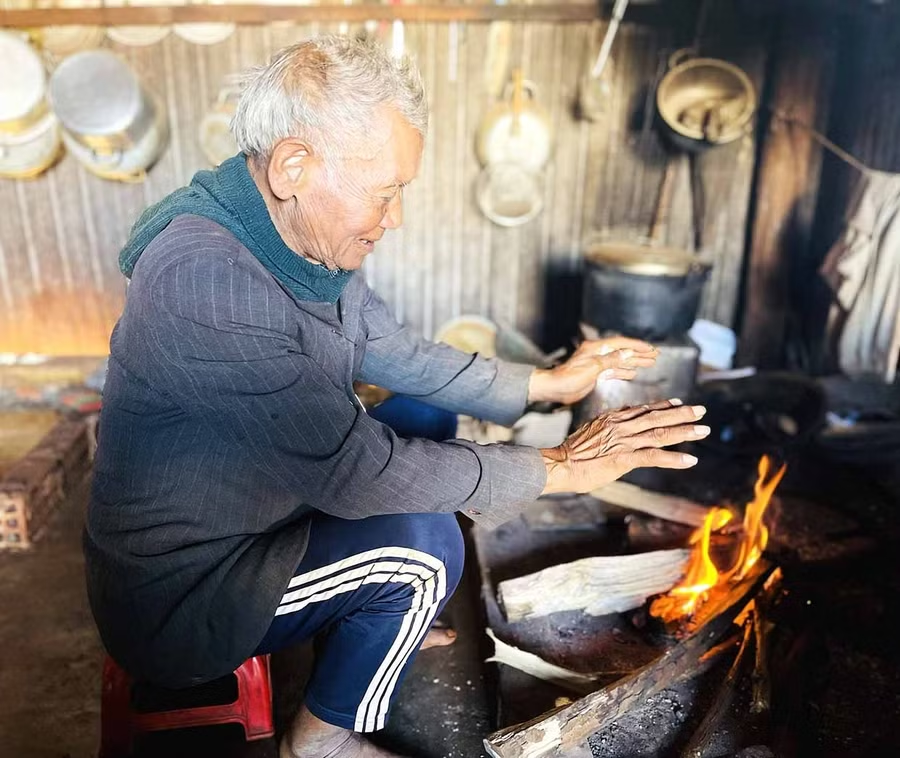
At dawn in Phun Thanh village, 84-year-old Siu Heol tends a newly lit hearth, recalling countless occasions when families exchanged firewood after marriage. He explains that because Jrai daughters “take a husband” who comes to live with their family, the bride’s relatives later offer firewood to the groom’s family to express thanks. Deliveries may take place shortly after the wedding or even years later, depending on the family’s circumstances.
In nearby Bak Kuao village, Kpah Vaih has fulfilled the tradition for each of her three married daughters. With natural forest wood now scarce, families often purchase rubber or bời lời trees. Vaih notes that the purpose is not calculation but sincerity.
She once spent 10 million VND (about USD 400) for four truckloads of rubber wood, and more recently 18 million VND (about USD 720) for the same amount.
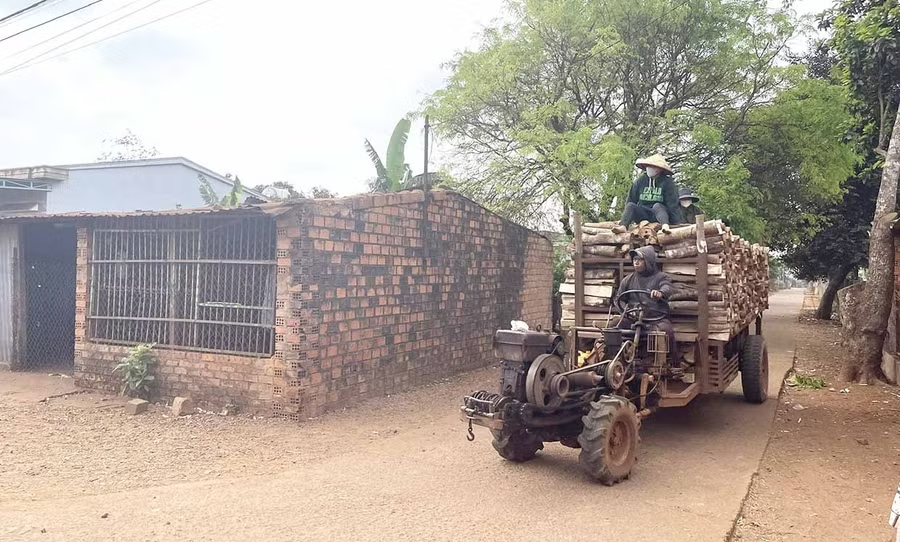
Preparing the firewood often becomes a collective effort of the entire clan. Men cut and saw the logs, while women split and stack them neatly. Each log is typically 60–80 cm long, with large pieces evenly divided. Stacking must be orderly, a detail reflecting the skill and pride of the women involved.
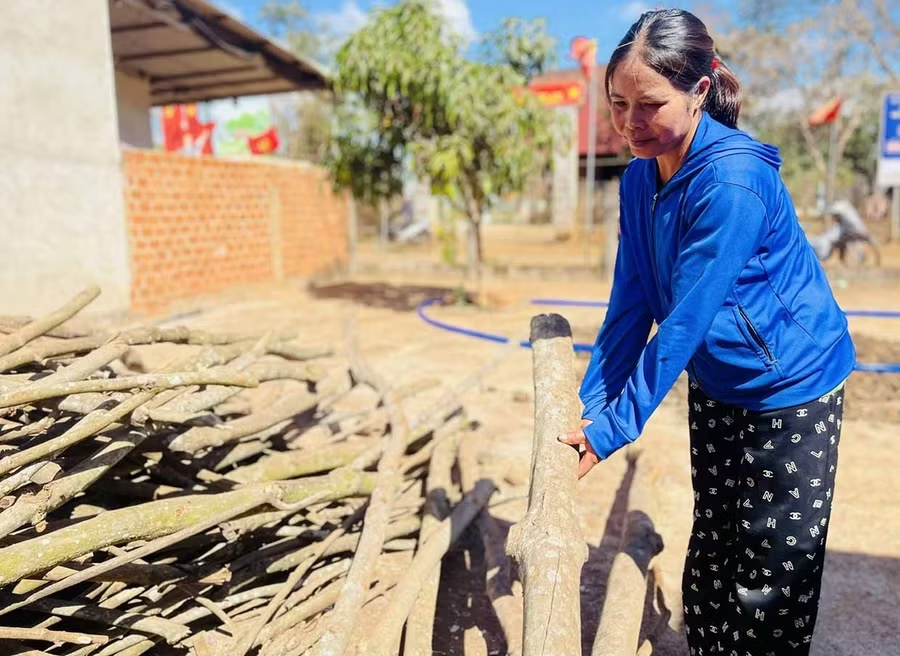
In Phun Thanh village, Siu Oách recently delivered two truckloads of bời lời firewood to her son-in-law’s family in Kênh Siêu village. She bought a grove for 10 million VND (about USD 400) and mobilized relatives to harvest it. One truckload went to the groom’s immediate family; the rest was shared among his extended relatives. A skilled woman from the bride’s side is responsible for arranging the stacks at each home, leaving them neatly at the gate if the occupants are away.
For recipients like Rơ Mah Ngát of Klah Băng village, the sight of carefully stacked firewood remains a source of pride. Though much of the gift from her daughter-in-law’s family has already been used, the remaining logs still stand straight and even, a visible reminder of care and respect.
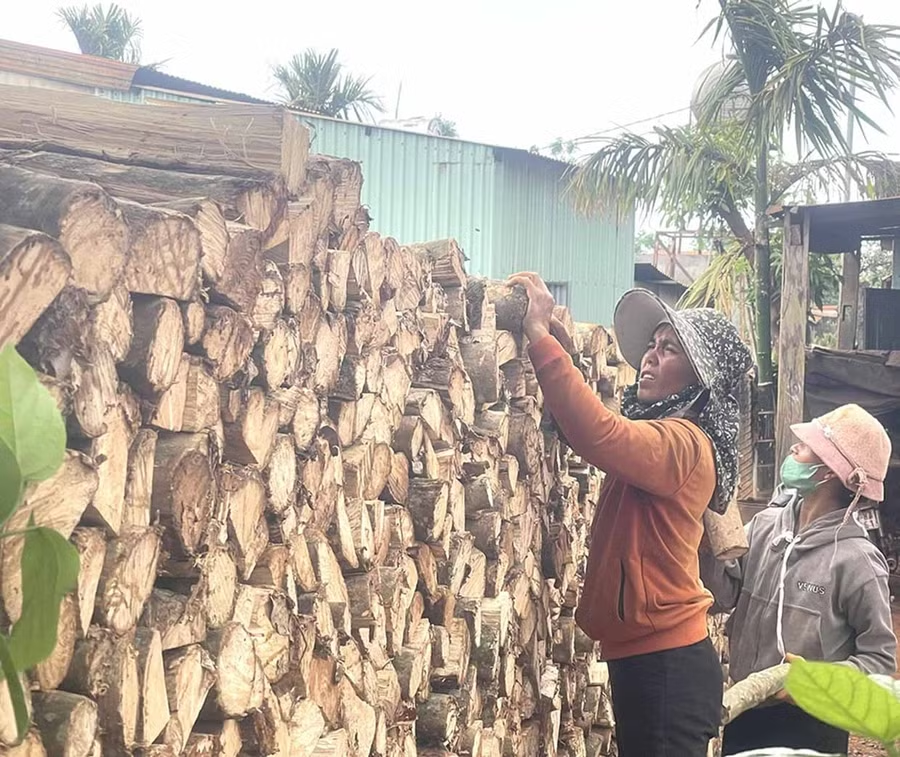
Younger generations continue to embrace the custom. Kpă Uy from Bak Kuao village recalls preparing four truckloads of firewood nearly a year after her own wedding, as farm work delayed the effort. She emphasizes that splitting and stacking the wood reflects a woman’s capability and her respect for her husband’s family.
Despite modern pressures, the wood-burning hearth remains central in many Jrai homes, a place for family members to gather at day’s end. For the community, firewood symbolizes not only warmth and sustenance but also the enduring ties between families.
Local authorities encourage the continuation of such practices in a way that respects cultural identity while adapting to present-day economic and environmental conditions. Through these simple bundles of wood, the warmth of Jrai in-law relationships continues to be passed down through generations.