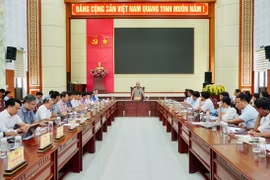
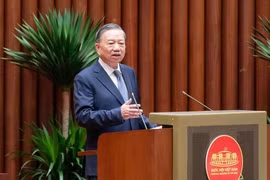
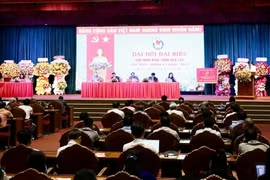
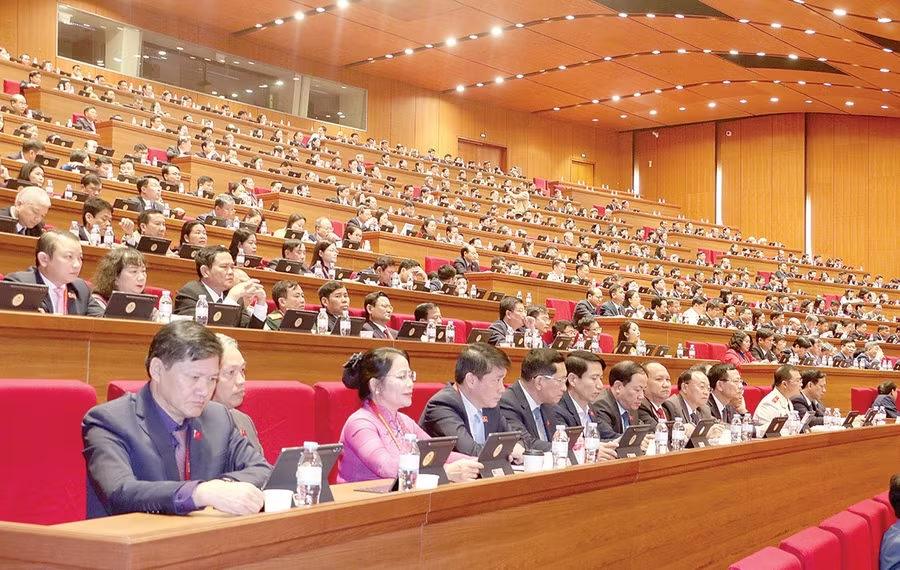
Vietnam’s 14th National Party Congress on its third working day held a plenary session focused on political restructuring, institutional reform and growth strategies aimed at building a prosperous and powerful nation in the new development phase.
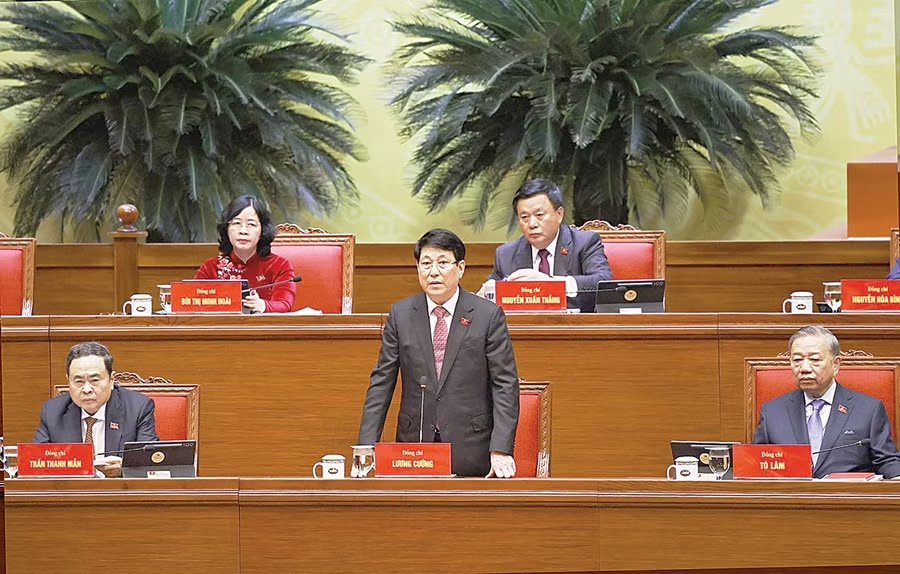
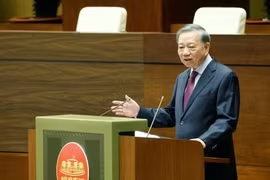
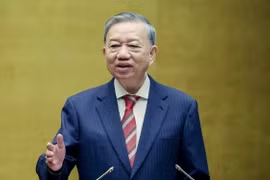
Delegates reviewed Congress documents and examined key objectives, identifying major issues and outlining specific solutions intended to accelerate national development. The Presidium, comprising all 16 Politburo members including General Secretary Tô Lâm, President Lương Cường, Prime Minister Phạm Minh Chính, National Assembly Chairman Trần Thanh Mẫn and Standing Secretariat Member Trần Cẩm Tú, chaired the discussions.
Since July 2025, Vietnam’s political restructuring efforts have exceeded targets set under Resolution 18-NQ/TW, which mandates streamlining and modernizing the political system through 2030. Officials described the rapid progress as a significant turning point and a model for future implementation of Party resolutions.
Deputy Head of the Party Central Committee’s Organization Commission Nguyễn Thanh Bình called for continued refinement of the Party’s institutional framework and state laws to align with the new organizational model.
He urged clear functional delineation across agencies, strengthened Party leadership, improved state management, and enhanced social oversight mechanisms. Bình also emphasized decentralization, local autonomy, and accelerating digital transformation to meet national development needs.
The Government’s 2021–2025 term, marked by unprecedented challenges, adhered to guiding principles of institutional improvement, decisive governance and resource mobilization. Officials reiterated that serving the people remains the overarching objective.
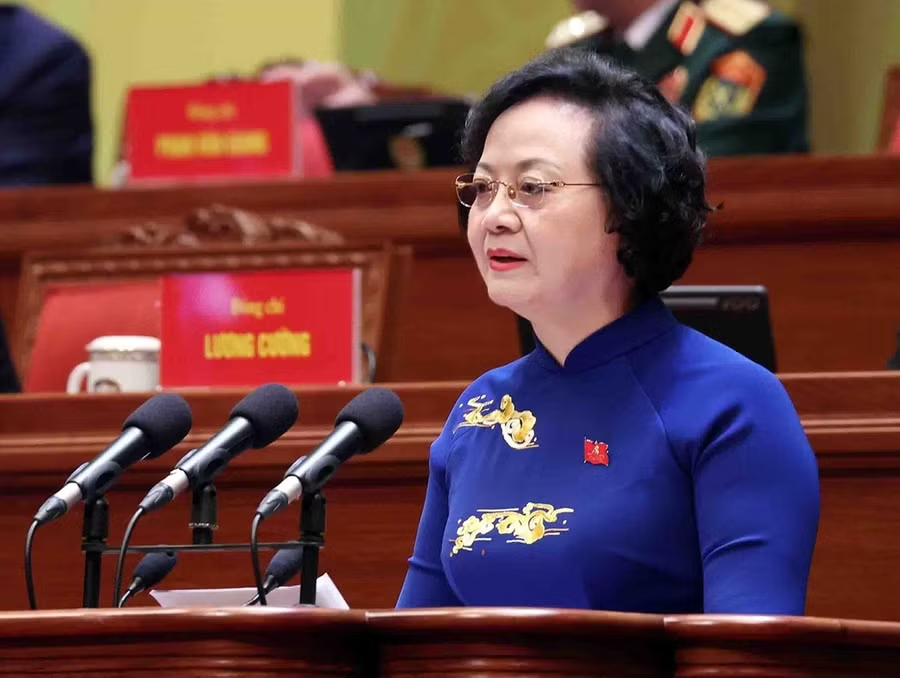
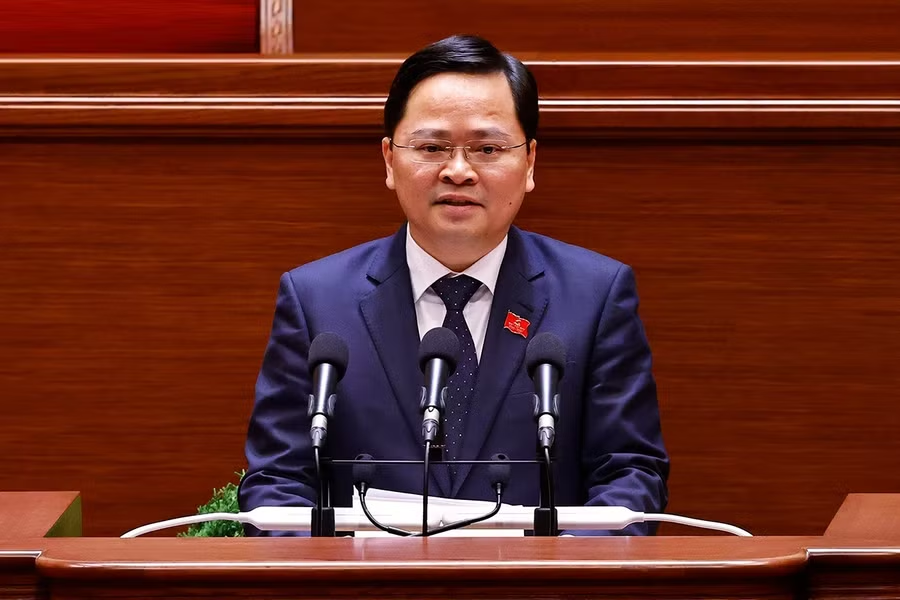
Deputy Prime Minister Phạm Thị Thanh Trà presented six priorities for building a “development-oriented, integrity-driven and people-serving Government.” She identified breakthroughs in institutional building as the most critical “breakthrough of breakthroughs,” essential for unlocking national resources and strengthening competitiveness. Other priorities include industrialization, economic restructuring, digital transformation, development of high-quality human resources, and modern strategic infrastructure.
Trà also underscored the need to modernize national governance, measure performance through citizen and business satisfaction, and accelerate the building of digital government, digital society and digital citizenship through unified, real-time data systems across the state apparatus.
Delegations from ministries and provinces reiterated their commitment to the 12 major orientations, six key tasks and three strategic breakthroughs identified in the Political Report, as well as the eight core priorities highlighted by General Secretary Tô Lâm. Proposed solutions centered on institutional reform, strengthening growth drivers, expanding digital transformation, developing science and technology, and completing synchronized national infrastructure. The overarching economic objective is to achieve average GDP growth of 10 percent or higher during 2026–2030.
Deputy Head of the Central Policy and Strategy Commission Nguyễn Anh Tuấn urged consistent macroeconomic stability as the foremost strategic solution for achieving double-digit growth. He called for sustained economic restructuring, technological innovation, digitalization, and expansion of both international and domestic markets. Tuấn stressed the need to mobilize all investment channels, public, private and foreign direct investment, to support high-growth objectives.
Construction Minister Trần Hồng Minh highlighted the importance of updating the legal framework to match new development requirements. He called for long-term planning of seaport, airport and waterway infrastructure to guide balanced investment and support sustainable, harmonized growth. Minh proposed prioritizing resources for strategic infrastructure with broad regional impact, creating new economic corridors and advancing green construction, low-emission transport, recycled materials, efficient energy use and climate-resilient development. Social housing and modern urban development also remain central pillars.
Minh stressed that the construction and transportation sectors must continue “pioneering the way” by building a multimodal, intelligent and modern transport system integrating road, rail, maritime, aviation and inland waterways.
After a day of lively, candid, and democratic discussions, the Congress recorded 30 heartfelt and insightful contributions to the documents of the 14th National Party Congress. The Presidium of the 14th Congress sincerely acknowledged and highly appreciated the content of the presentations, and directed the Document Subcommittee to review and incorporate valid suggestions to finalize the draft documents for the Congress’s decision.