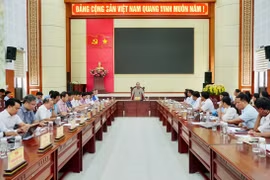
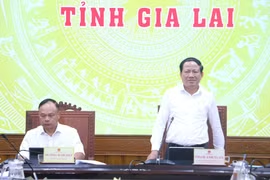
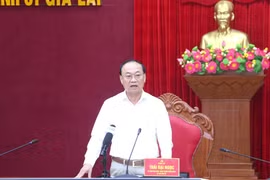
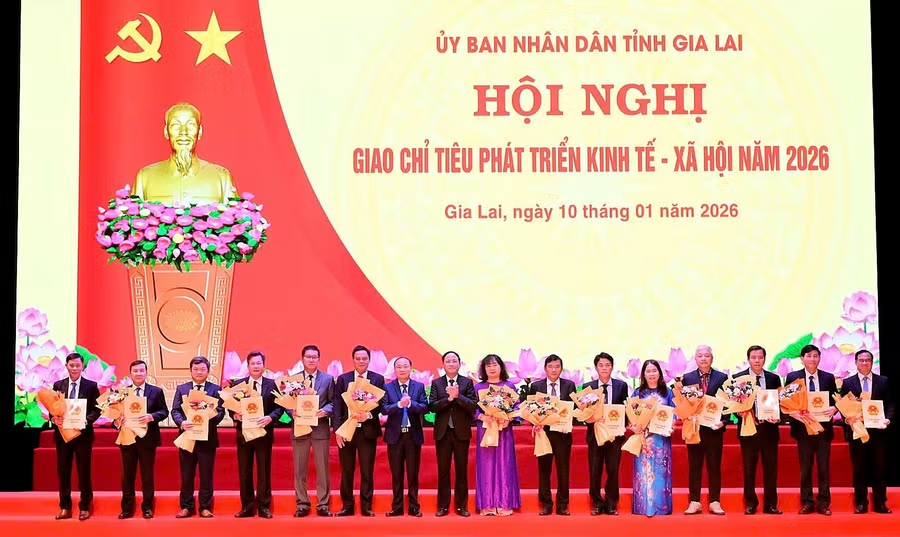
The targets were outlined at a hybrid conference on Friday allocating socio-economic development goals for 2026, organised by the Provincial People’s Committee.
The meeting underscored the need to renew management mindsets, place citizens and businesses at the centre of policymaking, and strictly implement the “six clear principles”, linking personal responsibility, particularly of leaders, to measurable outcomes.
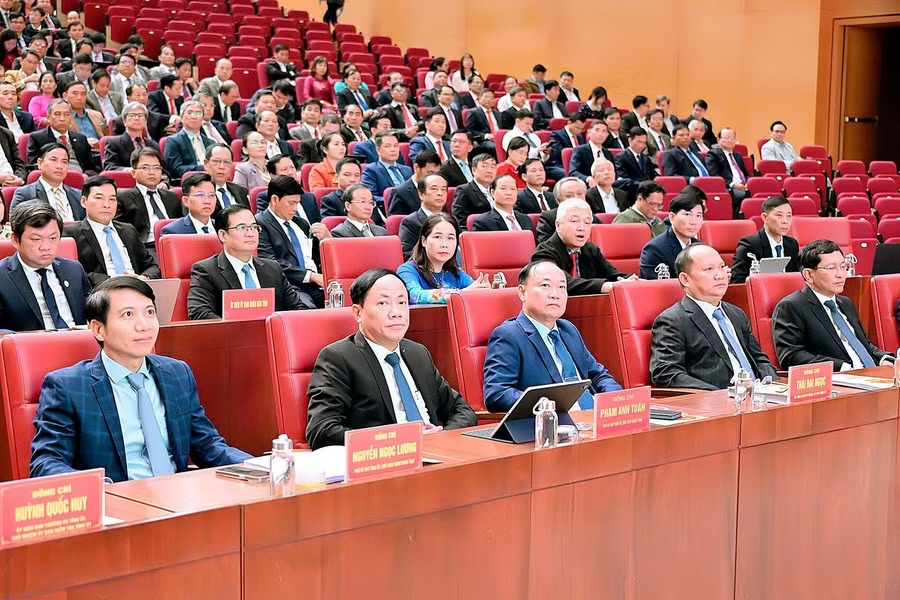
The conference was chaired by Provincial Party Secretary Thái Đại Ngọc and Provincial People’s Committee Chairman Phạm Anh Tuấn, with attendance from senior provincial leaders, department heads and representatives of all 135 communes and wards.
Presenting the government report, Standing Vice Chairman Nguyễn Tuấn Thanh said the province recorded solid progress in 2025, with GRDP expanding 7.2% year on year, ranking third among six provinces and cities in the South Central Coast and Central Highlands regions. Several targets, however, were missed due to severe storms and floods in November 2025.
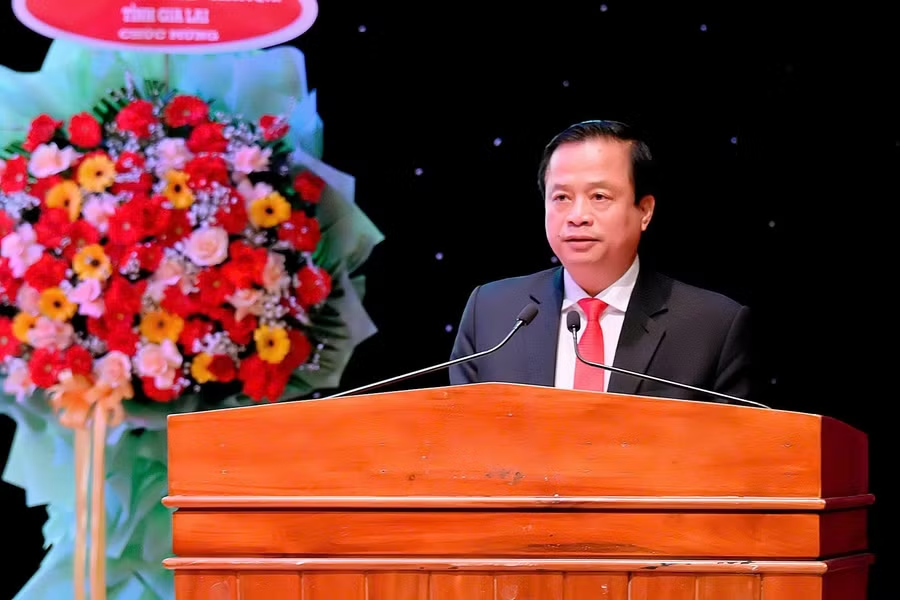
At its fifth session, the 12th Provincial People’s Council approved 19 statutory socio-economic targets for 2026. The official GRDP growth target is set at 8%, with a planning range of 8.8–9.4%, while provincial authorities aim to surpass 10%.
To support this, the People’s Committee assigned an additional 11 specific indicators to departments and agencies, alongside 21 indicators allocated to each commune and ward to ensure alignment from provincial to grassroots levels.
Addressing the meeting, Secretary Thái Đại Ngọc described the conference as a foundation for implementing the resolutions of the 14th National Party Congress and the Provincial Party Congress for the 2025–2030 term. He urged authorities to translate central and provincial resolutions into concrete, feasible programmes from the start of the year, with clear timelines, resources and accountability.
He also called for tighter supervision of implementation at the local level, swift resolution of bottlenecks, and continued streamlining of the two-tier government apparatus, with clearer decentralisation, delegation of powers and stronger oversight.
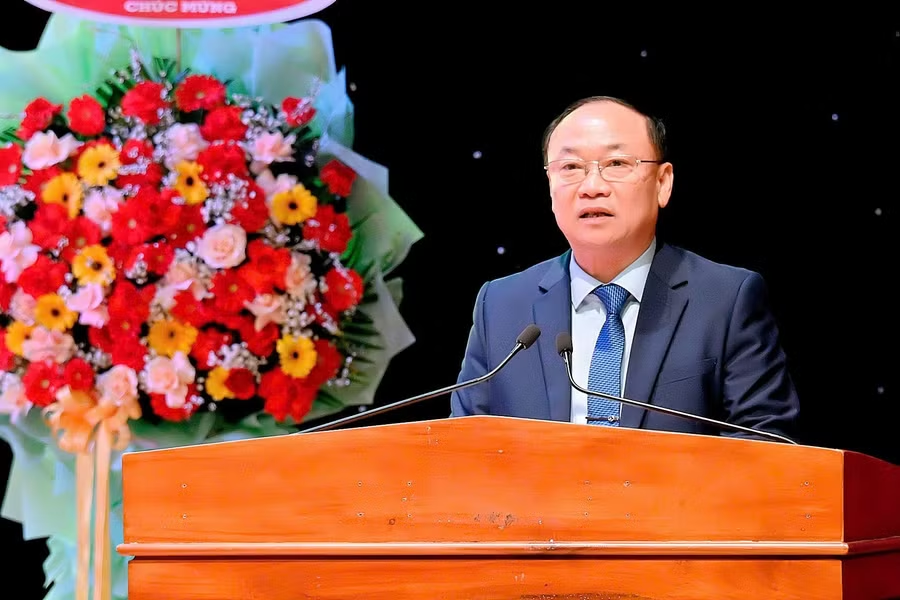
In 2026, the Department of Industry and Trade has been tasked with industrial value-added growth of 11.5-12.5%, an industrial production index increase of 9.5-10.5%, and export turnover of $3.1 billion, with a stretch goal of $3.5 billion.
Director Dương Minh Đức said the department would break targets down by month and unit, focusing on maximising capacity at factories launched in 2025, particularly 12 key projects with total investment of VND 10,423 billion ($434 million).
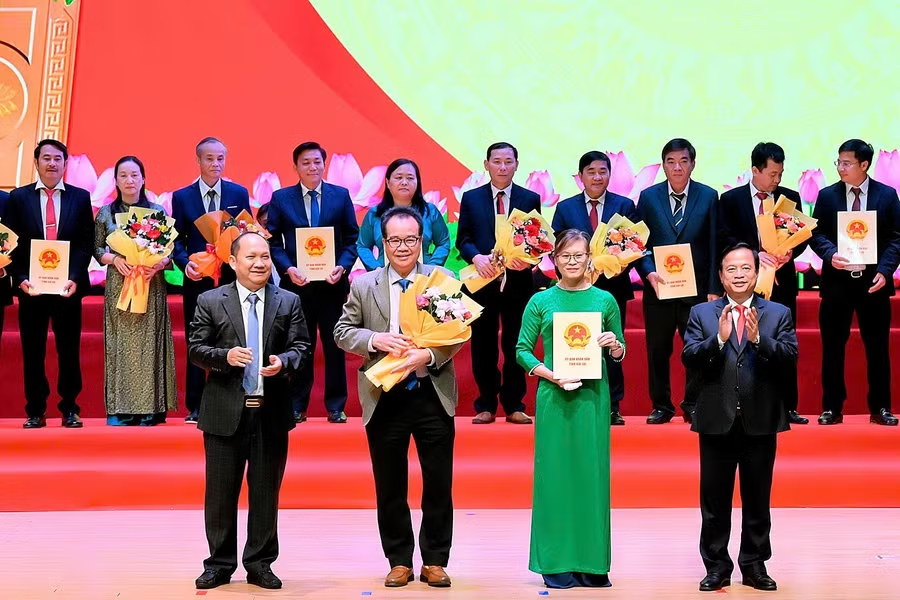
At the grassroots level, local leaders pledged strict implementation. Võ Văn Tài, chairman of Đề Gi Commune, said the locality would prioritise investment attraction in agricultural processing, high-tech farming zones, traditional craft villages linked to tourism, and preparation of key-area plans aligned with the 2026 public investment programme.

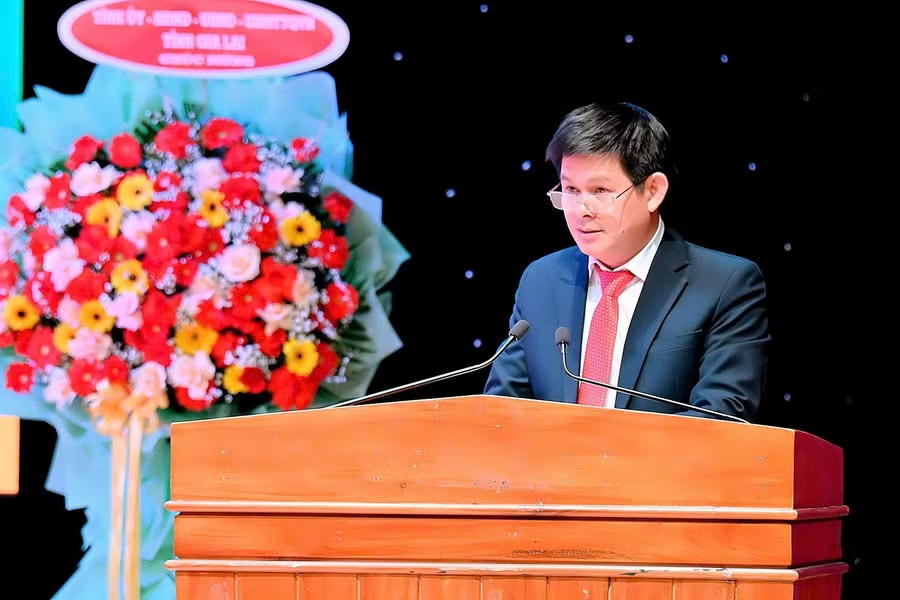
Chairman Phạm Anh Tuấn said Gia Lai’s strengths in agriculture, industry-construction and services, combined with investor interest and strong public aspirations, provided a solid foundation for accelerated growth.
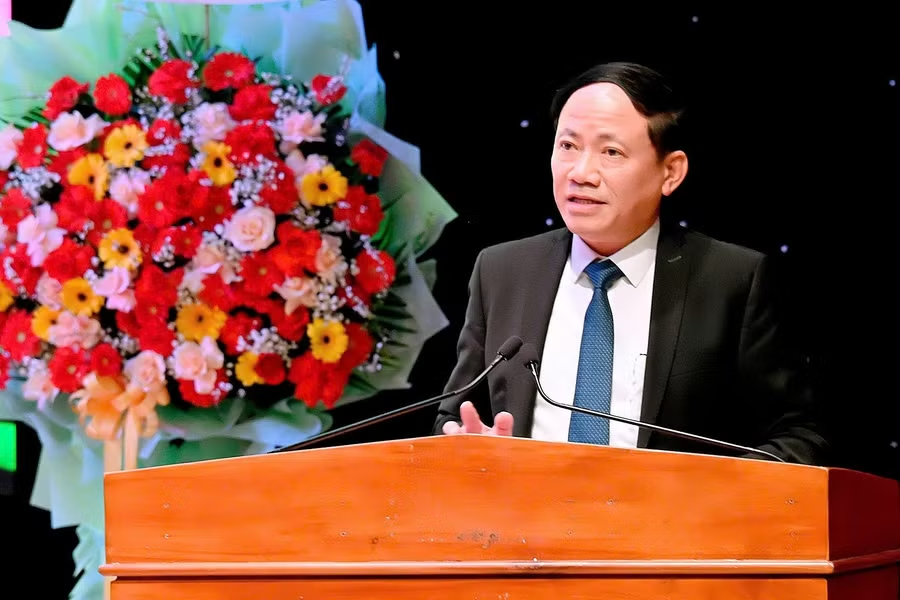
He called for decisive action under the guiding motto of discipline, responsibility, efficiency, innovation and sustainable development, stressing that decentralisation must go hand in hand with administrative reform.
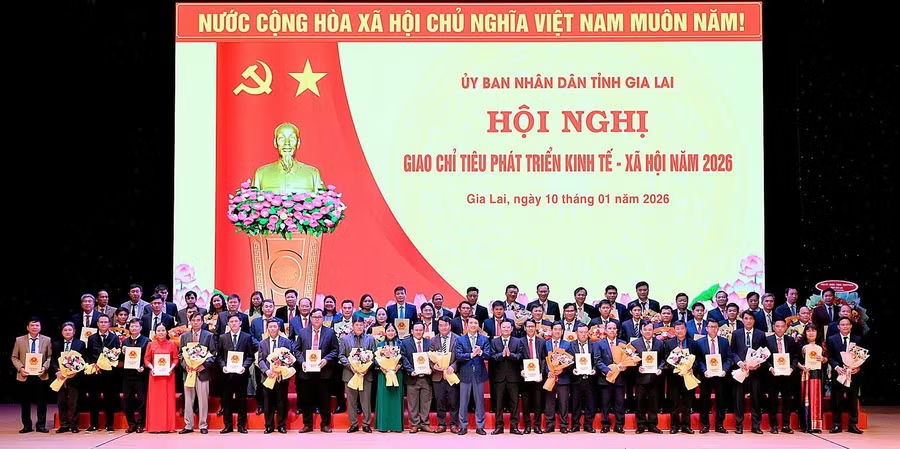
He added that agencies and localities should aim higher than minimum assigned targets where feasible, set quarterly and monthly implementation schedules, and define clear milestones for major tasks such as public investment disbursement, site clearance and budget revenue.
“All directives must be grounded in reality, focused and thorough, with leaders ready to think boldly, act decisively and take responsibility to ensure Gia Lai’s continued development,” he said.