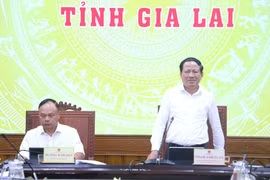
The resolutions focus on restoring agricultural production damaged by natural disasters and plant diseases, and on supporting vocational transition and the decommissioning of fishing vessels that are no longer in use.
Together, they establish a legal and financial framework intended to protect production capacity, stabilize raw material areas and strengthen social safety nets for local residents.
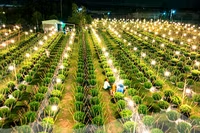
Under the disaster recovery resolution, support will be provided to individuals, households, farm owners, cooperatives, and small and medium-sized enterprises, excluding those under the armed forces, engaged in crop cultivation, animal husbandry, forestry, aquaculture and salt production. Provincial authorities said these groups are among the most directly affected by natural disasters and disease outbreaks.
The policy specifies support levels based on the extent of damage and type of production. Rice fields suffering more than 70% damage will receive between 6 million and 10 million VND per hectare (about USD 250–420), while those with 30–70% damage will receive 3–5 million VND per hectare (USD 125–210). Seedling areas with losses above 70% will receive 30 million VND per hectare (around USD 1,250), and 15 million VND per hectare (USD 625) for losses of 30–70%.
For other annual crops, support ranges from 6–15 million VND per hectare (USD 250–625) for damage exceeding 70%, and 3–7.5 million VND per hectare (USD 125–310) for damage of 30–70%. Perennial crops will receive 12–60 million VND per hectare (USD 500–2,500) for losses above 70%, and 6–30 million VND per hectare (USD 250–1,250) for lower levels of damage.
Forestry areas with damage exceeding 70% will receive 8–60 million VND per hectare (USD 330–2,500), while those with 30–70% damage will receive 4–30 million VND per hectare (USD 165–1,250).
In aquaculture, semi-intensive and intensive pond-based operations affected by natural disasters will receive 60 million VND per hectare (about USD 2,500). Cage, tank or raft-based aquaculture will receive 30 million VND per 100 cubic metres (USD 1,250), while other aquaculture forms will receive 15 million VND per hectare (USD 625). Salt production areas damaged by natural disasters will receive 3–4 million VND per hectare (USD 125–165).
The resolution also sets out support levels for livestock losses.
Funding for disaster support—excluding small and medium-sized enterprises—will be sourced primarily from the central government budget, covering 80% of costs. In Zone III communes and wards, the remaining 20% will be fully covered by local budgets. In Zone IV areas, the provincial budget will cover 50%, with the remainder funded by communes and wards. Support for small and medium-sized enterprises will come from the provincial budget and other lawful financial sources.
Provincial authorities said the measures reflect a governance approach focused on ensuring assistance reaches those sustaining agricultural production and supply chains, helping to maintain food security and raw material stability for the processing industry.
▪ Mr. Cao Thanh Thuong, Director of the Department of Agriculture and Environment: This is also the province’s commitment to accompany the people
In recent years, prolonged droughts, storms, landslides, heavy rains, and frost have continuously caused widespread damage. Many production areas have been completely lost, numerous households have lost their livelihoods, debts have increased, and the risk of falling back into poverty is real.
In this context, the new resolution is a necessary step, concretizing Government Decree No. 09/2025/NĐ-CP; it is in line with practical requirements to ensure timely and targeted support for the restoration of agricultural production.
This is not just a support policy but also a commitment by the province to stand by the people as climate change puts increasing pressure on agriculture.
Once enacted, the policy will provide a comprehensive legal basis for timely and effective support. Clear and feasible support levels will help people resume production more quickly, reducing the abandonment of land and livestock facilities after disasters.
The policy also helps protect raw material areas—vital for the province’s processing and export sectors such as coffee, pepper, rubber, fruit, and forestry products. If these areas suffer widespread damage without prompt support, the province’s entire agricultural value chain could be disrupted.
▪ Mr. Vo Van Tai, Chairman of the People’s Committee of De Gi Commune: A practical policy
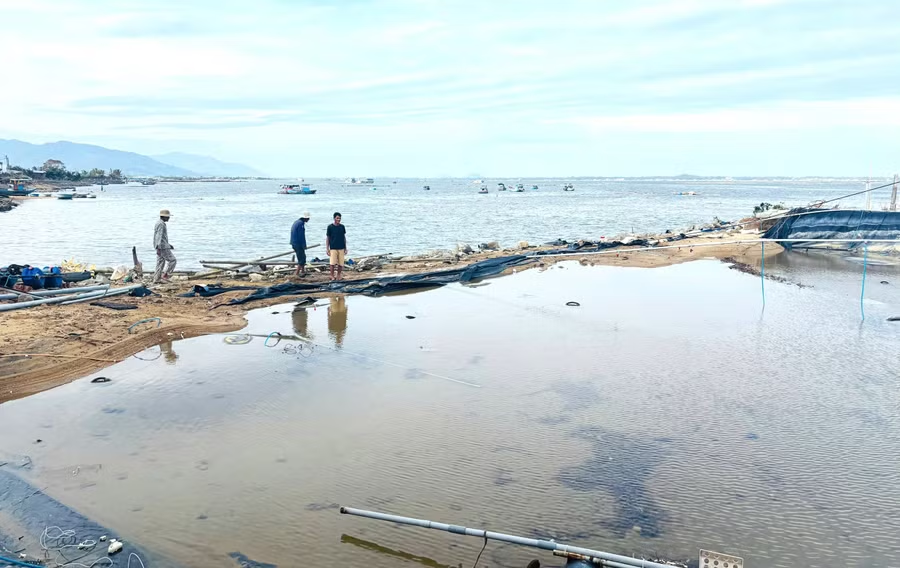
De Gi commune suffered heavy losses from Storm No. 13 and the historic floods in late November. The commune lost 166 hectares of aquaculture water surface, with many households losing all their stock and suffering damaged ponds.
The local government mobilized technical staff to guide residents in reinforcing ponds and worked with banks to provide financial support for reinvestment in production.
The province’s adoption of a resolution on support levels for agricultural production recovery in disaster-affected areas provides crucial resources, enabling people to reinvest.
Based on reports from households and the extent of damage, the commune People’s Committee will promptly implement the policy to help residents access support and quickly reinvest in economic development.
▪ Mr. Pham Van Duc, Chairman of the People’s Committee of Ia Tul Commune: A mechanism for more proactive post-disaster support

After two recent historic storms and floods, many crop areas in Ia Tul commune were completely lost. The hardest-hit area was Ju hamlet, submerged under 3 meters of water, with cassava, sugarcane, and tobacco fields swept away or buried, beyond recovery.
The Tul River (in To Khe hamlet) tripled in width; about 300 hectares of crops (cassava, cashew, etc.) were damaged, most of which were completely wiped out. Locals described the agricultural losses as “total loss,” as these were the main livelihoods for the Jrai people.
The resolution’s effectiveness will give the locality a proactive mechanism, with clear, transparent, and simple support procedures, avoiding delays that could cause people to miss the planting season. The commune will quickly implement the policy to help residents restore production.
▪ Mr. Ksor Tuyt, resident of To Khe hamlet, Ia Tul commune: Timely production recovery, no missed seasons
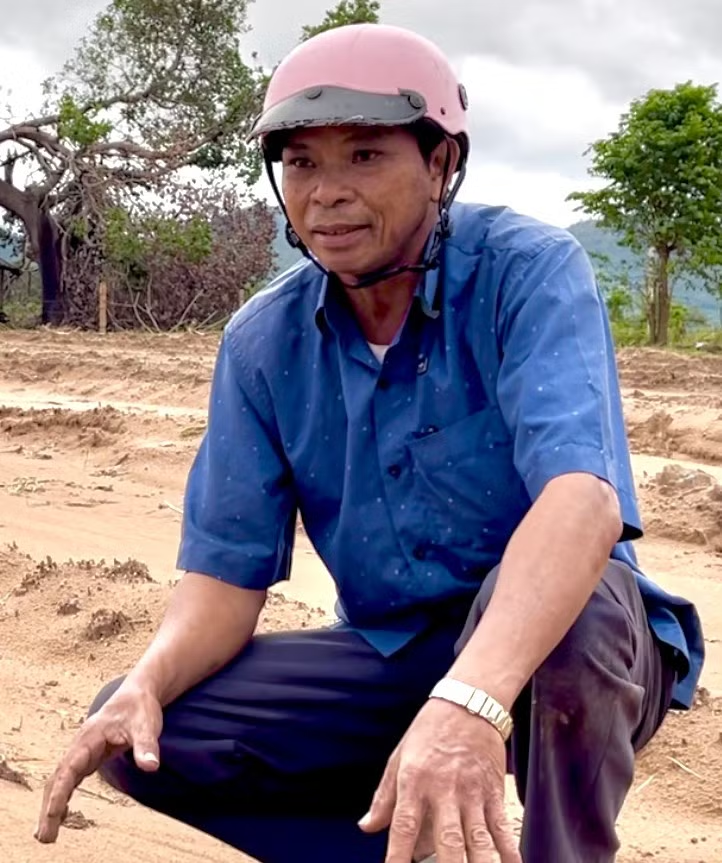
The two recent storms and floods wiped out 2.1 hectares of my family’s cassava, just days before harvest.
The land was buried under half a meter of sand, making short-term production recovery nearly impossible.
The disaster losses were overwhelming. Upon hearing about the support policy, everyone was excited and hoped the province and commune would implement it quickly and accurately so we could restore production in time for the next season.
We hope the resolution will serve as a foundation for the province to further improve policies to protect production as extreme weather persists.
▪ Mr. Pham Van Tai, resident of An Xuyen 3 hamlet, An Luong commune: Hope the resolution is implemented soon
Due to the impact of Storm No. 13 and high tides on the night of November 6, over 3,500 m² of my family’s fish and shrimp ponds—worth nearly 700 million VND—were completely washed away. The commune authorities visited, provided initial support, and guided us in restoring ponds and accessing new loans.
Learning that the province has a policy to support post-disaster production recovery, my family is very encouraged. This support policy is a crucial boost for households like ours who lost everything, giving us the confidence to reinvest and stabilize our income. We hope the resolution will soon be put into practice.
The resolution sets out policies to support vocational transition and decommissioning of fishing vessels that are no longer in use or do not meet the conditions for fishing in the province. This is not merely a financial support package.
It serves as a lifeline for vessel owners and related households, enabling them to seek new livelihoods and stabilize their lives when they must withdraw their vessels from fishing activities.
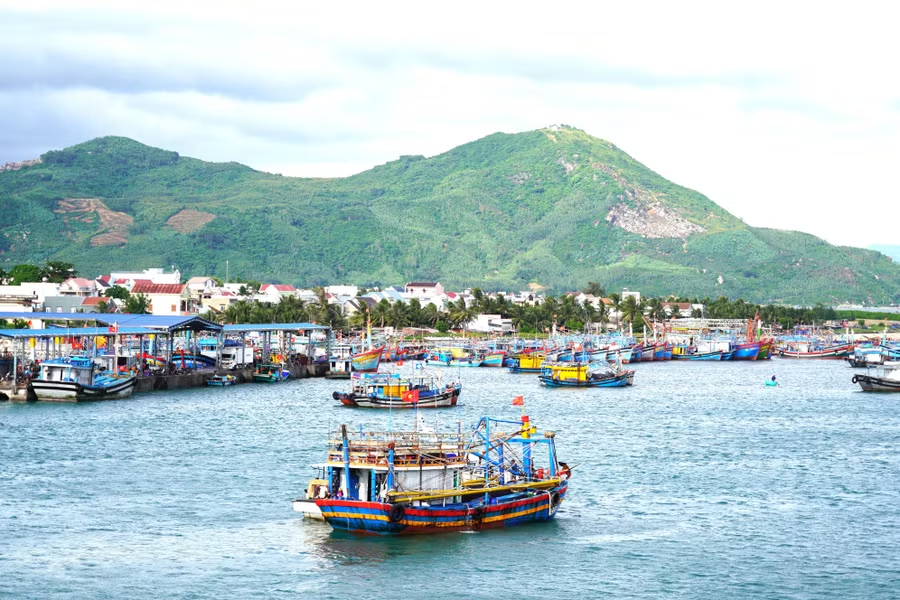
The policy aims to remove substandard fishing vessels from the management system, thereby eliminating high-risk vessels that could contribute to illegal, unreported, and unregulated (IUU) fishing, and helping to meet urgent requirements for lifting the European Commission’s “yellow card” on Vietnamese seafood.
At the same time, the policy lays the groundwork for restructuring the fishing fleet towards reduced exploitation intensity, protection of aquatic resources, and improved state management efficiency.
It provides financial mechanisms (support for dismantling hulls and engines) and livelihood transition support for affected vessel owners and crew, helping fishermen switch careers, ensuring social security, and fostering consensus in law enforcement and fisheries restructuring.
The resolution stipulates that support for decommissioning fishing vessels is calculated as a percentage of the new hull construction value, depending on the vessel’s years of operation.
Specifically, vessels in operation for less than 5 years will receive 80% of the new hull construction value, at a rate of 21.795 million VND/registered ton; vessels operating from 5 to under 10 years will receive 70%, at 19.075 million VND/registered ton; vessels operating from 10 to under 20 years will receive 60%, at 16.35 million VND/registered ton; vessels operating for 20 years or more will receive 50%, at 13.625 million VND/registered ton; and 70% of the main engine value for used vessels, at 591,500 VND/horsepower.
This support is a one-time payment and does not include actual dismantling and disposal costs. The above policies are valid until December 31, 2026.
For vocational training support, vessel owners and family members living in the same household with decommissioned vessels will receive a one-time cash payment if they participate in vocational training.
The policy includes training cost support of up to 3 million VND/person/month/course; meal support of 900,000 VND/person/month/course; and travel support of 200,000 VND/person/course. The maximum training support period is 3 months.
In terms of employment support, fishermen are given priority access to free counseling and job placement programs at the provincial Employment Service Center; preferential loans to create, maintain, or expand jobs or to work abroad under contract, from the National Employment Fund and other preferential credit sources as prescribed by law; and priority participation in livelihood transition and start-up programs in agriculture, fisheries, and coastal services implemented by the province.
The total projected budget for this policy is nearly 138 billion VND. This is a significant investment to ensure sustainable livelihoods for the people, while contributing to the province’s strategic goals in combating IUU violations and developing a sustainable fisheries sector.
▪ Mr. Tran Quoc Khanh, Deputy Director of the Department of Agriculture and Environment: The policy encourages vessel owners to voluntarily eliminate IUU risks

After eight years of implementing the 2017 Fisheries Law and various anti-IUU measures, the province has achieved some positive results.
However, there are still 360 fishing vessels in the province that do not meet the conditions for fishing. These vessels pose a high risk of IUU violations, complicate management, and negatively impact urgent efforts to address the European Commission’s “yellow card” warning. Moreover, aquatic resources are increasingly depleted due to overexploitation, necessitating a prompt restructuring of the fishing fleet to reduce exploitation pressure and sustainably protect resources.
Prime Minister’s Decision No. 2310/QD-TTg dated October 17, 2025, issued the “Action Plan for the Peak Month Against Illegal, Unreported, and Unregulated Fishing and Sustainable Development of Vietnam’s Fisheries Sector,” assigning the task of issuing policies for vocational transition and decommissioning of fishing vessels no longer in use or not meeting fishing conditions, tailored to local realities. Therefore, the issuance of support policies for vocational transition and decommissioning of such vessels is necessary. This policy creates a financial mechanism to encourage vessel owners to voluntarily and definitively remove high-risk vessels from the system, addressing the root cause of IUU violations.
This decommissioning policy is considered a fundamental step to thoroughly address the issue of small, unsafe fishing vessels, while opening up new livelihood opportunities for fishermen.
▪ Mr. Nguyen Van Hiep, Chairman of the People’s Committee of Hoai Nhon Dong Ward: No fisherman left behind

Hoai Nhon Dong ward currently has 657 fishing vessels over 6 meters in length registered for management as required. After extensive communication about the vocational transition policy, five vessel owners have registered for decommissioning and 20 coastal fishermen have registered for vocational transition to secure stable livelihoods and incomes.
Vocational training, financial support, and alternative livelihood orientation are key factors helping fishermen confidently transition, reflecting the spirit of leaving no fisherman behind.
Fishermen will have new, more suitable livelihoods when fishing vessels no longer meet safety requirements, are unfit for operation, or when they no longer wish to pursue a seafaring career.
Decommissioning old, damaged vessels demonstrates the State’s concern for human safety and reduces risks at sea. At the same time, reducing the number of small vessels helps protect aquatic resources and the marine environment.
Furthermore, encouraging the reduction of small-scale, unqualified fishing vessels also reflects responsibility for protecting aquatic resources and the ecological environment, aiming for sustainable fisheries development and community well-being.
The locality will continue to widely disseminate the vocational transition policy so that people understand and continue to register for suitable career changes; coordinate with higher-level agencies in organizing vocational training, prioritizing suitable occupations for stable incomes.
▪ Mr. Nguyen Van Be, Standing Vice Chairman of the People’s Committee of Nhon Chau Commune: Strong communication so people are informed
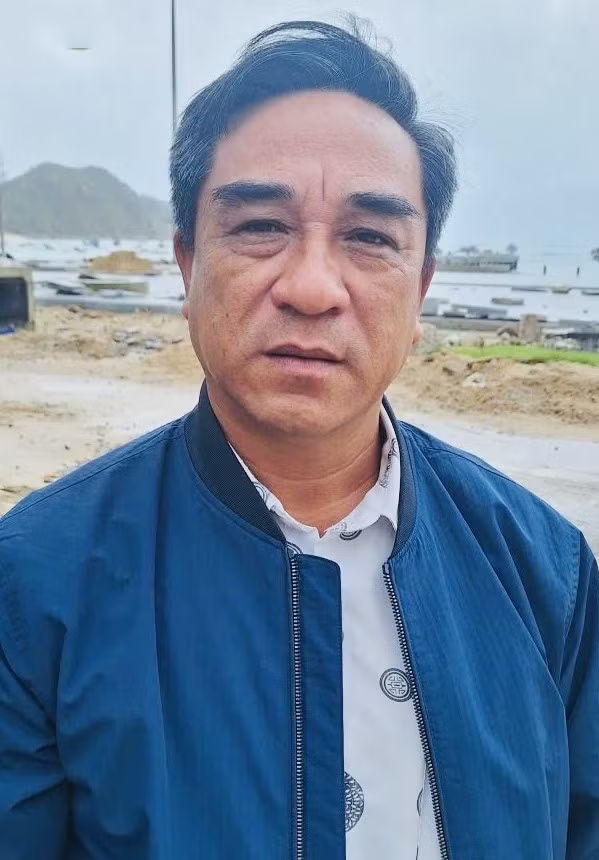
Currently, Nhon Chau island commune has 59 fishing vessels, all of which are registered, with nine vessels having expired licenses. The commune has intensified communication to vessel owners whose boats are unfit for operation, instructing them to anchor at the port.
At the same time, the commune has promoted the State’s vocational transition support policies for those with unqualified vessels so that people are well informed.
Monitoring shows that households with unqualified vessels comply well with anchoring requirements and are pleased with the province’s vocational transition support policy.
The commune will immediately implement these support policies for fishermen, ensuring timely, transparent, and non-duplicative assistance. The goal is to encourage fishermen to transition from fishing to other suitable occupations for stable incomes, thereby contributing to sustainable marine economic development and resource protection.
▪ Mr. Trinh Ngoc Anh, fisherman in Thanh Xuan neighborhood, Hoai Nhon Dong ward: A humane policy, suited to reality
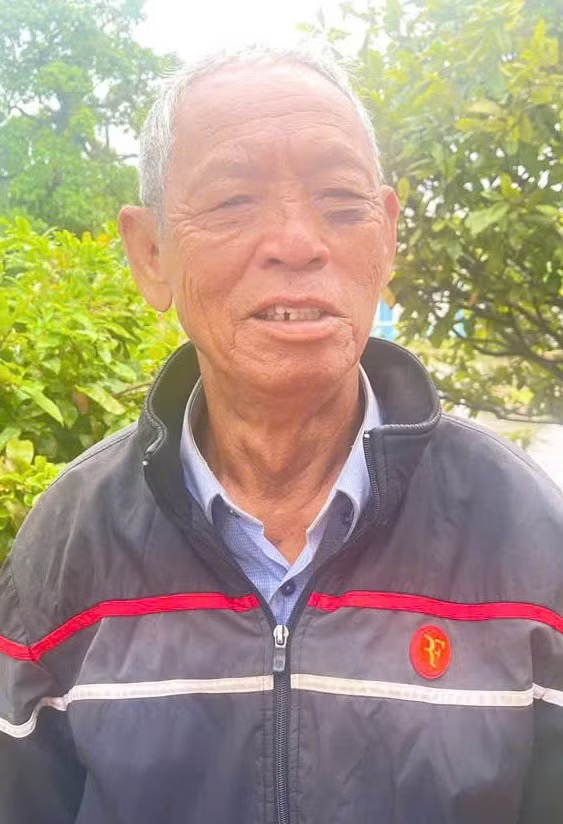
My family has been engaged in coastal fishing for over 60 years. The sea has sustained us and become an integral part of our daily lives. However, in recent years, coastal aquatic resources have sharply declined, making incomes unstable and life increasingly difficult. I am also getting older and less healthy, so continuing at sea is no longer suitable.
I have learned that the province is implementing support policies for those decommissioning fishing vessels and transitioning careers. This is a very humane policy, well-suited to the real-life circumstances of fishermen. I have confidently registered to decommission my vessel.
My greatest hope is that the State will quickly implement the policy, ensuring transparency so that we fishermen can feel secure and transition to new livelihoods soon.
I also hope that relevant agencies will provide guidance on suitable occupations based on our health and family conditions, helping us secure stable jobs and increase our income as we leave the sea behind.