From quiet acts of charity to an ambition to elevate local agricultural products, Nguyễn Chí Nguyên (born 1987), Chief of Staff of the Party Committee of Ia Krái Commune, has chosen to follow President Hồ Chí Minh’s example through concrete, persistent actions rooted in service to the people.
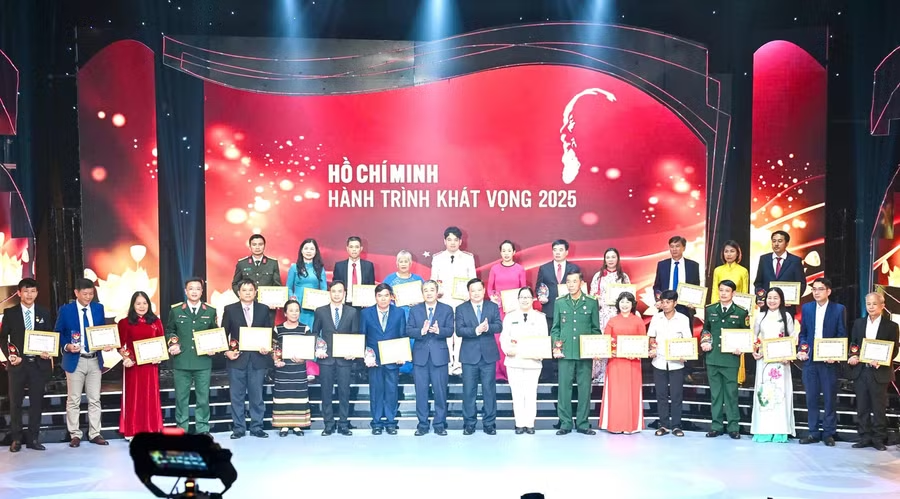
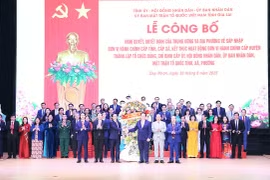
Nguyên is one of three exemplary individuals from Gia Lai Province honoured at the Exchange Program for Outstanding Role Models in Studying and Following Ho Chi Minh’s Thought, Morality, and Style in the Central and Central Highlands Regions 2025.
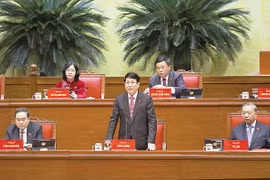
The event, themed “Resilience - The foundation of prosperity,” was jointly organised by the Central Propaganda and Mass Mobilisation Commission, the Nghe An Provincial Party Committee and Vietnam Television on December 14.
* Participating in the Exchange Program for Outstanding Role Models in Studying and Following Ho Chi Minh’s Thought, Morality, and Style in the Central and Central Highlands Regions 2025, how do you feel?
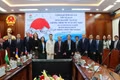
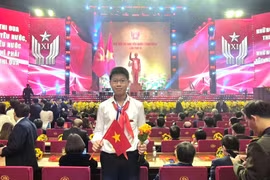
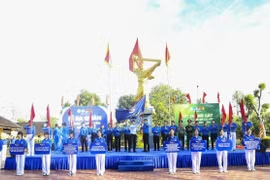
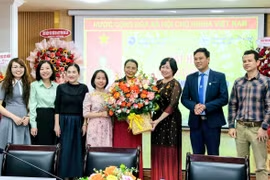
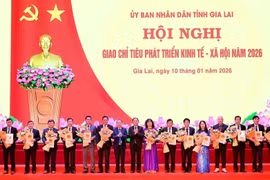
Nguyễn Chí Nguyên (front row, fifth from left) at the “Exchange Program for Outstanding Role Models in Studying and Following Ho Chi Minh’s Thought, Morality, and Style in the Central and Central Highlands Regions 2025.” Photo: NVCC
- For me, this is a tremendous honour and an opportunity for self-reflection. Standing among so many outstanding collectives and individuals from across the region, I felt even more deeply the spirit of tireless, quiet dedication shown by so many people.
Some are over 60 years old but still donate blood regularly, take part in charity work and travel directly to disaster-hit areas to support those in need. Their examples inspire me to strive harder and do better in the work I am pursuing.
* Looking back on your journey, what has motivated you to remain committed to charitable activities?
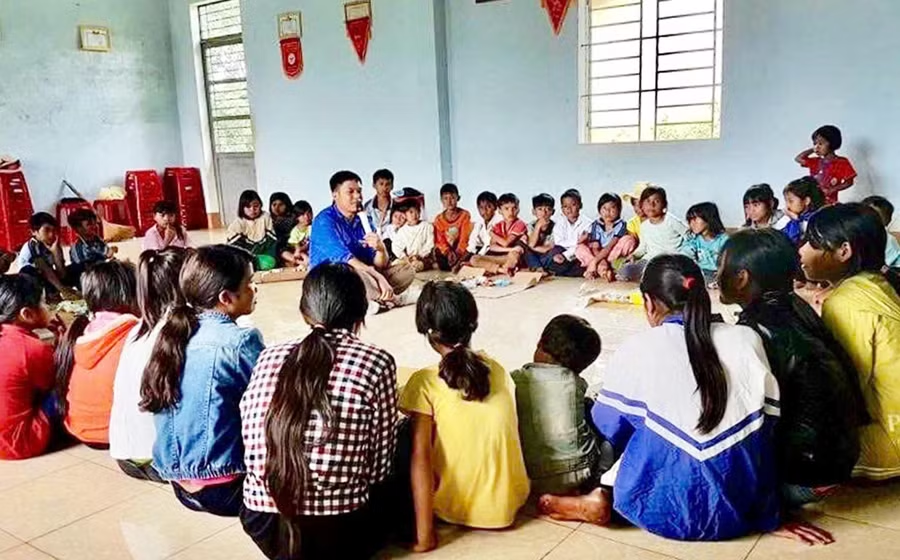
- Everything began very naturally, from simple and ordinary things. In 2018, while working at the former Ia Grai District Youth Union, I met many disadvantaged children, especially during the Mid-Autumn Festival and Lunar New Year.
I realised that sometimes a small gift or a simple playground can bring joy and create lasting childhood memories. At first, most activities relied on my own funds and support from family and friends. Gradually, more people joined, and the “Gia Lai Volunteer Together” group was formed.
The group initially focused on disadvantaged children, then expanded to cases involving serious illness, accidents and natural disasters. Although our scope has grown, vulnerable children have always remained our top priority.
* After more than seven years of mobilising social resources, what concrete results have you and your group achieved?
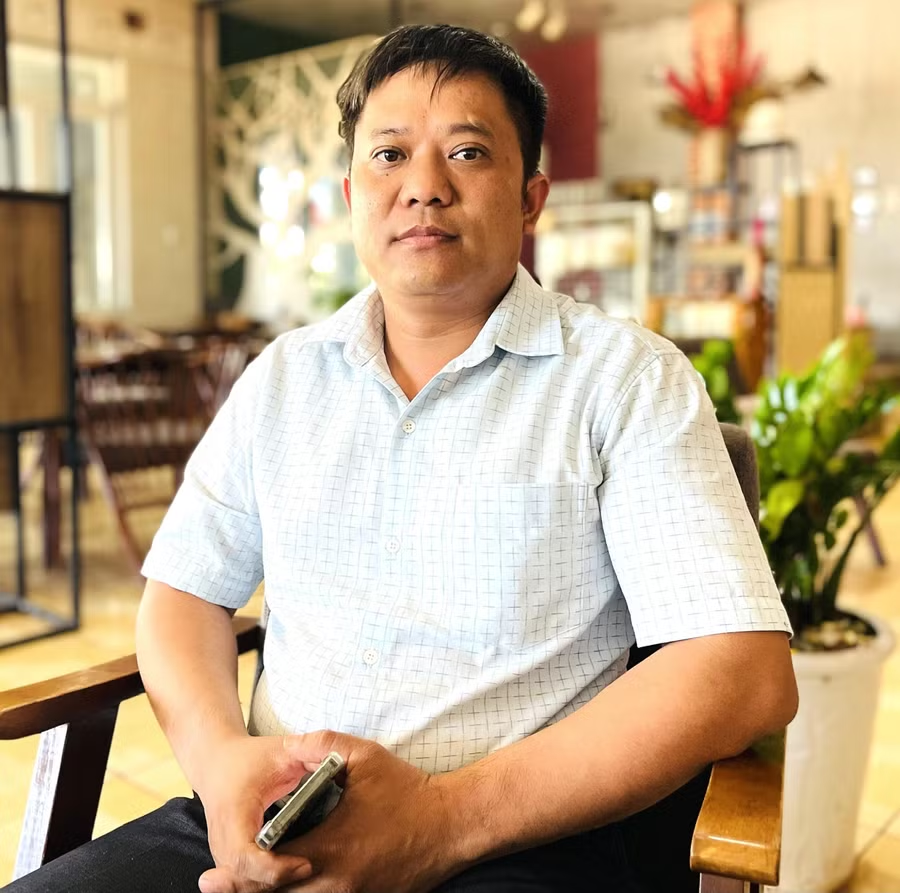
Nguyễn Chí Nguyên. Photo: P.D
- We have helped build seven new houses and repair four others for poor households, with a total cost of 580 million VND (approximately USD 23,700). We also provided more than 10,000 seedlings of various types to help people establish long-term livelihoods.
In addition, the group directly mobilised support for 27 difficult cases, raising a total of 690 million VND (about USD 28,200). Through coordination with agencies and organisations, we secured a further 260 million VND (around USD 10,600) for housing construction and direct cash assistance.
Notably, during major natural disasters in 2022 and 2024, the group mobilised more than 170 million VND (nearly USD 6,900) and over eight tonnes of relief goods, providing timely support to people in Quang Tri and Yen Bai provinces (now Lao Cai province).
For us, these figures are not just achievements, but also a responsibility to use every community contribution effectively and transparently.
* During your efforts to mobilise support, is there a story that has left a particularly strong impression on you?
- What I remember most is a traffic accident in 2022 that claimed the lives of three people from the Mekong Delta. Although we did not know them, the community quickly came together to raise more than 100 million VND (around USD 4,100) to help return the victims to their hometowns.
That experience deepened my appreciation of the spirit of solidarity and compassion in our society. At the same time, it reminded us of the importance of verifying information carefully and coordinating closely with local authorities, so that support reaches the right people in the right circumstances. Only then can public trust be maintained and charitable efforts sustained.
* In your view, what role do grassroots officials play in connecting and mobilising social resources for the community?
- From years of experience, I believe the effectiveness of each campaign is not measured solely by the amount of money or goods raised, but by the “focal point” role of grassroots officials.
They are the critical link that ensures information flows smoothly and support reaches the right people in a timely and transparent manner.
When grassroots officials are truly responsible, close to the people and understand each household’s circumstances, charity work becomes genuinely meaningful. This is also the foundation for large-scale support efforts to be effective rather than superficial or fragmented.
* Beyond charity work, you are also involved in local agricultural development. As a member of the Board of Directors of the Ia Tô Agricultural Services Cooperative, what are your main priorities?
Nguyên spends time accompanying and creating playgrounds to bring joy and lasting childhood memories to disadvantaged students. Photo: NVCC
- Cooperatives and farmers’ organisations are essential pillars for people to feel secure in production. My focus is therefore on improving the effectiveness of the cooperative and the Fruit Tree Farmers’ Association in Hamlet 7.
Since 2024, through partnerships with relevant units, the cooperative has organised 18 training sessions on coffee, rambutan and durian cultivation techniques, attracting more than 850 farmers.
Alongside technical improvement, we emphasise brand building and product standardisation. We have developed a collective brand for Ia Grai rambutan, established a certified mother-tree orchard in Hamlet 6, promoted traceability for rambutan and durian, and guided rambutan production according to VietGAP standards in Hamlets 5, 6 and 7. As a result, product quality has improved, gradually building trust with traders inside and outside the province.
* From this experience, how do you see the path to sustainable agricultural development in your locality?
- It is a long-term process that cannot be rushed. Sustainability requires careful preparation, quality control, product standardisation and proper traceability, followed by gradual expansion of production areas.
At the same time, we must persistently develop products in line with standards such as OCOP, VietGAP and GlobalGAP for key crops like durian and rambutan, so they can integrate more deeply into the value chain.
The most important factor is gaining farmers’ consensus, helping them understand that although sustainable agriculture demands more effort, it delivers stable and long-term benefits.
* Looking back on your journey, what do you value most?
- What I value most is the trust and companionship of benefactors and like-minded people. That trust has motivated us to overcome difficulties and share promptly with those in vulnerable circumstances.
I believe that when people unite, listen to one another and strive to improve themselves every day, positive values will continue to spread throughout the community.
* Thank you for the conversation!
Nguyễn Chí Nguyên is a dedicated official, exemplary in ethics, and highly respected and responsible towards the community. His concrete actions in supporting the poor, the vulnerable, and those affected by natural disasters clearly demonstrate the practice of studying and following Ho Chi Minh’s thought, morality, and style through practical deeds, contributing to strengthening public trust in grassroots officials.”
Trần Đình Nghĩa, Permanent Deputy Secretary of the Ia Krái Commune Party Committee
Gia Lai Province has launched a new emulation movement to accelerate administrative reform for 2026–2030, aiming to build a modern, transparent and citizen-focused public administration.
A Politburo supervision team has commended the leadership of the Gia Lai Provincial Party Committee for its effective implementation of Party directives and successful organization of recent elections, according to a draft report presented on March 22.
Students across Vietnam are being inducted into the Ho Chi Minh Communist Youth Union and the Young Pioneer Organization at revolutionary historical sites, as part of efforts to strengthen patriotism and civic responsibility among young people.
Authorities in Vietnam’s Gia Lai province have reaffirmed a conservation-first approach to managing Kon Ka Kinh National Park, emphasising biodiversity protection alongside the development of controlled ecotourism.
Provincial leaders in Gia Lai on Tuesday offered flowers and incense at the Zone 10 historical site to mark the 51st anniversary of the province’s liberation (March 17, 1975 - 2026).
Authorities in Gia Lai province have named 15 outstanding young individuals as recipients of the 2025 Ngo May Award, recognizing exceptional achievements across multiple fields.
Gia Lai’s Party Secretary Thái Đại Ngọc on March 11 visited two high-tech livestock farms in the province and later inspected planning for the Tây Sơn Thượng Đạo Special National Historical Complex.
With a strong sense of duty and a commitment to the ideology and ethics of President Ho Chi Minh, Phan Van Nhat, the young head of Hamlet 9 in Phu My Dong commune, Gia Lai Province, has helped reshape his coastal community.
Gia Lai Province Chairman Phạm Anh Tuấn on February 28 called for a decisive shift toward proactive, service-oriented governance during an inspection of socio-economic development progress in the western communes of Chư Sê, Al Bá, Ia Ko, and Bờ Ngoong.
Gia Lai province has completed reconstruction of 674 flood-destroyed homes ahead of the Lunar New Year, marking a rapid post-disaster recovery effort that local officials describe as a model of coordinated provincial leadership.
Gia Lai province is entering 2025 with profound structural changes and a renewed push for development, marking a pivotal year defined by administrative reform, economic momentum and strengthened political leadership. Below are the ten most notable events shaping the province’s trajectory.
Gia Lai’s leadership met a visiting delegation from Attapeu Province on Monday, reaffirming long-standing Vietnam–Laos ties and outlining an expanded cooperation agenda for 2026–2030.
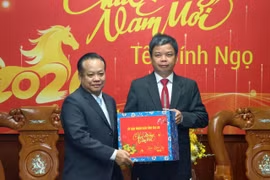
A delegation from Laos’ Sekong Province, led by Comrade Sisouphan Mahavong, Deputy Secretary of the Provincial Party Committee, paid a Lunar New Year visit to Gia Lai Province on February 5, reaffirming cooperation and solidarity between the two localities.
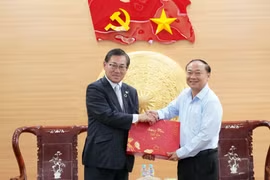
Gia Lai Party Secretary Thai Dai Ngoc on January 29 met Kato Hirosuke, chairman of the Japan - Vietnam Friendship Association in Sakai City, to discuss ongoing cooperation and opportunities to deepen ties between the Vietnamese province and Japanese partners.
Vietnam’s 14th National Party Congress on its third working day held a plenary session focused on political restructuring, institutional reform and growth strategies aimed at building a prosperous and powerful nation in the new development phase.
Authorities in Vietnam’s Central Highlands province of Gia Lai have encouraged nine citizens from ethnic minority communities to return home after spending years living illegally in Thailand, a senior security official said on January 17.
As the 14th National Party Congress convenes amid a solemn and spirited atmosphere, carrying the aspiration for a prosperous and happy nation, the Party Committee and people of Gia Lai are placing high expectations on the Congress’s strategic decisions for the country’s next phase of development.
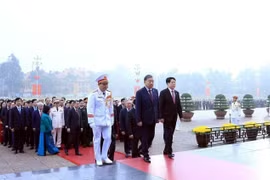
Senior leaders of Vietnam’s Communist Party and State on Sunday paid tribute to late President Ho Chi Minh and the nation’s fallen heroes, as the 14th National Congress of the Communist Party of Vietnam (CPV) opened in Hanoi.
A series of commemorative events across Gia Lai has marked the 76th anniversary of the Traditional Day of Vietnamese Students and the Vietnam National Union of Students, highlighting the role of young people as pioneers in learning, innovation and community service.
Gia Lai has been instructed to mobilise all resources to complete the “Quang Trung Campaign” on schedule, ensuring residents affected by recent natural disasters can move into new homes before the Lunar New Year, Deputy Prime Minister Hồ Quốc Dũng said during an on-site inspection on January 12.
Prime Minister Pham Minh Chinh on Sunday called for the rapid establishment of a comprehensive, accurate and unified national data system, stressing that data is the core foundation for artificial intelligence, the digital economy and new growth drivers.
Gia Lai province has set ambitious socio-economic targets for 2026, including a GRDP growth rate of at least 8% and an aspiration to exceed 10%, as provincial leaders called for sweeping reforms in governance, accountability and execution to drive breakthroughs.
Local authorities in Vietnam’s Central Highlands are translating Party Congress resolutions into visible improvements in daily life, with rural road expansion and community-based tourism emerging as key priorities during the 2025-2030 term.
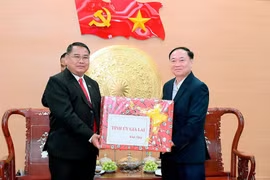
A high-level delegation from Salavan Province of Laos on January 6 paid a New Year visit to Gia Lai Province in Vietnam, extending Tet greetings and reaffirming commitments to strengthen bilateral cooperation ahead of the 2026 traditional holiday.