By promoting the exemplary role of Party members and strengthening communication with residents, local officials have secured broad consensus, enabling policies and initiatives to move forward smoothly.
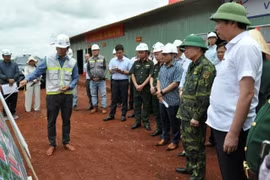
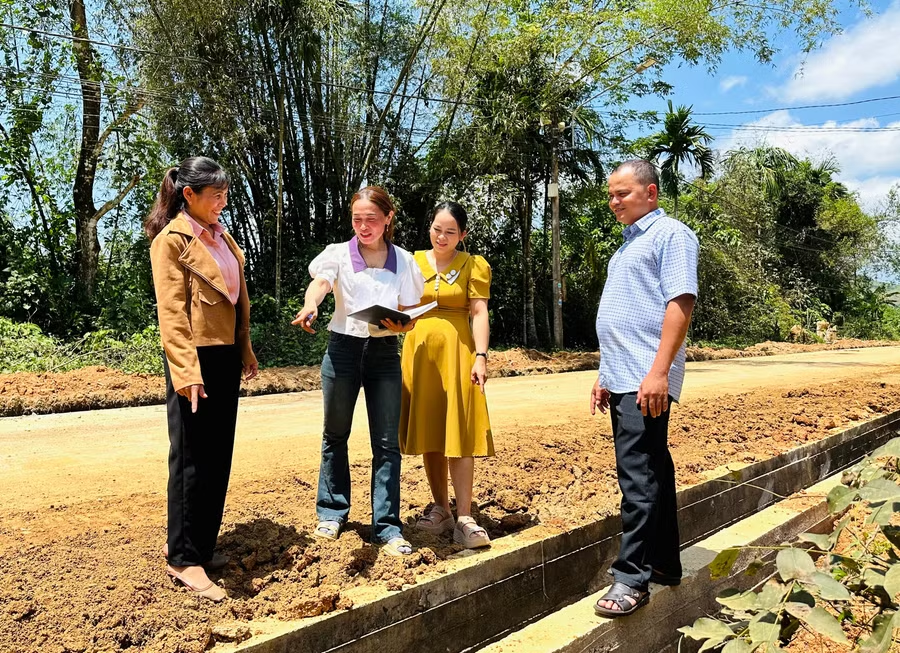
A major example is the upgrade of a nearly 5.5-kilometre concrete road linking Hóc Đèn intersection in Gò Bùi hamlet to Hamlet 2. Previously narrow and severely degraded, the road hindered travel and the transport of agricultural and forestry products.
The project, launched in late December 2025 with a budget of 7 billion VND (approximately 275,000 USD), is funded under the National Target Program for Socio-Economic Development in Ethnic Minority and Mountainous Areas for 2021–2025.
By promoting the exemplary role of Party members and strengthening communication with residents, local officials have secured broad consensus, enabling policies and initiatives to move forward smoothly.
A major example is the upgrade of a nearly 5.5-kilometre concrete road linking Hóc Đèn intersection in Gò Bùi hamlet to Hamlet 2. Previously narrow and severely degraded, the road hindered travel and the transport of agricultural and forestry products.
The project, launched in late December 2025 with a budget of 7 billion VND (approximately 275,000 USD), is funded under the National Target Program for Socio-Economic Development in Ethnic Minority and Mountainous Areas for 2021-2025.
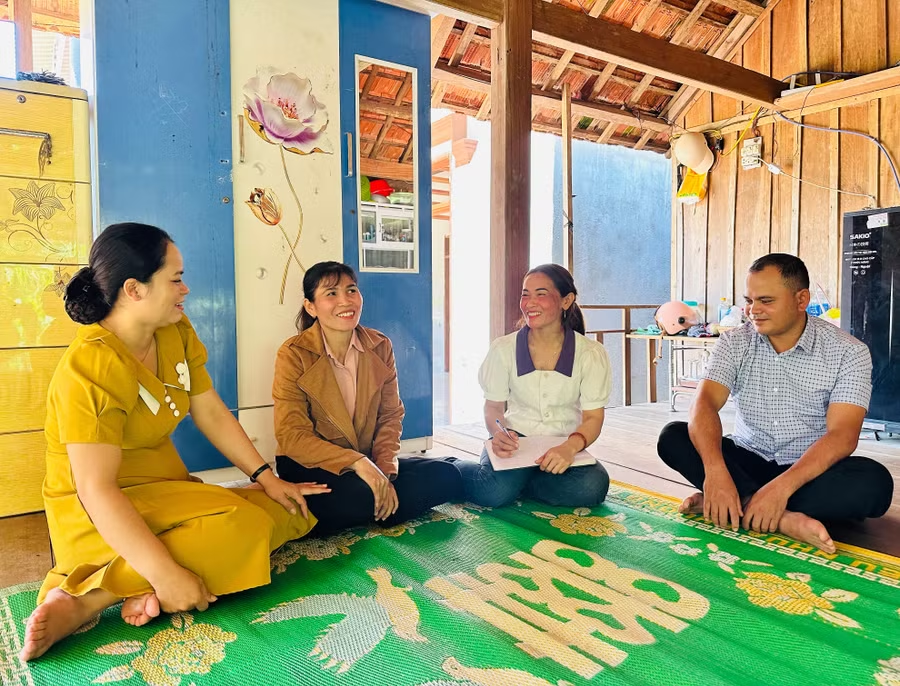
To keep construction on schedule, local Party cells intensified outreach efforts and encouraged residents to support site clearance. Party members took the lead by donating land, setting an example that prompted wider community participation.
Đinh Thị Thanh, an H’re ethnic Party member, donated nearly 50 square metres of residential land and persuaded 17 households to contribute more than 900 square metres in total, along with crops and structures, ensuring timely implementation.
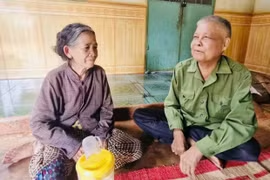
Initial hesitation among residents was gradually overcome through dialogue. Đinh Văn Hùng, a resident of Hamlet 2, said his family had concerns about losing land without compensation but later agreed after understanding the project’s broader benefits.
Local officials say such outcomes reflect the importance of leadership by example. Đinh Văn Tôn, Secretary of the Hamlet 2 Party Cell, noted that when Party members prioritise collective interests, it builds trust and fosters unity.
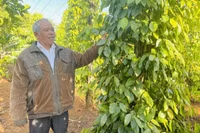
Beyond infrastructure, grassroots mobilisation is also supporting economic transformation. In Hamlet 1, Party members have pioneered new production models, encouraging residents to access preferential loans and adopt scientific techniques.
Successful initiatives include acacia nurseries, crossbred cattle farming and pig raising, which have been replicated by local households, improving productivity and incomes.
Authorities have also prioritised monitoring public sentiment to ensure stability during policy changes. Ahead of an administrative boundary merger involving An Lao, An Tan and An Hung communes, officials addressed concerns over procedures, land documentation and travel.
Through consistent communication, residents gained clarity and confidence in the policy. Administrative services are now handled at the commune level, reducing the need for travel to district offices.
At the grassroots level, Party members are assigned to monitor smaller community units, allowing authorities to respond quickly to concerns and maintain social stability.
In parallel, local Party cells have worked with respected community figures to encourage the abandonment of outdated customs and promote more civilised practices. These efforts have helped families reduce the cost and duration of ceremonies while preserving cultural values.
According to Đinh Văn Lang, Standing Deputy Secretary of the An Lao Commune Party Committee, close attention to public opinion remains central to governance, helping authorities respond promptly and prevent potential social tensions.