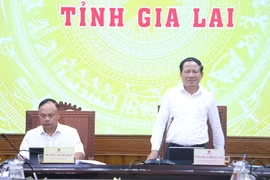
Reporters from Gia Lai Newspaper and Radio & Television had a brief interview with Ms. Lý Tiết Hạnh, Deputy Head of the delegation of the National Assembly Deputies (NAD) of Gia Lai Province, regarding the outcomes of the session.
▪ What are the key outcomes of the 10th session of the 15th National Assembly?
- This was a session of exceptional significance, lasting from 20 October to 11 December. As the final session of the 15th National Assembly, it not only fulfilled regular duties but also reviewed the work of the entire term and addressed major policy issues in line with all mandated functions of the legislature.
The National Assembly deliberated and approved 51 laws and 39 resolutions, including eight normative resolutions. This legislative output represents nearly 30% of all laws and normative resolutions adopted during the entire term. The legal framework approved at this session meets pressing practical needs and lays the groundwork for a new phase of national development.
Alongside lawmaking and oversight, the National Assembly addressed strategic policy matters, conducted a comprehensive review of activities of state agencies during the 2021-2026 term, considered personnel matters in accordance with regulations, and discussed draft documents to be submitted to the 14th National Party Congress.
All contributions were directed toward long-term national development goals: achieving modern industrial status and attaining upper-middle income by 2030, and becoming a developed, high-income nation by 2045. These outcomes reflect rigorous efforts by drafting bodies, reviewing agencies, and the close coordination of all stakeholders, as well as the diligence and responsibility of the deputies throughout the process.

▪ Discussions by the Gia Lai Delegation drew strong attention from voters. Could you elaborate on the delegation’s contributions?
- The Gia Lai Delegation participated actively and comprehensively in all working sessions. With a strong sense of responsibility to voters in Gia Lai and nationwide, deputies conducted research and made substantive contributions in both group discussions and plenary sessions.
The delegation delivered 21 speeches in plenary sessions, engaged in one debate, and made 62 interventions during group discussions. Drawing on voter feedback and local realities, deputies contributed to deliberations on key national issues including socio-economic plans for 2025 and 2026, state budget allocations for 2025–2026, national target programmes, and other critical matters.
Gia Lai deputies also raised issues of local significance, such as improving grassroots healthcare capacity, investing in education, particularly in remote and ethnic minority regions, environmental protection, disaster response, sustainable forest management, and livelihood development.
Recommendations from deputies, including those from Gia Lai, will inform forthcoming policies such as adjustments to budget allocations for national infrastructure, repairs to damaged transport networks, support for disaster-affected households and enterprises, preservation of traditional cultural values, and operational mechanisms for the two-tier local government system.

▪ Looking back at the 15th National Assembly term, marked by major legislative and oversight achievements, what are your expectations for improving the legal system?
- The 15th National Assembly operated under unprecedented challenges, from the Covid-19 pandemic to climate change, natural disasters, and global geopolitical tensions. Despite this context, the Assembly delivered an extensive workload and achieved meaningful progress in legislation, supreme oversight, and key national decisions.
The Gia Lai delegation made 776 interventions throughout the term at both group and plenary sessions. We actively consulted experts and scientists, conducted research, and contributed informed feedback to amendments to the Constitution and various draft laws and resolutions. Many of our proposals were incorporated into final documents, thereby strengthening the National Assembly’s legislative outcomes.
Major decisions adopted during the term have had significant implications for local development, including infrastructure investment connecting the Central and Central Highlands regions, the Quy Nhơn-Pleiku expressway, land-use policy improvements, and investment in science and technology. These illustrate the strong link between deputies and voters, and reflect the deputies’ commitment to addressing obstacles and improving governance at national and local levels.
Looking ahead to the 16th National Assembly (2026-2031), we expect a democratic, lawful, and transparent electoral process that selects capable, reputable, and qualified deputies to serve the country in the new term.
▪ Thank you very much!