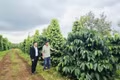
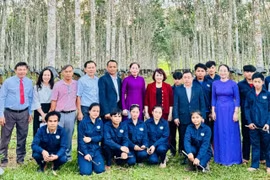
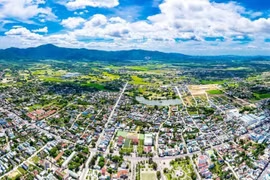
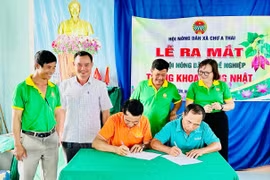
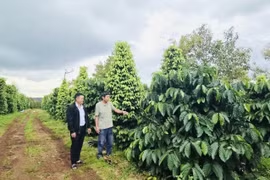
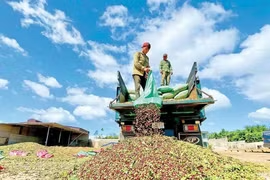
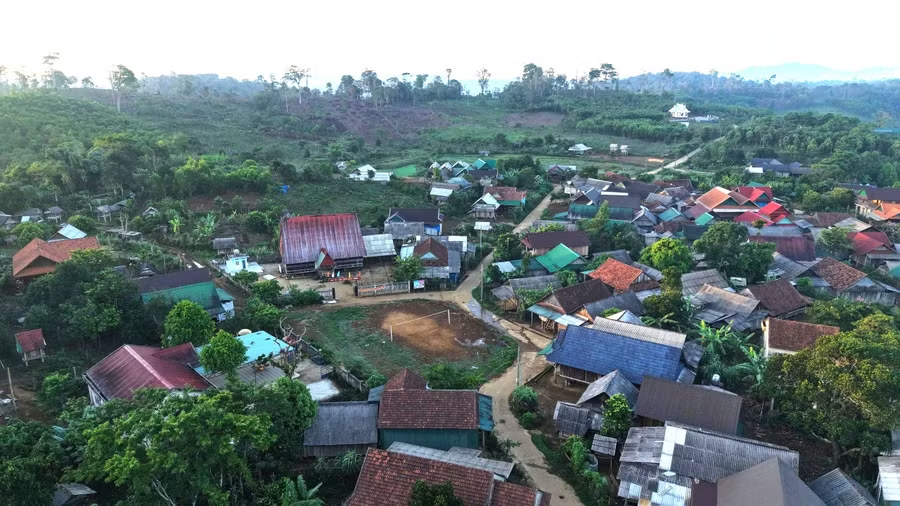
With forest coverage exceeding 90%, An Toan is among the province’s most forest-rich localities. In addition to safeguarding the ecological environment, the forests provide livelihoods for many residents through the collection of honey, wild bamboo shoots, medicinal herbs and other non-timber forest products.
Local authorities have identified forest-based livelihoods as a key driver of economic development and poverty reduction. In recent years, residents have expanded economic activities linked to the forest, generating additional income beyond traditional agricultural production.
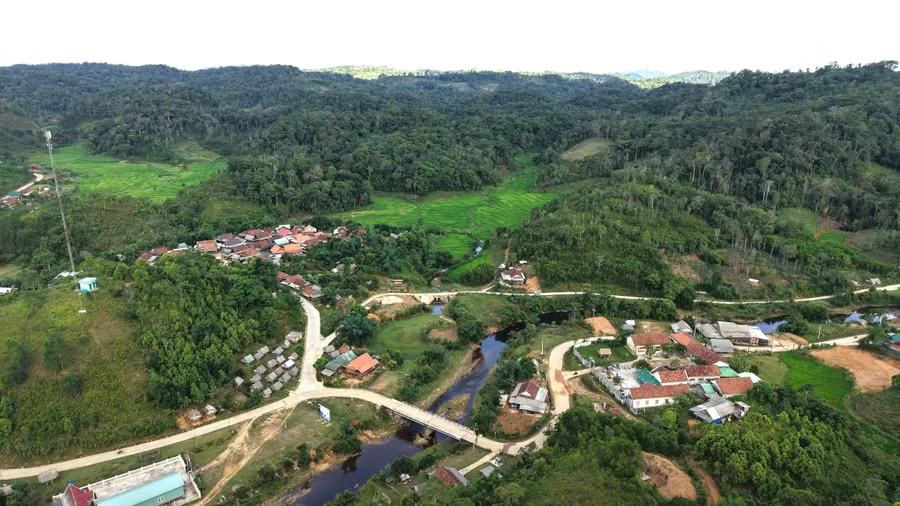
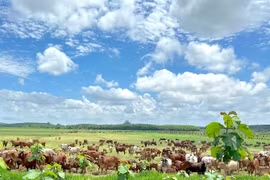
One of the most notable models is semi-wild black pig farming under the forest canopy. By taking advantage of large forested areas and abundant natural food sources, the model has created new income opportunities suited to local highland conditions.
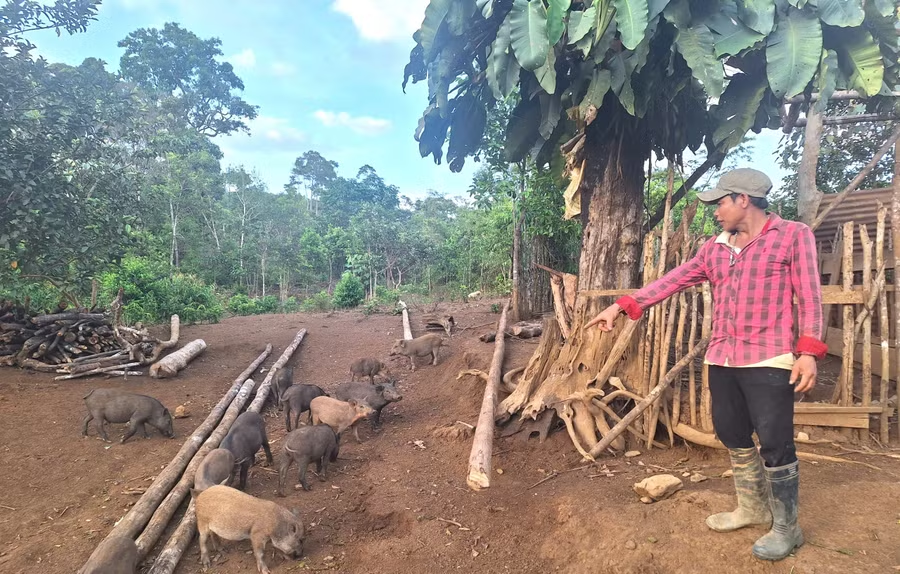
After nearly five years raising black pigs, farmer Pham Van De from Hamlet 1 said the activity has become a stable source of income for his family. According to De, free-range pig farming along forest edges reduces feed and labor costs while lowering disease risks. The practice also allows domestic pigs to naturally crossbreed with wild boars, producing hardy hybrids whose meat commands strong market demand.
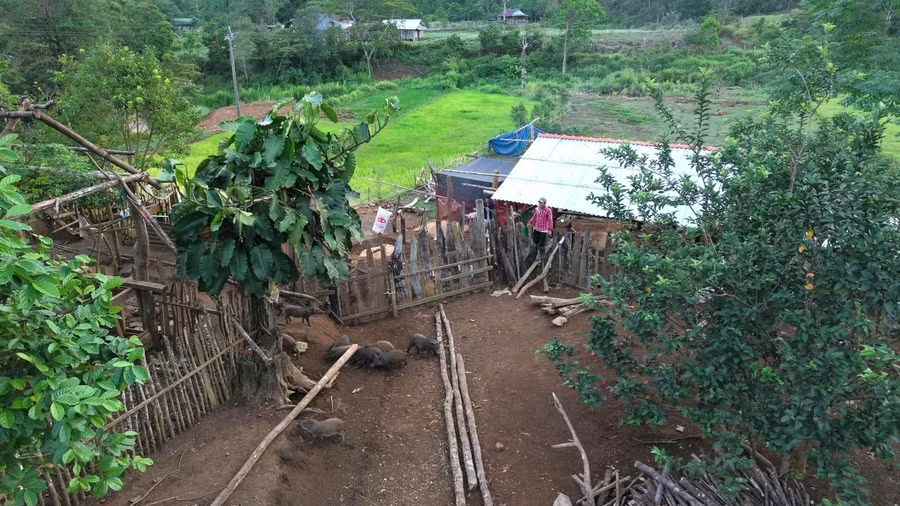
His family currently raises about 25 pigs, more than half of them wild boar hybrids. In 2025, the family sold five market-ready pigs at prices exceeding VND150,000 (about USD5.70) per kilogram.
Alongside pig farming, De’s household also raises six buffaloes and two cows while cultivating around one hectare of cassava.
“Wild boar hybrids are more popular with customers and therefore sell at higher prices,” De said, adding that he plans to expand his herd. “The pigs can forage naturally in the forest for leaves, grass and other food sources, reducing feed costs and helping keep them healthy.”
Forest-based income opportunities extend beyond livestock farming. Many households are also collecting and processing non-timber forest products, a practice viewed as both an economic activity and a means of supporting forest protection.
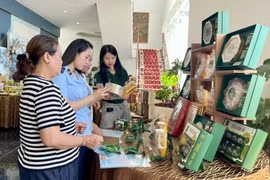
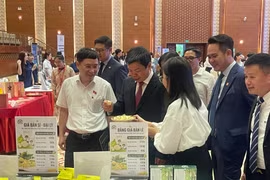
Dinh Thi Hanh, also from Hamlet 1, has been among the first local residents to collect, process and market specialty products including day tea, wild honey, bamboo shoots and wild mushrooms.
“All products are harvested from natural forests by local people and then processed and packaged for customers both inside and outside the area,” Hanh said. “Because quality is assured and no preservatives are used, consumers have responded positively.”
She said the business provides additional income for her family while creating a market outlet for local specialty products.
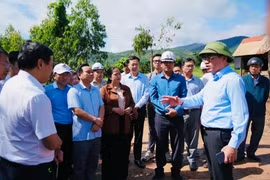
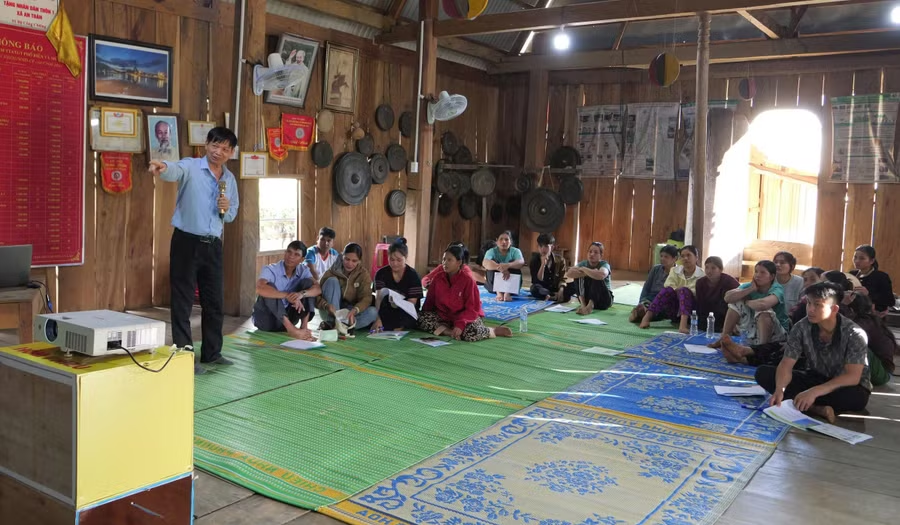
According to Nguyen Hoang Vu, head of the commune’s Economic Department, local authorities are supporting residents in diversifying forest-based livelihoods through livestock expansion and the development of non-timber forest products and medicinal plants.
“Black pig farming requires relatively little capital and labor, making it highly suitable for local conditions,” Vu said. He added that the commune plans to utilize support funds and loans from the Social Policy Bank to help residents expand production.
The locality also intends to further develop products such as honey, medicinal herbs and other forest-derived goods to create additional jobs and increase incomes.
Chairman of the An Toan Commune People’s Committee Dinh Van Nghin said the commune is targeting overall product value growth of 8.13% in 2026. The agriculture, forestry and fisheries sector is projected to grow by 4.1%, industry and construction by 10.8%, and services by 9.26%.
The commune also aims to reduce its poverty rate from 17.5% to approximately 11.5%.
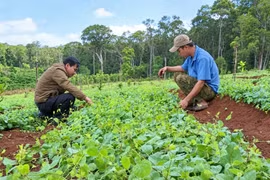
To achieve those goals, An Toan is prioritizing sectors with strong growth potential, including medicinal herbs cultivated under the forest canopy, community-based ecotourism and agroforestry processing.
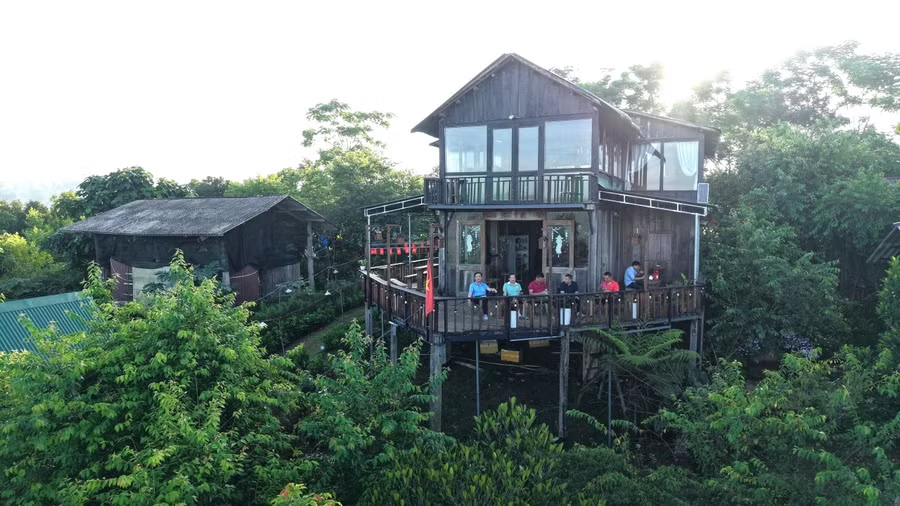
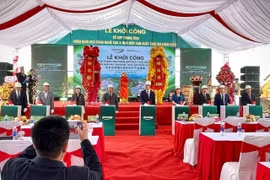
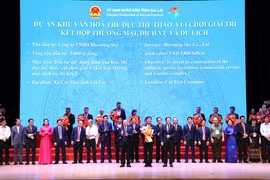
Authorities are currently working with investors to complete procedures for the An Toan Cloud-Viewing Peak Tourism Service Area project. With total investment exceeding VND76 billion (about USD2.9 million), the development is expected to attract visitors interested in nature, cloud viewing and the area’s primeval forest ecosystem.
The commune is also promoting the Tien Vua Tea Factory project while continuing to seek investment in medicinal herb cultivation, vegetable production, Angelica ginseng and other forest-based economic initiatives.
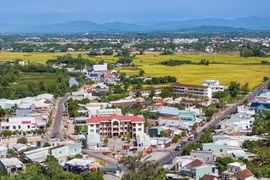
By building on its natural advantages, particularly its extensive forest resources, An Toan is laying the groundwork for long-term socio-economic development. Local officials see the forests not only as an environmental asset but also as a key resource for increasing incomes, improving living standards and helping residents move out of poverty.