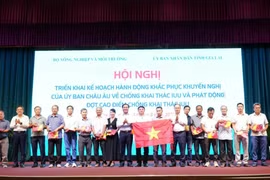
Provincial authorities say the revised criteria will create both challenges and opportunities for businesses and cooperatives, encouraging them to improve product quality, strengthen competitiveness and access larger markets.
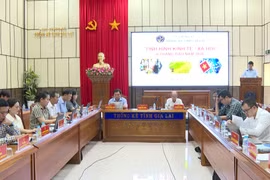
“The implementation of the new set of criteria will significantly impact OCOP entities in the province in two ways: it imposes stricter requirements while also opening up opportunities to improve product quality and value”, said Cao Thanh Thuong, Director of the Department of Agriculture and Environment.
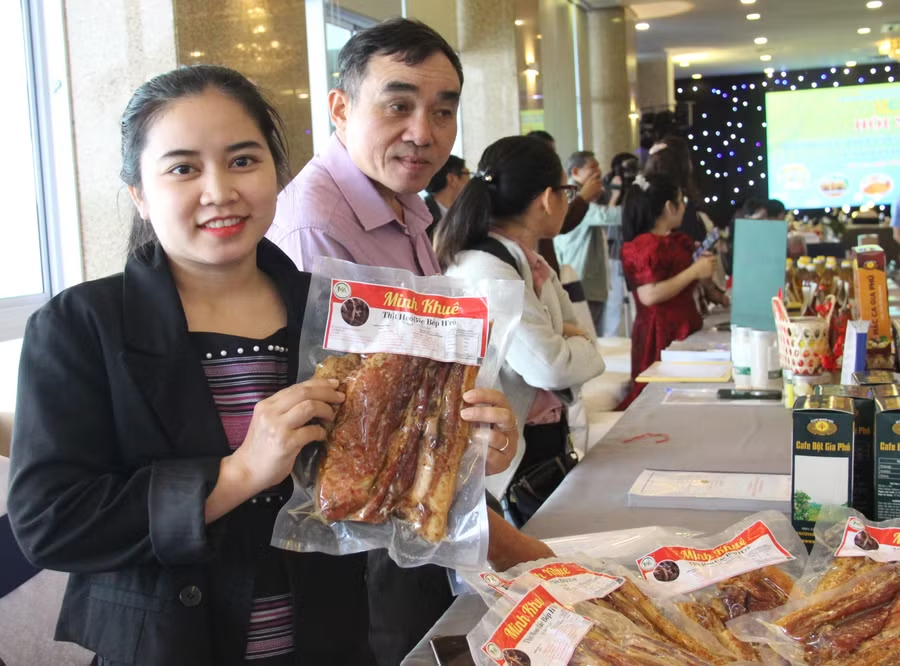
According to Thuong, new requirements related to legal documentation, trademark protection, traceability and market development will encourage producers to improve their production and business capabilities while promoting innovation, brand development and sustainable growth.
One of the most notable changes is the tightening of mandatory conditions for products seeking OCOP recognition. To qualify as a 3-star OCOP product, producers must have a trademark registration accepted by the competent authority and establish at least five agency or distribution contracts outside the commune level.
Authorities believe the regulation will help eliminate small-scale and spontaneous production models while encouraging more systematic investment in branding and market expansion.
The revised framework also introduces new provisions on product upgrading, re-evaluation after the recognition period and the revocation of OCOP certification, strengthening transparency and oversight throughout the management process.
After nearly eight years of implementation, Gia Lai has become one of the leading localities for OCOP development in Vietnam’s Central and Central Highlands regions.
The province currently has 852 valid OCOP products produced by 443 entities. Among them, 756 products have achieved 3-star status, 85 products hold 4-star ratings and 11 products have received the national 5-star designation.
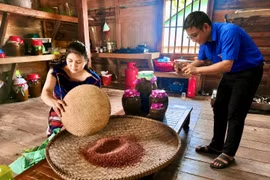
Food products account for the majority of Gia Lai’s OCOP portfolio, with 698 products. Other categories include beverages, medicinal herbs, handicrafts, ornamental creatures and community tourism services.
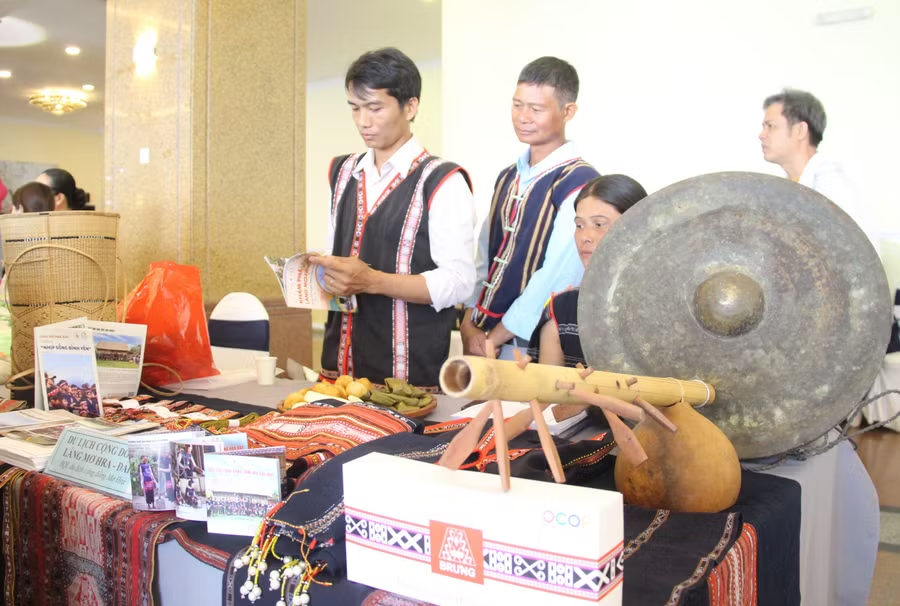
Several nationally recognised 5-star products have established strong market positions, including rice paper produced by Nhan Hoa Co., Ltd. in Hoai Nhon Nam Ward; coffee and pepper from Nam Yang Agricultural and Service Cooperative in Kon Gang Commune; coffee from BaKa Co., Ltd. in Ia Hrung Commune; cashew nuts from Hai Binh Gia Lai Cashew Joint Stock Company in Hoi Phu Ward; and honey from Phuong Di Bee Honey Cooperative in Gao Commune.
Provincial officials describe these products as closely linked to Gia Lai’s competitive advantages and well positioned for long-term development.
Hoai An Commune currently has 18 OCOP products rated at 3 stars, many of which are already distributed in provinces and cities across the country.
Huynh Van Duy, Vice Chairman of the Hoai An Commune People’s Committee, said the programme has played an important role in rural economic development by encouraging residents and businesses to invest in production and commercial activities.
He added that the new criteria have been carefully designed to ensure legal compliance and align with current priorities for rural economic development.
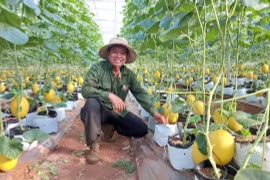
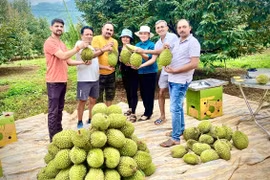
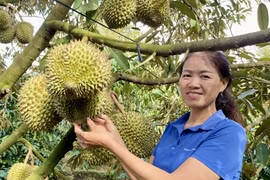
Gia Lai possesses favourable conditions for developing distinctive OCOP products, including coffee, pepper, macadamia nuts, honey, durian, bananas, medicinal herbs and processed agricultural goods.
Looking ahead, the province is preparing an OCOP development plan for the 2026–2030 period, with a focus on products linked to key industries, concentrated raw material zones and deep processing activities.
Authorities plan to prioritise support for products that reflect local cultural identity, demonstrate strong branding potential and possess high market competitiveness.
The province is also promoting the development of raw material areas connected to key products, strengthening value-chain production linkages, supporting brand building and intellectual property protection, encouraging the adoption of quality standards, and accelerating digital transformation and e-commerce initiatives.
Officials said the next phase of OCOP development will focus not only on increasing the number of products but also on improving quality, building stronger brands and expanding market access.
“These products will be closely integrated with rural tourism, community tourism and the unique cultural values of each locality. This will help increase incomes for local people and promote the image of Gia Lai’s land and people to both domestic and international visitors”, Thuong said.
He added that the strategy is expected to contribute to rural economic development, support new-style rural area construction and improve living standards across the province in the years ahead.