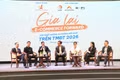
On June 22, the Provincial People’s Committee approved 14 science and technology tasks for 2026 with a total budget of nearly VND 29 billion (about USD 1.1 million).
The projects cover information technology, agriculture, natural resources and the environment, and social sciences and humanities, with a focus on addressing practical needs and supporting the province’s socio-economic development.
Among the key information technology projects is the “Research and Development of Generative Artificial Intelligence (AI) for Tourism Promotion in Gia Lai Province,” led by Quy Nhon University.
The project aims to develop a generative AI assistant capable of providing personalized travel advice based on visitors’ individual needs and languages. It will also support the creation of promotional content and integrate with the province’s digital platforms.
The project will build a provincial digital tourism database, train AI models and develop digital products for communications and destination promotion.
Nguyễn Hữu Hà, Deputy Director of the Department of Science and Technology, said AI and digital transformation projects in tourism were designed to address the province’s practical needs and produce solutions that could be put into use immediately after completion.
The department expects the projects to help establish a digital data platform for tourism resources and products, develop AI applications for destination promotion, enhance visitor experiences and support businesses in analyzing market demand.
The department has also coordinated with other agencies and local authorities to promote the use of digital technology in destination marketing and the digitization of data on heritage sites, scenic attractions, OCOP products, craft villages and tourism destinations.
Businesses are being encouraged to adopt digital platforms for management and marketing and to connect with online travel marketplaces.
Digital transformation is also being applied to heritage preservation. A research project focusing on Han-Nom heritage in the eastern part of the province aims to create a digital database, digitize documents and develop tools that allow users to search for and experience heritage on digital platforms.
The initiative is expected to provide a foundation for preserving traditional cultural values while creating new products for tourism promotion and development. Other science and technology projects are also increasingly focused on harnessing cultural values to stimulate local tourism.
Tourism businesses and community-based tourism operators are meanwhile adopting digital tools for management, promotion and visitor engagement.
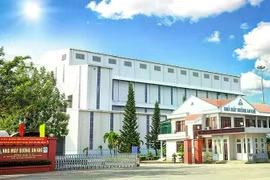
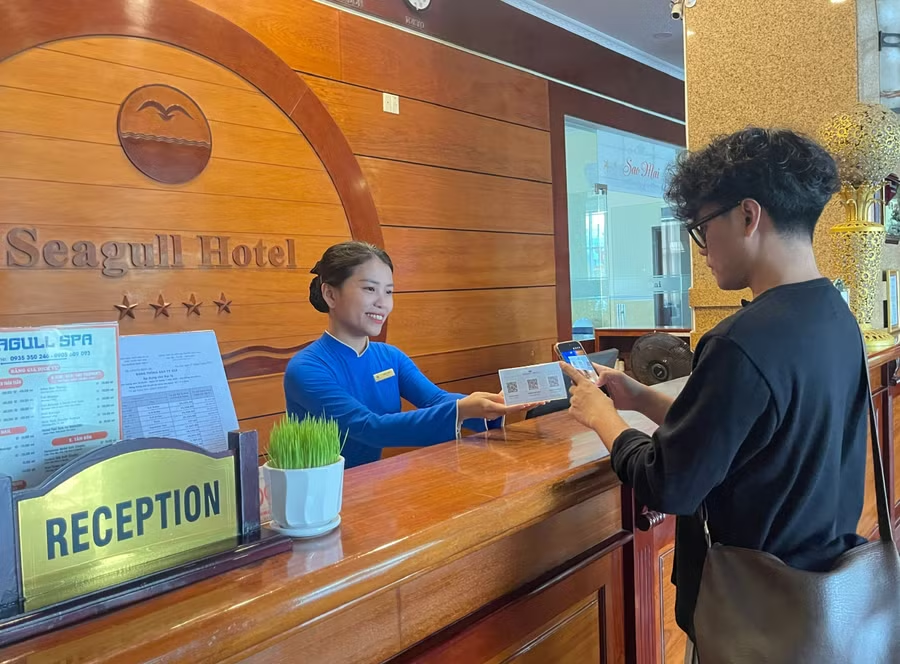
Hai Au Hotel in Quy Nhon Nam Ward has introduced digital technology for marketing, room reservations, customer care and guest registration. It also provides tourism information through QR codes at the reception area and in guest rooms.
Lê Hồng Quang, Deputy Director of Hai Au Hotel, said technology allowed businesses to reach customers more quickly, improve management efficiency and enhance the visitor experience. However, he said existing shared platforms were not yet synchronized, making it difficult to fully exploit available data.
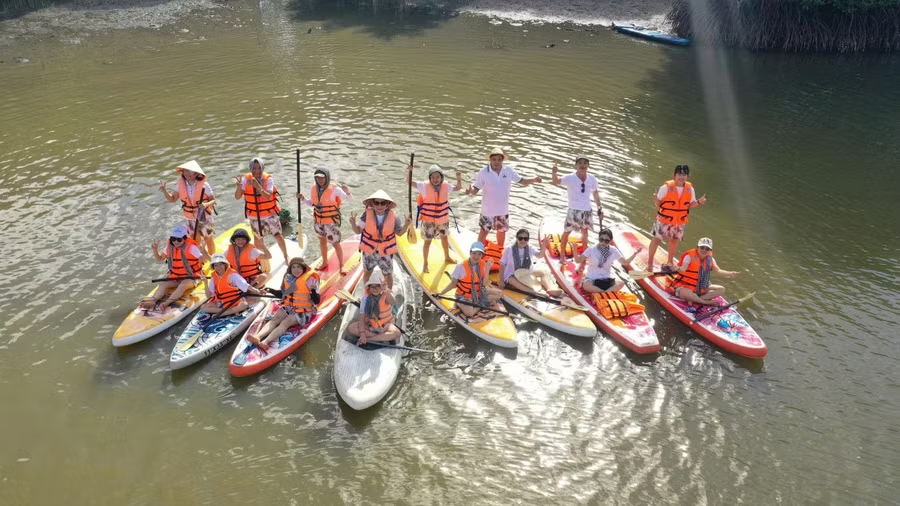
At Con Chim Xanh Trade & Service Cooperative in Tuy Phước Đông Commune, digital transformation has become a key tool for promoting a community-based tourism model linked to the Thi Nai lagoon ecosystem.
Through digital platforms, the cooperative introduces visitors to local experiences and cuisine, allowing them to learn about the destination before their trip.
Hồ Thị Thân Thương, the cooperative’s director, said the organization hoped to receive support to improve its digital communication skills and connect with the province’s tourism data platforms, helping local cultural values reach a wider audience.
Similarly, the “Bamboo Weaving and Brocade Weaving Linked with Community Tourism” group in Ia Ly Commune is combining the preservation of traditional crafts with online product promotion, bringing Jrai culture closer to visitors.
Hà said the science and technology sector was promoting research into and the transfer of emerging technologies, including AI, Big Data, the Internet of Things, Virtual Reality and Augmented Reality, to improve management, strengthen tourism promotion and develop smart tourism products.
Following the merger, Gia Lai Province has expanded its tourism potential across coastal areas, forests, highlands, culture and heritage. Authorities see science, technology and digital transformation as key tools for turning those resources into new tourism products and supporting the sector’s future development.