The province is developing an investment roadmap for 2026–2030 that will prioritise areas with high water demand and gradually complete irrigation networks across six sub-regions. By 2030, it aims to expand the proactively irrigated area by 41,174 hectares, raising the rate to 15.86%.
The programme comes as irrigation infrastructure across the western region faces mounting pressure from ageing facilities, flood damage, incomplete water distribution networks and limited maintenance resources.
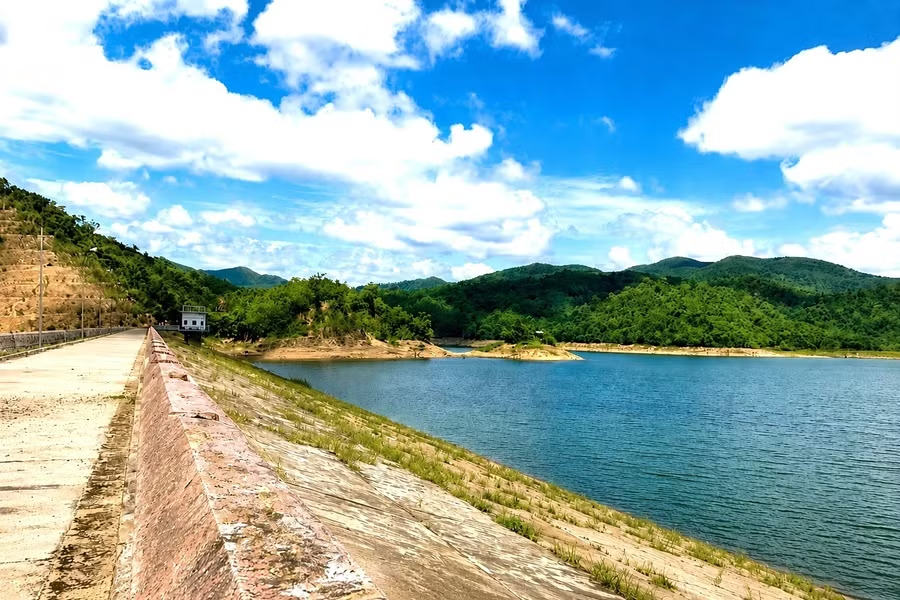
According to the Department of Agriculture and Environment, Gia Lai has more than 737,800 hectares of agricultural land, supported by 284 reservoirs, 486 weirs and 272 pumping stations.
The western region has 353 irrigation projects serving 53,138 hectares, equivalent to about 70% of their designed capacity. Despite that infrastructure, the proportion of agricultural land with proactive irrigation stands at only 8.94%, leaving most production areas dependent on rainfall or groundwater.
Dry-season irrigation demand in areas without irrigation systems totals 3.623 billion cubic metres, while the western region faces an estimated annual deficit of more than 1.234 billion cubic metres. The shortage is concentrated mainly in 22 communes in the former Krông Pa, Chư Prông, Phú Thiện and Đức Cơ areas.
Vũ Ngọc An, Deputy Director of the Department of Agriculture and Environment, said the planned investment was intended to strengthen water-resource management and support agricultural production.
Ageing infrastructure strains water supply
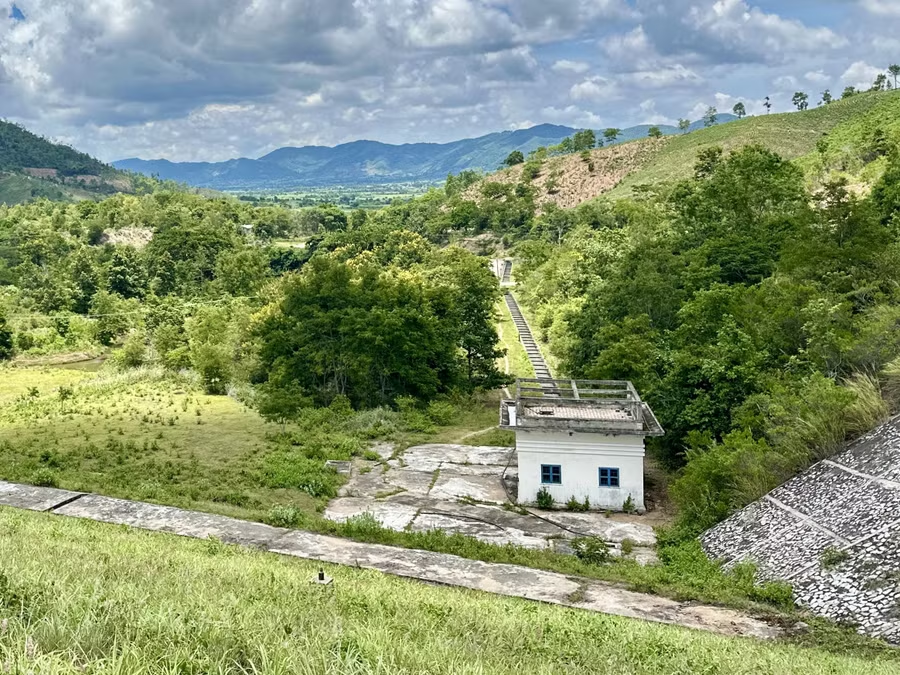
The challenges extend beyond a shortage of irrigation works. Existing infrastructure in several areas has deteriorated, suffered damage or is operating below its intended capacity.
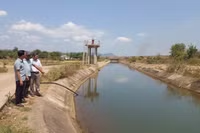
Ia Mlah Reservoir in Phú Túc commune, the main water source for the former Krông Pa district, has a designed capacity of 54 million cubic metres.
By the end of July 2026, the reservoir held 29 million cubic metres of water, 13 million cubic metres more than at the same point in 2025, providing irrigation for about 3,000 hectares of crops.
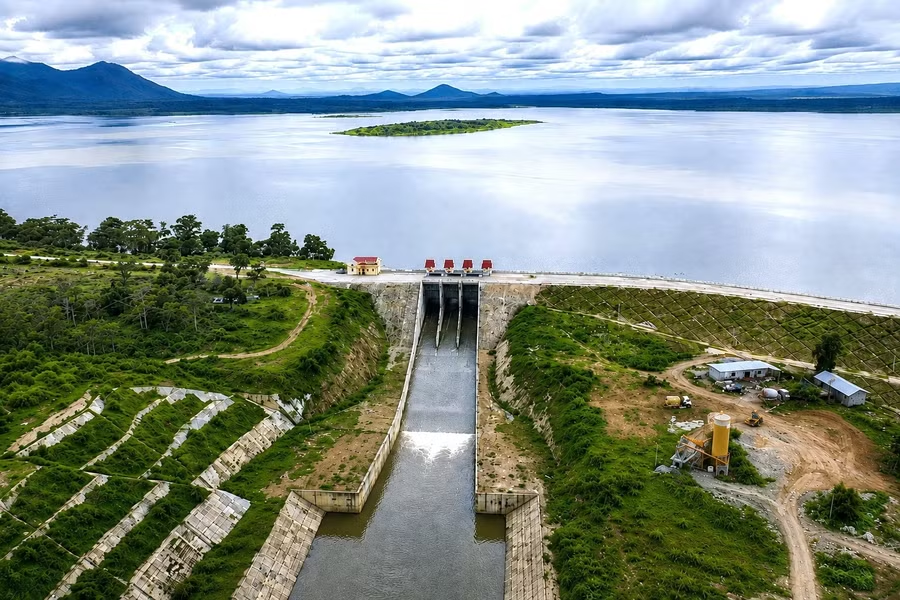
However, consecutive floods in late 2025 caused severe siltation and erosion along sections of its canal network.
The Krông Pa Irrigation Branch, under Gia Lai Irrigation Works Exploitation One Member Limited Liability Company, allocated about VND 6 billion for routine maintenance and more than VND 400 million for urgent repairs. The reinforcement work carried out so far has largely addressed only immediate needs.
Nguyễn Xuân Sang, Director of the Krông Pa Irrigation Branch, said more than a decade of operation had left several components deteriorated. Limited maintenance funding and repeated silt accumulation after storms and floods mean canals require frequent dredging to maintain water supplies.
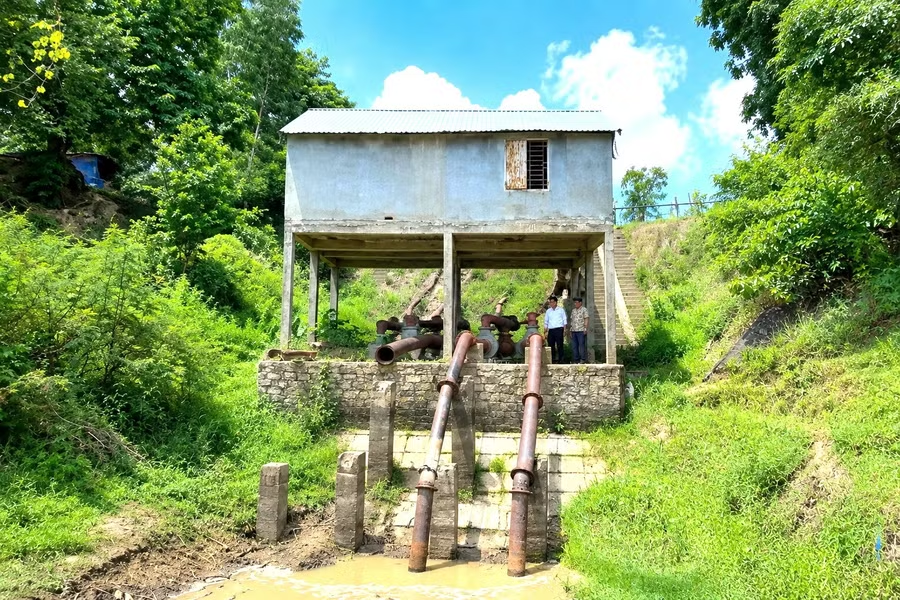
Smaller pumping stations face even greater difficulties.
Ia Rmok head pumping station in Ia Dreh commune was built in 1998 with a designed irrigation capacity of 150 hectares per crop for Gum Gốp and Bhă Nga villages. Its actual capacity has since fallen to less than 70 hectares per crop.
Floods in late 2025 severely damaged its pumps and power grid, while local funding is insufficient for comprehensive repairs needed to secure irrigation during the dry season.
Võ Thúy Vân, Chairwoman of the Ia Dreh Commune People's Committee, said locally funded pump repairs could provide only a temporary solution and would not meet dry-season irrigation demand.
The commune is seeking provincial support to repair the station. It has also proposed investment in the Ji head pumping station, now in Ia Krông village, together with canals and auxiliary infrastructure that would provide water for about 200 hectares of farmland in Ia Krông and Ia Hly villages.
Large projects operating below potential
Some major irrigation works also remain unable to deliver their full designed benefits.
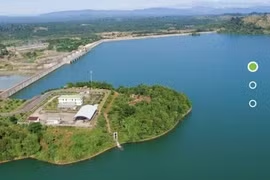
Ia Mơr Reservoir in Ia Mơ commune, the largest irrigation project in the province's western border area, has a designed capacity of nearly 178 million cubic metres. Its water conveyance and distribution network remains incomplete, however, preventing irrigation from reaching the entire planned area.
The limitations increase production costs and reduce the project's ability to attract businesses to invest in irrigated agricultural areas.
The Ayun Hạ major irrigation project faces a different set of problems after more than 20 years of continuous operation. Sections of its main and branch canals have developed damage, leaks, erosion and localised siltation.
With a capacity of 253 million cubic metres, the reservoir provides irrigation for more than 13,500 hectares of rice and other crops, but its network has yet to cover the entire expanded project area.
Six sub-regions targeted for investment
Under the 2026–2030 roadmap, Gia Lai plans different investment priorities for six sub-regions in the west.
In the South–North An Khê area, the province will focus on using water released from Ka Nak Reservoir and investing in the Kbang–An Khê irrigation system and Djang Reservoir. The Upper Ayun region is expected to receive new reservoirs, including Ia Ke, Đăk Trau Dle and Suối Lơ.
In the Ayun Pa region, plans include upgrading the Ayun Hạ irrigation system, adding the Ea Sol Pumping Station and expanding the irrigated area by 12,700 hectares. Inter-regional projects including the Đăk Pi Hao, Đăk Pờ Tó and Ia Thul reservoirs are also planned.
For Krông Pa, priority will be given to constructing large reservoirs on major rivers and streams, including Upper Ea Ur, Ea Drê and Krông Năng, alongside a transition towards drought-resistant crops.
In the East–West Pleiku region, Gia Lai plans to renovate 42 existing irrigation projects and build 46 new ones to strengthen water supplies for coffee-growing areas.
Around Ia Mơr Reservoir, the province plans to construct 10 branch canals with a combined length of more than 30 kilometres and implement the third phase of the Ia Mơr project. The works are intended to provide stable irrigation for 4,728 hectares of farmland.
By 2030, the province aims to bring an additional 41,174 hectares in the Western region under proactive irrigation, lifting the rate from 8.94% to 15.86%.
An said the expansion was expected to significantly strengthen water-resource management and contribute to Gia Lai's target of reaching VND 40.265 trillion in crop production value by 2030.