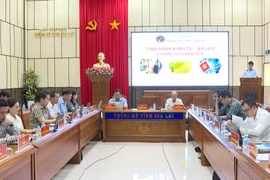
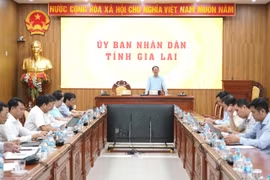
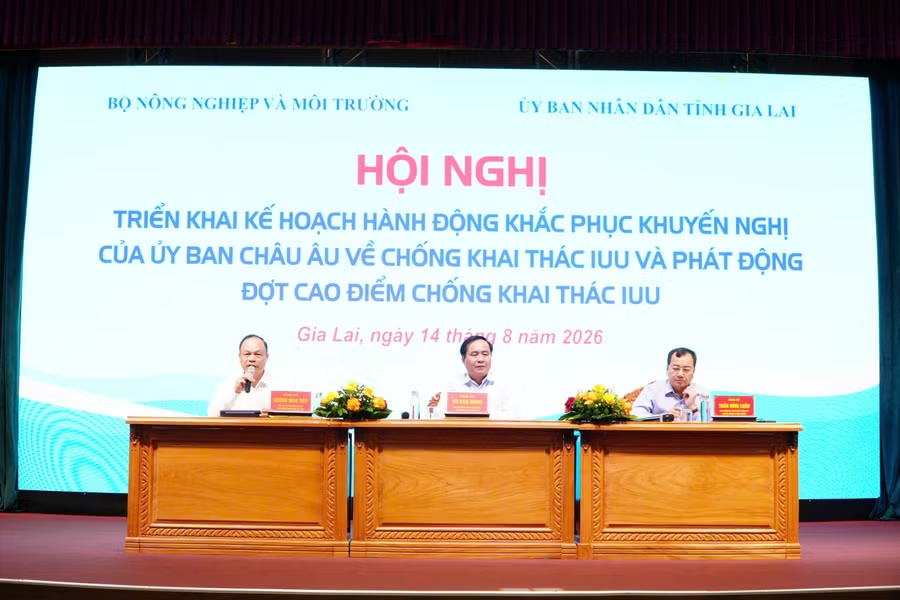
The Ministry of Agriculture and Environment and the Gia Lai Provincial People’s Committee outlined the intensified measures at a national conference held on August 14 at the Gia Lai Provincial Convention Center in Quy Nhon Ward.
The conference focused on implementing Prime Ministerial Decision No. 1516/QĐ-TTg, dated August 10, 2026, which sets out measures to address recommendations made by the European Commission (EC) following its fifth inspection of Vietnam’s efforts to combat IUU fishing.
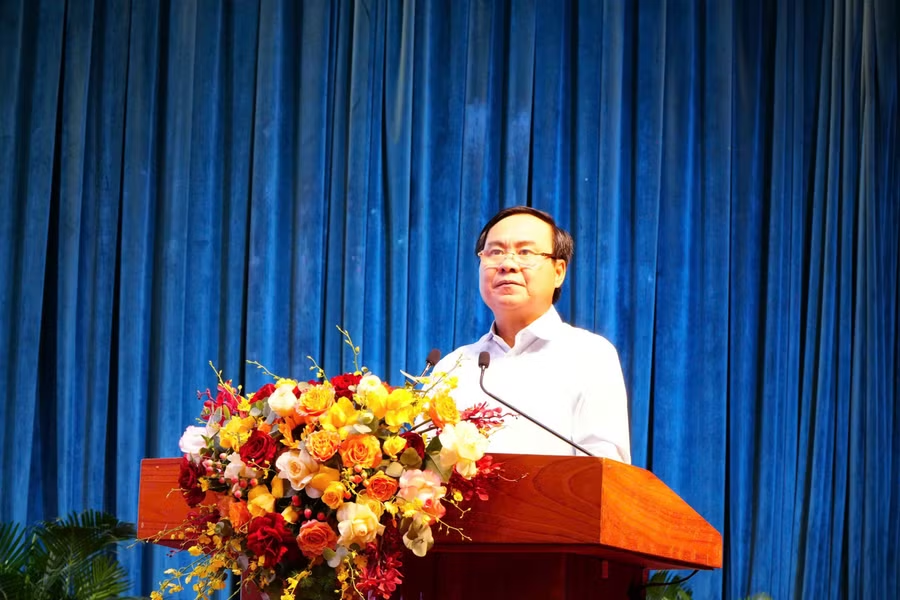
Deputy Minister of Agriculture and Environment Võ Văn Hưng, who is also Deputy Head of the National Steering Committee on IUU, and Gia Lai Provincial People’s Committee Vice Chairman Dương Mah Tiệp co-chaired the conference.
From implementation to measurable results
After years of measures to combat IUU fishing, authorities are now placing greater emphasis on demonstrating tangible and verifiable results rather than simply completing assigned tasks.
According to the Ministry of Agriculture and Environment, this approach is central to the action plan under Decision No. 1516/QĐ-TTg, signed by Deputy Prime Minister Hồ Quốc Dũng.
The plan seeks to resolve outstanding shortcomings, fully address the EC’s recommendations and bring fundamental changes to fisheries management, with the longer-term goal of preventing and ultimately eliminating IUU fishing.
Authorities are also required to prepare comprehensive documentation, data and enforcement records for discussions with the EC. The stated objective is to have the “yellow card” warning lifted in 2026 while developing a transparent, responsible and sustainable fisheries sector.
The ministry said previous anti-IUU measures had produced results but were not yet sufficient to demonstrate that issues identified by the EC had been resolved substantively and sustainably.
The focus must therefore shift from “implementation” to “enforcement with results,” with performance measured through electronic data, actual outcomes and verifiable records.
Month-long enforcement campaign
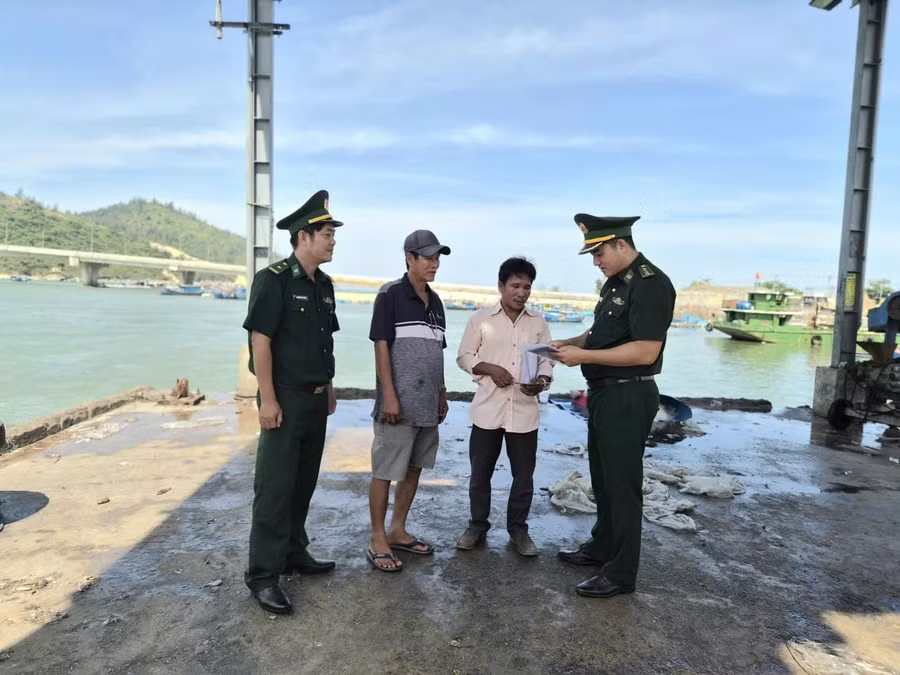
A high-intensity campaign against IUU fishing, running from August 15 to September 15, concentrates on 10 key areas.
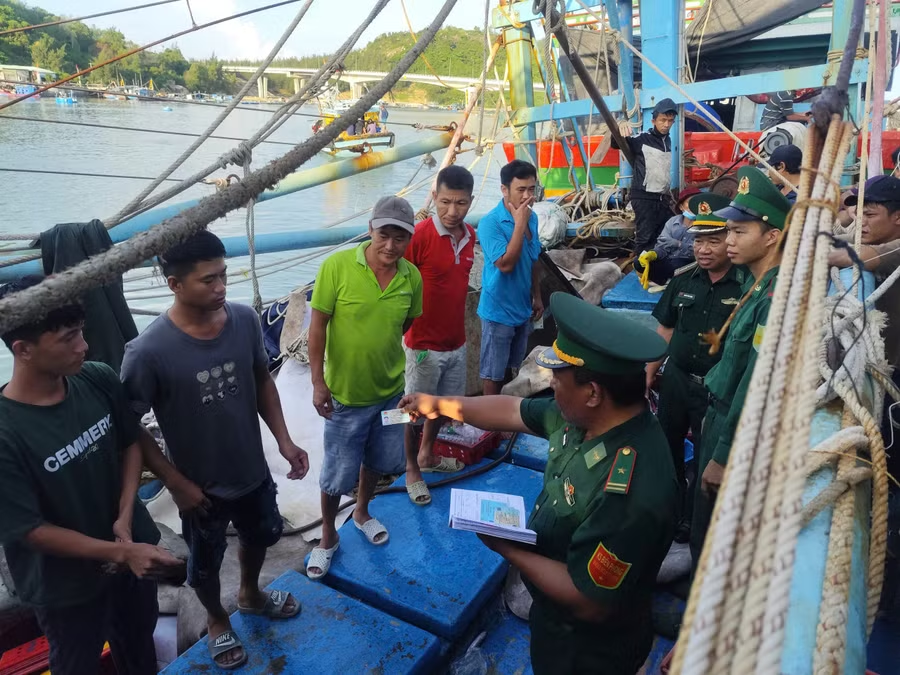
These include controlling fishing vessels that fail to meet operating requirements; monitoring vessel departures and arrivals; updating voyage information on the electronic catch documentation and traceability system, or eCDT; managing traceability at seafood businesses; and monitoring vessel monitoring system (VMS) data.
Authorities will also focus on resolving VMS violations within 60 days, preventing and handling cases involving fishing vessels detained by foreign authorities, submitting weekly reports, strengthening inspections and supervision, and developing specific action plans.
Hưng instructed local authorities to develop their plans according to the “six clears” principle: clear personnel, tasks, timelines, responsibilities, authority and results.
He also called for adequate funding, personnel and equipment, alongside stronger inspections and supervision.
Localities must compile the results of the campaign by September 15 and submit their reports to the Ministry of Agriculture and Environment by September 20.
Digital integration seen as key bottleneck
Coordination and data connectivity among government agencies, particularly in monitoring fishing vessels entering and leaving ports, remain among the major challenges identified by authorities.
The ministry called for software systems to be integrated and synchronized quickly, with the goal of allowing fishermen to use a single eCDT application for all vessel-related procedures.
Clearer regulations are also needed on updating, managing and using fisheries databases, as well as on assigning responsibility for the data, to ensure information is complete, accurate and shared seamlessly among relevant agencies.
Gia Lai tightens fishing vessel controls
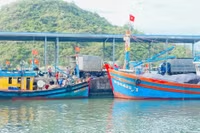
Gia Lai currently has 5,738 fishing vessels measuring at least six metres, including 3,138 offshore vessels.
A total of 3,339 vessels have installed VMS equipment, while 100% of vessels measuring 15 metres or longer are under active monitoring.
The province is subsidizing 50% of VMS installation costs for 206 high-risk vessels measuring less than 15 metres.
Electronic fishing logs have also been introduced on 3,470 of the province’s 3,950 vessels measuring 12 metres or longer.
As part of efforts to reduce fishing intensity, Gia Lai has decommissioned 230 fishing vessels, providing more than VND 46.3 billion (about US$1.8 million) in financial support.
No fishing vessel from the province has been detained by foreign authorities since June 2024.
Trần Quốc Khánh, Deputy Director of the provincial Department of Agriculture and Environment, said Gia Lai wants the central government to continue providing resources to reduce fishing intensity and decommission vessels.
The province has also proposed further support for fishermen seeking to change occupations or undergo vocational training, stronger fisheries data sharing among localities, and expanded VMS installation assistance for high-risk vessels measuring between 12 and 15 metres.
Gia Lai has called for stronger maritime patrols and inspections, the development of a shared fisheries management platform and improvements to the quality and stability of VMS services to make fleet management more transparent and effective.
Fishermen recognized for anti-IUU efforts
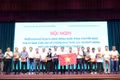
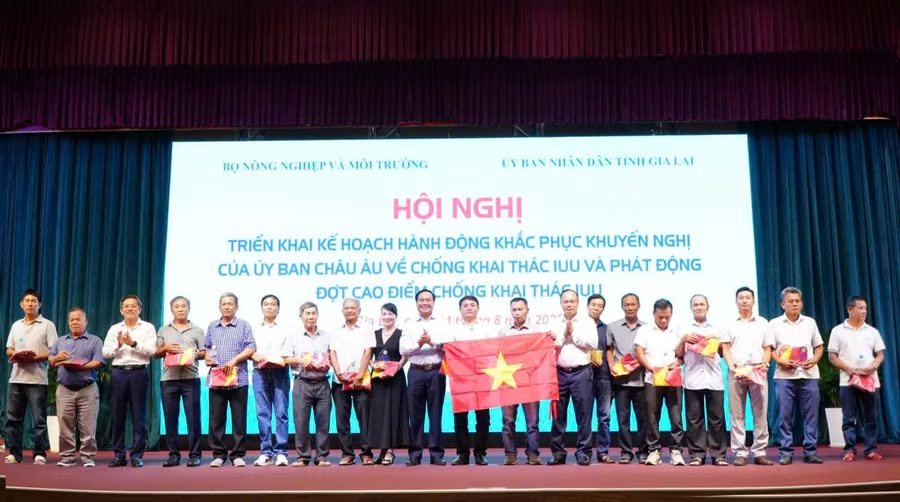
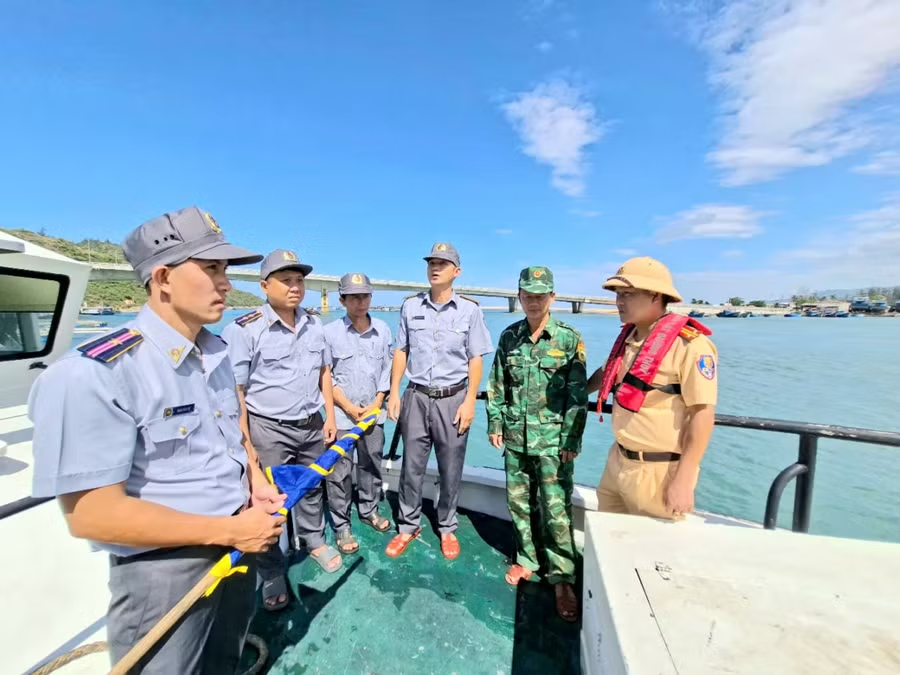
At the conference, the Ministry of Agriculture and Environment presented national flags and gifts to 20 fishermen in Gia Lai recognized for their efforts to combat IUU fishing.
Nguyễn Văn Thượng, a fisherman from Lam Truc 2 Quarter in Hoai Nhon Ward, said he hoped communication about fisheries regulations would become more practical, particularly for rules that fishermen could easily misunderstand.
He also called on authorities to continue helping fishermen overcome operational difficulties and facilitate the sale of seafood products, enabling them to maintain their livelihoods at sea while meeting their responsibilities in combating IUU fishing.
Fisheries sector targets greener growth
Later on August 14, the Directorate of Fisheries and Fisheries Surveillance under the Ministry of Agriculture and Environment reviewed implementation of Vietnam’s Fisheries Development Strategy for 2021-2025 and outlined priorities for 2026-2030.
Phạm Quang Toản, Deputy Director of the directorate, said the fisheries sector had gradually reformed production between 2021 and 2025, improved the efficiency of aquaculture and fishing, expanded processing and markets, and modernized management towards greater responsibility and sustainability.
The central government approved two master plans, four programs and several major projects covering marine aquaculture, occupational transition, seafood processing and efforts to combat IUU fishing during the period.
Resource protection has also been expanded, with seven marine protected areas and 125 aquatic resource protection zones established.
About 50 million juvenile aquatic animals are released into natural waters each year, while co-management and greater community participation in resource protection have been promoted in many localities.
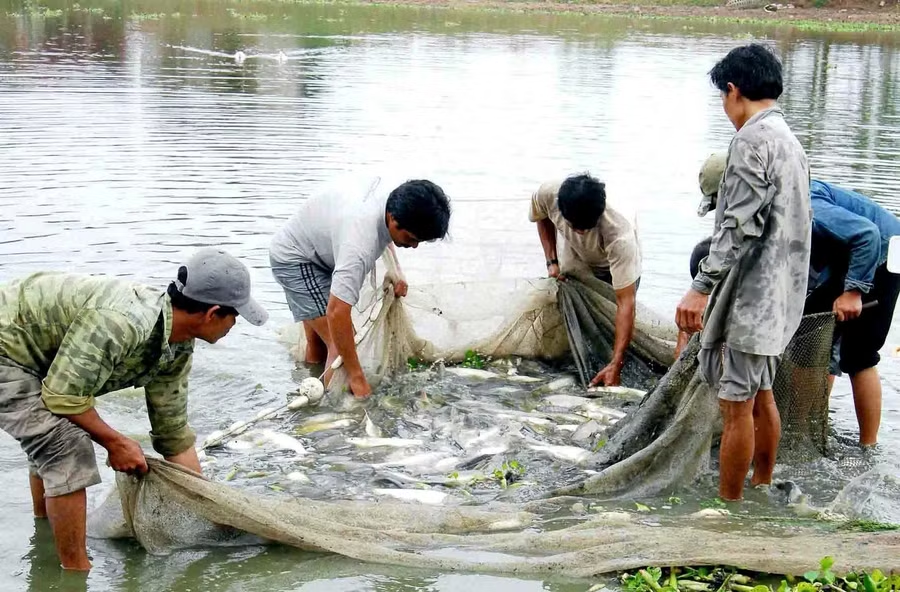
Aquaculture has emerged as a key pillar for increasing production and improving quality while reducing pressure on natural aquatic resources through the use of more advanced farming models.
Output of 9.8 million tonnes targeted by 2030
For 2026-2030, Vietnam’s fisheries sector plans to develop under the motto “Green – Clean – Responsible,” combining industrialization and modernization with resource protection, ecosystem restoration and biodiversity conservation.
Marine aquaculture, high-tech applications and digital transformation will be among the priorities.
The sector is targeting annual production value growth of 3-4%, total fisheries output of 9.8 million tonnes, export revenue of $14-16 billion and employment for more than 3.5 million workers.
Gia Lai’s Sustainable Fisheries Development Project for 2026-2030, with a vision to 2050, aims to reduce the province’s fishing fleet to 3,800 vessels by 2030 while achieving an annual catch of 250,000 tonnes.
The province also plans to expand high-tech applications, reduce post-harvest losses and establish value chains linking harvesting with consumption.
Aquaculture development will focus on high-tech and biosecure production, with a target of 8,400 hectares and output of 46,500 tonnes. Marine aquaculture production is expected to reach 8,000 tonnes a year.
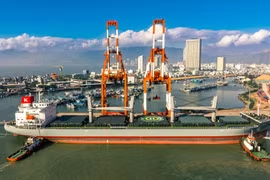
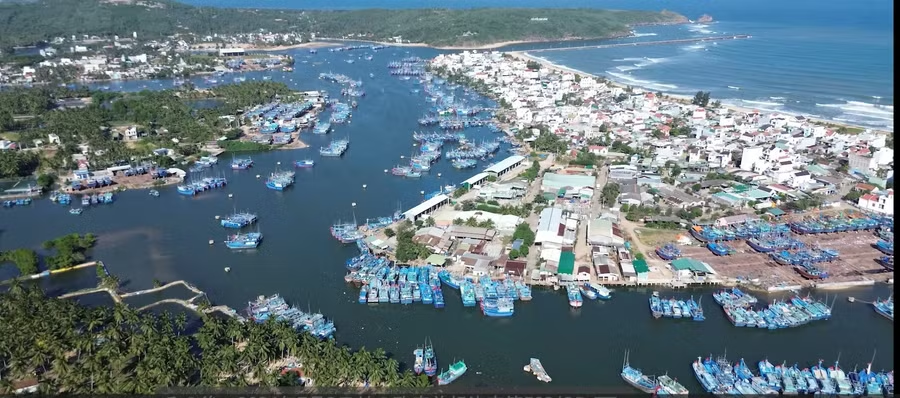
Tam Quan Fishing Port is being developed as a smart port using artificial intelligence and digital technology, with plans for it to become a center for ocean tuna auctions.
The intensified campaign against IUU fishing forms part of a broader restructuring of the fisheries sector, combining tighter fleet management and reduced fishing intensity with high-tech aquaculture, digitalization and resource restoration.
The approach is intended to gradually move fisheries away from extensive exploitation towards higher-value production, stronger resource protection and sustainable development.