The results reflect efforts to strengthen credit management, mobilize resources and improve access to preferential loans following administrative restructuring and the implementation of the two-tier local government model.
Credit resources continue to grow
Implementing Directive No. 39-CT/TW, issued by the Secretariat on October 30, 2024, on improving the effectiveness of social policy credit in the new period, Gia Lai has stepped up efforts to ensure preferential loans reach eligible beneficiaries and support sustainable economic development.
Following the provincial merger and the introduction of the two-tier local government model, the province reorganized its administrative structure while adapting social policy credit operations to meet changing requirements.
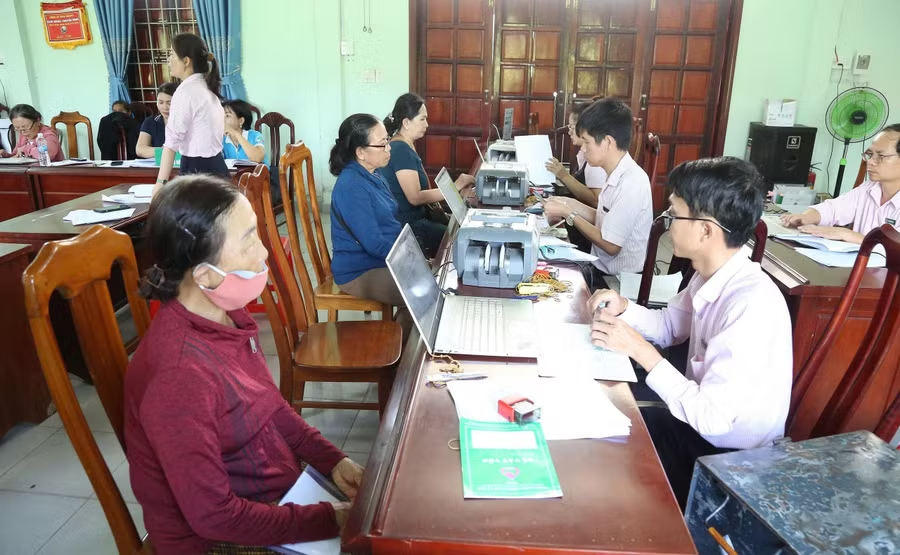
Authorities have focused on stabilizing the organizational system, expanding lending activities and improving the effectiveness and sustainability of credit capital, while strengthening the role of the entire political system in implementing social policies.
The province has consolidated its representative boards of the Vietnam Bank for Social Policies (VBSP) at all levels and strengthened poverty reduction steering committees.
The provincial board currently has 12 members, while commune-level boards have 540 members.
Financial resources have also been reinforced. In early 2026, the Provincial People's Committee allocated VND 380 billion ($14.5 million) from the local budget to VBSP's provincial branch for lending to poor households and other eligible beneficiaries.
By the end of September 2026, total capital managed by the provincial branch had reached VND 18.28 trillion ($698 million), an increase of VND 1.688 trillion ($64.5 million), or 10.2%, from the beginning of the year.

Preferential loans support livelihoods and employment
During the first nine months of 2026, 66,325 borrowers received loans from the provincial branch, with total disbursements reaching VND 4.812 trillion ($183.7 million).
By September 30, outstanding loans stood at VND 18.247 trillion ($696.7 million), covering 252,594 borrowers.
The bank has implemented 19 social policy credit programs, working alongside local authorities, associations and mass organizations to deliver preferential capital to eligible beneficiaries.
A network of 5,662 savings and loan groups has also been consolidated at the grassroots level.
Local governments have arranged convenient transaction locations at commune and ward levels, enabling residents to access credit services closer to home.
They have also supported training, technical transfers and the development of production models to help borrowers improve their business skills and economic efficiency.
The impact of preferential lending is evident in individual households.
In February 2026, Nguyễn Thị Thanh Thảo, from Vạn Thắng neighborhood in Hoài Nhơn Nam ward, borrowed VND 100 million ($3,820) through the job creation program to expand her home-based garment processing business.
After purchasing two additional sewing machines, she increased production capacity and began sharing work with seven other households in the neighborhood.
Thảo said she had been processing garments for a company in Ho Chi Minh City for years, receiving fabric and returning finished products. Her expanded operation now provides additional employment opportunities for local households, while she earns an average of VND 10 million ($382) per month.
Early repayments reflect effective investment
Some borrowers have also repaid their loans ahead of schedule after achieving positive results from their investments.
Võ Văn Ca, from Đinh Trung hamlet in Vĩnh Quang commune, borrowed VND 150 million ($5,730) in two installments beginning in 2024 to invest in planting and maintaining forestry trees.
Although his first VND 50 million loan had not yet reached maturity, Ca said he had already repaid it in full thanks to effective investment.
Such cases demonstrate how preferential credit can help households develop production activities while strengthening their capacity to repay loans.
Stronger oversight improves credit quality
According to Nguyễn Triều Quang, deputy director of VBSP's Gia Lai provincial branch, the bank places emphasis on transparent and accurate beneficiary selection, alongside encouraging savings and timely loan repayments.
The bank also regularly conducts meetings at transaction points, reconciles lending records with actual capital use and promptly addresses emerging problems.
These measures have contributed to improving the quality of social policy credit across the province.
As of September 30, 2026, overdue loans totaled VND 7.07 billion ($270,000), accounting for just 0.04% of outstanding credit. This represented a decrease of VND 1.931 billion ($73,700) from the beginning of the year.
Notably, 48 of Gia Lai's 135 communes and wards, along with 5,419 of its 5,662 savings and loan groups, reported no overdue debt.
The results highlight the role of coordinated efforts among VBSP, local authorities, associations, mass organizations and borrowers in improving credit management and ensuring the sustainable use of social policy lending resources.