The results have emerged alongside a community-based conservation model in which local residents directly participate in managing and restoring marine ecosystems while developing tourism activities linked to the sea.
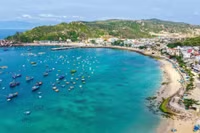
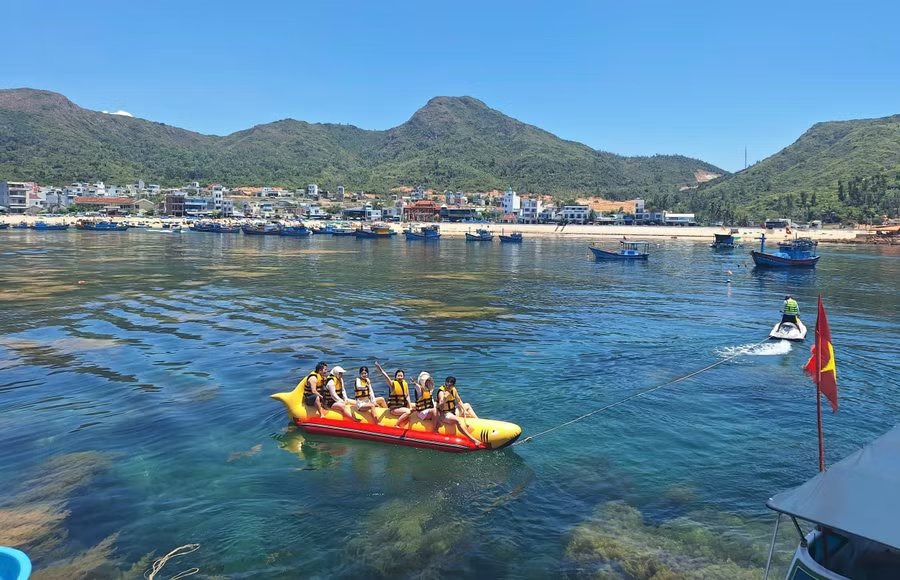
In the waters around Hon Kho, tourists travelling by basket boat can see little of the work taking place beneath the surface. Below the clear blue water, coral reefs shelter schools of small fish, while golden sargassum sways with the tides.
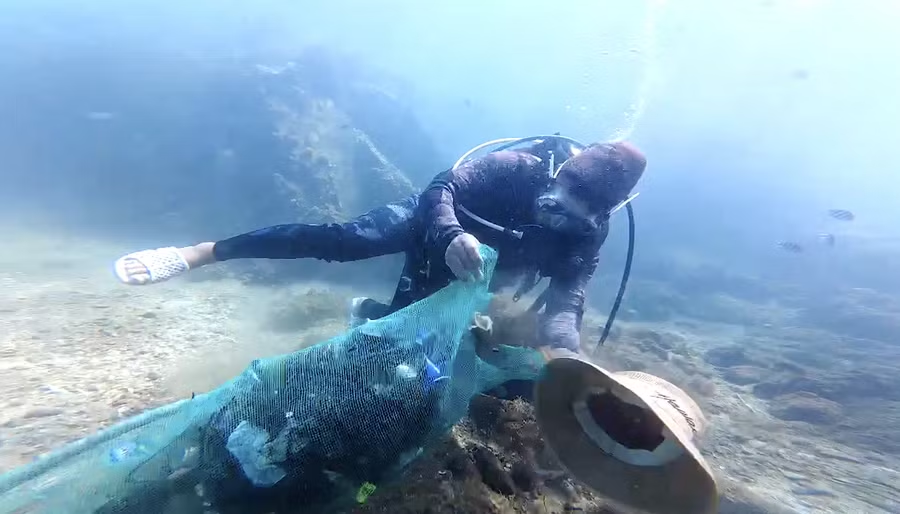
After boats return from tourist trips, Nguyen Ton Xuan Sang and other members of the Nhon Hai Community Group for the Protection of Aquatic Resources prepare air tanks, diving masks and sacks before heading underwater.
Their task is to remove plastic bottles, nylon bags, straws, fishing lines, nets and other debris that have been carried by waves and become trapped in coral reefs.
The work is unpaid and can require hours of diving for only a few sacks of rubbish. Yet for the residents whose lives are closely tied to the sea, keeping the reefs clean has become a regular part of their lives.
“Some types of trash, if left for too long, will damage the coral. That’s why whenever we see debris, we dive down to collect it,” Sang said.
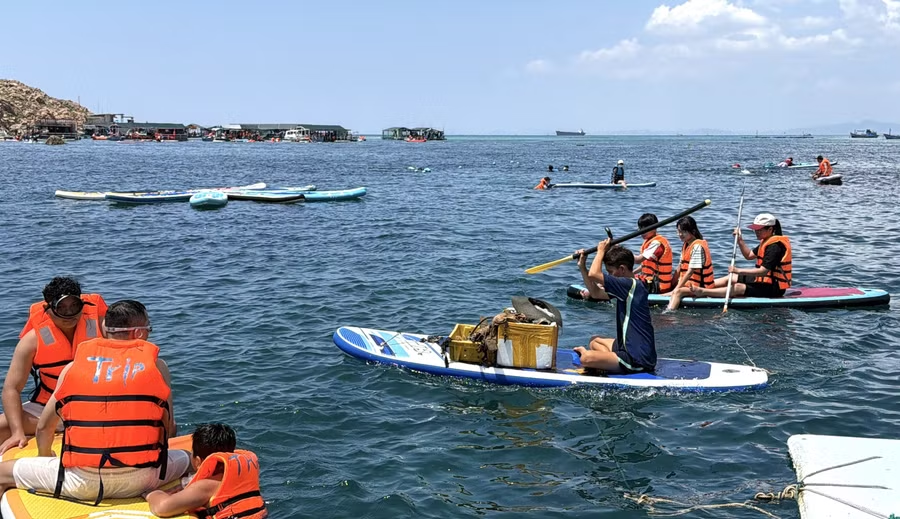
More than a decade ago, parts of the Hon Kho coral reef were affected by fishing and other marine activities. Since local communities were entrusted with managing the area, residents have established protected zones, monitored reef development and encouraged more sustainable harvesting practices.
The approach is based on practical measures: banning fishing in protected areas, preventing littering, identifying threats to the ecosystem and working collectively to address them.
“When the coral is healthy, fish, shrimp, and sea turtles will return. A rich ecosystem attracts tourists. That’s why tourism must go hand in hand with conservation,” Sang said.
Community members are not alone in the effort. Other Nhon Hai residents also voluntarily join marine clean-up activities.
Every week, Pham Minh Bay from Hai Bac neighborhood joins others in collecting waste around the reefs.
“Sometimes it’s plastic bottles, sometimes nylon bags or straws swept into the coral by the waves. Every time we bring a sack of trash ashore, the sea gets a little cleaner,” Bay said.
Years of such efforts have brought visible changes to the Hon Kho marine area. Coral reefs are better protected, sargassum has flourished, more fish have returned and sea turtles have once again been seen in the area.
For Nhon Hai residents, however, marine conservation is also closely connected to their livelihoods.
Cleaner waters and healthier coral reefs help preserve aquatic resources and the coastal landscape while making the area more attractive to tourists. That has created opportunities for community-based tourism services and additional income for local residents.
Sang said part of the revenue generated by community tourism is used to support conservation activities.
Tourism, he said, provides income while helping maintain people's connection with the sea and strengthening their role in protecting its resources.
The model therefore links marine conservation with local livelihoods: residents benefit from the value generated by the sea while taking direct responsibility for protecting it for the future.
According to the Gia Lai Provincial Fisheries Sub-Department, since 2018, with support from international marine conservation organizations, activities including coral reef monitoring, beach clean-ups, crown-of-thorns starfish removal and ecosystem restoration have been maintained in the Nhon Chau, South Quy Nhon and East Quy Nhon marine areas.
Community organizations in East Quy Nhon now directly manage more than 20 hectares of coral reefs.
The increase in coral coverage at Bai Dua and Hon Kho Nho demonstrates the resilience of marine ecosystems under protection and the initial effectiveness of a co-management model in which local communities participate directly in managing, protecting and restoring natural resources.
Nhon Hai residents have gradually moved from exploiting marine resources to helping manage them. Their activities now include removing waste, protecting coral reefs, rescuing sea turtles, monitoring ecosystems and raising awareness among residents and tourists.
But protecting the sea remains challenging. Unregulated tourism, continued littering and environmental risks associated with some coastal developments continue to require stronger management and oversight.
Tran Viet Quang, Chairman of the People's Committee of East Quy Nhon Ward, said the locality was stepping up public awareness campaigns aimed at encouraging residents and tourists to protect the marine environment.
Authorities are also increasing inspections, removing eateries that affect sea turtle nesting areas, clearing construction debris and improving the coastal landscape, Quang said.
Underwater, meanwhile, community members continue their regular work. They dive to the reefs, remove fishing nets, lines and plastic bags, monitor coral growth and identify potential threats to the ecosystem.
Their efforts are largely unpaid, but they are helping maintain the marine environment and sustain the resources on which local livelihoods depend.
In Nhon Hai, restored coral reefs and healthier aquatic resources are gradually creating a foundation for nature-based tourism that combines conservation with community livelihoods, turning local residents into direct stewards of the sea.