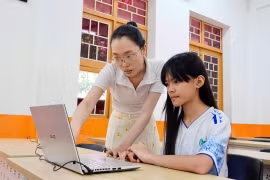
Launched in October 2026, the “AI Literacy for All” program has attracted considerable interest from local residents, helping make digital technology more accessible and familiar to the community.
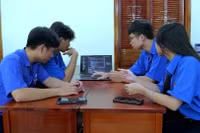
The initiative is being piloted in Quy Nhon Ward, where experts from the Department of Science, Technology and Information under the Ministry of Education and Training have conducted surveys to assess residents’ ability to access and use AI.
Based on the findings, participants have received learning materials, instructional videos and practical exercises tailored to real-life situations.

Making AI accessible to all generations
Unlike training programs aimed primarily at officials or teachers, the initiative targets a broader audience, including parents, youth union members and elderly residents.
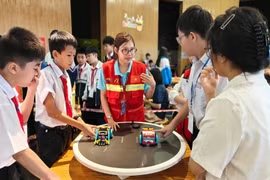
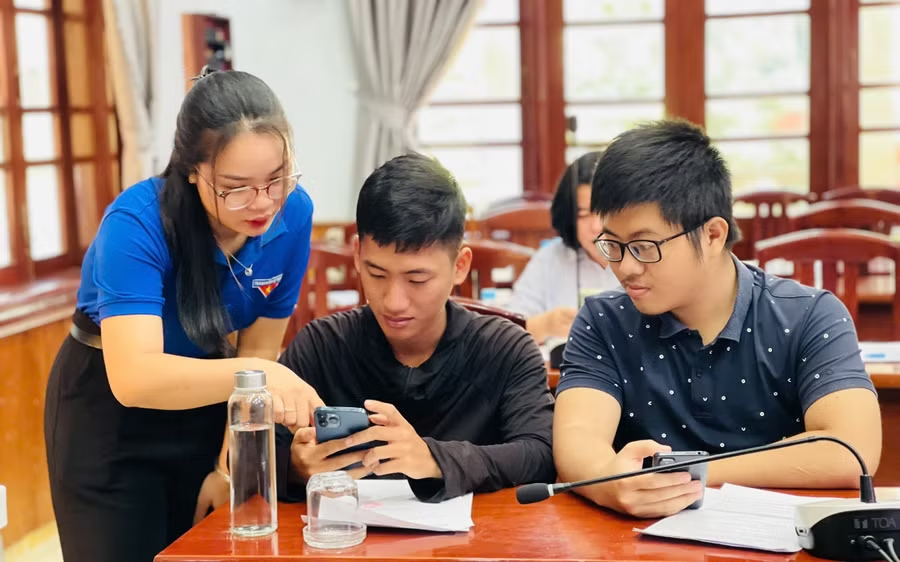
Participants are introduced to practical ways of interacting with AI, including how to formulate questions, use the technology in everyday situations and recognize potential problems in AI-generated responses.
Huỳnh Thanh Ngân, Secretary of the Youth Union of Residential Group 1 in Quy Nhon Ward, said the training had helped her better understand AI's capabilities and limitations, as well as how to use it more effectively and reliably.
With a clearer understanding of the technology, she said she felt more confident applying AI in both her professional activities and daily life.
For parents, AI literacy also offers new ways to support children's education while addressing concerns about excessive dependence on technology.
Quỳnh Trần Nhã Vy, a resident of Quy Nhon Ward, said she had previously worried that her child might become overly reliant on AI for schoolwork and lose the ability to think independently.
After participating in the program, she learned how to use AI to encourage her child to ask questions and think critically, giving her new approaches to supporting learning rather than simply worrying about the technology.
The initiative has also helped elderly residents overcome misconceptions about AI.
Phan Thanh Lâm, an elderly resident of Quy Nhon Ward, said he had once believed AI was exclusively for technology professionals and younger generations.
Through hands-on instruction, he discovered that the technology was more accessible than he had expected. He said AI could serve as a useful assistant for older people, helping them engage more actively with digital technology and reduce their vulnerability to misinformation.
Building digital skills and responsible AI use
The pilot program is expected to provide a foundation for the Ministry of Education and Training and relevant agencies to evaluate its effectiveness, refine its content and consider expanding the initiative.
Ngô Đăng Tiến, Head of the Department of Technology and Digital Human Resource Development under the Department of Science, Technology and Information, said AI was transforming the way people learn, work and create.
The technology, he noted, was no longer merely a future trend but had already become part of schools, offices, businesses and everyday life.
Against this backdrop, he described the “AI Literacy for All” initiative as a practical effort to narrow the digital divide and improve people's ability to adapt to the changing demands of modern society.
For the education sector, AI presents opportunities to improve teaching methods and assessment. However, its effectiveness depends largely on users' awareness, skills and sense of responsibility.
The program therefore seeks to equip participants with new knowledge and hands-on experience with AI tools, enabling them to apply the technology appropriately in their professional activities.
Tiến stressed that people could not remain outside the broader trend of technological development. Instead, they needed to approach AI proactively, creatively and responsibly.
He also encouraged program participants to share their experiences and support others in using AI effectively and appropriately for learning, research and everyday activities.
The pilot initiative marks an initial step toward developing digital thinking, digital skills and digital culture within the community, with expectations that its benefits will spread more widely in the coming years.