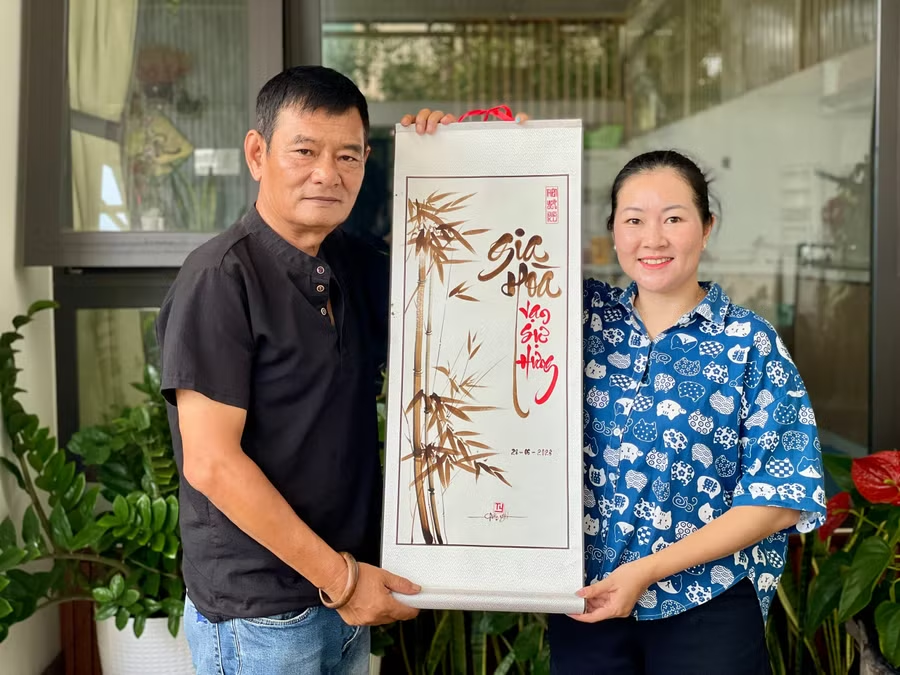
Leading the initiative is Trần Ngọc Dũng, head of the Pleiku Calligraphy Club, who replaces conventional Chinese ink with a concentrated coffee solution.
Using the coffee-based ink, he creates paintings featuring traditional motifs including apricot blossoms, orchids, bamboo, chrysanthemums, lotus flowers, night-blooming cereus and tranquil lakeside landscapes.
The artworks are then completed by Phan Thị Kim Thanh, deputy head of the club, who writes calligraphic characters with the same coffee ink while highlighting selected strokes with cinnabar ink.
The finished pieces combine visual appeal with the subtle aroma of coffee, reflecting both traditional calligraphy and the identity of Gia Lai's basalt highlands.
The idea has attracted interest from local residents in one of Vietnam's major coffee-growing regions.
Vũ Hồng Phương, a resident of Thống Nhất Ward and a calligraphy student, said he was impressed after seeing coffee used as ink for the first time.
"The warm, subdued tones of coffee perfectly complement the classical style of calligraphy, giving the artwork depth and making it truly impressive," he said, adding that he hopes to experiment with the technique himself.
According to Kim Thanh, the ink is produced by collecting used coffee grounds from local cafés before repeatedly boiling and filtering them until the liquid reaches the consistency of ink.
Although the process is more time-consuming than using conventional ink of a similar colour, she said the results have exceeded expectations. The concentrated solution can later be diluted with water to achieve different shades while painting or writing.
To address concerns over durability, Thanh presented calligraphy works created with coffee ink a year earlier, showing that the colour had remained well preserved.
Following the project's success, Dũng said members of the Pleiku Calligraphy Club have been invited to demonstrate and promote coffee-ink calligraphy during a Japanese Calligraphy Exchange programme scheduled to take place in Ho Chi Minh City in September 2026.

He believes the technique could become a distinctive feature of Gia Lai's calligraphy tradition if showcased at major cultural and tourism events both inside and outside the province.
Local resident Lê Thị Dung welcomed the idea, saying she was surprised that used coffee grounds could be recycled into ink and transformed into artistic works.
She said the paintings would make meaningful souvenirs for visitors to Gia Lai and should be introduced more widely at souvenir shops in Pleiku.
Inspired by the combination of calligraphy and Central Highlands coffee, Dũng is also exploring the possibility of using coffee beans roasted at different temperatures to produce varying tones for future artworks.
"If people can make paintings from rice, then coffee is also a great material," he said.
The initiative demonstrates how recycled coffee materials can be incorporated into traditional art while highlighting the cultural identity and coffee heritage of Gia Lai.