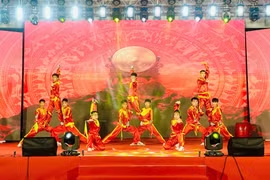
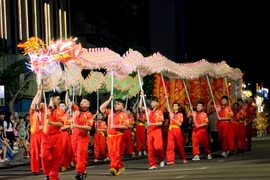
The festival featured a range of disciplines, from traditional dragon dancing and Địa bửu (Earthly Blessings) performances to the technically demanding Mai hoa thung (Plum Blossom Poles) competition.
The sound of pounding drums accompanied dragon teams as they swept across the performance area. Guided by the dragon's head, performers moved in unison to create a succession of waves, rises and coils, combining rhythmic coordination with vivid costumes and agile movements.
In the Địa bửu category, teams used storytelling to give their performances distinctive identities.
The Xóm Lưới team from Quảng Ngãi portrayed a playful and agile lion discovering a baby bird that had fallen from its nest near a snake's den. The lion confronts the danger before returning the bird to safety.
Hoàng Sơn team from Lâm Đồng took a different approach, portraying its lion as a courageous soldier. In the team's storyline, the soldier recovers from his injuries, climbs a mountain to collect ammunition to protect local people and then returns to battle.
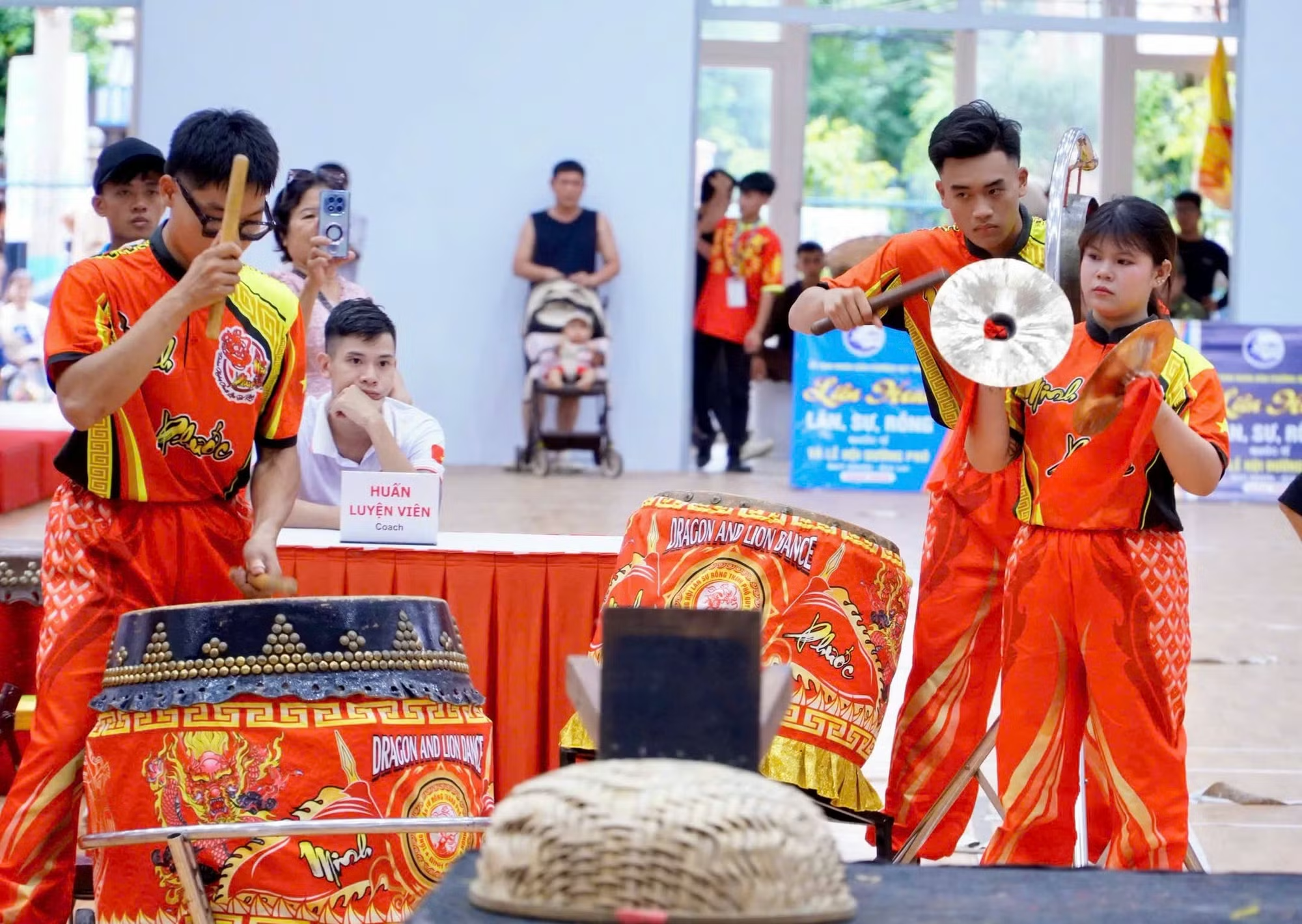
The festival also highlighted women's participation in an art form that demands strength, stamina and coordination.
Phùng Ánh Nhi, the only female member of Gia Lai's Minh Phước team, said she had practised lion dancing for seven years but was competing at the festival for the first time.
She said the event offered an opportunity to meet other performers, build connections and compete on a major stage.
Acknowledging the physical demands of the discipline, Nhi said she trained harder to compensate for having less arm strength than male performers and to ensure she could perform her role effectively.
Among the most dramatic contests was Mai hoa thung, in which performers propelled their lions between elevated poles, carrying out aerial moves before finding their balance for the next sequence. The rapid jumps, transitions and landings drew close attention from spectators.
Nguyễn Thị Thanh Loan, from Quy Nhơn Nam Ward, rushed to the new venue after learning on the afternoon of August 9 that the final round had been relocated to the Quy Nhơn University Sports Hall.
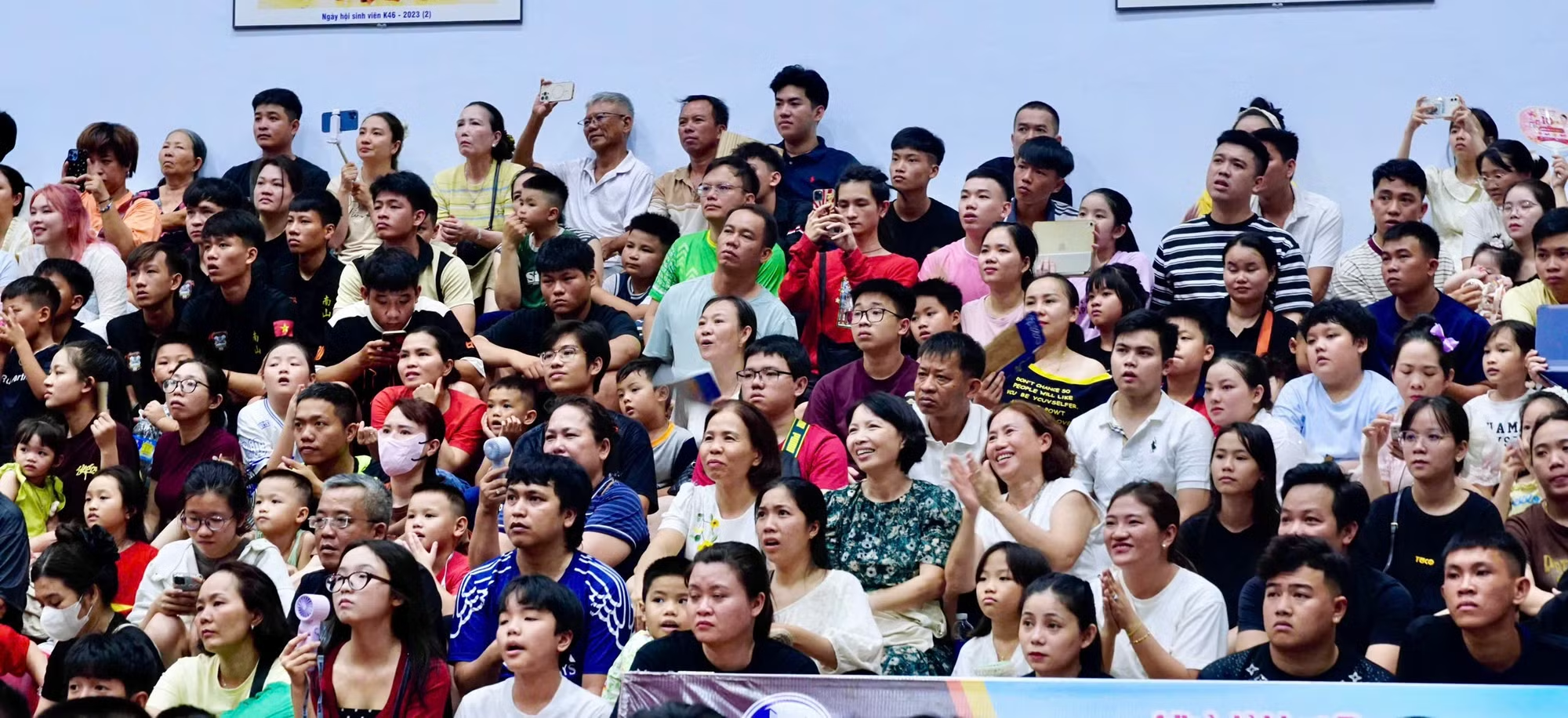
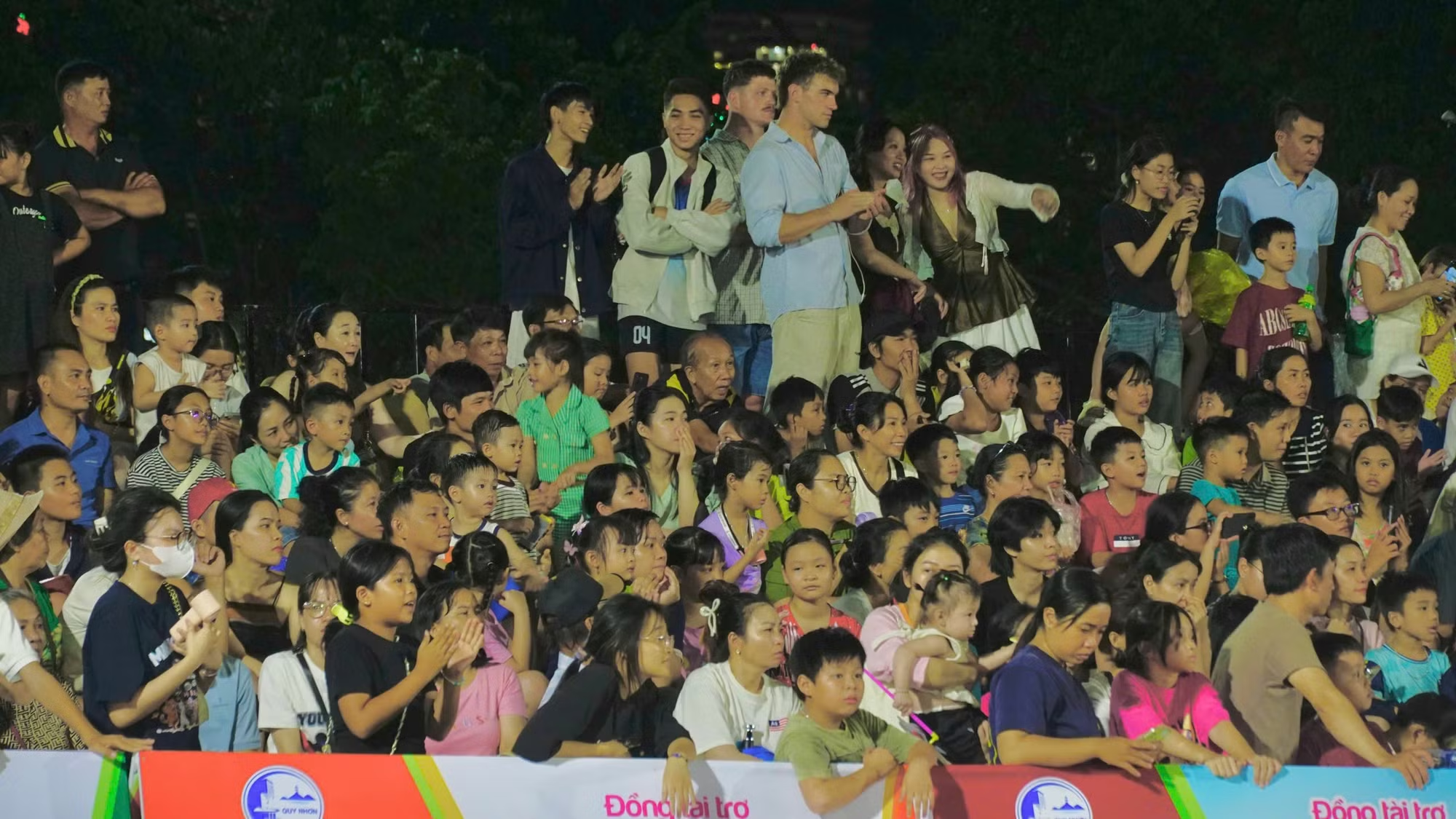
Loan said she immediately invited friends to join her after hearing about the change. Of the events she watched, she found the Mai hoa thung performances the most compelling, saying the energetic routines held her attention throughout.
International participation added another dimension to the competition, giving performers from Vietnam and overseas an opportunity to encounter different approaches to the traditional art.
Yess Cheong, a member of China's Bilintang team who was competing in Vietnam for the first time, said he was impressed by the level of preparation and investment demonstrated by the participating teams.