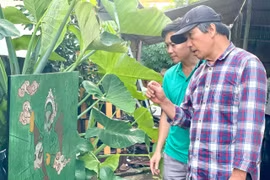
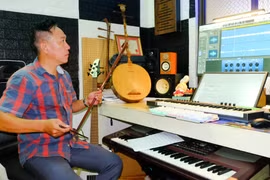
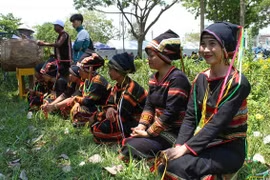
The project is among eight entries that passed the preliminary round of the Gia Lai Youth HackAIthon 2026, organised by the provincial Youth Union, securing the school’s team a place in the finals.
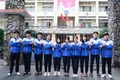
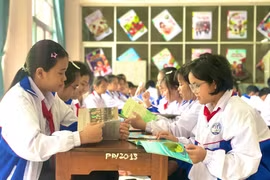
Eighteen students worked for more than a month in three teams responsible for content, fieldwork and post-production.
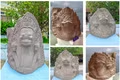
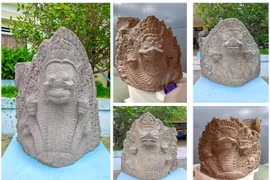
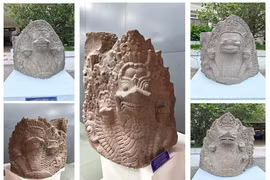
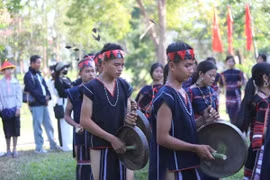
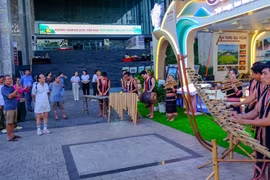
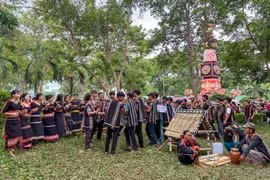
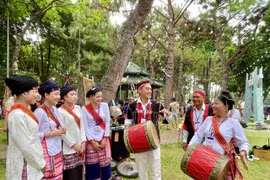
Visitors will soon be able to scan a QR code to explore the Plei Ơp Cultural and Tourism Village, including its wooden statue exhibition area, communal house, known as a nhà rông, and stilt houses.
Launched by the school’s Youth Union in 2025, the project was expanded in 2026. Students replaced almost all the images and added narration and illustrative video clips.
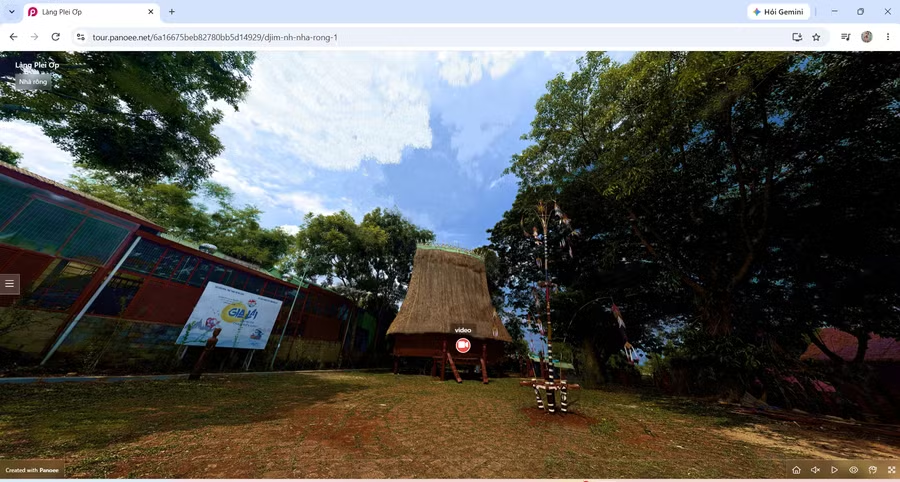
Creating a single 360-degree image sometimes required nearly 100 separate photographs.
Lương Thúy Nhi, a student in class 12B2 who handled image processing, said the photographs had to be taken in the correct sequence so they could be joined seamlessly.
The team then stitched the photographs together using VR 360 software, matched their colours, finalised the accompanying content and uploaded the material to a digital platform.
The project began with a question: How could students use technology familiar to their generation to introduce the village’s cultural values to a wider audience?
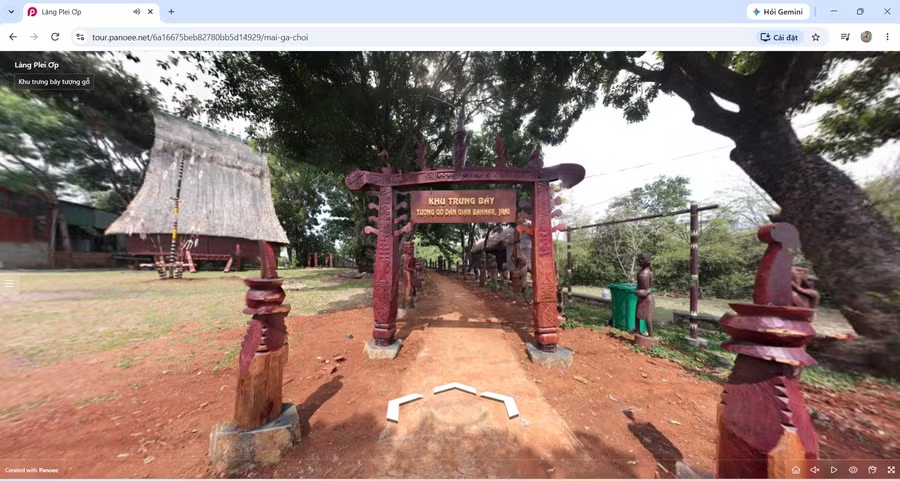
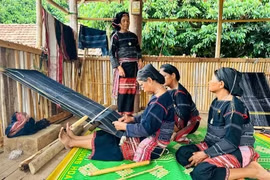
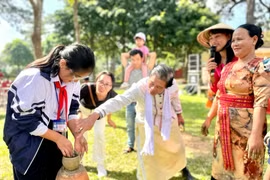
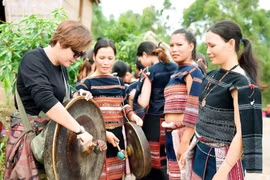
Before developing the digital tour, they studied the village’s culture, architecture and community life.
Teachers and Youth Union advisers guided the content, checked its accuracy and addressed copyright, responsible AI use and respect for the people and culture represented.
Lê Thị Anh Đào, secretary of the school’s Youth Union, said the priority was to help students use technology to address practical needs and create value for the community.
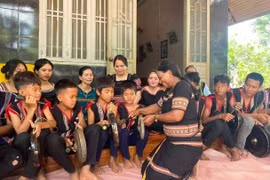
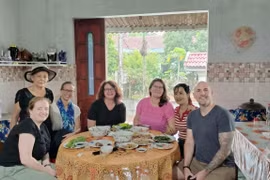
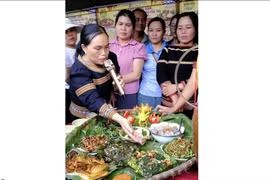
Fieldwork also gave participants a closer understanding of local traditions. Trần Gia Huy, from class 12B8, said he had learned about Jrai festivals, traditional dishes and other aspects of village life.
La Thị Bảo Ngọc, from class 12B5, said traditional rituals were not held continuously and visitors could not always arrange to attend.
The team hoped the digital project would allow people living far away to explore Plei Ơp on their phones at any time.
Limited funding and equipment complicated the work. The students lacked money for AI subscriptions and suitable editing tools, while some professional software demanded more computing power than their available computers could provide.
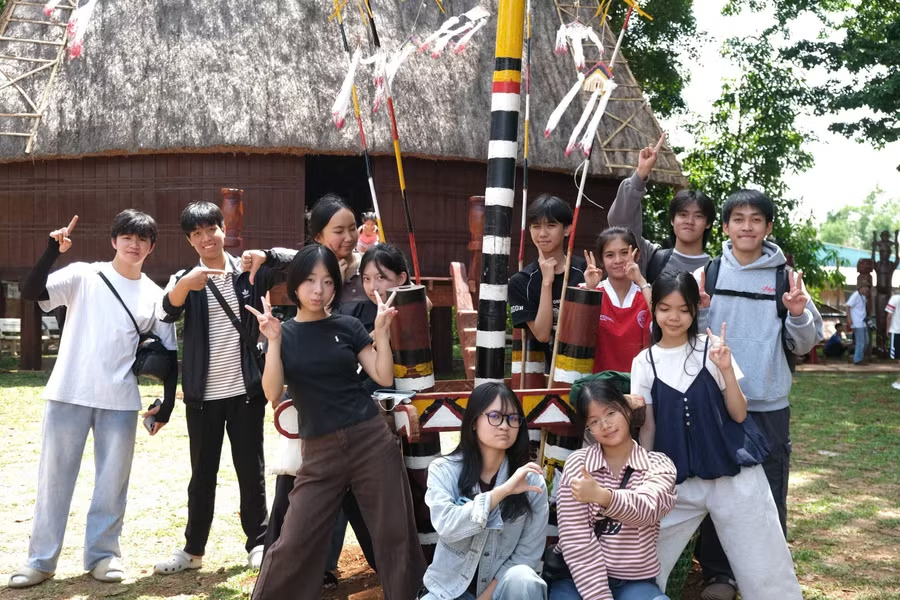
They drew on applications taught in their Grade 11 informatics lessons to work through those difficulties and turn classroom knowledge into a functioning product.
Working across different classes also required students to coordinate tasks, support one another and manage progress across the three teams.
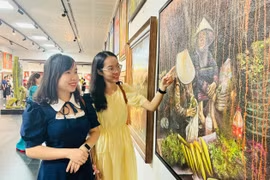
Đào cited the school’s digital exhibition “Anh hùng Núp – Huyền thoại làng Stơr”, its AI and VR 360 applications, youth informatics achievements and digital media development as examples of students’ ability to produce useful technology when given opportunities.
The school’s Youth Union plans to expand practical activities that encourage students to develop ideas, with teachers providing guidance and community needs helping shape the results.