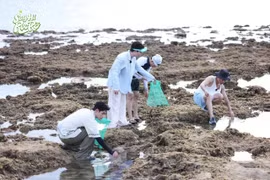
It is also the time when distilleries in Bàu Đá village begin firing their kilns for what local producers regard as the most important batches of the year.
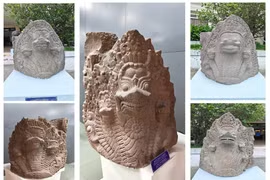
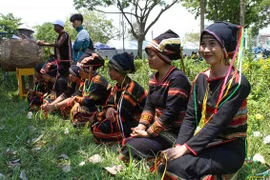
An Nhơn was once the capital of the Champa Kingdom and later the Tây Sơn dynasty under Emperor Thái Đức Nguyễn Nhạc.
Along the Côn River, numerous craft villages developed to supply food, goods and other products to the royal capital. Rice liquor was among them.
Centuries later, the area still bears traces of its past, while its traditional craft villages continue to shape the identity of what is often described as a “land of a hundred trades”.
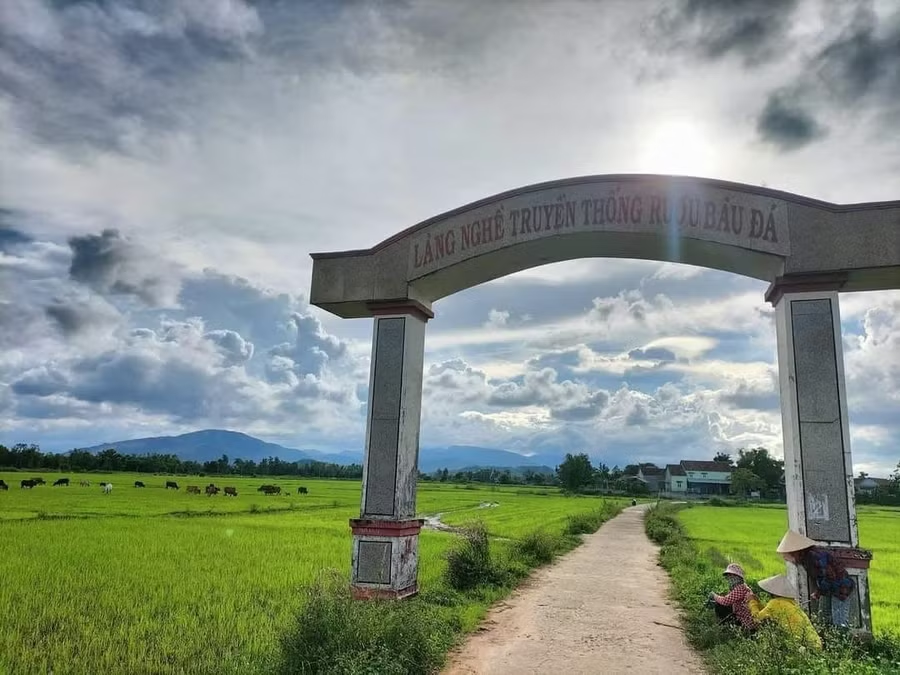
Bàu Đá liquor is one of the products that connects that history with contemporary life.
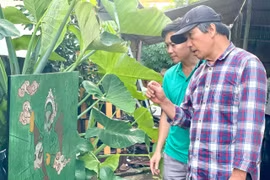
One such connection emerged when Dr. Pornsawan Nonthapha, a Thai sculptor and son-in-law of An Nhơn, visited a home in Gò Sành, in what is now South An Nhơn ward.
After hearing two lines by poet Yến Lan, “Shake the earthen jar, a drop of liquor remains / Raise a toast atop the mountain peak”, translated into Thai by his wife, Nonthapha was delighted.
The liquor was served in a small ceramic cup he had made himself, using a glaze formula similar to that of ancient Gò Sành ceramics.
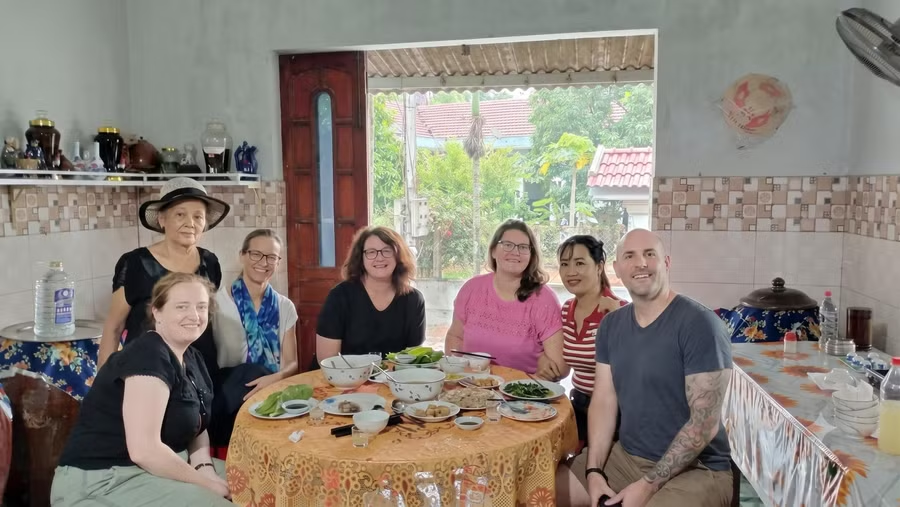
Nonthapha described Gò Sành ceramics and Bàu Đá liquor as treasures embodying the soul of the land. He suggested that combining the ceramics, liquor and atmosphere of the old village could create something particularly distinctive.
Bàu Đá liquor has also attracted admirers beyond the region.
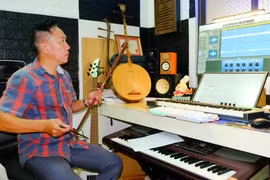
During a writing retreat with Military Arts Magazine in Bà Rịa–Vũng Tàu, writers Thái Chí Thanh, chairman of the Children’s Literature Council of the Vietnam Writers’ Association, and Trung Sỹ, known for Chuyện lính Tây Nam, reportedly declined foreign and infused liquors in favour of Bàu Đá.
“We love this liquor. It’s mellow. The aftertaste is superb. Full of character!” Trung Sỹ said.
The seasonal transition is considered by local distillers to be an especially good time for producing distinctive batches. The liquor is clear, with a fleeting aroma that lingers, a subtle sweetness on the tongue and a rich flavour without a harsh finish.
Villagers say the transitional season is their favourite period for distilling. By then, the land has passed through the summer heat, the rice harvest is over and the Côn River has flowed through the surrounding fields.
Some producers set aside liquor distilled during this period for the Lunar New Year, calling it the “Tết batch”.
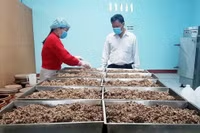
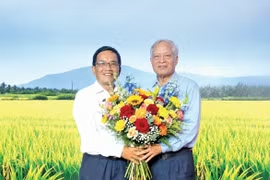
At the BIDIR Hoàng Long distillery in Phụ Ngọc neighborhood, Dương Văn Hành has combined traditional methods with modern equipment. Hành is also vice chairman of the Bàu Đá Liquor Association of Gia Lai.
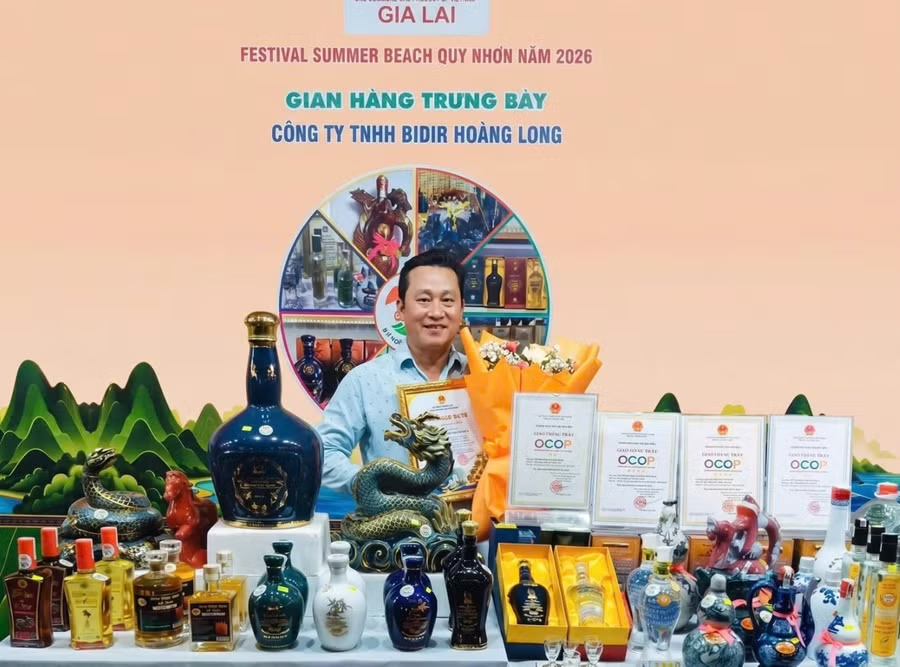
The distillery retains the familiar pots, fires and yeasty aroma of the traditional craft, while modern equipment has been introduced alongside them.
Hành said he has researched production methods extensively and travelled to Hanoi to purchase machinery and equipment. Some components have been modified to accommodate traditional manual distillation techniques.
He has also invested in a system to separate aldehydes and remove certain impurities, while gradually introducing modern production standards into a craft traditionally passed down through generations.
His liquor also travels with him when he attends festivals, celebrations and hometown gatherings, where bottles from his distillery are shared with friends and Vietnamese living far from home.
“We’ve just invested in a new bottling and filling machine. We’re also developing a new product, ginseng-infused Bàu Đá liquor”, Hành said.
Across the village, distillers continue to preserve the core manual techniques while adopting technology where they see a need for it.
Changes include controlling and removing certain toxins, improving fermentation, storage and bottling, as well as expanding marketing, customer engagement and online sales.
Smartphones have effectively become a new sales counter for the distillers. The fire continues to burn in the traditional kitchens, but the way the liquor reaches customers has changed.
At the Ba Trương Bàu Đá distillery, run by Huỳnh Thị Mỹ Dung and her husband in Cù Lâm hamlet, the traditional kilns remain in use. Each day, their four kilns produce about 40 litres of liquor.
Lê Thị Trinh, Dung’s daughter, said online sales had helped more customers discover Bàu Đá liquor.
“Many times, groups from France, the US, Japan, New Zealand and other countries visit our distillery to learn about the craft, stay for a meal and enjoy our local liquor,” she said. “Everyone is impressed”.
She said the growing interest also reinforced the family’s determination to maintain quality and protect the traditional brand.
Along the Côn River, among the bamboo groves of the former royal land, the aroma of freshly distilled liquor remains part of the village landscape.
For local producers, the continuing craft is not only about making a traditional drink, but also about carrying the character and memories of An Nhơn into the present.