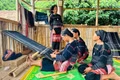
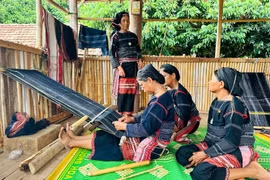
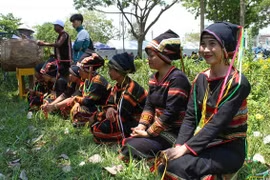
In Bok Ayơl village, Hra commune, Y Tan crafts instruments using skills passed down by her father.
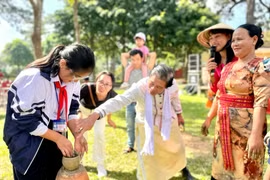
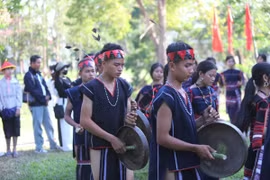
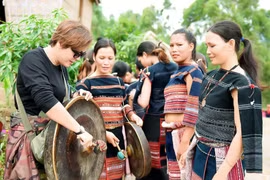
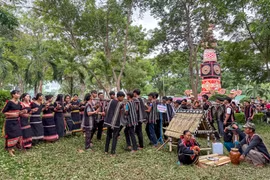
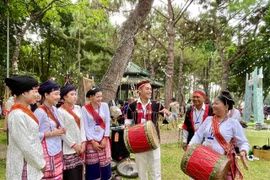
In Kmông hamlet, Ia Krái commune, Puih H’Nir has offered free gong-playing and folk-singing classes since 2023, hoping to pass on knowledge held by an ageing generation.
Their work ranges from the careful tuning of individual bamboo tubes to lessons on the cultural meaning of gong music.
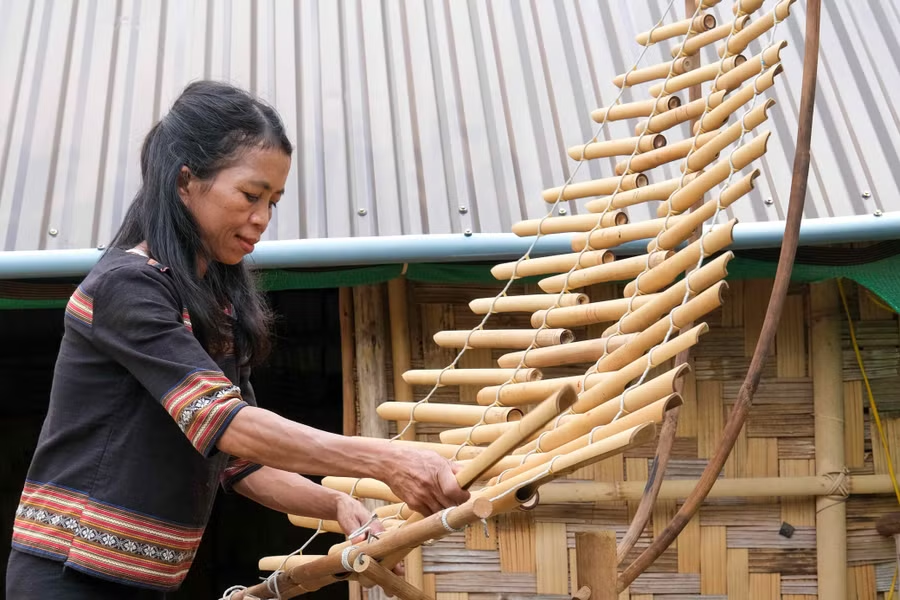
Y Tan, born in 1979, began making instruments at 18. Her father, the renowned instrument maker Byơh, taught her from childhood to play the t’rưng bamboo xylophone, klông pút and klek klok. The t’rưng remains her favourite.
Her stilt house doubles as a workshop, with instruments of different sizes arranged across the floor and partly carved bamboo tubes, rattan strips and tools on the porch.
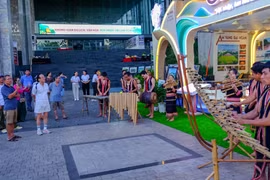
To make a t’rưng, she trims each bamboo tube, taps it with the handle of her knife and listens before adjusting it further.
Once the tubes reach the right pitch, she binds them with rattan and mounts them on a bamboo frame.
Y Tan said shaping the tubes to produce the correct sound was the most demanding part of the process, requiring both precision and physical strength.
She is among the few Bahnar women in the Central Highlands skilled in making traditional musical instruments. Her creations have appeared at local and provincial cultural events.
She also makes bamboo and rattan devices used to frighten birds and animals away from crops, drawing on her knowledge of weaving and instrument construction.
Trần Thị Thu Hương, head of Hra commune’s Department of Culture and Information, said Y Tan’s family had maintained its musical skills across three generations. Family members regularly represent the locality at festivals and cultural events.
Women instrument makers remain particularly rare in the Bahnar community, Hương said, describing Y Tan’s work as a contribution to preserving the village’s musical heritage.
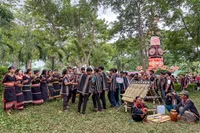
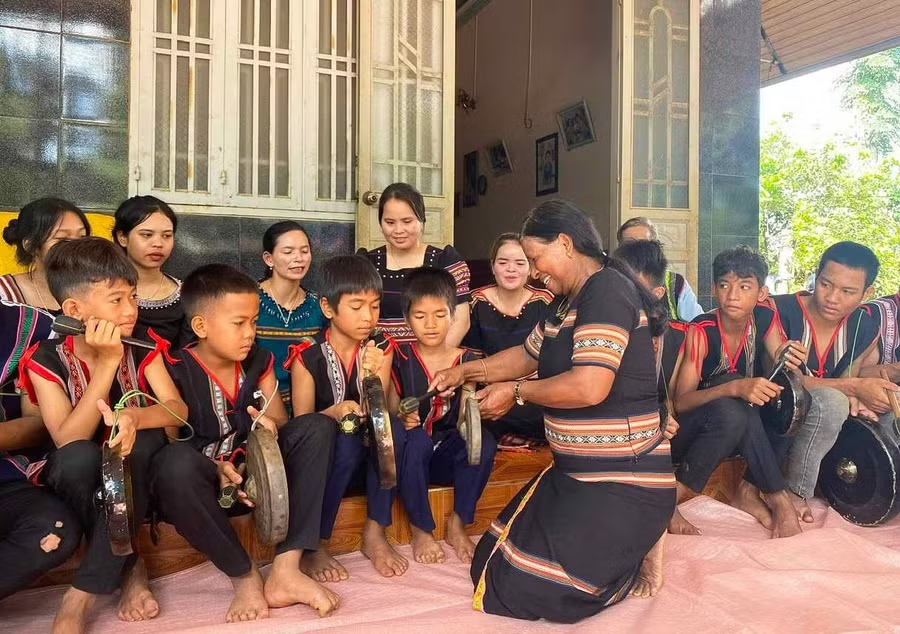
For H’Nir, born in 1963, preservation centres on teaching. A core member of Kmông’s gong team, she has participated in local cultural activities for many years.
She became concerned as elders with knowledge of gong traditions grew older, the community’s gong collection diminished and fewer people could sing traditional folk songs.
Drawing on more than 20 years of experience as a Women’s Union officer, she brought young villagers together for free lessons.
Students learn to recognise the sound of each gong, hold and play the instruments, coordinate with other performers and practise different pieces.
H’Nir also explains the place of gongs in their ancestors’ lives and the cultural settings associated with particular sounds and compositions.
She said she initially hesitated because she had never seen a woman teach gong playing.
Encouragement from village elders helped her gain confidence, as did seeing students develop an appreciation of the music and its spiritual and cultural significance.
Village elder Rơ Châm No said few Jrai women played gongs, and fewer still could both perform and teach. H’Nir’s classes, he said, had helped introduce the village’s younger generation to the tradition.