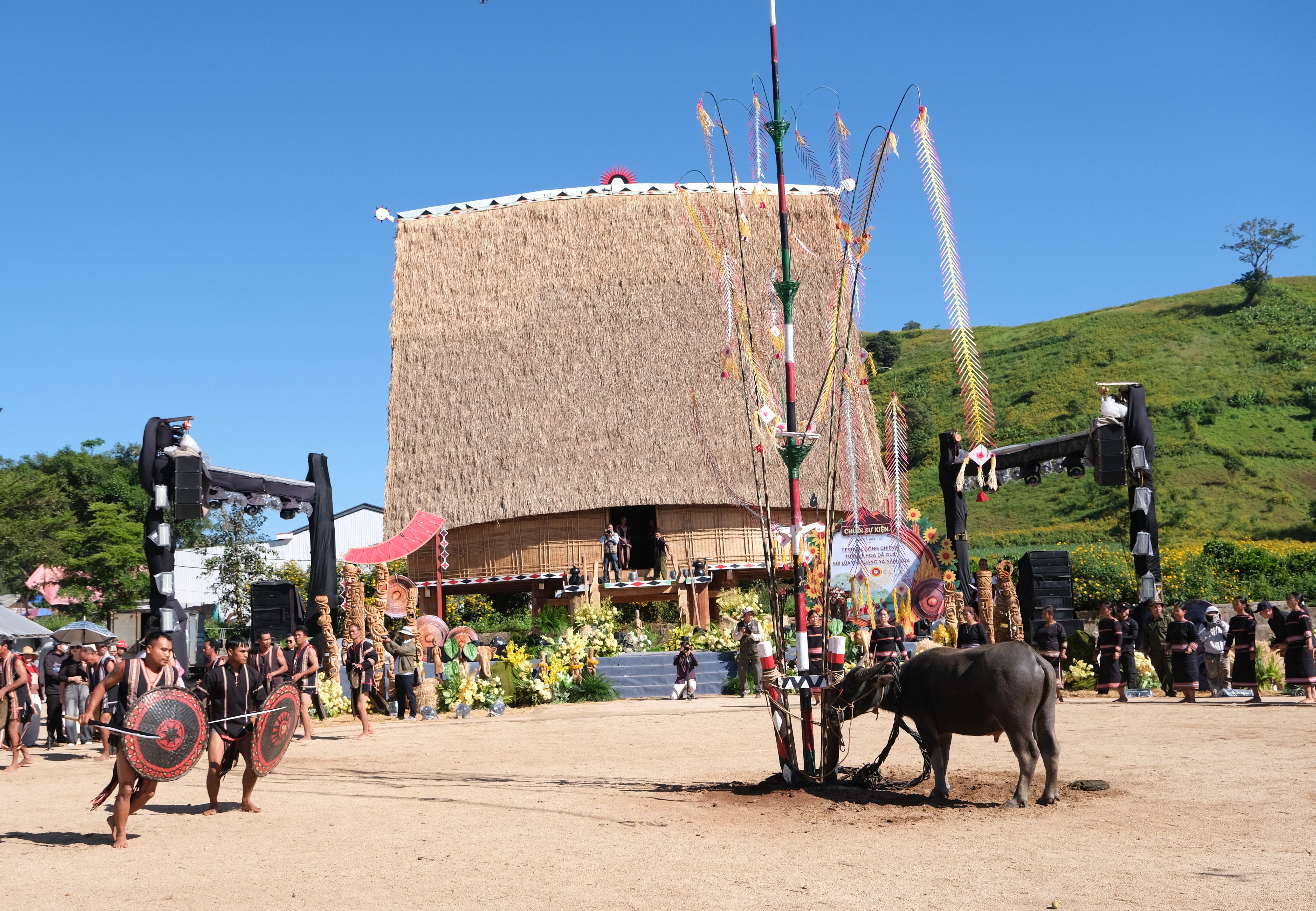
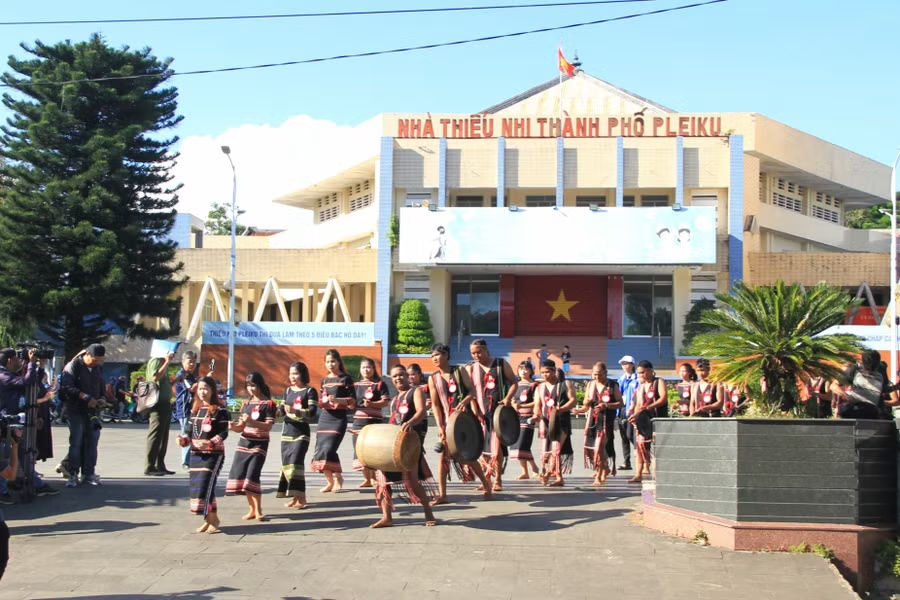
Around 1,500 artisans from Gia Lai and other Vietnamese provinces took part in a colorful street festival in Pleiku on November 6, showcasing traditional costumes, gong music and folk performances as part of the Gia Lai Gong Festival 2026.
The parade brought together 39 artisan troupes, including 29 from Gia Lai and others from provinces and cities across the country, transforming the streets into a vibrant celebration of Vietnam's cultural heritage.
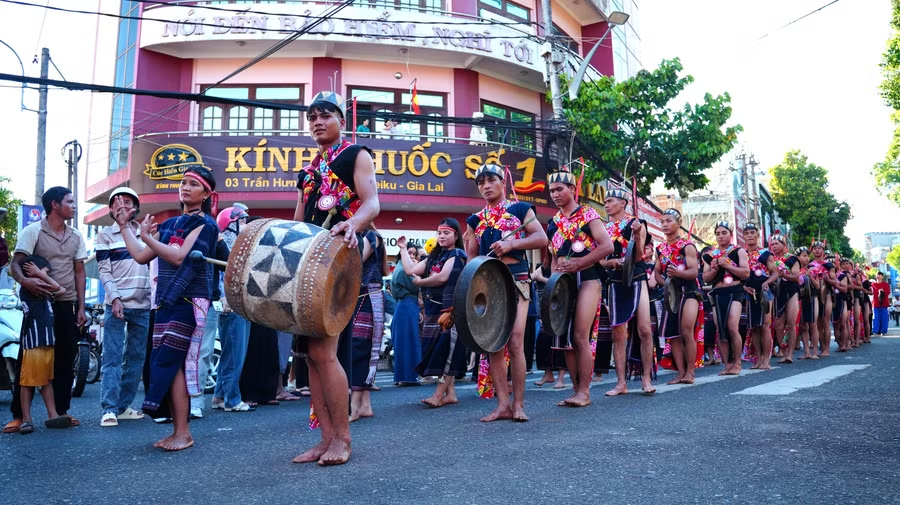
At exactly 3:00 p.m., the artisan troupes began their parade towards Dai Doan Ket Square. Photo: Hoàng Hoài
The participating troupes were divided into two groups, which departed simultaneously from separate locations in Pleiku Ward before converging at Dai Doan Ket Square.
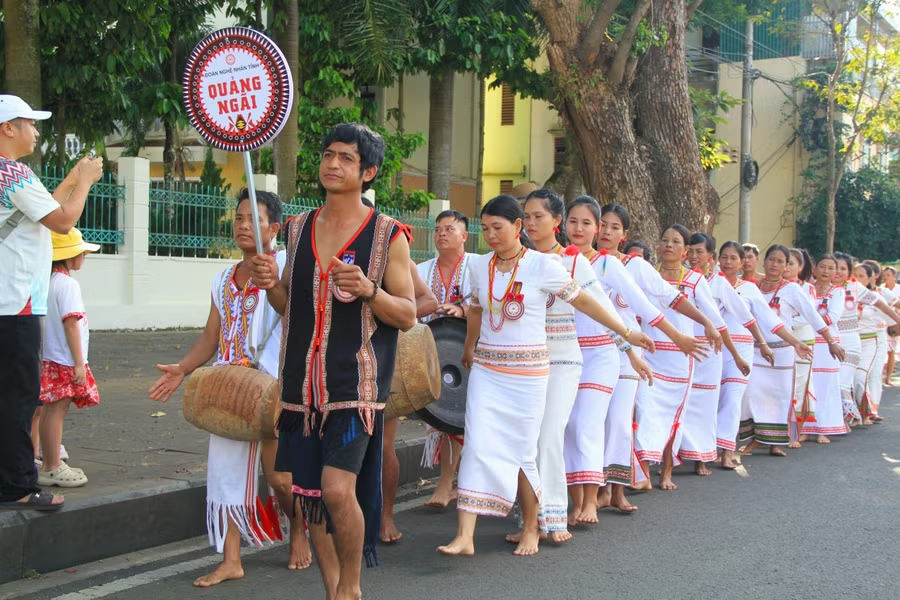
The first group, comprising 21 troupes, set off from Pleiku Children's House on Hai Bà Trưng Street, following the route Hai Bà Trưng – Quang Trung – Trần Hưng Đạo. Participants included artisans from Lâm Đồng, Quảng Ngãi, Huế, Đồng Nai and Đắk Lắk, alongside representatives from numerous localities across Gia Lai.
The street festival provided an opportunity for artisans from different localities to interact, showcase, and promote the values of traditional culture. Photo: Hoàng Hoài
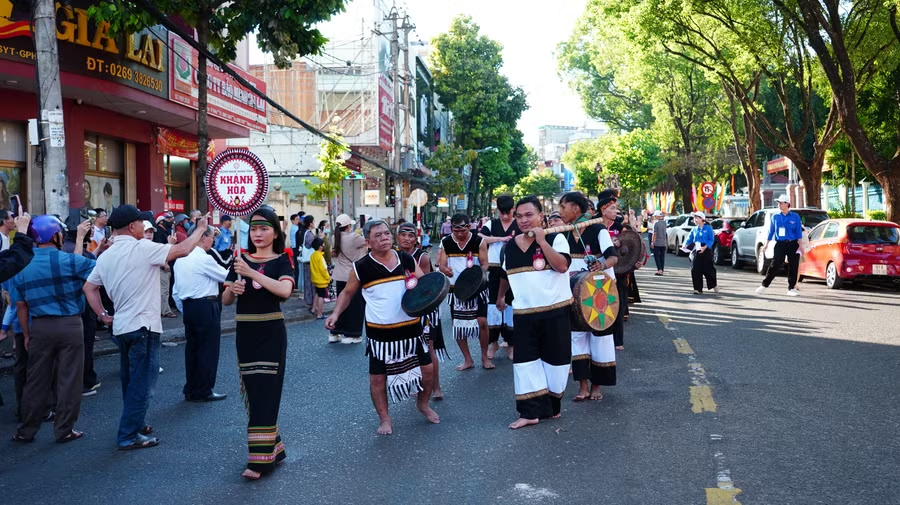
The second group, consisting of 18 troupes, departed from the 2/9 Hall on Hoàng Hoa Thám Street, proceeding along Hoàng Hoa Thám – Trần Phú – Trần Hưng Đạo.
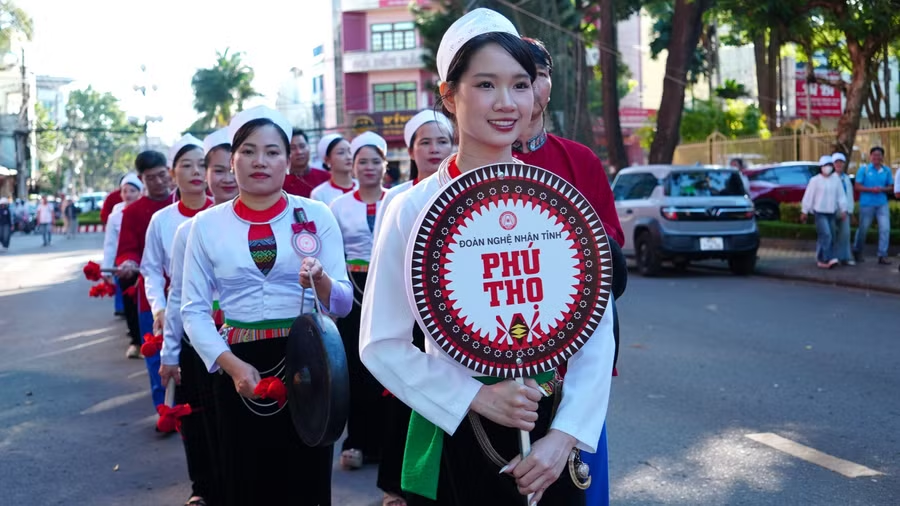
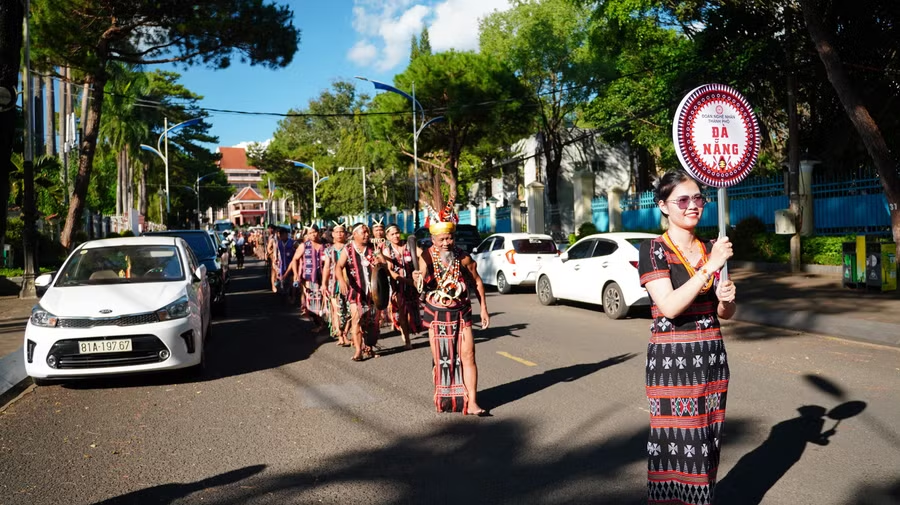
It featured artisan groups from Khánh Hòa, Đà Nẵng, Quảng Trị, Phú Thọ and Thanh Hóa, as well as communities across Gia Lai.
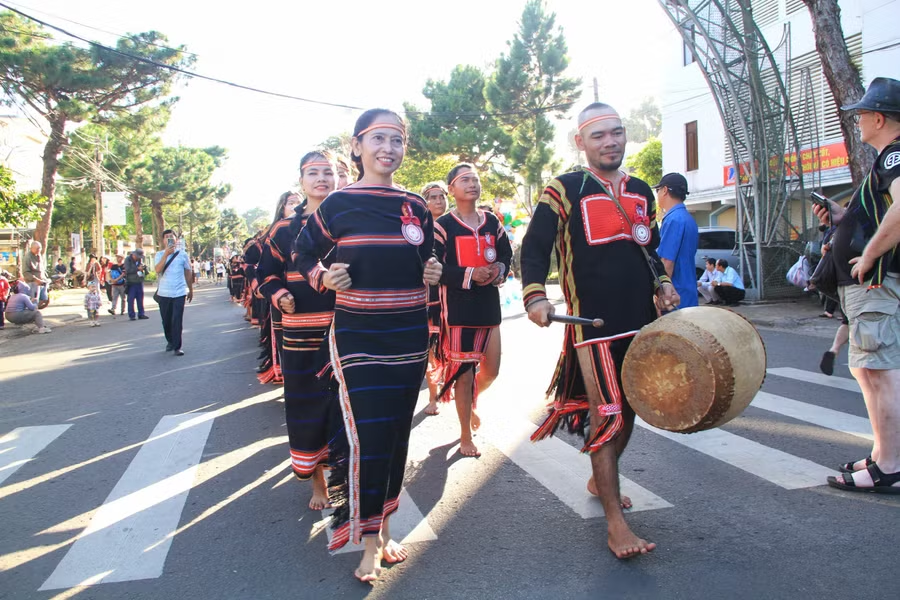
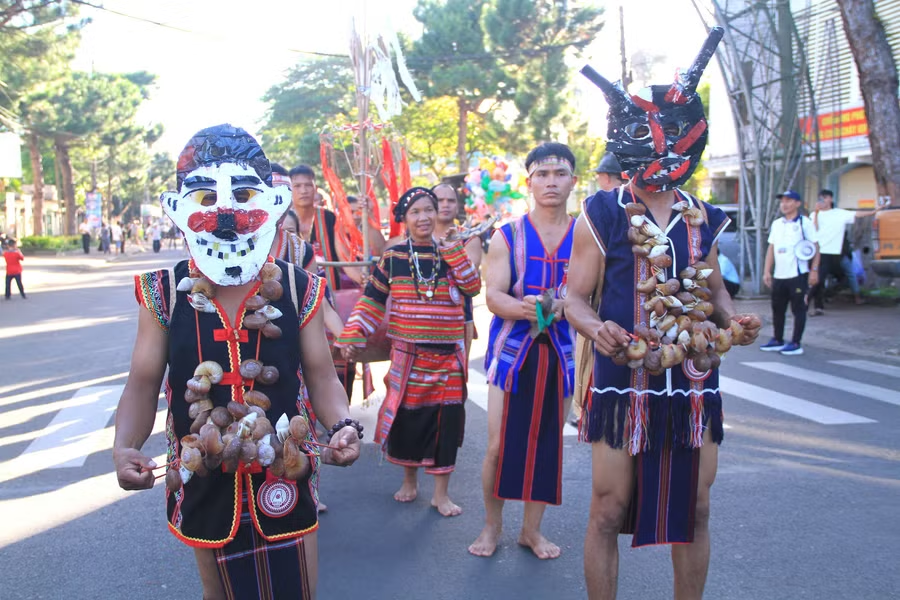
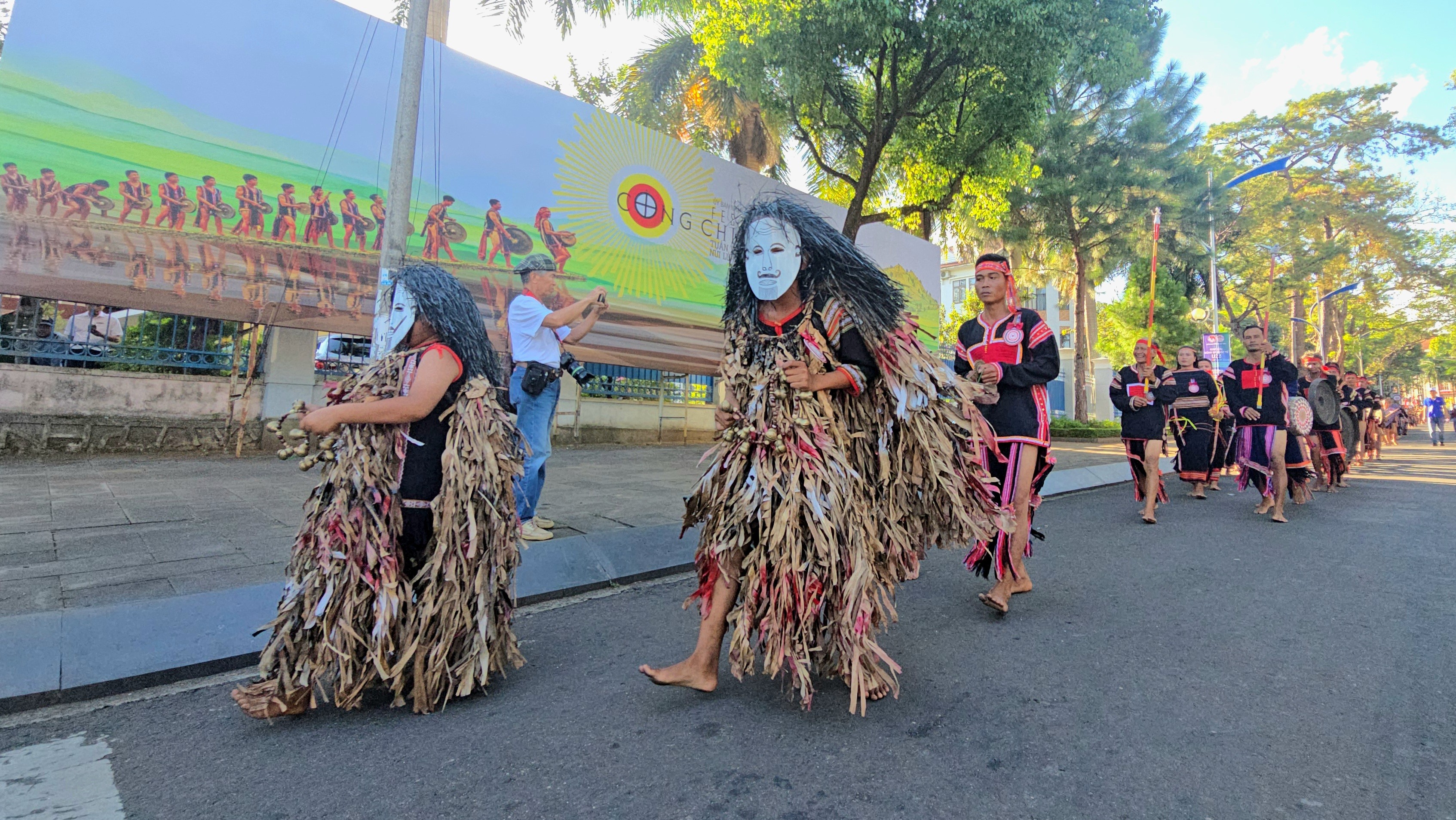
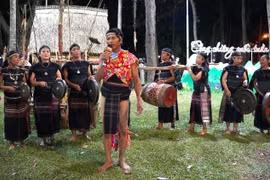
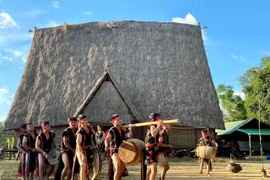
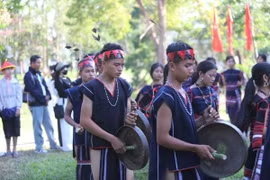
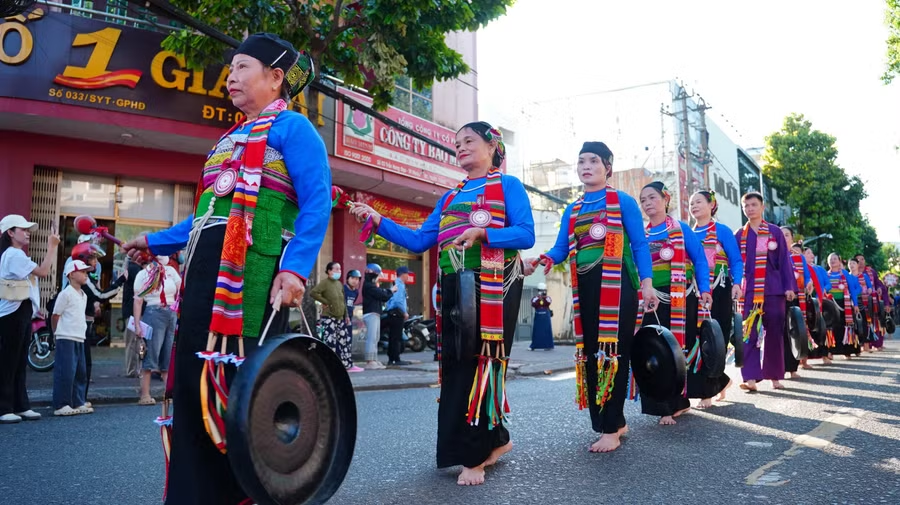
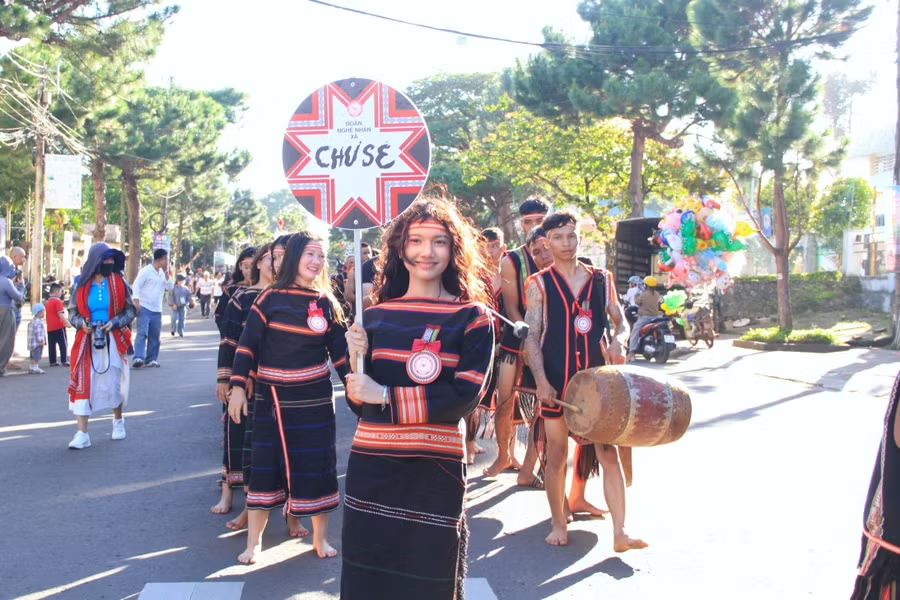
Throughout the parade, artisans wore traditional costumes and carried gongs, ethnic musical instruments, props, models, puppets and stilts.
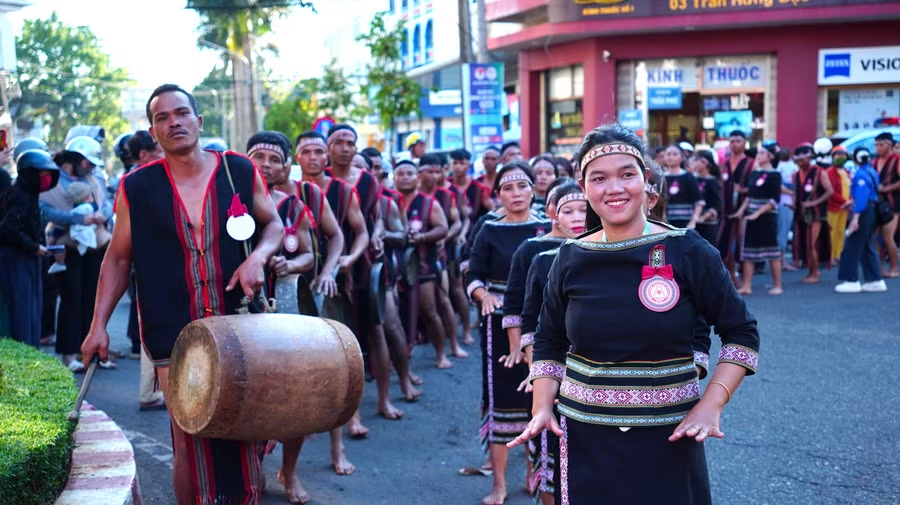
The resonant sounds of gongs accompanied xoang dances and folk performances, while colorful brocade costumes added to the festive atmosphere.
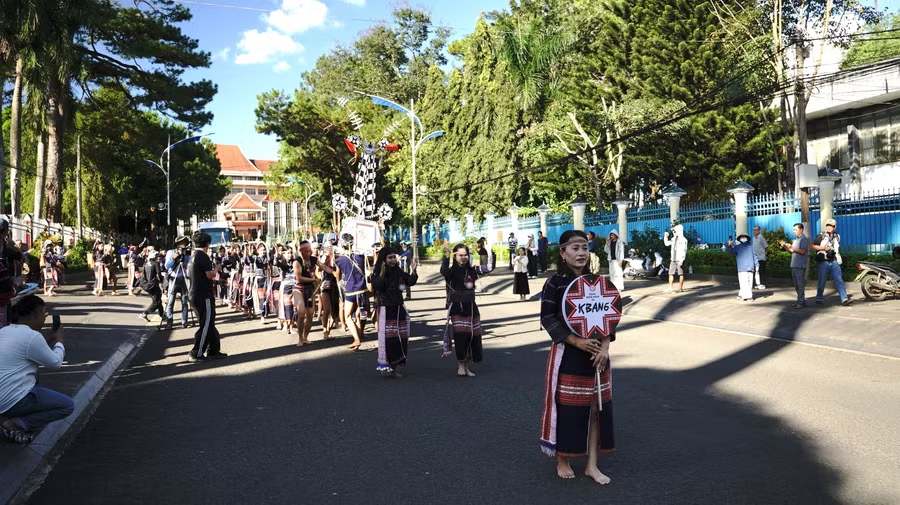
The Bahnar ethnic artisan troupe from Kbang commune led the group departing from the 2/9 Hall. Photo: Chu Hằng
Large crowds of residents and tourists gathered along the streets to watch the performances, take photographs and immerse themselves in the celebrations.
Artisan troupes from other provinces proudly showcased their traditional costumes, musical instruments, and unique cultural features at the street festival. Photo: Chu Hằng
Beyond showcasing the distinctive cultural identities of participating communities, the festival provided an opportunity for artisans from different localities to exchange experiences, strengthen connections between cultural regions and promote traditional heritage to wider audiences.
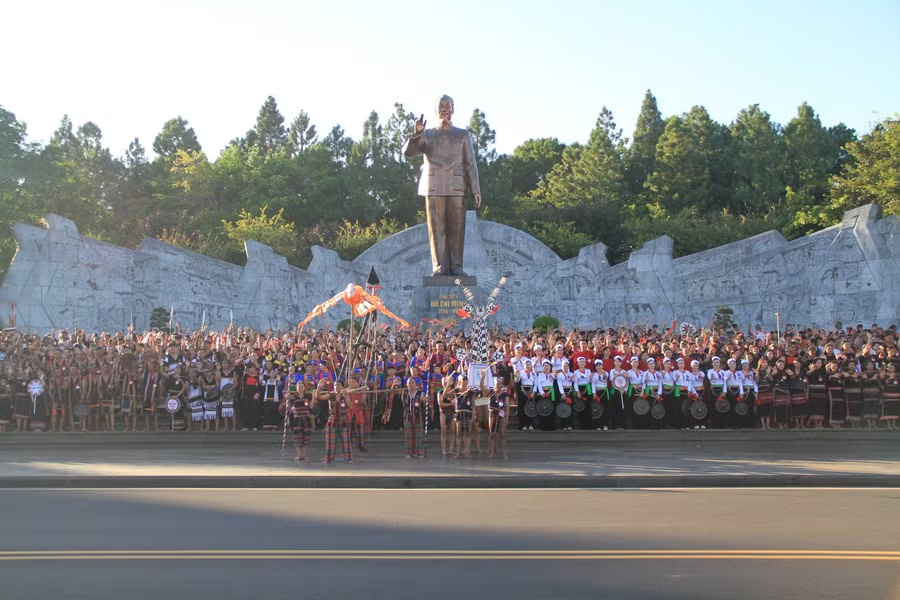
The 39 artisan troupes from within and outside the province took commemorative photos at the Uncle Hồ Monument with Central Highlands ethnic groups at Dai Doan Ket Square after parading through the streets of Pleiku. Photo: Hoàng Hoài
The two parade groups eventually converged at the Uncle Hồ Monument with Central Highlands ethnic groups in Dai Doan Ket Square, where participants took commemorative photographs before continuing with traditional cultural exchange activities as part of the Gia Lai Gong Festival 2026.
Below are some impressive images from the street festival:
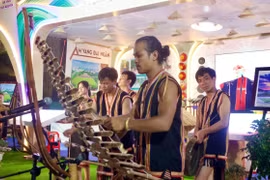
Cơtu ethnic artisans from Hue City performed traditional musical instruments, showcasing the unique cultural heritage of their locality at the street festival, part of the Gia Lai Gong Festival 2026. Photo: Hoàng Hoài Artisan troupe from Thanh Hóa province. Photo: Chu Hằng
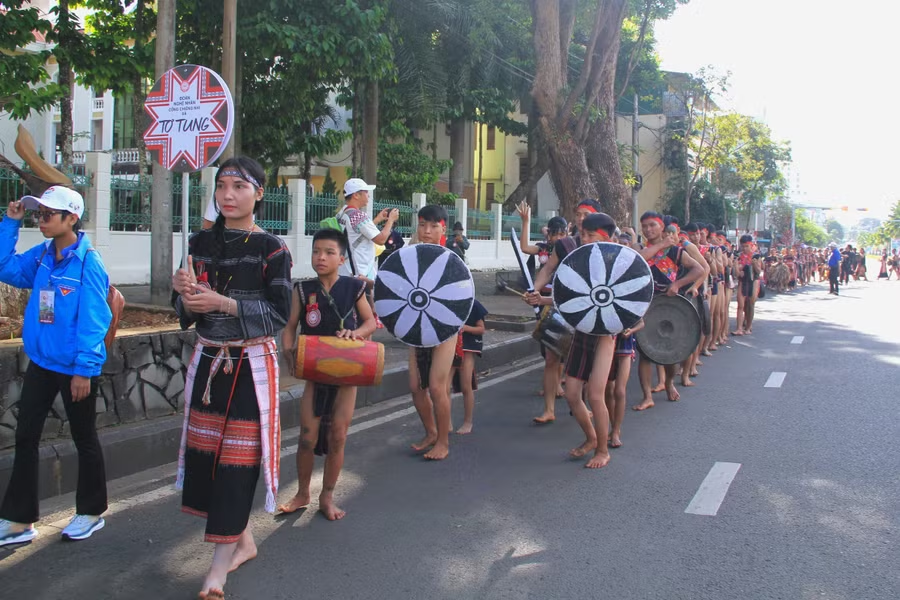
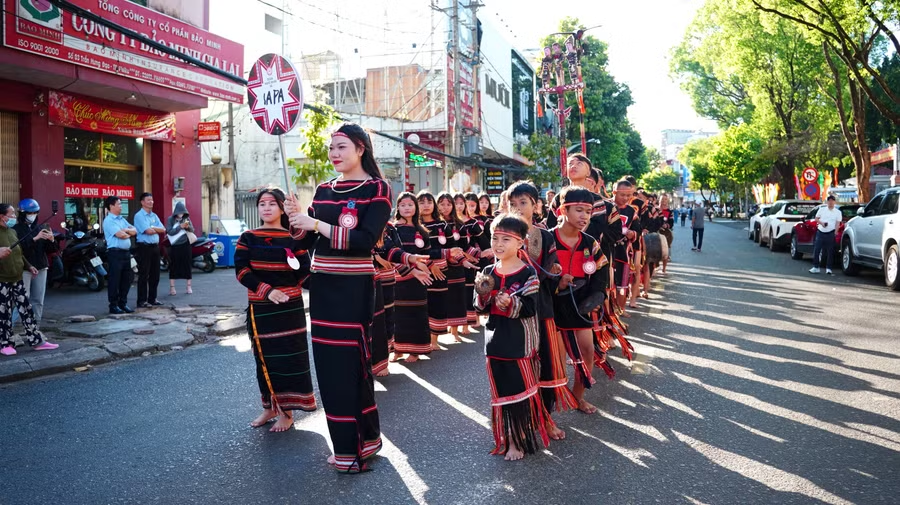
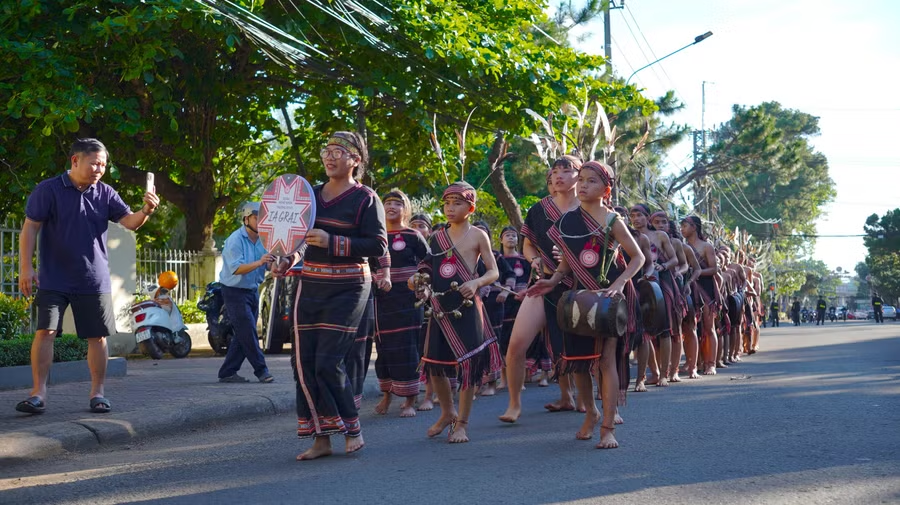
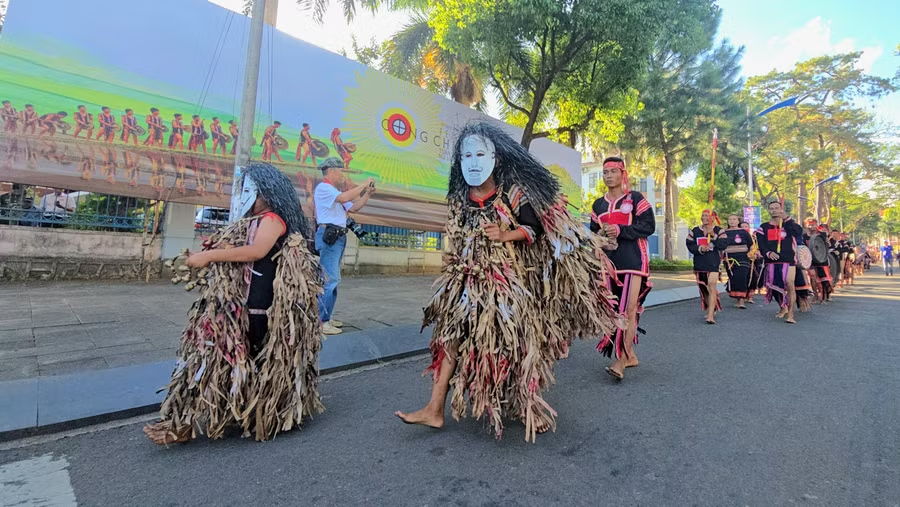
Vibrant brocade costumes contributed to the colorful cultural tapestry of the street festival. Photo: Hoàng Hoài Young Jrai artisans from Chư Prông commune (Gia Lai province) dressed as "mutants," leading the parade. Photo: Chu Hằng The young gong artisan troupe from Tơ Tung commune (Gia Lai province). Photo: Hoàng Hoài Jrai artisan troupe from Ia Pa commune (Gia Lai province). Photo: Chu Hằng Artisan troupe from Ayun Pa commune. Photo: Hoàng Hoài Artisan troupe from Khánh Hòa province. Photo: Chu Hằng Artisans wore masks and carried unique folk props and musical instruments, recreating traditional cultural scenes at the street festival, part of the Gia Lai Gong Festival 2026. Photo: Hoàng Hoài The Jrai ethnic artisan troupe from Ia Grai commune (Gia Lai province) enthusiastically participated in the parade in traditional costumes. Photo: Chu Hằng Artisan troupe from Quảng Ngãi province. Photo: Hoàng Hoài
The Bahnar ethnic artisan troupe from Đak Pơ commune (Gia Lai province) joyfully immersed themselves in the festive atmosphere of the street festival. Photo: Chu Hằng The artisan troupe from Phú Thọ province brought vibrant traditional cultural colors to the festival. Photo: Chu Hằng The young gong troupe from Ia Grai Boarding School for Ethnic Minorities (Ia Grai commune) participated in the street festival. Photo: Chu Hằng
Jrai artisans in Ia Phí commune, Gia Lai province, are passing traditional weaving and wood carving skills to younger generations while creating new handicrafts to appeal to customers and tourists.
Ia Pa commune in Gia Lai province recreated the Jrai people’s new rice celebration on October 24, bringing villagers and visitors together for a harvest ritual, gong performances and traditional games.
A 40-member women’s gong team performed in Gia Lai province on October 20 at a special cultural event celebrating Vietnamese Women’s Day and honouring Bahnar women’s cultural identity.
Gia Lai will host a series of cultural festivals, sporting competitions and tourism events from October to December 2026, with a major gong festival, an international U23 football tournament and activities marking the conclusion of National Tourism Year - Gia Lai 2026 among the highlights.
Two couples in Gia Lai are helping preserve Jrai and Bahnar cultural traditions, sharing their skills in music, dance, weaving and basketry with their communities and showcasing them at festivals.
The 2026 Pleiku Mountain Town OCOP and Culinary Specialty Fair brought together local producers and buyers from October 16 to 18, combining a showcase of regional goods with traditional Jrai ceremonies, music and dance.
Gia Lai's Dam San Theater is staging eight cultural performances in border and neighboring communes from October 12 to 21, bringing traditional music, dance and the distinctive heritage of the Central Highlands closer to local communities.
Gia Lai Province has reviewed dossiers proposing national heritage status for the Trường Lũy Gia Lai rampart and national treasure recognition for two groups of Champa-era artifacts, as authorities move to strengthen the legal and scientific basis for their protection.
Kép village has been selected to represent Gia Lai province in Vietnam’s 2026 “Best Rural Tourism Destination” competition, as its Jrai community builds tourism around traditional crafts, food and village life.
Gia Lai province will hold cultural performances, exhibitions and hands-on heritage activities throughout November to mark Vietnam Culture Day 2026, with November 24 as the focal point.
A traditional Jrai ceremony celebrating a new communal house will be recreated on the afternoon of October 31 at the foot of Chư Đang Ya volcano, as a highlight of Gia Lai’s International Gong Festival.
Students at Le Loi High School in Gia Lai province have recreated the cultural spaces of Plei Ơp village using 360-degree virtual reality and artificial intelligence, developing a digital tour intended to make its heritage accessible by smartphone.
Women artisans in Bahnar and Jrai communities are preserving traditional music by making bamboo instruments and teaching young people to play gongs, taking on roles long associated with men.
Bahnar Kon K’Đĕh women in Vietnam’s Gia Lai province are finding new markets for their traditional brocade through tourism and adapting their products to customer demand while preserving weaving skills passed down through generations.
Pleiku Museum has agreed a partnership involving 30 schools and seven localities to give students regular opportunities to explore history and cultural heritage during the 2026-2027 academic year.
In the early days of autumn, as the intense Central Vietnamese heat begins to ease and rain becomes more frequent, An Nhơn takes on a gentler character. The Côn River winds through villages, carrying silt and memories of a land that was once an imperial capital.
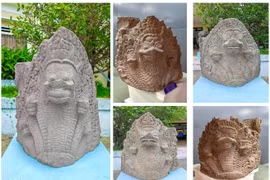
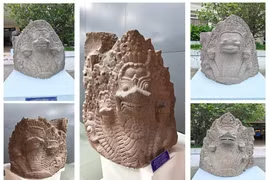
Two stone lion statues from Mẫm Tower and a collection of Naga serpent reliefs from Dương Long Tower are being documented for nomination as national treasures, as researchers assess their significance to Champa art and culture during the Vijaya period.
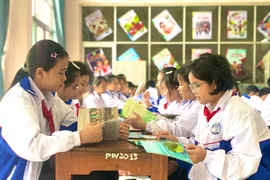
Nearly 100 sixth-grade students in Pleiku Ward, Gia Lai Province, took part in a Mid-Autumn Festival program on September 22 combining books, traditional games and activities designed to promote reading.
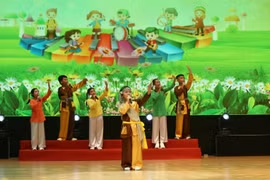
Gia Lai is embracing the Mid-Autumn Festival with colorful lantern displays, lion dance performances and hands-on craft workshops, giving children and families new ways to enjoy the traditional celebration.
A cultural exhibition in Gia Lai is bringing together heritage, traditional crafts, local specialties and artistic performances from across Vietnam, creating a platform to promote destinations and strengthen links between culture and tourism.
Traditional theater in Gia Lai is turning to history not simply to recount heroic figures and events, but to connect a younger generation with the past through the distinctive language of hát bội and bài chòi opera.
Lê Kiều Oanh was crowned Miss Vietnam Entrepreneur Talent and Beauty 2026 on September 10, as the seventh edition of the pageant concluded at the Gia Lai Provincial Convention Center.
Vinh An Village in Bình Phú Commune, Gia Lai Province, will host the “Weekend Gong Night - Enjoy and experience” program on September 11, offering locals and visitors an opportunity to experience the cultural heritage of the Bahnar people.

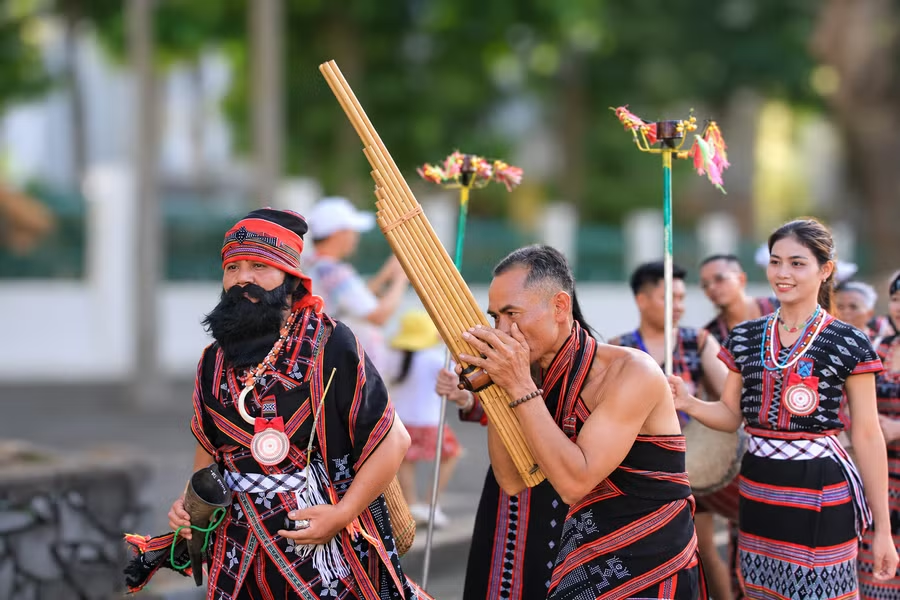
 dressed as "mutants," leading the parade. Photo: Chu Hằng")