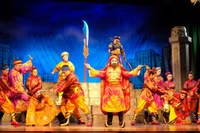
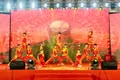
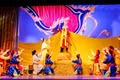
Through new approaches to character development, staging, music, lighting and storytelling, theater practitioners are seeking to move history beyond textbook narratives and transform stories of patriotism and resilience into experiences that resonate with contemporary audiences.
On the traditional stage, kings, heroes and patriotic scholars are portrayed not merely through a chronology of events but as people with emotions, conflicts and difficult choices. Actors use movement, voice and expression to give historical figures an inner life, allowing audiences to experience rather than simply learn their stories.
That approach has made history a longstanding theme in the repertoire of Gia Lai's traditional theater.
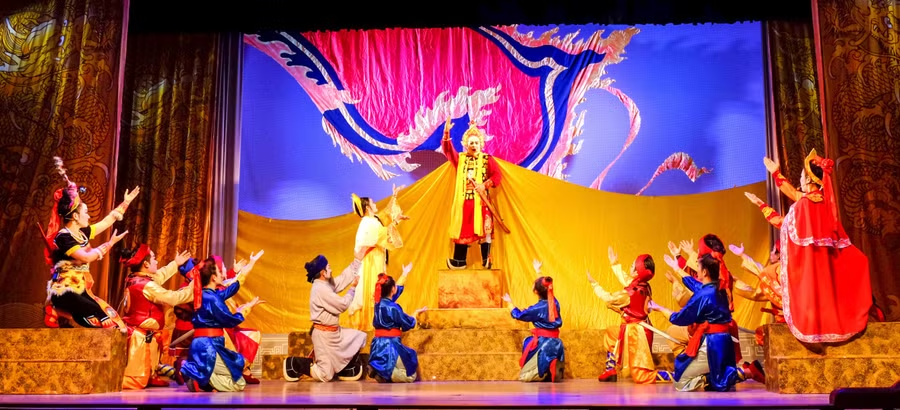
Productions including Bông mai đỏ (The red apricot blossom), Nước Nam niềm khát vọng (Vietnam’s aspiration), Khí tiết rạng trời Nam (The integrity that brightens the South), Nhìn lại một vương triều (Looking back at a dynasty), Khát vọng non sông (Aspiration of the homeland) and Quang Trung đại phá quân Thanh (Quang Trung’s great victory over the Qing) have explored historical figures and events through traditional theatrical forms.
Bài chòi operas such as Cô thần (The Loyal Subject), Khúc ca bi tráng (Epic Song), Ngọc sáng Khúc gia trang (The Shining gem of Khuc family) and Huyền Trân công chúa (Princess Huyền Trân) have pursued a similar goal: preserving the spirit of history while making it accessible to contemporary audiences.
Nguyễn Trọng Quỳnh, Director of the Provincial Traditional Arts Theater, said historical productions must respect historical truth without becoming straightforward illustrations of historical records.
“Historical theater must first and foremost respect the truth, but it cannot stop at merely illustrating historical records,” Quỳnh said.
The challenge, he said, is to ensure audiences can still recognize enduring values such as patriotism, attachment to their homeland and concern for the country's destiny.
“These values are never outdated. The storytelling approach may change to suit the audience, but the core spirit of history must be preserved,” he said.
Finding the human story in history
For scriptwriter Đoàn Thanh Tâm, history provides a rich source of dramatic material because historical figures can be explored not only through their achievements but also through their personal struggles, choices and losses.
Characters including Mai Xuân Thưởng in Bông mai đỏ, King Thành Thái in Nước Nam niềm khát vọng and Nguyễn Trung Trực in Khí tiết rạng trời Nam are portrayed through both their historical roles and their individual destinies.
That human dimension, Tâm said, can help bridge the distance between historical figures and modern audiences.
“I don’t want to write history as a mere retelling of events,” Tâm said. “I want to find, in each character, a story that can touch today’s emotions.”
“When the audience feels for a character, is moved by a choice, or aches over a loss, that is when history truly enters their minds”.
The approach also presents directors and performers with a delicate challenge: balancing historical authenticity with artistic innovation.
Modernizing historical theater too aggressively risks distorting its characters and traditions, while relying too heavily on established performance conventions can make productions less accessible to contemporary audiences.
People’s Artist Nguyễn Hoài Huệ, who has directed numerous historical tuồng and bài chòi productions, said bringing history to the stage involves considerably more than illustrating past events.
“The hardest part is balancing historical accuracy with artistic creativity,” Huệ said. “We must ensure that historical characters remain true to their nature and circumstances, while also giving them a vibrant stage life.”
Making traditional theater accessible
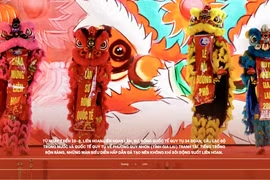
Hát bội has a distinctive theatrical vocabulary built around conventions governing makeup colors, choreography, music and performance. For younger audiences unfamiliar with those conventions, however, artists are seeking new ways to make that theatrical world more accessible.
Director and People’s Artist Hoàng Ngọc Đình said refreshing historical tuồng does not mean altering the essence of hát bội.
Instead, innovation can come through narrative structure, pacing, treatment of characters' psychological development and the use of sound and lighting to strengthen dramatic expression.
“If traditional theater wants young audiences to stay, the work must first be engaging,” Đình said.
“But engaging does not mean chasing after superficial forms. Hát bội must retain its unique language; only the storytelling and approach should be more flexible.”
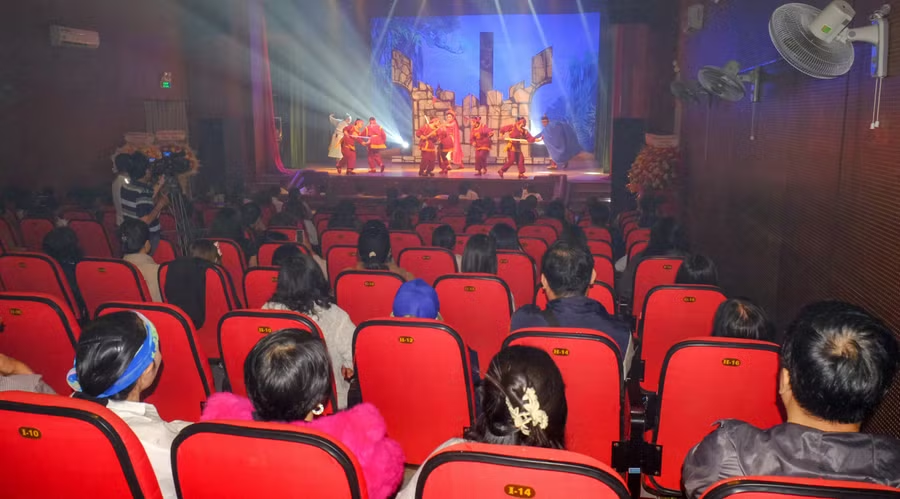
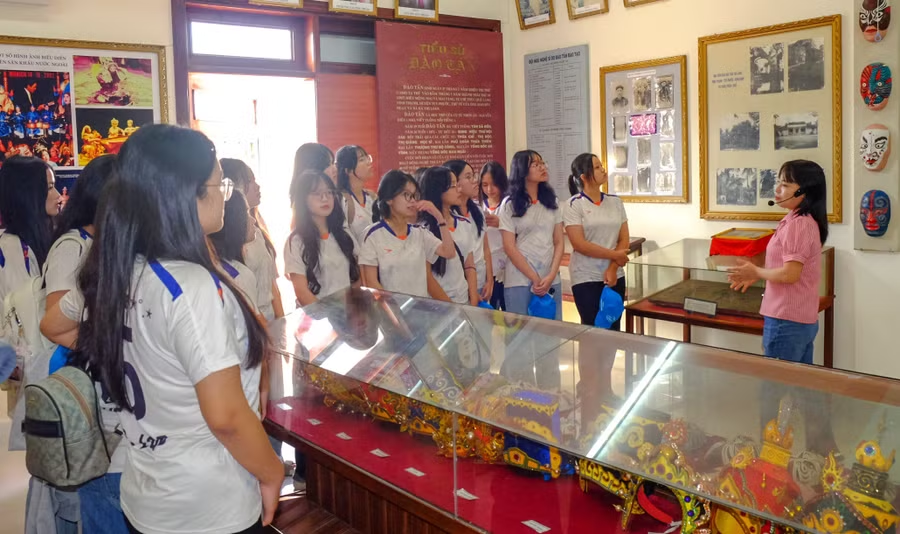
Efforts to reach younger audiences are increasingly extending beyond conventional theater performances. Experiential hát bội and bài chòi programs are giving students opportunities to encounter the art forms directly.
Quỳnh said attracting audiences, particularly young people, has become an important mission for traditional theater.
“We are determined to bring the arts closer to students, giving them opportunities to watch, listen, meet artists, and understand why a gesture, a line, or a makeup style is meaningful”, he said. “Only when they understand can they develop a love for traditional arts”.
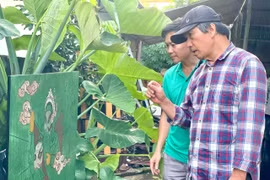
At the Provincial Traditional Arts Theater, activities including visits to its tradition room, hát bội mask painting and live performances allow young visitors to learn how hát bội and bài chòi work from close range.
Such experiences have changed some students' perceptions of traditional theater.
Nguyễn Thị Hà My, a student at Tran Cao Van High School No. 1 in Quy Nhơn Ward, said she had initially expected hát bội to be difficult to follow because its singing and acting differed significantly from modern entertainment.
“But after watching the tuồng Quang Trung đại phá quân Thanh, I found it captivating and it helped me remember the historical story much longer,” My said.
Students at FPT University’s Quy Nhơn campus have also organized experiential hát bội and bài chòi activities, attracting participants from other schools and providing multimedia communication students with material for academic projects.
Trương Lê Quỳnh Như, a student in the university's Business Administration Faculty, said watching artisans apply makeup, put on traditional costumes and perform hát bội and bài chòi at the university had given her a greater appreciation of local cultural heritage.
“From there, I learned more about hát bội and bài chòi theater,” she said.
Connecting past and present
Bringing traditional theater into schools is therefore about more than presenting performances. Artists are seeking to create experiences through which young audiences can understand the cultural language behind what they see on stage.
For historical theater, that engagement also offers a way to bring stories of independence, freedom and patriotism closer to a generation increasingly removed from the periods being portrayed.
Huệ said the growing presence of young people in traditional theater audiences was encouraging, but attracting them once was not enough.
“To have them return, each performance must have its own appeal,” she said. “We must work more seriously, tell better stories, and find ways to ensure traditional arts do not create a gap with the new generation.”
Through the drumbeats of hát bội, the melodies of bài chòi and historical characters brought to life on stage, traditional theater is creating a bridge between past and present.
For its practitioners, success comes when young audiences no longer regard history as a distant lesson, but leave the theater moved by a character, curious about an event and wanting to discover more about the past.