Recent revisionist narratives circulating on social media have sought to downplay the achievements of the Tây Sơn movement and its leader Quang Trung–Nguyễn Huệ. However, official histories and widely accepted accounts document events that underscore his decisive role in defending national independence.

The Đại Nam Thực Lục, the official chronicle compiled by the Nguyễn dynasty, records that in 1784 Nguyễn Ánh sought military assistance from Siam, now Thailand. Siamese forces led by Chao Phraya Chakri and Chao Phraya Surasi entered Gia Định, where historical documents describe widespread looting and hardship inflicted on the local population.
Historical sources further note that in 1787 Nguyễn Ánh continued to pursue foreign intervention through Bishop Pigneau de Béhaine, signing the Treaty of Versailles with France. The agreement sought military aid in exchange for territorial and commercial concessions, including ports and islands. Although the treaty was not fully implemented due to political upheaval in France, records indicate that Nguyễn Ánh later relied on French officers, ships and weaponry.

By contrast, historical accounts credit Quang Trung-Nguyễn Huệ with ending the immediate threat of foreign invasion. In 1785, he led the defeat of more than 50,000 Siamese troops at the Battle of Rạch Gầm-Xoài Mút. In early 1789, during the Year of the Rooster, he again secured independence by defeating 290,000 Qing troops. The chronicle Hoàng Lê Nhất Thống Chí describes his rapid victories and the retreat of Qing commander Sun Shiyi.
Those who rise to defend national independence, no matter how brief their dynasties, live on forever in the memory and pride of the people.
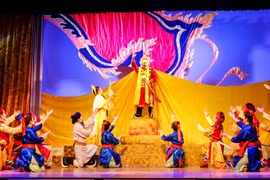
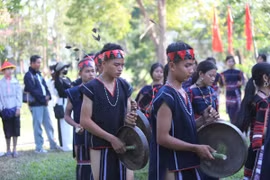
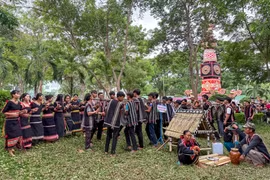
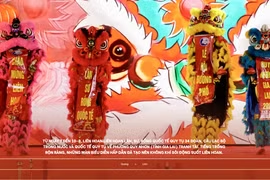
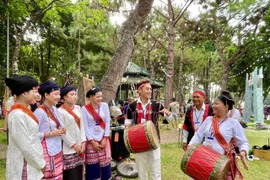
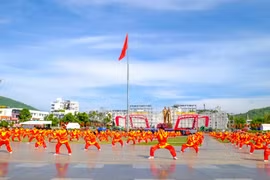
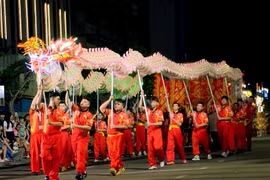
Public commemoration continues to reinforce this legacy. Each year, large numbers of people gather voluntarily at Gò Đống Đa in Hanoi, the Quang Trung Museum in the former Bình Định province, now Gia Lai, and festivals marking the Ngọc Hồi–Đống Đa victory.
Gia Lai province is set to host commemorations during the 2026 Lunar New Year for the 255th anniversary of the Tây Sơn uprising and the 237th anniversary of the Ngọc Hồi–Đống Đa victory, underscoring the lasting place of Quang Trung–Nguyễn Huệ in Vietnam’s historical memory.