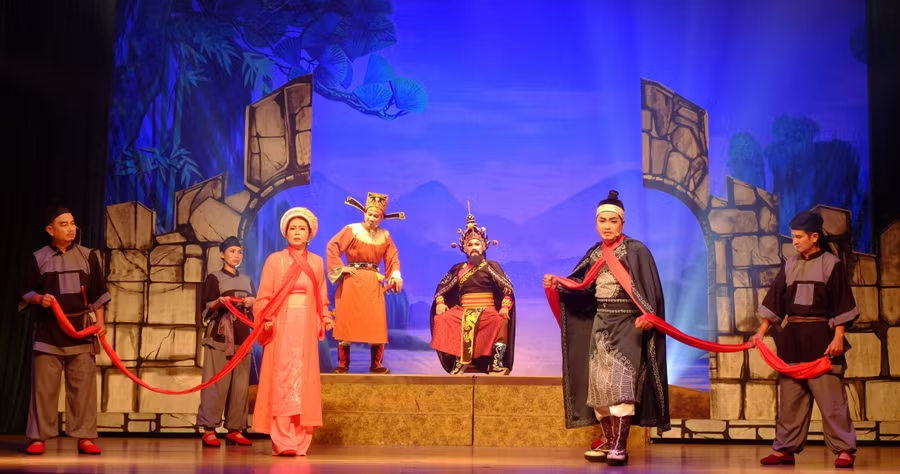
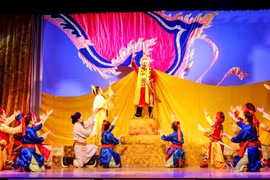
Adapted from the historical novel Da khuc Quynh Hoa by Dr. Khuc Minh Tuan, the opera was written by Nguyen Hoai and directed by People’s Artist Nguyen Hoai Hue as a large-scale theatrical epic.
The production recreates the period in the early 10th century when the Khuc family asserted national self-rule, laying the foundations for an independent state after more than a millennium of Northern domination.
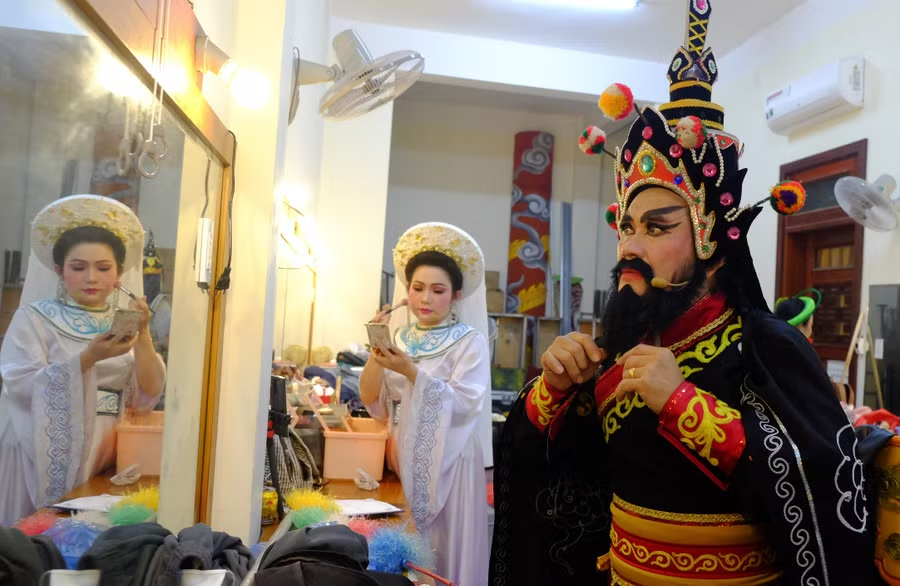
Rather than focusing solely on heroic triumphs, the play adopts a humanistic lens, portraying historical figures confronting painful choices between national interests and the lives of the people.
Characters such as Khuc Thua Hao, Khuc Thien, Khuc Thua My and Khuc Thi Ngoc are depicted not only as leaders bearing the nation’s fate, but also as individuals marked by loss, restraint and silent sacrifice.
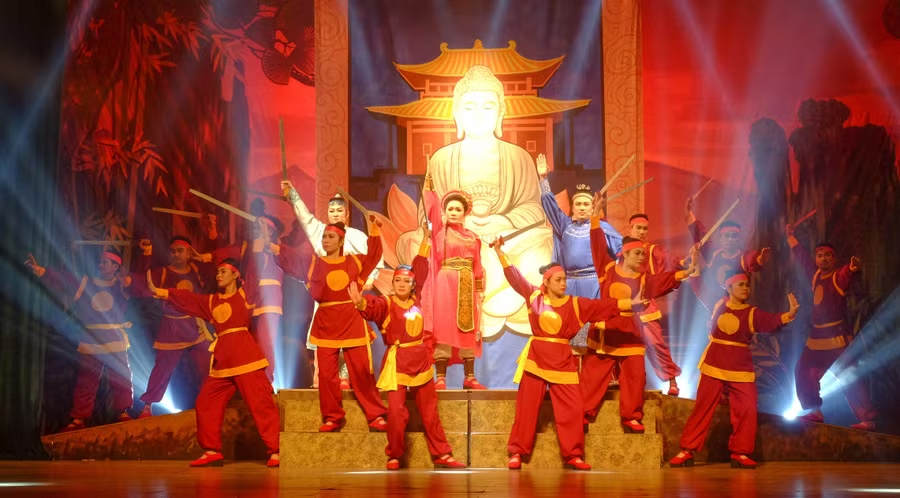
At the heart of the narrative is Khuc Thi Ngoc, also revered as Quynh Hoa Thanh Mau. As the daughter of Lord Khuc Thua Du, she is portrayed as intelligent and graceful, symbolizing the quiet sacrifices made by Vietnamese women during decisive moments in history.
Historical records and folk belief regard her as a real figure, honored by the saying “alive as a general, dead as a deity.” The prologue, combining meditative music, lighting and choreography, establishes a sacred atmosphere that carries the audience back to the dawn of Vietnam’s journey toward independence.
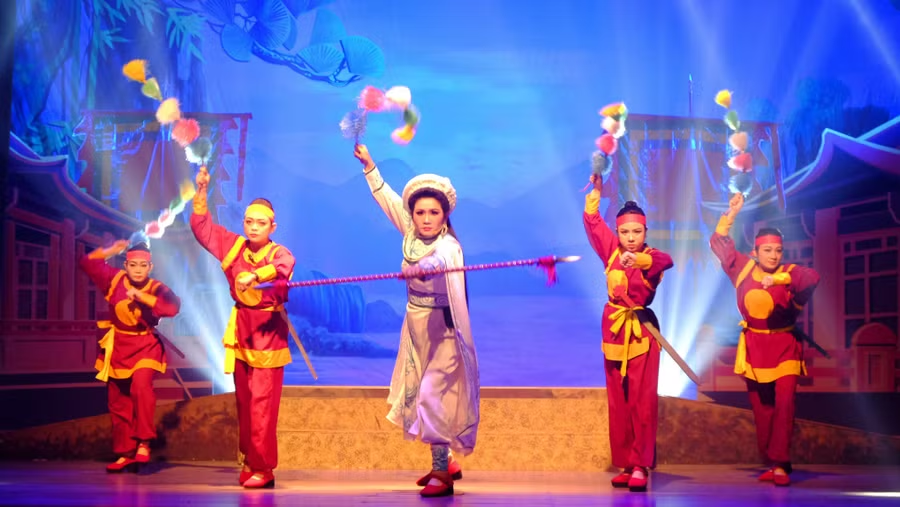
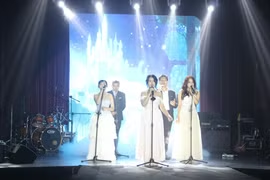
Meritorious Artist Thuy Dung, head of the Binh Dinh Bai Choi Opera Troupe, delivers a restrained and introspective performance as Khuc Thi Ngoc, using subtle shifts in voice, gaze and timing to convey inner conflict. She said the role demanded careful reflection to express the character’s silent sense of responsibility and sacrifice.
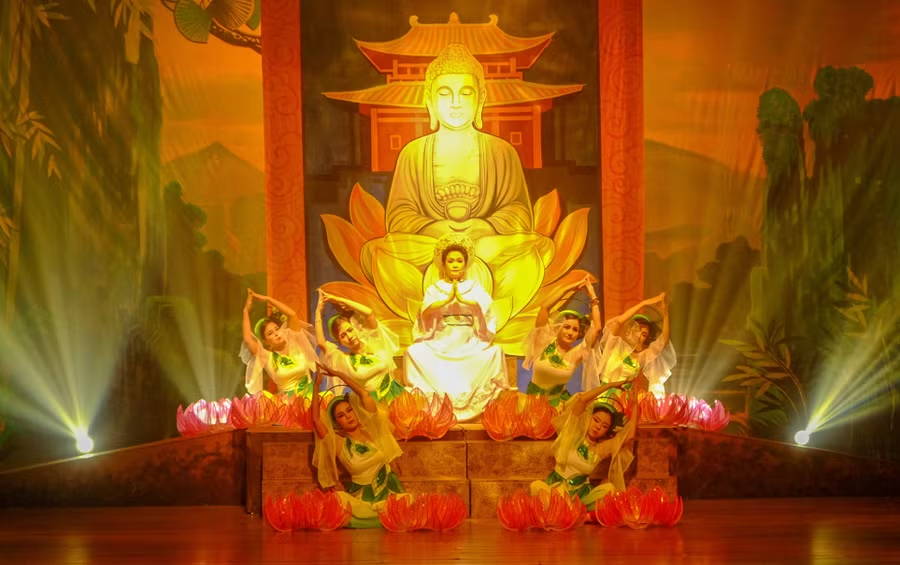
Supporting performances by Meritorious Artist Phuong Phu as Khuc Thua Hao, artist Thanh Viet as Khuc Thien, and artist Thien Nga as Khuc Thua My complete the portrait of a composed yet compassionate family. Thien Nga’s portrayal of Khuc Thua My, a young man embodying early patriotism, required intensive physical, vocal and movement training to capture the character’s spirit.
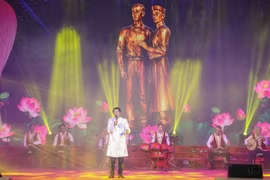
The production stands out for its symbolic and stylized stage design, with fluid scene transitions that sustain narrative momentum. Settings ranging from daily life at the Khuc family estate to enemy quarters, battlefields and temples are seamlessly connected, maintaining a steady rhythm throughout the performance.
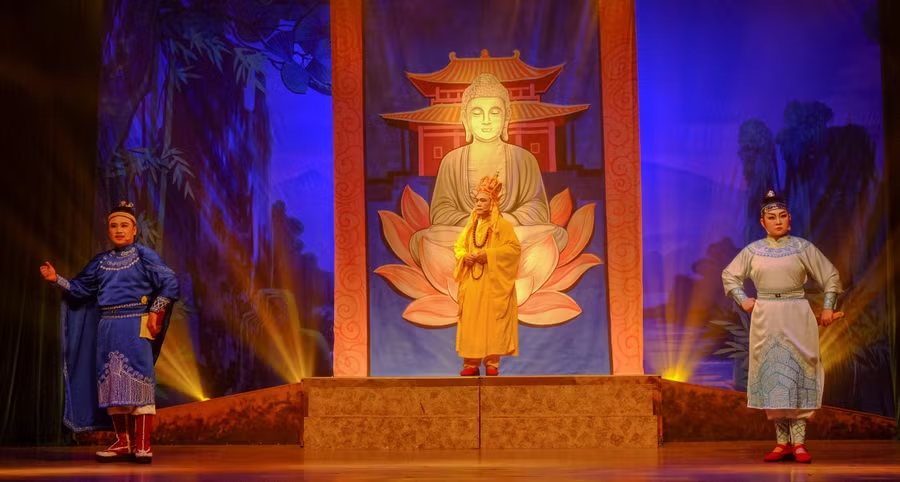
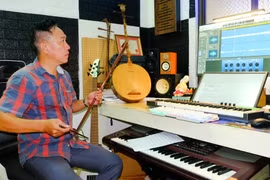
Music serves as a central bridge between scenes. Under the musical direction of Meritorious Artist Dinh Van Nhan, traditional bai choi and folk melodies are woven together with flexible harmonies and rhythms.
Drums and percussion heighten climactic moments, while meditative passages underscore introspective scenes, reflecting the influence of Buddhism on Vietnamese cultural life.
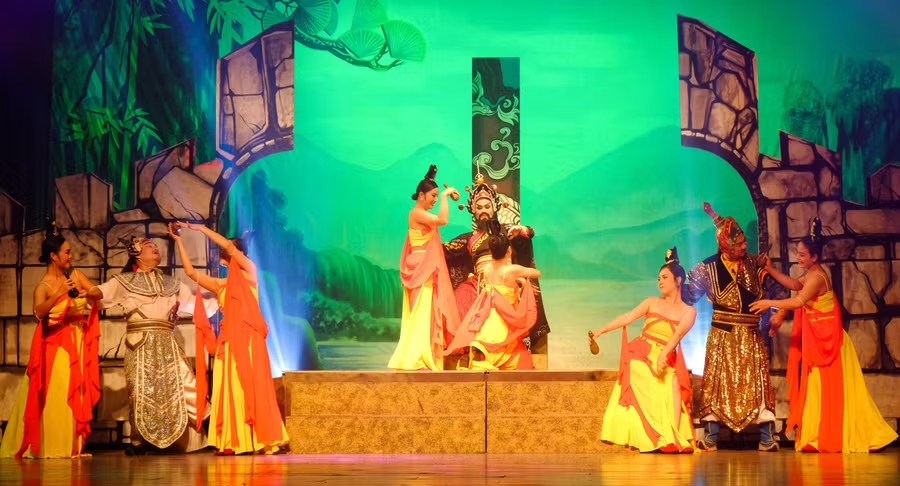
Director Nguyen Hoai Hue said the creative team sought to preserve the essence of bai choi while making the story accessible to contemporary audiences, particularly younger viewers. Alongside bai choi, the opera incorporates traditional folk tunes such as ly tang tit, ly chieu quan, han ly tinh and vong kim lang, enriching its emotional and musical palette.
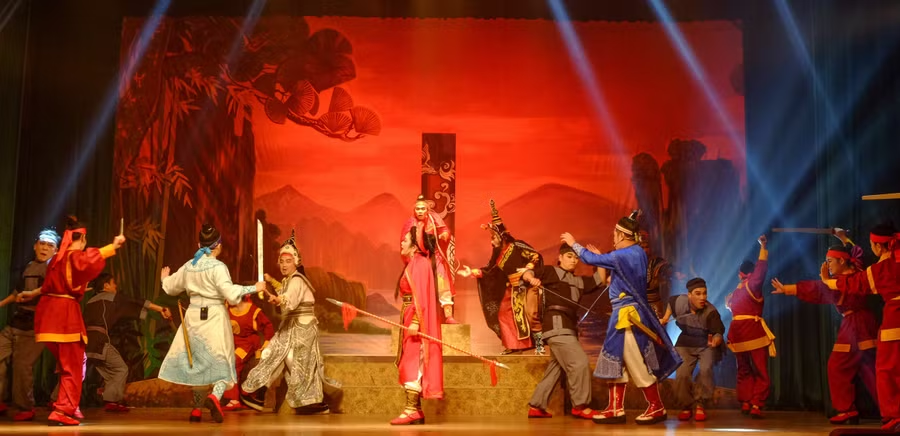
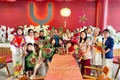
As the curtain fell, sustained applause echoed through the venue. Audience members lingered to share their impressions, including students and representatives of the Khuc family who had traveled from Hanoi to attend the rehearsal. Many praised the production for making history vivid, emotionally resonant and closely connected to modern life.
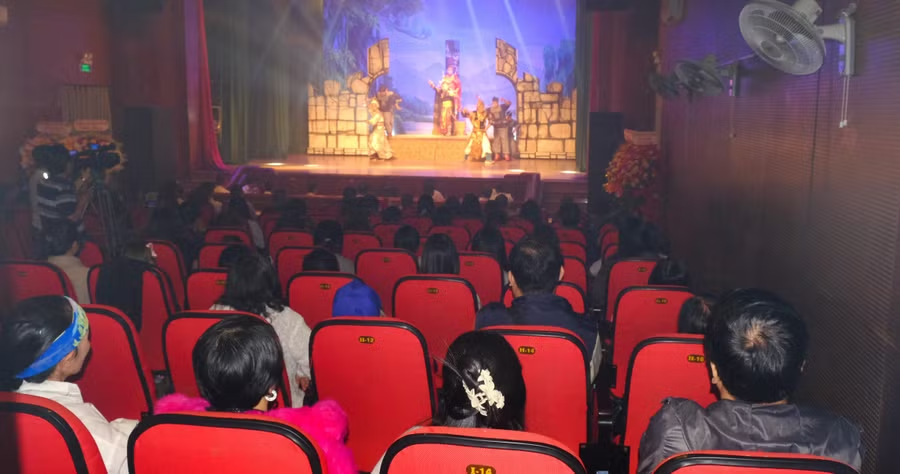
The dress rehearsal of Ngoc Sang Khuc Family Estate marked not only a new artistic milestone for the Binh Dinh Bai Choi Opera Troupe, but also a broader effort to revitalize historical storytelling on the traditional stage, bringing the spirit of national independence to contemporary audiences through simple, heartfelt expression.