From foundational stance training to the celebrated form “Nap Ma Mon Cuong,” the image of the horse, steady, powerful and enduring, runs through the core philosophy and practice of Bình Định traditional martial arts.
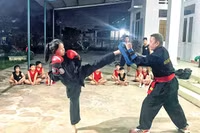
Experts say stance techniques form the bedrock of Vietnamese traditional martial arts, particularly in Bình Định. Rigorous stance work develops leg strength, flexibility and balance, while helping practitioners control their center of gravity during movement, attack and defense.
A martial artist may master numerous forms and techniques, but without a solid stance, effective execution of strikes and kicks remains elusive.
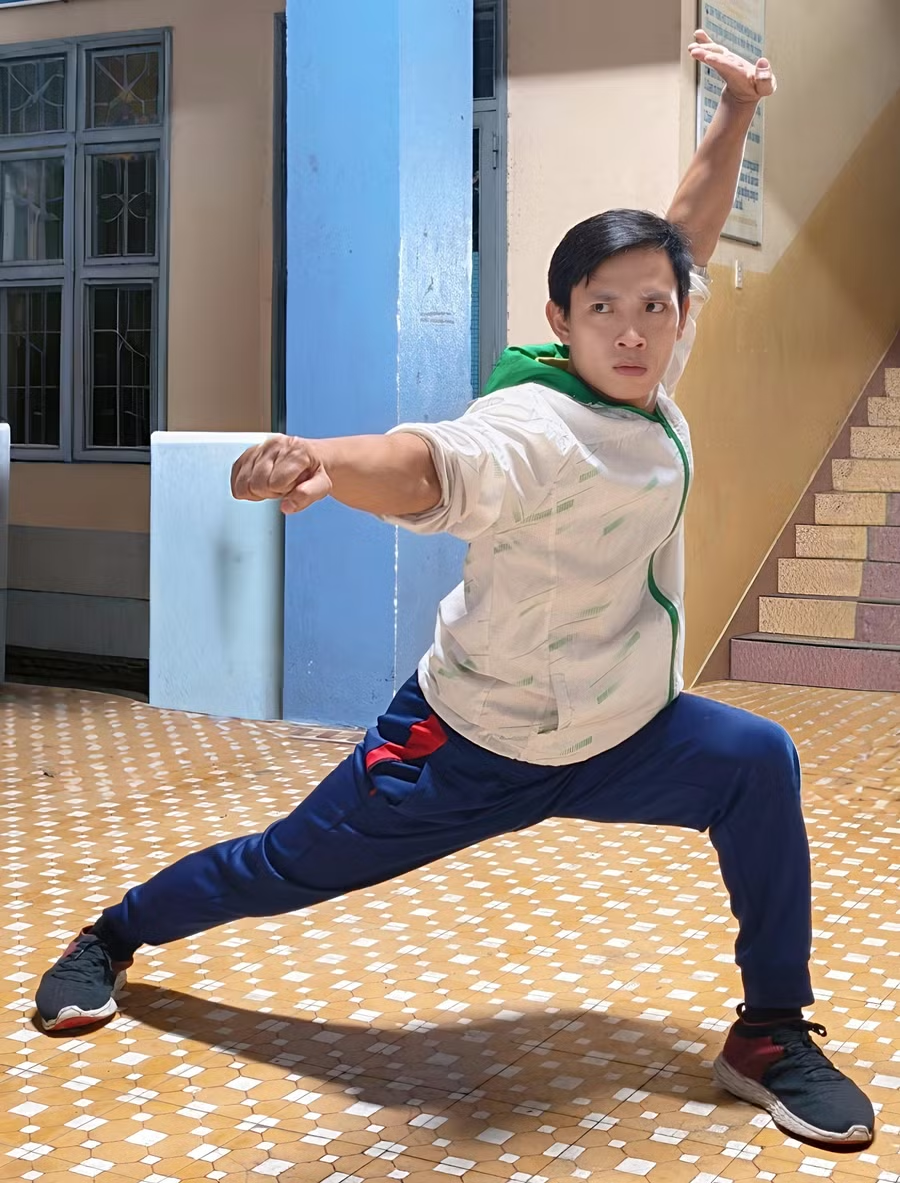
Training curricula nationwide classify stance practice as a fundamental component from beginner to advanced levels. Stances are typically grouped into high, medium and low categories, distinguished by foot positioning, distance and body height. Several include the word “mã,” meaning horse, such as “trảo mã tấn” (claw horse stance) and “hạ mã tấn” (lower horse stance), which are commonly used to assess proficiency.
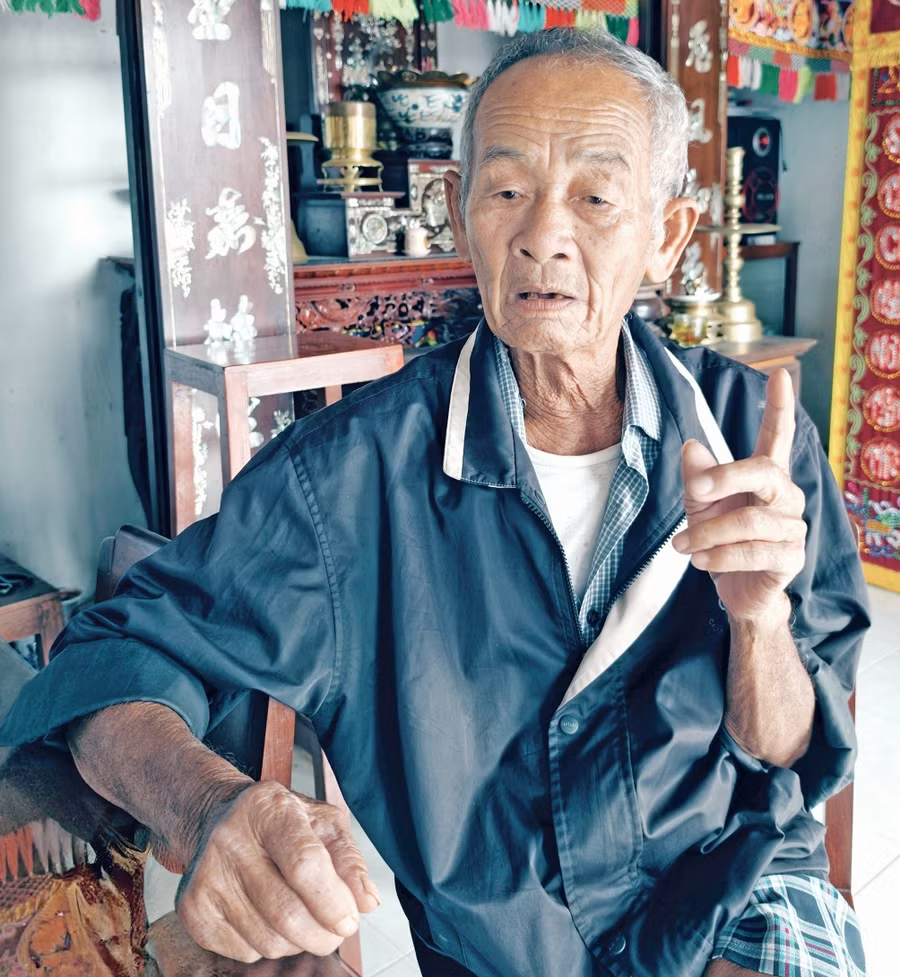
In colloquial usage, many schools refer broadly to stance techniques as the “horse stance.” Grandmaster Le Xuan Canh, 82, from An Nhon Dong Ward, describes the horse stance as encompassing the methods of movement applied in striking, attacking and defending.
“A solid stance is like a horse’s hooves gripping the ground,” he said, comparing the firm base of a practitioner to the stability that allows a warhorse to charge decisively.
In earlier decades, training was austere and prolonged. Canh recalled that after repeated stance drills, thigh and knee pain was so intense that students sometimes needed support simply to stand upright.
While some traditional stances are now less suited to modern competition formats, the principle of “taking the horse stance as the root” remains central to the art, Canh said.
The enduring influence of the horse is perhaps most clearly embodied in “Nap Ma Mon Cuong,” a distinctive unarmed form documented in the provincial scientific project “Research and Preservation of Selected Binh Dinh Traditional Martial Arts Forms” (2015–2016), led by the Department of Culture, Sports and Tourism.
According to Senior Master Nguyen Van Canh, coach at the Binh Dinh Traditional Martial Arts Center, the form appears in the secret manual “Luc Tuong Tang Vuong Pho Minh Binh Thu Chieu Phap,” compiled by founder Master Hu Minh (1518–1590). It was first taught in Bình Định at Long Phuoc Pagoda in Tuy Phuoc commune.
“Nap Ma Mon Cuong” comprises 48 continuous techniques integrating body movement, hand strikes and footwork. No technique is repeated. Movements alternate between fluid and forceful, expressing agility, versatility and the speed and endurance associated with a warhorse.
Its introductory verse encapsulates key martial principles, including the line “Nap ma kinh cong tan long thanh.” In practice, entering a stance must be as steady as mounting a horse; internal strength must be harnessed with precision; and techniques must be unleashed with decisive force.
The philosophy emphasizes exact power generation, resolute offense and harmony between internal and external strength—hallmarks of traditional Vietnamese martial arts.
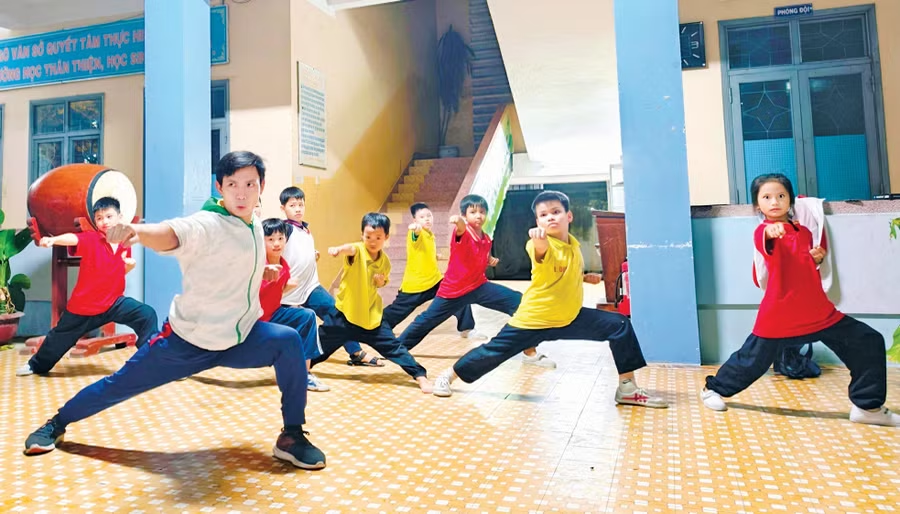
Over the past two decades, athletes from the Binh Dinh Traditional Martial Arts Center have regularly selected “Nap Ma Mon Cuong” for optional form categories at national competitions, earning high praise from judges and experts. The form has brought home more gold medals for Bình Định athletes than any other optional routine, coaches say.
Veteran athlete Pham Dinh Khiem credits the form for his own national-level successes. He said it has been introduced widely in schools and clubs both within and beyond the province, attracting practitioners from youth to elderly women.
In recent years, Khiem has adapted the form for health training at the Hoa Huong Duong Traditional Martial Arts Health Club, under the Provincial Labor Cultural House. The club selected “Nap Ma Mon Cuong” for a national health exercise competition, where it won a gold medal.
Recognition of the form has extended into academia. In the 2021 national-level project “Research on Binh Dinh Traditional Martial Arts in the Context of International Integration,” led by Dr. Ho Minh Mong Hung of the Faculty of Physical Education at Quy Nhon University, “Nap Ma Mon Cuong” was chosen as one of 24 unarmed forms proposed for inclusion in curricula for schools and clubs in the South Central Coastal region.
With sustained relevance in training, competition and community practice, “Nap Ma Mon Cuong” has come to symbolize the enduring vitality of Bình Định martial arts.
As the Year of the Horse approaches, practitioners say the form’s “iron horse hooves” will continue to carry generations of martial artists forward—steady, resilient and rooted in tradition.