The plan covers An Khê Ward, Cửu An Commune, Ya Hội Commune, Kông Bơ La Commune, and Kông Chro Commune in Gia Lai Province, with implementation extending to 2035 and a long-term vision to 2050.
The planning area spans 66.55 hectares, including 46.55 hectares in Protection Zones I and II and an additional 20 hectares to expand Protection Zone II.
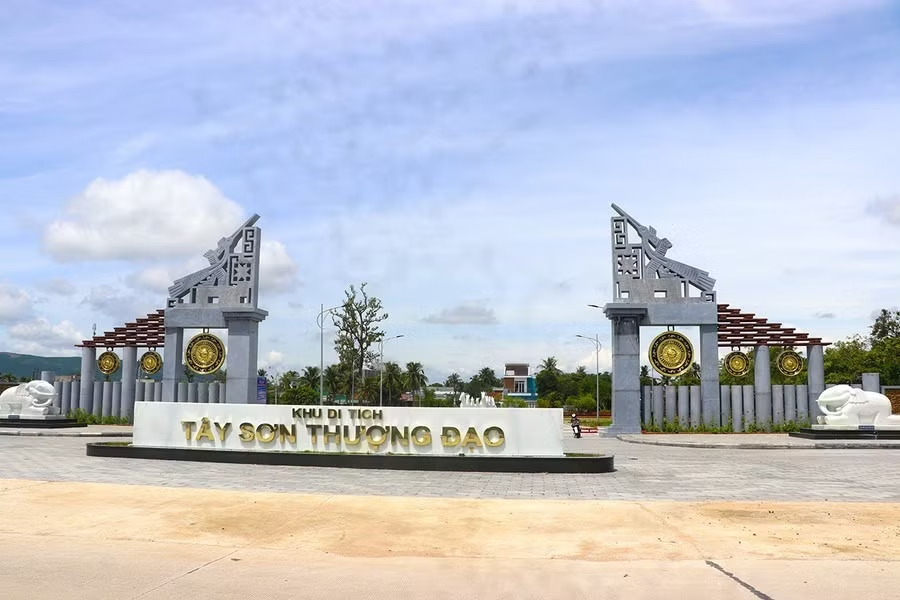
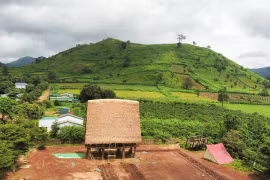
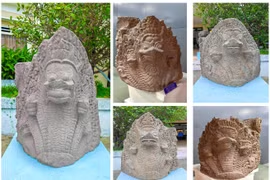
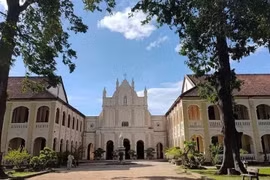
The master plan evaluates the historical, cultural, architectural, artistic and landscape values of all sites within the complex and its ecological surroundings in the Central Highlands.
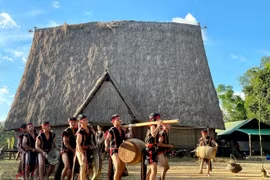
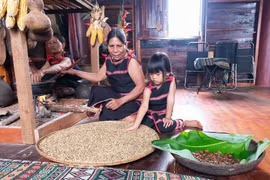
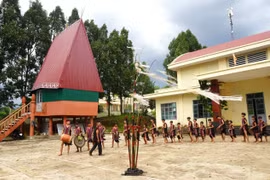
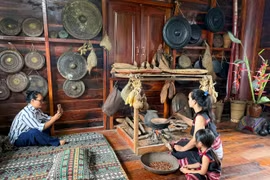
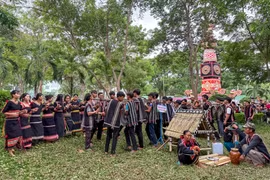
It also incorporates intangible heritage, festivals, spiritual practices, legends, and local customs, as well as cultural and religious structures and resident communities.
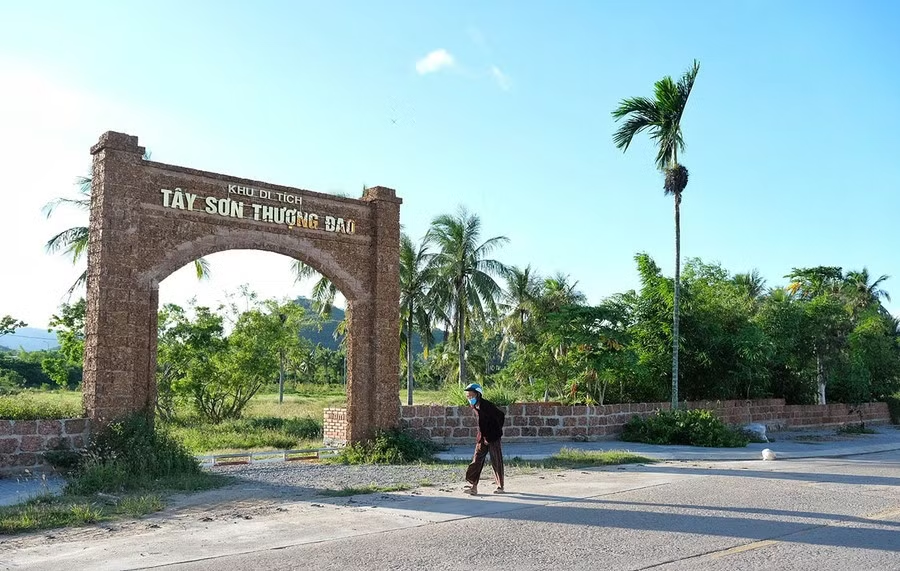
Key areas of assessment include relic management, protection, investment strategy, tourism activities, natural conditions, technical infrastructure, socio-economic factors, and the policy framework governing the site. The planning also examines the complex’s linkages with nearby heritage locations to build integrated tourism routes.
The plan’s primary goal is the long-term preservation of the only relic in the Central Highlands associated with the Tây Sơn Peasant Movement, serving as a historic corridor between the lowlands and the highlands. The master plan aims to safeguard cultural, historical and natural landscape values while supporting sustainable tourism and improving local living standards.
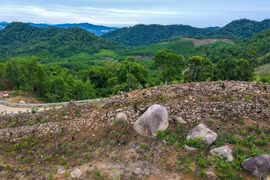
A second objective is to elevate the complex into a leading cultural and spiritual destination of Gia Lai, leveraging its archaeological significance, notably the early An Khê Paleolithic relics, and its geological and topographical attractions. The plan seeks to strengthen Kinh-Bahnar ethnic solidarity, boost local tourism revenue, restructure the economy and generate resources for heritage conservation.
A third objective is to define functional land-use zones, including residential, landscape and environmental protection areas, while organising spatial layouts and infrastructure consistent with phased conservation needs. The plan will detail strategies, timelines and comprehensive solutions for management, investment, restoration and tourism integration.
A fourth goal is to establish a legal foundation for relic management, ensuring proper preparation, appraisal and approval of component conservation projects and regulating architectural and landscape development in and around the protected area.
The planning area is classified as a special national historical relic, a long-standing multi-ethnic settlement, and a region of strategic defence importance. It is also designated as a landscape–ecological protection zone combined with cultural and tourism development functions.
The Gia Lai People’s Committee will allocate funding, approve planning cost estimates, appoint a lead agency and select consultants in compliance with legal procedures.
The committee will work with the Ministry of Culture, Sports and Tourism and other authorities to prepare and approve planning documents under the Cultural Heritage Law. It must also ensure broad consultation with communities, experts, scientists, researchers, architects and relevant organizations throughout the planning process.