For one woman, Tet in the countryside was defined not by store-bought goods but by long days beside her mother, preparing traditional cakes and sweets to honour ancestors and welcome guests. These homemade treats, crafted with simple ingredients and meticulous care, formed the heart of her family’s holiday traditions.
Handcrafted cakes marked by simplicity and labor
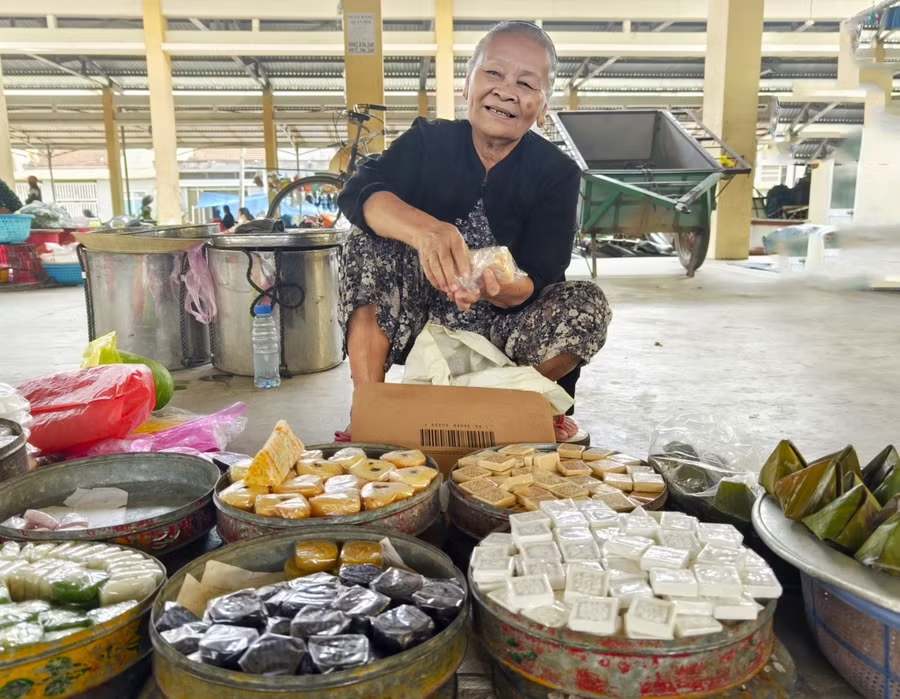
Although the family had limited means, her mother made dozens of Tet cakes each year. Among them was bánh in, a pressed cake made from sugar and finely ground roasted glutinous rice flour.
Her mother mixed the ingredients by hand, then used wooden molds to press the round cakes embossed with the character for “fortune.” Despite their elegant appearance and long shelf life, bánh in was often unpopular with children, who found it dry and difficult to swallow.
Another simple but beloved treat was bánh nổ, made from roasted glutinous rice that popped into bright white grains. Mixed with sugar syrup and ginger, then pressed into diamond-shaped molds, bánh nổ offered a fragrant, crunchy sweetness that delighted both children and adults.
More luxurious were bánh thuẫn, made from flour, sugar, eggs, and spices. The batter was cooked in molds heated over charcoal, producing golden, fluffy cakes that resembled apricot blossoms. Reserved mainly for guests, these cakes were a prized Tet delicacy.
Time-consuming candied ginger required patience and skill
The household also produced multiple types of candied fruits, including ginger, coconut, and winter melon. The most labor-intensive was whole-root candied ginger.
After selecting ginger plants with roots shaped like five-fingered hands, her mother scraped, washed, and soaked them in salt water overnight. The following day, the children pierced each root with multi-needle tools to help soften the ginger and reduce its heat.
Accidents were common, one sister once pricked her hand and burst into tears, but the process continued until the ginger could be boiled and simmered in sugar to achieve an ivory-white color. Once dried in the sun, the finished candy carried the unmistakable warmth of handmade Tet preparations.
Bánh Tét: The centerpiece of the holiday kitchen
Nothing evoked Tet more powerfully than the cooking of bánh tét, the cylindrical glutinous rice cake central to southern Vietnamese celebrations.
Her mother selected premium glutinous rice, freshly cut banana leaves, and a filling of mung beans and pork belly. She layered and wrapped each cake carefully, tying them with bamboo strings while instructing her daughters on the proper technique.
The remaining rice was used to make small bánh ú, a pyramid-shaped sticky rice cake reserved as a treat for the children. Bánh tét was cooked through New Year’s Eve, with the children gathered around the fire, eventually falling asleep to the sound of adults’ conversations.
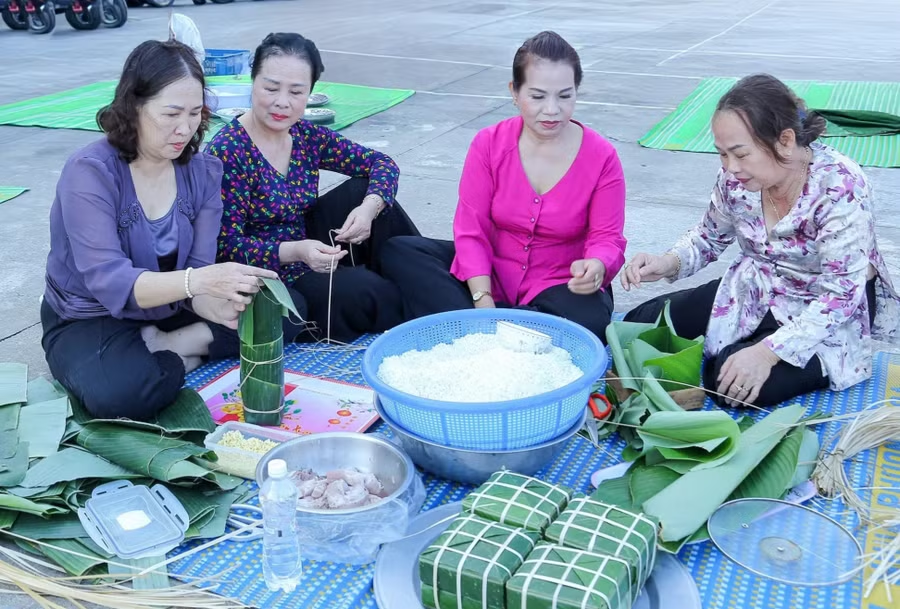
During Tet, her mother sliced bánh tét with the same bamboo string used for tying the cake, one end clenched in her teeth, the other pulled by hand, creating perfectly even pieces. When guests arrived and meals were not ready, bánh tét was served with pickled vegetables as a festive alternative.
Store-bought Tet goods lack the warmth of memory
Today, the narrator buys bánh tét and bánh chưng from well-known bakeries such as Ngọc Nga and Ba Xe. Although widely praised, these commercial products lack the rustic aroma, the depth of tradition, and the warmth of a wood-fired kitchen that defined her childhood Tet.