The decision to designate Italian food as an intangible cultural heritage was confirmed on Wednesday by Italian Prime Minister Giorgia Meloni ahead of an announcement expected from UNESCO.
“We are the first in the world to receive this recognition, which honors who we are and our identity,” she said in a statement. “Because for us Italians, cuisine is not just food or a collection of recipes. It is much more: It is culture, tradition, work, and wealth.”
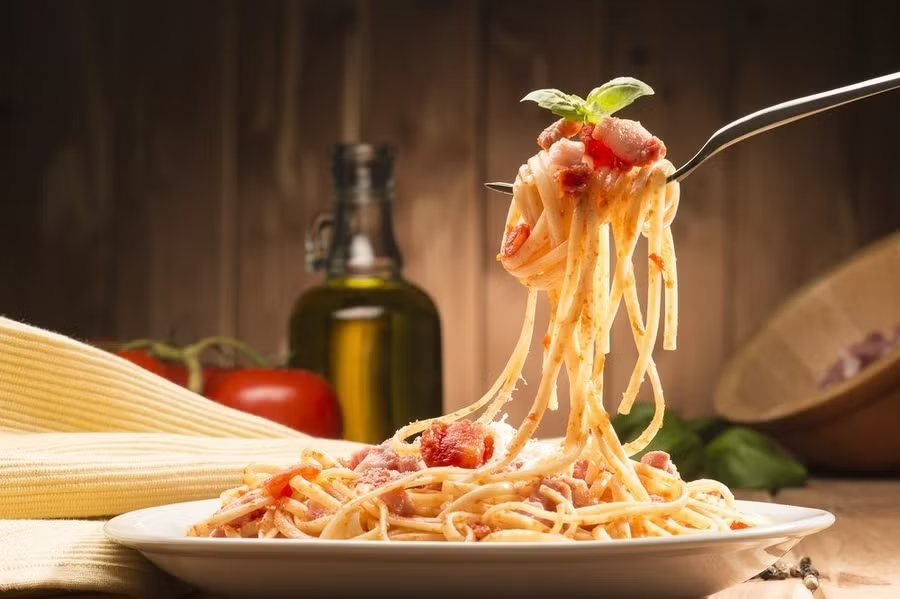
The status marks the successful end to a three-year campaign by Italy’s Agriculture Ministry to have the nation’s traditional way of growing, harvesting, preparing and serving food recognized.
“The act of cooking in Italy transcends the simple nutritional necessity to become a complex and stratified daily practice,” Pier Luigi Petrillo, one of the editors of Italy’s proposal, wrote in the initial bid.
It comes as the country continues to fight against “fake” Italian food, including a recent complaint lodged with the European Parliament after jars of prepackaged carbonara sauce showed up on its shelves. Italy has also fought against the production of fake olive oil and the use of Italian-sounding names on products that were not made in Italy.

The recognition by UNESCO should help protect the cuisine from such culinary abuses, the country’s agriculture minister, Francesco Lollobrigida, said.
“This recognition is a source of pride but also of awareness of the further valorization that our products, our territories, and our supply chains will enjoy,” Lollobrigida said in a statement. “It will also be an additional tool to counter those who seek to exploit the value that the entire world recognizes in Made in Italy, and it will represent new opportunities to create jobs and wealth in the regions, and to continue in the tradition that UNESCO has recognized as a World Heritage Site.”
UNESCO heritage status typically bestows added prestige to designated entities — which range from historical landmarks to other so-called intangible assets, such as pool swimming in Iceland or beekeeping in Slovenia. It also places an added burden of responsibility on countries to safeguard their cultural treasures.
“We already export 70 billion euros in agri-food products, and we are the leading economy in Europe in terms of agricultural added value,” she said. “This recognition will give the Italian economy a decisive boost to reach new heights.”
Italy’s previous contributions to the list of intangible cultural heritage include manual bell ringing (2024), opera singing (2023), truffle hunting and extraction (2019), Neapolitan pizza makers (2017), and celebrations of big shoulder-borne processional structures (2013). Italy was also listed among the places that enjoy the Mediterranean diet when it was added in 2013.
In its bid, Italy argued that the country’s “living gastronomic landscapes” reflect the nation’s biocultural diversity and that the cuisine adheres to sustainability, seasonability and non-wasteful recipes, which adds to its uniqueness. The proposal also pointed out that the passing on of traditions within families over generations creates a sentimental connection to food.