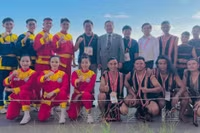
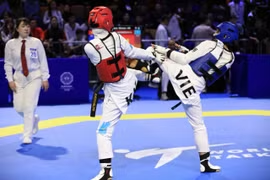
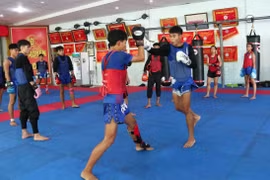
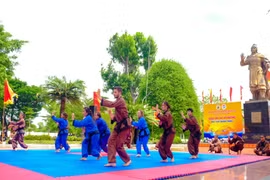
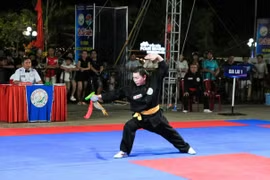
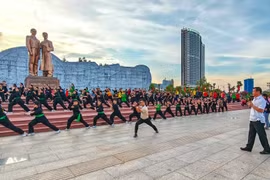
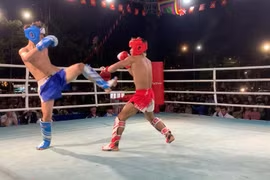
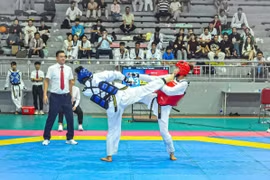
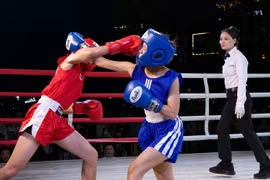
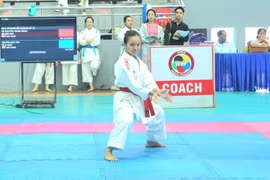
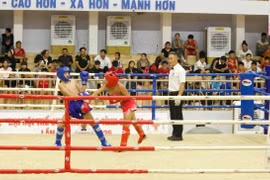
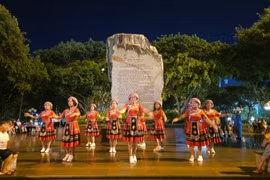
His work has opened systematic access to martial arts for thousands of students and helped nurture a new generation of athletes and young coaches.
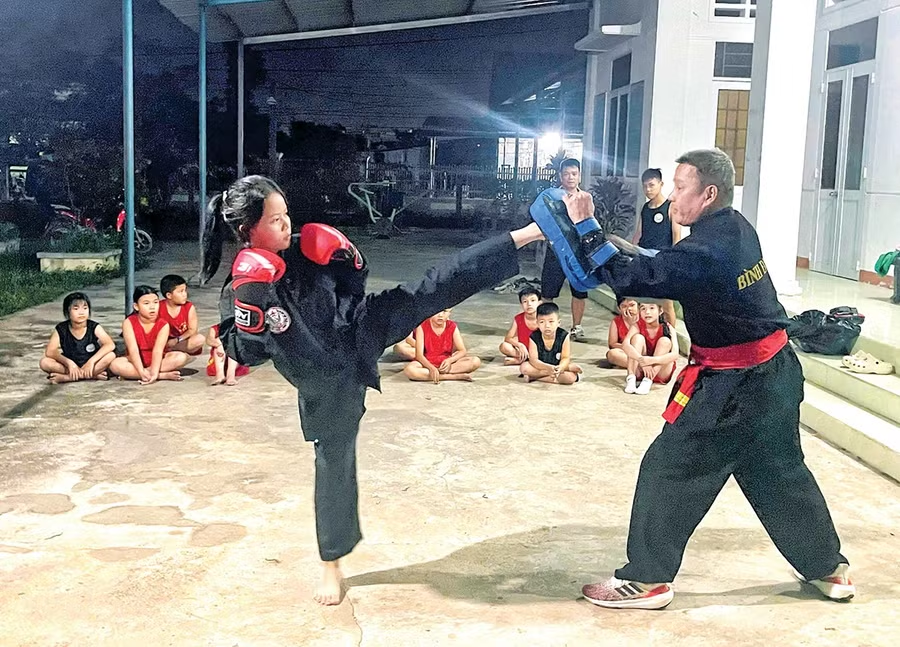
As former chairman of the district martial arts association, Công worked directly with the Phù Cát District Department of Education and Training and school leaders to define educational goals, design safe and age-appropriate curricula, and secure support from parents and local authorities. He said traditional martial arts, particularly Bình Định styles, instill discipline, humility, confidence and collective responsibility, qualities he considers essential to students’ character formation.
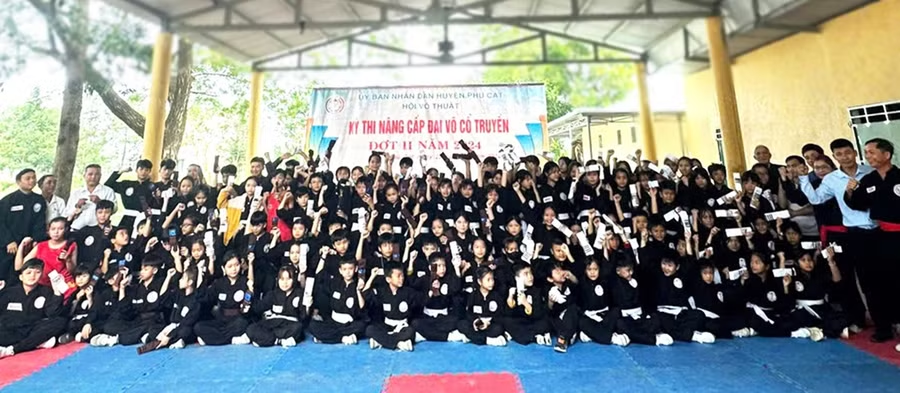
Born in 1970 in Ngô Mây town, Công trained at the Hồng Kim Nghi dojo, competing in nearly 50 matches in his early years. The experience shaped his technical skill, resilience and sense of martial spirit, which later guided his push to integrate martial arts into formal education.
His initiative faced multiple hurdles, including the need for qualified coaches with pedagogical skills, standardized safety conditions and administrative consensus. Through sustained outreach and credibility built over decades, Công gradually secured alignment among schools, local government and parents, enabling clubs to operate both as extracurricular programs and talent pipelines. Several students have progressed to advanced training and competitive levels, contributing to the region’s sports movement.
Công says the next phase requires structural reforms as the local government shifts to a two-tier model. He supports establishing local martial arts associations under the provincial federation to coordinate teaching programs, expand satellite training centers and align with the province’s high-performance sports development plan for 2026–2030, with a long-term vision toward 2045.
He also recommends that the provincial Department of Culture, Sports and Tourism collaborate with the Department of Education and Training to organize annual competitions at provincial or inter-communal levels. Such events, he said, would motivate students, provide clear goals and help sustain a broad and enduring martial arts movement across schools.