(GLO) – After turning 30, Gia Lai-born actress Lê Hạ Anh has chosen not to chase the dazzling spotlight, but instead quietly makes her mark through deeply nuanced roles.
In 2025, Hạ Anh has reaped many “sweet fruits” for her efforts, most notably with her portrayal of Hồng in the film “Mưa đỏ” (“Red Rain”).
At the beginning of the lunar month of December, Year of the Snake, Lê Hạ Anh took time to sit down with reporters from Gia Lai Newspaper, Radio, and Television to share her perspectives on her craft and her aspirations for the Year of the Horse.
▪ Mưa đỏ is a war film—a genre that is not easy for female actors. What made you decide to take on this project? Did you have any special memories during filming?
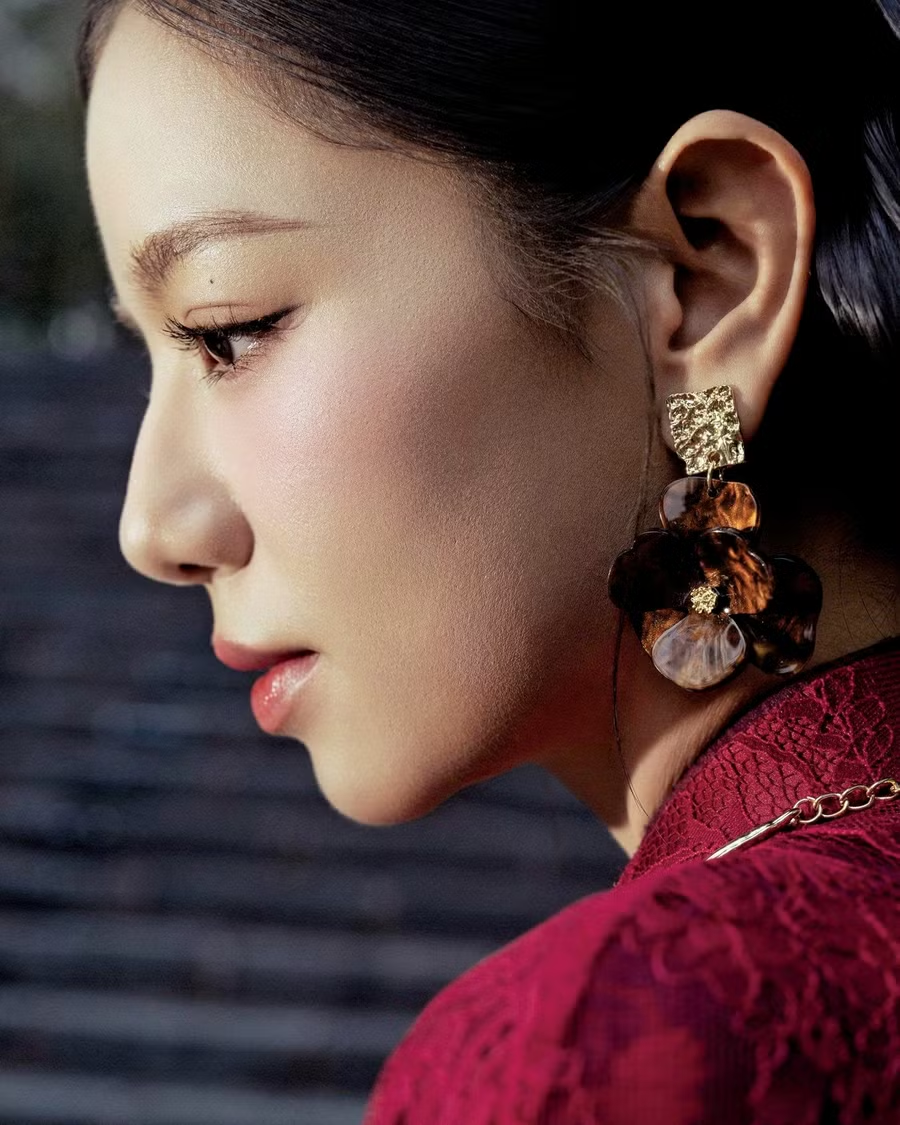
Actress Lê Hạ Anh. Photo: Provided by the artist
- The script moved me from the very first read. Mưa đỏ is not just about war, but about people in wartime.
The character Hồng is layered with emotions, representing the silent women behind the front lines. I saw this as a rare opportunity to “touch” a very different kind of role.
There were many scenes shot amid smoke, fake explosions, mud, and rain. Sometimes I was so exhausted I just wanted to sit down and rest for a moment. Those moments helped me understand, in part, the harshness that previous generations endured to win independence and freedom for our country.
▪ Hồng doesn’t have many lines, but she leaves a lasting impression on the audience. In your view, what was the most challenging aspect of portraying this character?
- With roles that have few lines, every emotion must be conveyed through the eyes, gestures, and breathing. I had to constantly remind myself: Hồng is a very ordinary woman, and it is that ordinariness that gives her weight.
I didn’t focus on making the character stand out, but rather on expressing the feelings of a woman living through war.
Hồng is not a hero; she simply does very ordinary things, but it is precisely this ordinariness that gives the role depth. I wanted the audience to remember her for her authenticity, not for lengthy dialogue.
▪ After Mưa đỏ, your name has been mentioned much more frequently. Looking back on your journey so far, how do you feel at this moment?
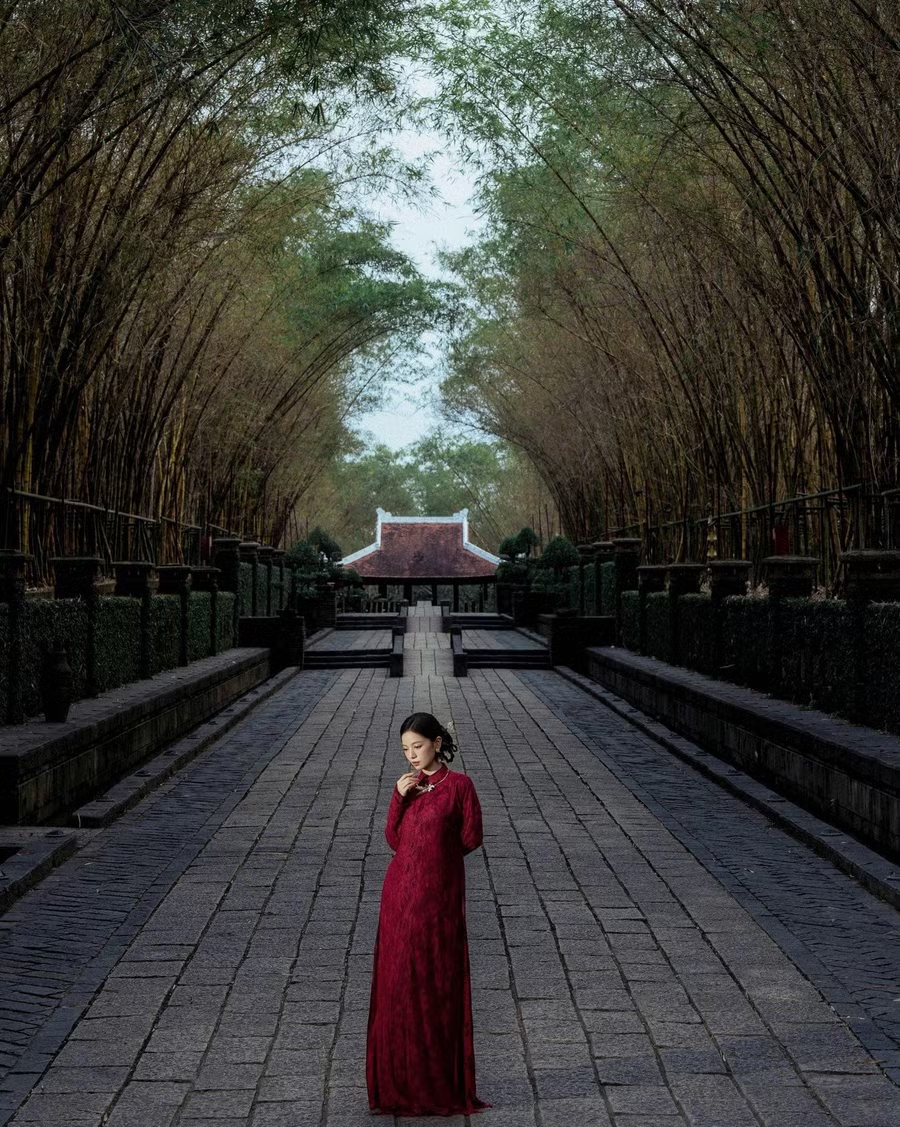
Actress Lê Hạ Anh is not afraid to take on villainous roles. Photo: Provided by the artist
- After Mưa đỏ, I feel grateful and extremely proud. Grateful that the team’s efforts were recognized and loved by the audience. Proud that I didn’t get “lost” among the countless roles in an increasingly vibrant film industry.
Looking back, I think it’s been a journey of learning to trust my own choices.
This success is a milestone, reminding me to take my craft even more seriously, to remain sincere, and to never forget why I chose this path in the first place.
▪ Previously, you were often cast in villainous or even controversial roles. Have you ever felt pressured by harsh audience reactions?
- Honestly, I’m used to it. If you play a villain and don’t get “stoned” by the audience, that’s when you should worry. I think audience reactions—positive or negative—show that they’ve watched and cared about the character. The most important thing is to act truthfully and accurately according to the character’s psychology; whether the audience loves or hates the character is a natural response.
Every role has its own value. Villainous roles often offer more psychological depth, but if you don’t control it well, it’s easy to go “over the top.”
I don’t choose roles based on whether they’ll attract attention, but on whether they challenge me and give me a chance to explore the character’s inner world.
▪ At 30, many actors choose to build their image in the media to break through. Why have you chosen to keep a relatively low profile?
- It’s probably my personality. I’m used to a simple lifestyle and don’t like noise. For me, peace is very important.
If I’m not filming, I usually stay home, read, or have coffee near where I live. I believe that when I live a balanced life, I bring more positive energy to my roles.
2025 was a year of many achievements for actress Lê Hạ Anh. Photo: Provided by the artist
▪Looking back on your journey, how do you think you’ve changed compared to your early days in the profession?
- I’m calmer and understand myself better. Now, I focus all my energy on doing each role well. Every day on set, if I learn something new, that’s progress for me.
▪ On the occasion of the New Year, what are your wishes for yourself, and do you have a message for the readers and audience who have always supported you?
- On the occasion of the 2026 Lunar New Year, I wish all readers and viewers good health, much joy, and wonderful new beginnings. Thank you for always following and supporting me.
I hope the new year brings everyone lots of positive energy, enough peace to get through busy days, and enough love to hold on to what matters most in life.
As for myself, I wish for good health, meaningful roles, and the chance to work with dedicated teams. I just hope that when people watch the films I’m in, they feel their time was well spent.
▪ Thank you for this engaging conversation. Wishing you a peaceful and creatively inspiring new year!
Lê Hạ Anh (born 1995) graduated in Finance and Banking from the University of Economics Ho Chi Minh City. She won first prize in the “Fashion Star” competition in 2011.
Since then, the actress has ventured into acting, participating in numerous film and television projects such as Mưa đỏ, Trái tim bất hạnh, Chiếc vòng ngọc bích, Yêu đi đừng sợ, Cả một đời ân oán, Đánh cắp giấc mơ, Lật mặt: 48h, among others.
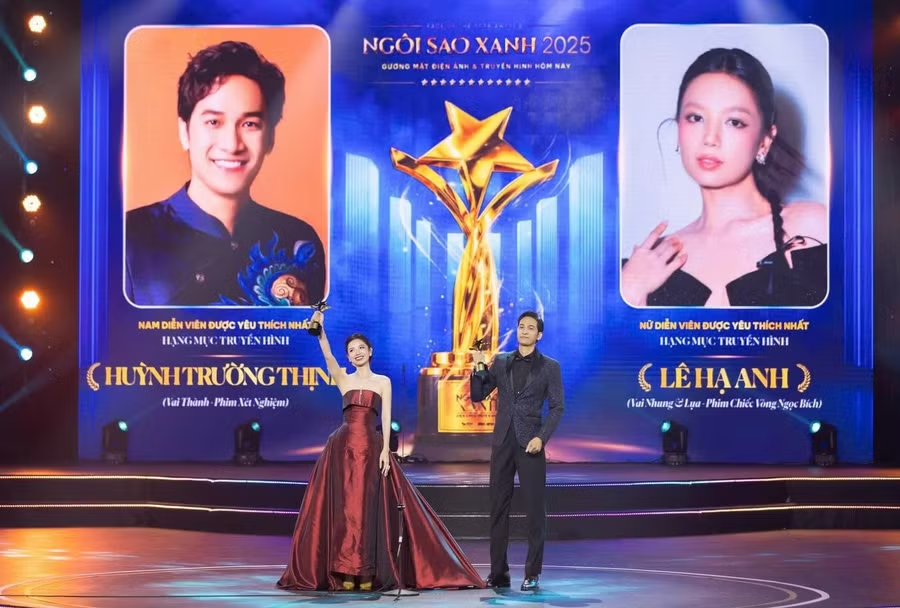
At the 2025 Ngôi sao xanh Awards, Lê Hạ Anh achieved major success, being honored in several categories: Most Favorite On-Screen Couple in Mưa đỏ with actor Steven Nguyễn; Most Favorite Actress in Chiếc vòng ngọc bích; and Best Supporting Actress in Trái tim bất hạnh.
Traditional theater in Gia Lai is turning to history not simply to recount heroic figures and events, but to connect a younger generation with the past through the distinctive language of hát bội and bài chòi opera.
Lê Kiều Oanh was crowned Miss Vietnam Entrepreneur Talent and Beauty 2026 on September 10, as the seventh edition of the pageant concluded at the Gia Lai Provincial Convention Center.
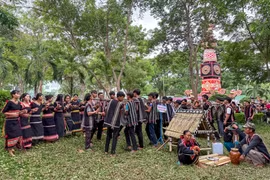
Vinh An Village in Bình Phú Commune, Gia Lai Province, will host the “Weekend Gong Night - Enjoy and experience” program on September 11, offering locals and visitors an opportunity to experience the cultural heritage of the Bahnar people.
An exhibition in Quy Nhon has brought together cultural traditions, heritage and tourism products from 16 provinces and cities, offering visitors a glimpse into Vietnam’s diverse cultural identity.
An art program in Gia Lai on September 7 brought together traditional performances representing different regions of Vietnam, highlighting the country’s cultural diversity and promoting the image of its people and tourism.
Three Bryde’s whales spotted hunting off Vũng Bồi in Gia Lai have highlighted the ecological richness of the Đề Gi estuary while underscoring the fishing communities’ longstanding culture of respecting and protecting the sea.
Dương Kim Thiên An, a second-grade student at Nguyen Van Troi Primary School in Gia Lai Province, has won four national art awards in 2026, marking a promising start to her journey in painting.
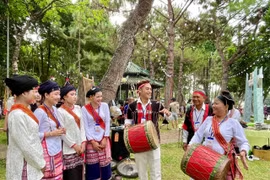
Traditional culture is being brought closer to children in Gia Lai through hands-on activities that allow them to experience gong music, xoang dances and hát bội art rather than simply learn about them through lessons.
Bitterness is the defining taste of traditional Jrai cuisine in Phu Tuc, where forest leaves, bitter vegetables and distinctive cooking methods have shaped dishes closely tied to the community’s way of life.
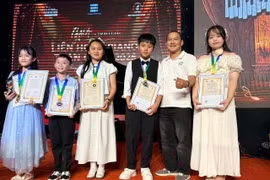
Two young pianists from Gia Lai won gold medals at the finals of the 2026 National Piano Festival, held in Buon Ma Thuot Ward, Dak Lak Province, from August 4 to 9.
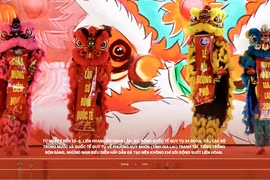
Thirty-four troupes and clubs from Vietnam and abroad gathered in Quy Nhon Ward, from August 7-10 for the International Lion, Unicorn and Dragon Dance Festival, delivering four days of energetic performances and closely contested events.
Gia Lai is moving to implement new policies that put ethnic minority communities and cultural bearers at the center of efforts to safeguard traditional heritage, with a stronger focus on passing cultural practices to younger generations.
Two contestants representing Gia Lai have secured places in the national semi-finals of the Miss Vietnam 2026 pageant, drawing attention not only for their appearance but also for their academic achievements, leadership experience and commitment to community engagement.
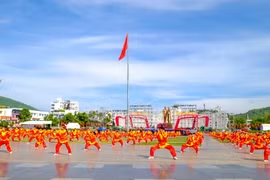
Hundreds of martial artists gathered at Nguyen Tat Thanh Square in Quy Nhon Ward on Sunday to perform synchronized demonstrations of Vietnamese traditional martial arts as part of the 9th International Vietnamese Traditional Martial Arts Festival - Gia Lai 2026.
(GLO) – Foreign Trade University beauty queen Le Phuong Nghi (an alumna of Hung Vuong High School for the Gifted, Gia Lai province) has officially advanced to the preliminary round of the Miss Vietnam 2026 pageant.
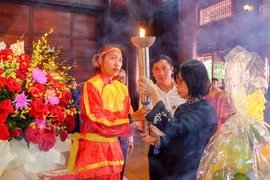
The 9th International Vietnamese Traditional Martial Arts Festival officially began on Sunday with an incense offering ceremony and a sacred flame procession, bringing together martial arts delegations from across the country and overseas for the opening of the 4-day cultural and sporting event.
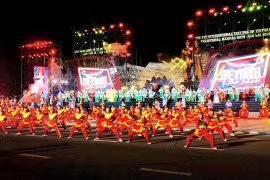
The 9th International Vietnamese Traditional Martial Arts Festival officially opened on Sunday at Nguyen Tat Thanh Square in Quy Nhon Ward, bringing together martial arts masters, practitioners from Vietnam and abroad in a celebration of traditional martial arts and its international presence.
Musician Trần Kim Vân has been awarded a Certificate of Merit for his outstanding contributions at the 2026 National Three-Region Folk Singing and Instrumental Festival.
Phu Tuc Commune in Gia Lai Province will host its first Ethnic Minority Cultural and Sports Festival alongside an Agricultural Market introducing local OCOP products on August 8, marking the first anniversary of the commune's establishment.
The seventh episode of Say Hi Rực Rỡ will see contestants compete in a series of team-based challenges that test strategy, coordination and endurance, while continuing to blend competition with light-hearted entertainment.
Large crowds of residents and tourists gathered in South Quy Nhon Ward, Gia Lai Province, on the evening of July 10 for the “South Quy Nhon - Call of the Sea” street carnival, a cultural and tourism event showcasing the coastal area’s traditions and ambitions for marine tourism development.
In early July 2026, the Vietnam Rice Industry Association (VIETRISA) presented awards in Ho Chi Minh City for the “Vietnamese rice - Origins and future” creative writing contest.
After a demanding first day of challenges on Cù Lao Xanh island, the artists of the reality show “Say Hi Rực Rỡ” turned their attention to preparing dinner, creating a mix of humorous moments and relaxing experiences against the island’s coastal backdrop.