Now preserved at the Da Nang Museum of Cham sculpture, the work is considered exceptional within the broader sculptural tradition, where horse imagery seldom occupies a central role.
The relief depicts three pairs of horse-drawn chariots in fierce pursuit, a dramatic scene from the Mahabharata. Carved with elongated limbs, taut necks and clear galloping motion, the horses drive the composition’s sense of speed and tension. A warrior stands on a rear chariot with bow drawn, while a figure on the front chariot lies limp, evoking the fatal turn of battle.

Unlike the symbolic or ritualized horses seen in other Cham centers, the Binh Dinh carving presents the animal as an engine of war—its hooves effectively determining the narrative’s rhythm. Scholars regard this as one of the few instances in which the horse becomes a decisive force rather than a decorative or supporting motif.
Comparative pieces across Champa highlight its distinctiveness. At Trà Kiệu, a 10th-century Ramayana altar includes a single ceremonial horse, short and rounded, used to signify courtly processions rather than combat. Other sites—such as Đồng Dương, Khương Mỹ and Mỹ Sơn Sanctuary—treat the animal as a spiritual, cosmic or mythological symbol linked to deities, renunciation narratives or natural forces.
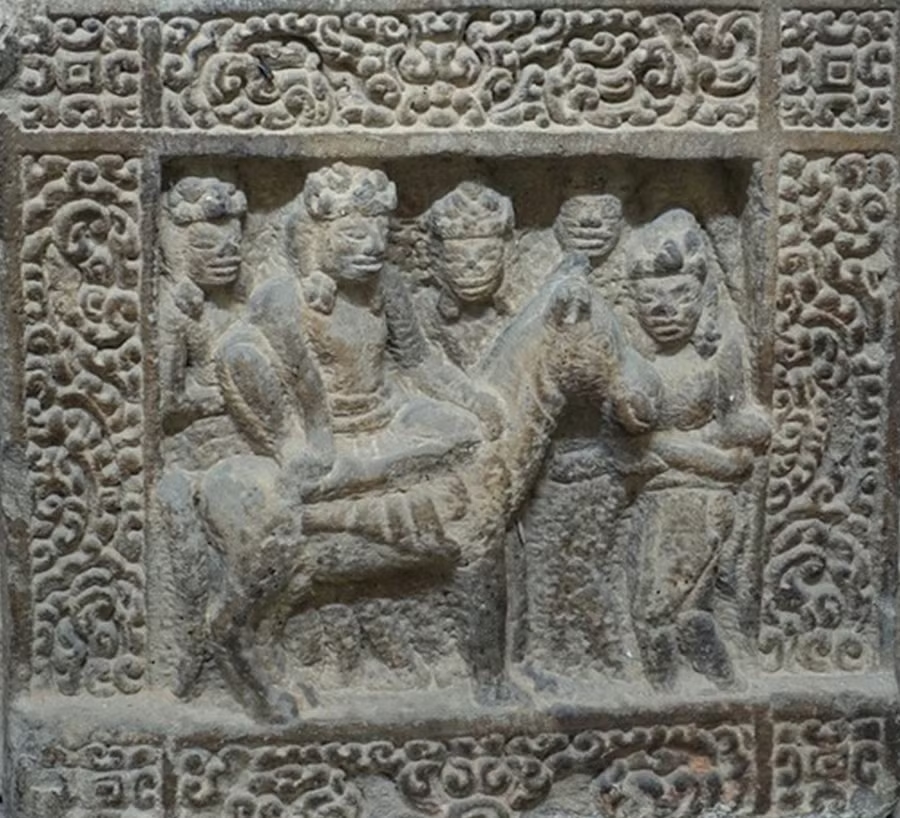
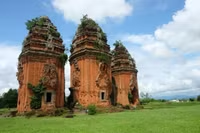
By contrast, the Binh Dinh relief is firmly anchored in themes of conflict and heroism. Researchers say its emphasis on warfare aligns with the region’s role as a major political and military center of Champa from the 11th century onward, where epic imagery offered a fitting visual language for local identity.
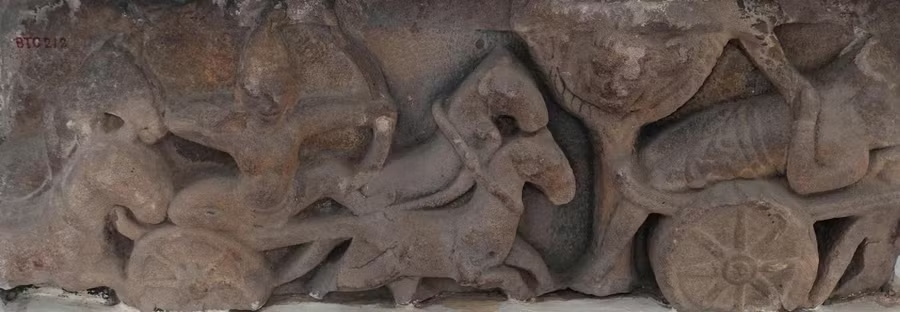
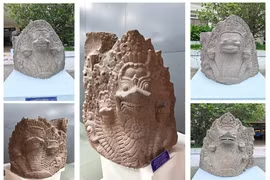
The scarcity of horse imagery in Binh Dinh’s Cham remains further elevates the piece’s cultural weight. Though not a dominant motif in Champa cosmology, the horse here embodies power, destiny and the martial ethos that once shaped the region.
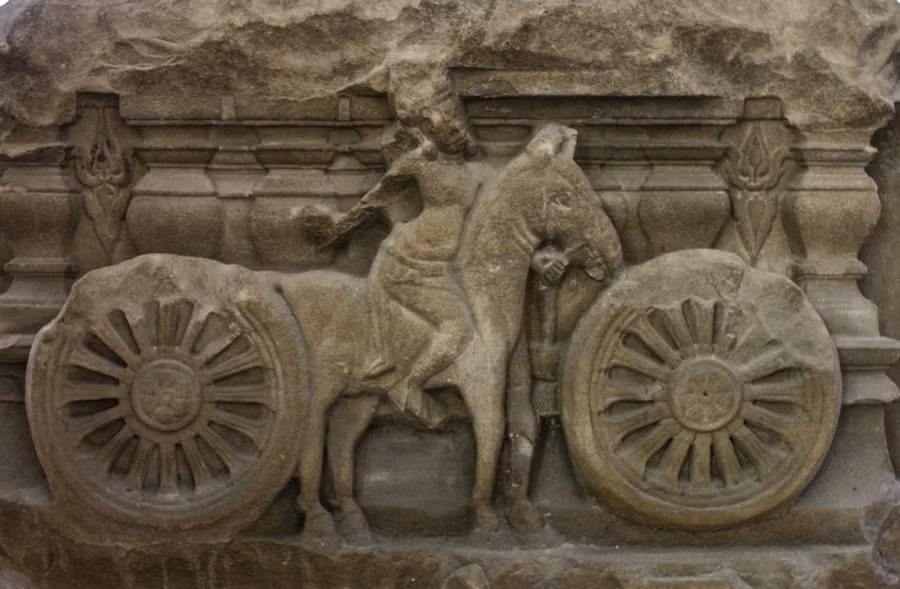
Today, as Binh Dinh reflects on its cultural roots—long celebrated as the “Land of Martial Arts”—the carved echo of ancient hooves continues to resonate through the sandstone reliefs that survive, preserving the momentum of epic narratives from a millennium ago.