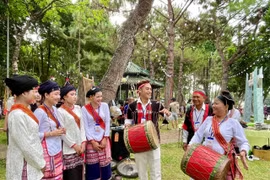
Held from the 11th to the 14th days of the lunar calendar, the festival is increasingly positioned as a distinctive tourism product, contributing to the promotion of the locality during the National Tourism Year - Gia Lai 2026.
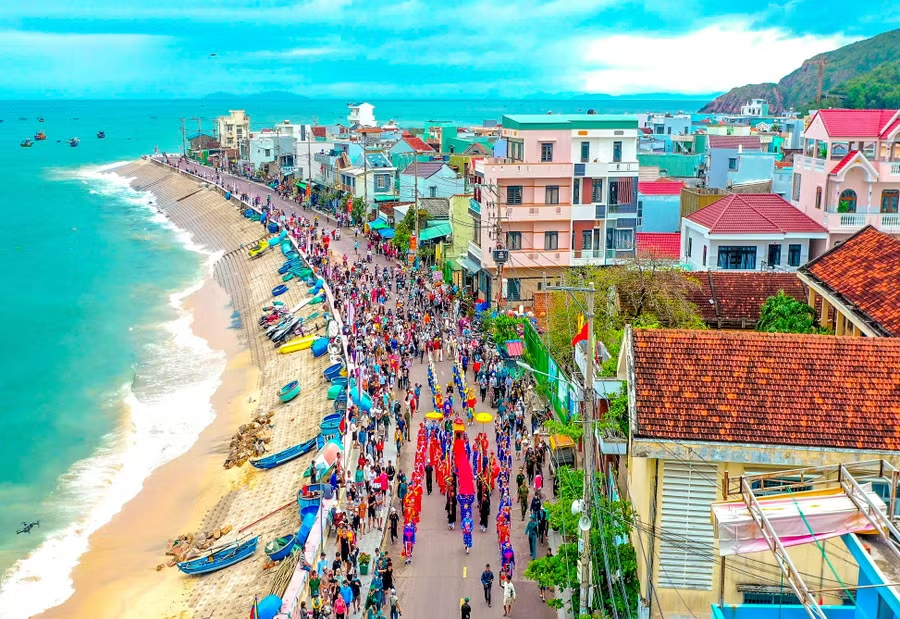
In the weeks leading up to the event, the village’s three neighborhoods. Hải Bắc, Hải Đông and Hải Nam, are transformed.
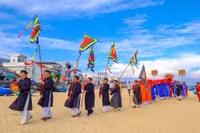
Colorful flags line the coastline and the Nam Hải Whale Shrine, while fishing boats are decorated in festive displays. Anticipation builds across generations, as residents prepare days in advance for the celebration.
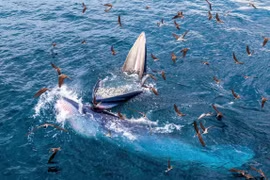
Like many coastal communities in Vietnam, Nhơn Hải’s festival is rooted in the belief in the whale deity, known as Cá Ông or Thần Nam Hải. Fishermen regard the whale as a guardian spirit that protects them at sea, and the festival’s ceremonial elements are conducted with solemnity and deep reverence.
Nguyễn Khắc Vũ, head of the local fishing guild, said the event reflects both spiritual devotion and cultural continuity. It is an occasion to honor the deity and the village’s founding ancestors, while reinforcing traditional values among younger generations.
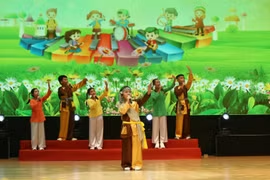
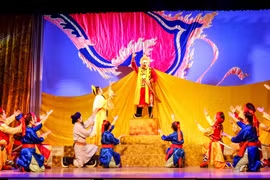
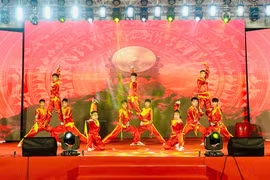
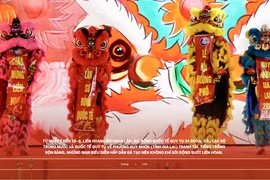
Among the festival’s highlights is the bả trạo performance, which reenacts fishermen’s journeys through turbulent seas. Equally notable is a rare ritual sword dance, preserved as a ceremonial act rather than mere spectacle. The performance symbolizes reverence for the deity and expresses the community’s hopes for protection and prosperity.
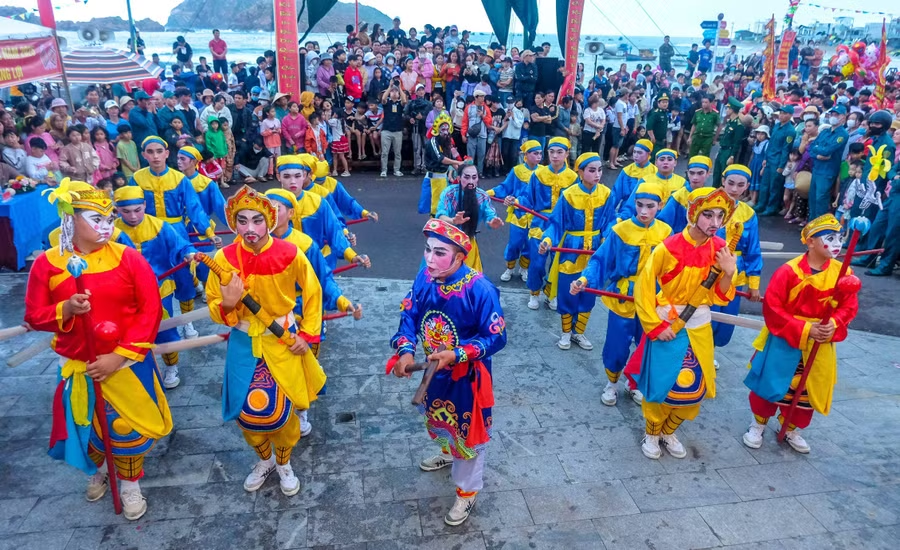
The sword dance troupe comprises 33 members, including ritual leaders, lantern bearers, tiger warriors, and sword soldiers divided into two groups. Performers wear elaborate costumes inspired by Bình Định’s traditional hát bội opera, combining stylized movements with martial arts techniques.
This fusion of folk belief, classical performance and martial tradition gives the festival its distinctive cultural identity. Veteran performer Nguyễn Văn Tình, who has taken part for over two decades, described the discipline required: movements must be precise and expressive, reflecting the solemnity of the midnight ritual.
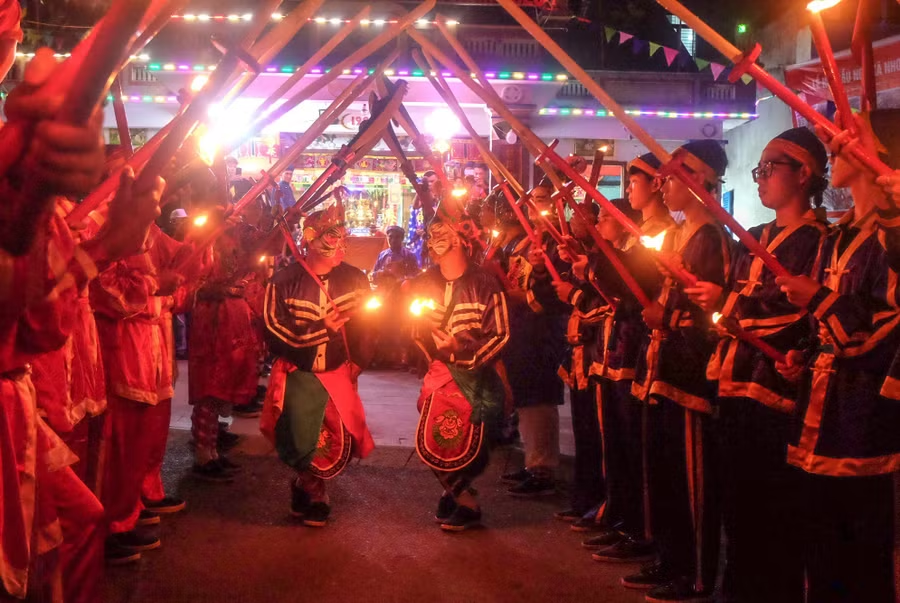
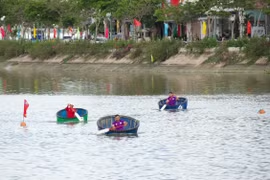
This year’s festival is being held on a larger scale, incorporating cultural, sporting and tourism activities to attract visitors. Events include boat racing, basket boat rowing, tug of war, football and hát bội performances, offering a vivid glimpse into coastal life.
Local residents describe the festival as a “second Tết”, underscoring its importance to the community. Its timing, immediately following the opening of the National Tourism Year - Gia Lai 2026, has further heightened expectations of increased visitor numbers.
Authorities say the festival represents both a spiritual practice and a valuable cultural asset. Efforts are underway to prepare a dossier seeking recognition as a National Intangible Cultural Heritage, a move seen as crucial for preserving and promoting its unique traditions.
Officials note that such recognition would not only confer status but also support the safeguarding and transmission of traditional performance forms, particularly the sword dance and bả trạo.
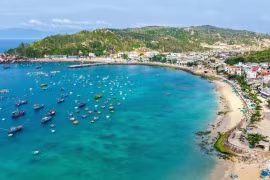
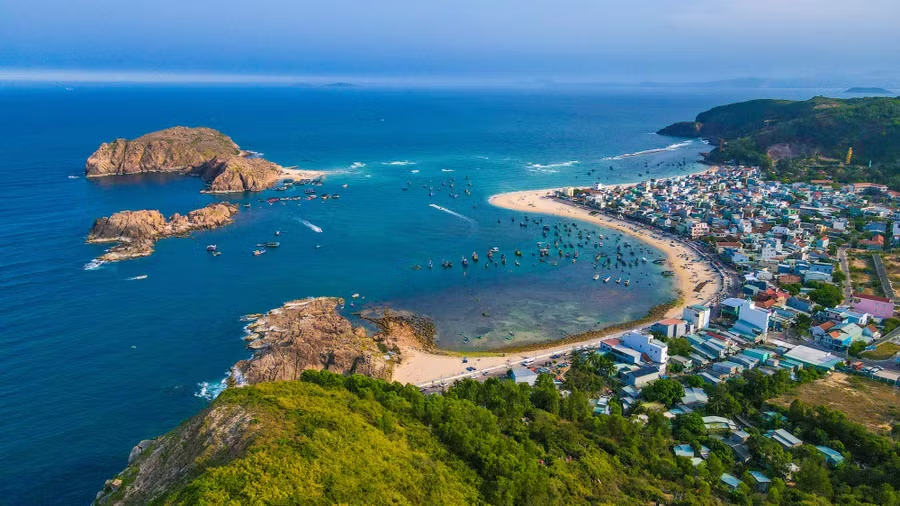
Visiting Nhơn Hải fishing village during this season, tourists can immerse themselves in the vibrant atmosphere of the whale worship festival, with solemn rituals and distinctive cultural colors, while enjoying a range of unique experiences: snorkeling to admire coral reefs in crystal-clear waters and capturing underwater photos; savoring fresh seafood and enjoying squid pancakes right on the tranquil beach.
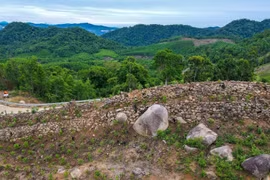
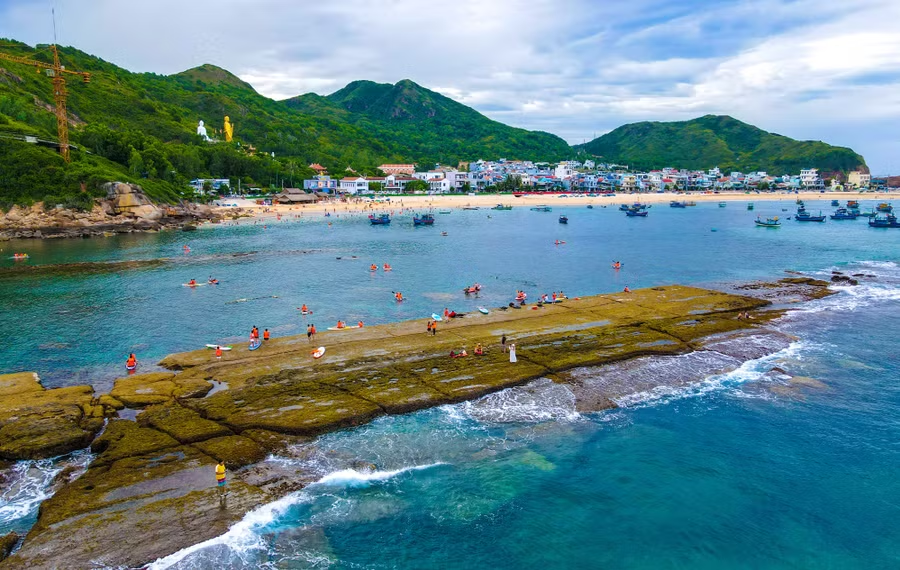
In the afternoon, as the tide recedes, visitors can check in at the mossy green rocks along the breakwater, stroll around the rocky outcrops of Gành Trên and Gành Dưới, or explore the ancient sea wall.
Nhơn Hải is also home to temples, the Lady’s Shrine, and the village communal house for visitors to explore. All these elements combine to create an unforgettable, sea-infused journey.