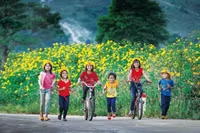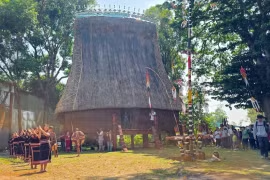
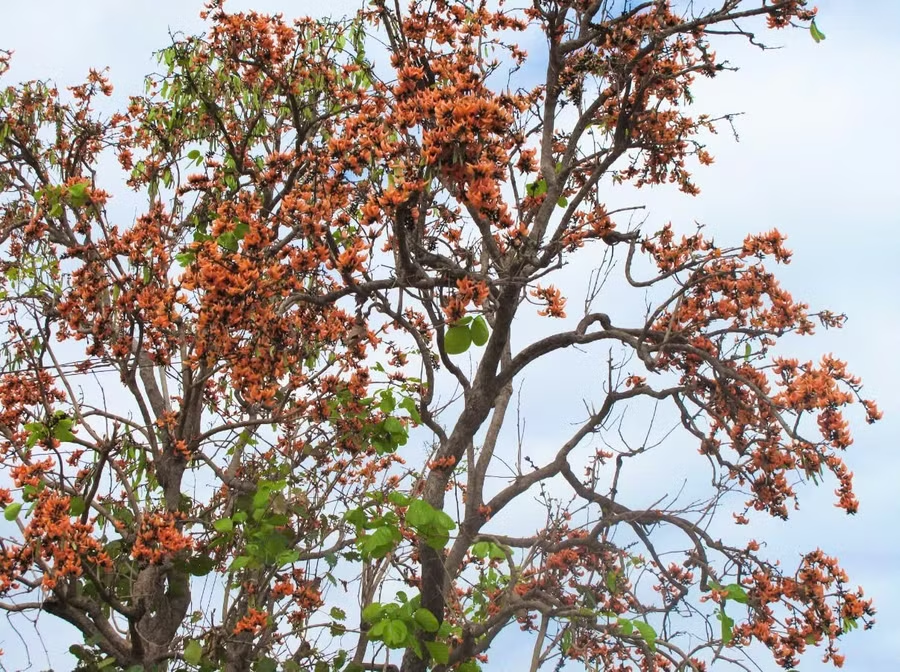
Under the intense sunlight of the Central Highlands, the blossoms stand out sharply against deep blue skies, creating a striking natural landscape across Jrai villages. Known locally as Plah or Mlah in the Jrai language, the tree is also referred to by other names such as giềng giềng, lâm vố, and kok chăn. Scientifically identified as Butea monosperma (Lam.) Taub, it belongs to the legume family.
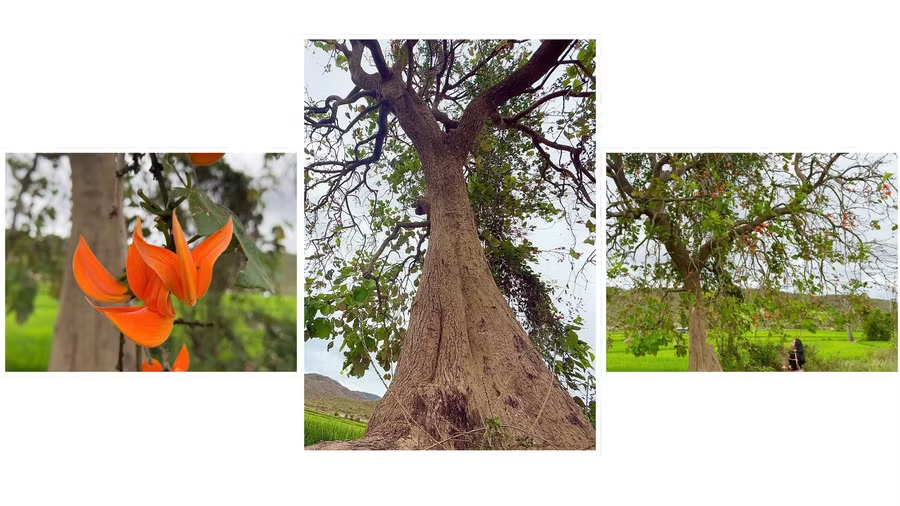
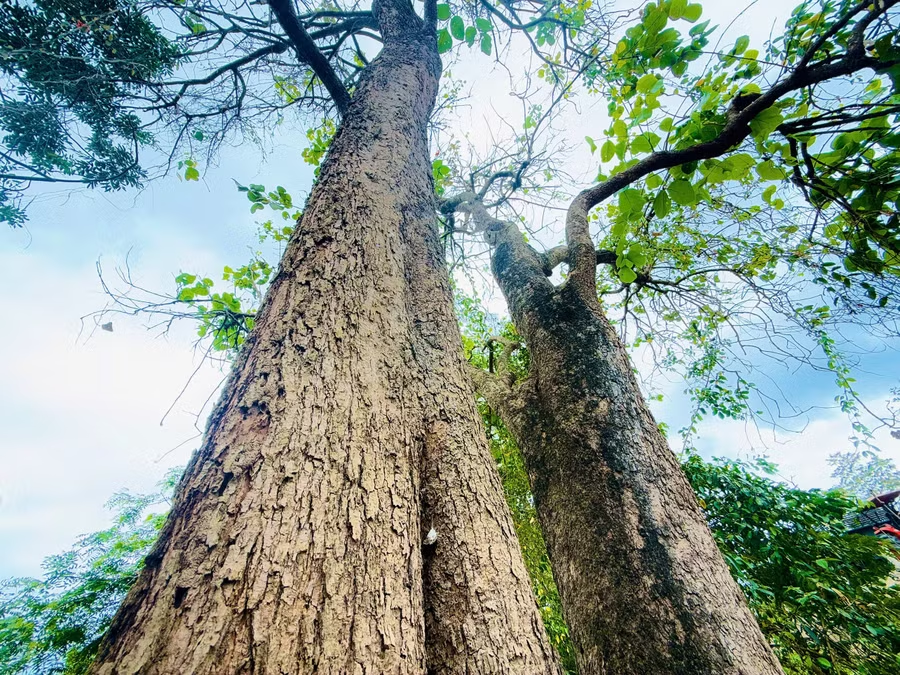
The Plah tree typically grows between 8 and 10 metres tall, with a twisted trunk and irregular branches. Its thick, grey-brown bark is often mottled and can appear dusted with white mould. When cut or damaged, the tree releases a dark red resin. Its leaves are large, compound, and asymmetrical, with a soft, hairy underside.
According to Kpă Pual, a researcher of Jrai culture, the Plah flower is often mistaken for the silk-cotton flower, though the two are distinct. While silk-cotton trees belong to the Bombacaceae family and are widespread across Vietnam, the Plah tree is unique to the Central Highlands.
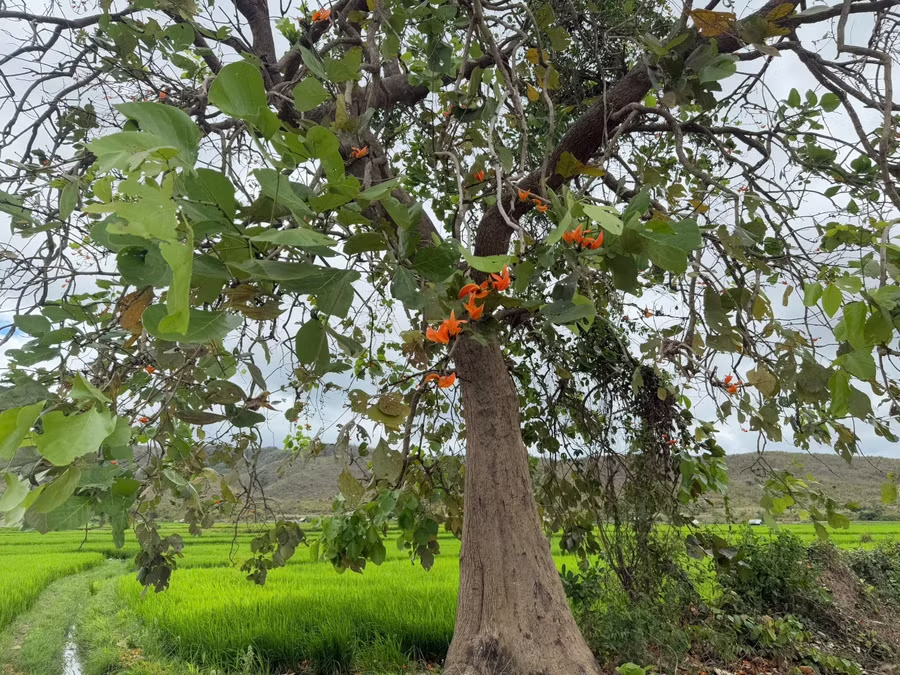
Differences are visible in both flowers and leaves: silk-cotton blossoms have five evenly spaced bright red petals, while Plah flowers display four reddish-orange petals. Their foliage also differs in shape and structure.
The blooming season begins as the trees shed their leaves, replacing green canopies with dense clusters of flowers. In western Gia Lai, Plah trees are commonly found in areas such as Phú Túc, Ia HDreh, Ia Rsai, Uar, Ia Hiao, Phú Thiện, and Ayun Pa ward—regions characterised by hot and sunny conditions.
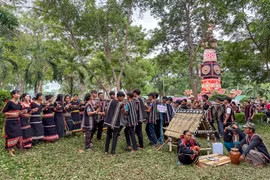
For local communities, the flowering of Plah trees is more than a seasonal spectacle. It holds deep cultural significance for the Jrai people, marking a time of transition and preparation. As one resident, Rơ Ô H'Huyên from H’Muk village in Phú Túc commune, explains, the bloom signals the start of a new upland farming season and the beginning of forest trips to gather products such as honey and weaver ants.
The flowers are also closely tied to everyday life. Children in the villages collect them to taste their nectar, carefully plucking stems to enjoy their subtle sweetness. Both the flowers and the resin are used in traditional remedies, including treatments for stomach aches and insect bites.
Locals often compare the vibrant red of the blossoms to the beauty of highland women, simple, gentle, yet full of vitality. Over time, the Plah flower has become deeply embedded in the memory and identity of the region, though its origins remain unknown.
As each flowering season returns, the landscape of Gia Lai is once again filled with colour, evoking a sense of tranquillity and continuity in a place where nature and human life remain closely intertwined.