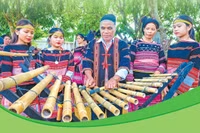
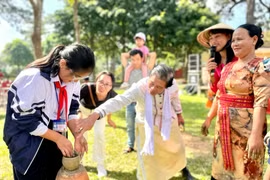
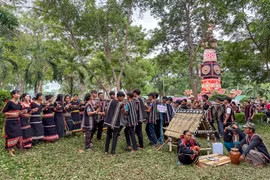
On May 15, the Bahnar people in Pral Sơmei village, Đak Sơmei commune, re-enacted the traditional Water Drop Worship Ceremony, a ritual that had disappeared from the community for decades.
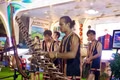
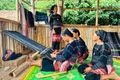
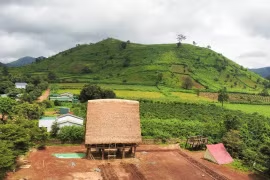
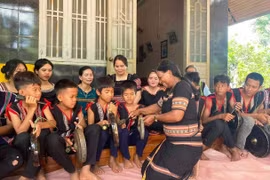
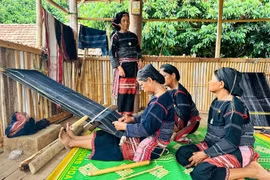
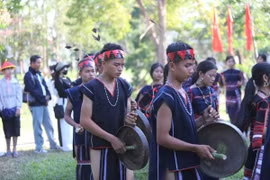
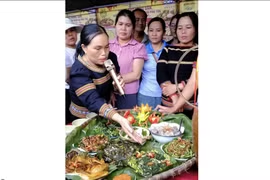
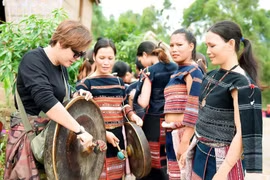
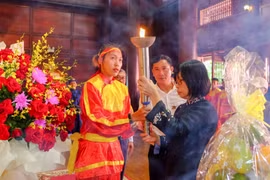
Held beneath the shade of trees near the village’s water source, the ceremony brought together the Village Elders’ Council, artisans and local residents, many of whom wore traditional attire to mark the occasion.
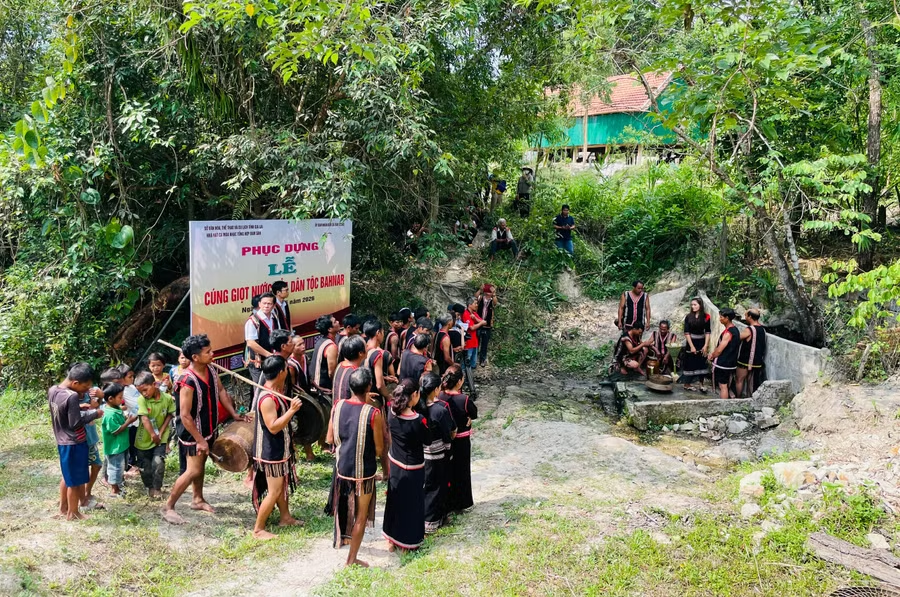
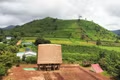
According to Mr. Ngin, head of Pral Sơmei village, the water source remains central to daily village life, although the ritual itself had gradually faded away over the years.
With support from the Đam San General Song and Dance Theater in Pleiku ward and local authorities, the ceremony was restored according to traditional customs.
“We are overjoyed. I hope this ceremony will continue in the coming years so that the younger generation can understand our ethnic traditions”, Mr. Ngin said.
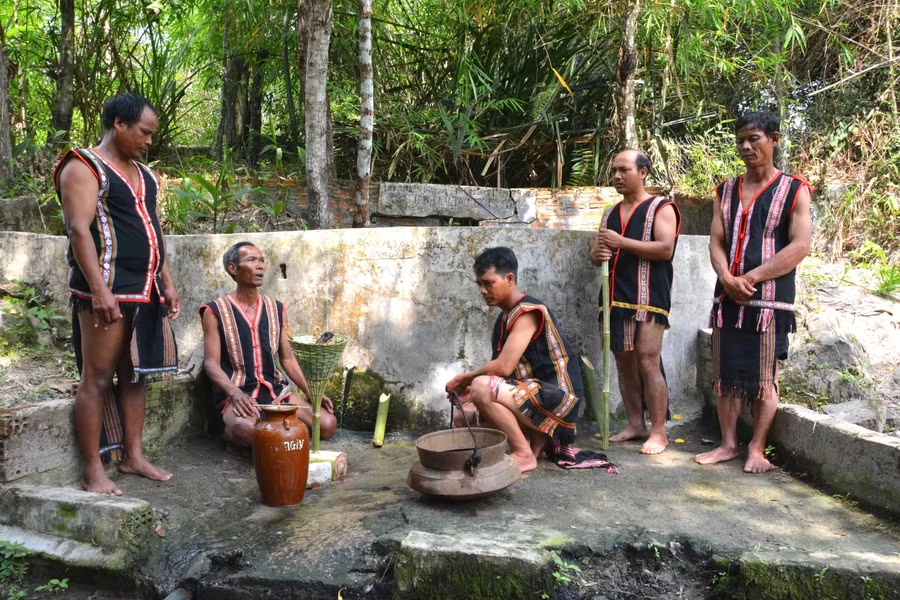
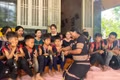
During the ritual, Mr. Ngưt, a member of the Village Elders’ Council and the ceremony leader, offered tributes including a chicken, rice wine, bamboo-tube rice and grilled meat while praying to invite the Mountain God, Forest God, River and Stream Gods, along with ancestors believed to have protected the village for generations.
The prayer, recited in the Bana language, called for abundant water, prosperous harvests, good health, unity and protection from sickness and misfortune.
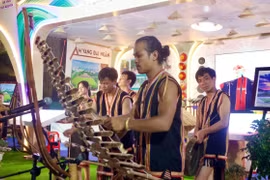
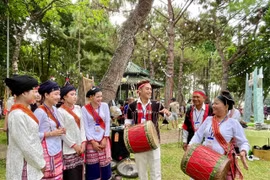
Following the prayer, villagers collected water from the spring in bamboo tubes before joining a communal celebration accompanied by traditional gongs and drums.
Mr. Nhữ Văn Hưng, Vice Chairman of the People’s Committee of Đak Sơmei commune, said ethnic minorities account for nearly 90% of the commune’s population, with the Bahnar community preserving many distinctive cultural traditions.
“Through the re-enactment of the Water Drop Worship Ceremony, we hope to inspire pride in our cultural identity within the community, especially among the younger generation”, Mr. Hưng said. “At the same time, the locality aims to link cultural preservation with the development of community-based tourism, creating livelihoods for local people”.
Across Gia Lai province, authorities have collaborated with communities since early 2026 to revive ceremonies that are at risk of disappearing amid modernization.
At the end of March, the Pleiku Museum and the People’s Committee of Ia Grai commune restored the Jrai people’s Victory Celebration Ceremony in Bẹk village.
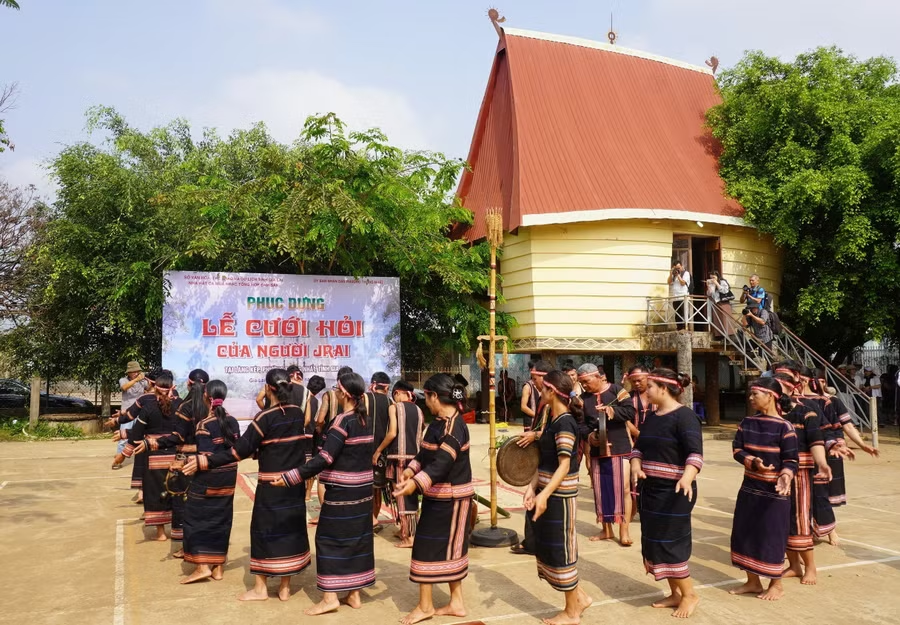
In April, several additional ceremonies were revived, including the Yă Pum Worship Ceremony in Sô Ma Hang A hamlet, a traditional Jrai wedding ceremony in Kép village and the Jrai New Rong House Celebration in Ơp village.
For many younger residents, the events marked their first direct experience with traditions previously known only through stories.
Siu H’Trâm, born in 2011 and a resident of Kép village, said participating in the traditional Jrai wedding ceremony strengthened awareness of the need to preserve cultural identity.
“These values not only help us understand our roots but also serve as a foundation for building future family happiness”, she said.
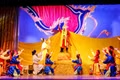
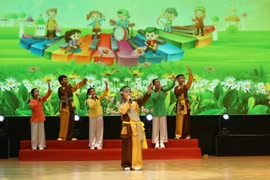
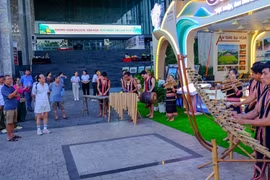
The ceremonies are taking place during the National Tourism Year – Gia Lai 2026, with local authorities also seeking to promote cultural tourism through traditional performances and rituals.
Mrs. Nguyễn Thị Kim Lan, who attended the Jrai wedding ceremony re-enactment in Kép village, said she was deeply impressed by the event, particularly the Yàng worship ritual and the exchange of copper bracelets between the bride and groom.
“The ceremony evoked a very special feeling, both unique and rich in cultural identity,” she said.
The revival activities form part of the provincial government’s “Preservation and Promotion of the Value of the Gong Cultural Space Heritage of Gia Lai Province, 2026 - 2030” project, launched in February 2026.
Under the initiative, authorities aim to restore and maintain ceremonies and festivals featuring gong performances among the Bahnar, Jrai, Chăm and H’re ethnic groups, ensuring that endangered traditions remain part of community spiritual and cultural life for future generations.