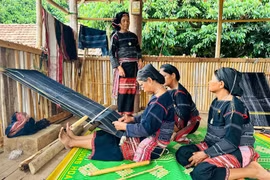
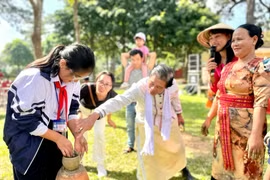
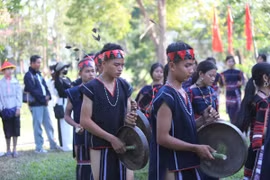
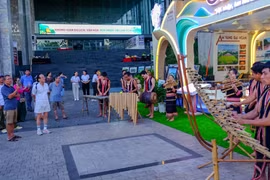
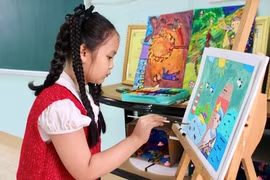
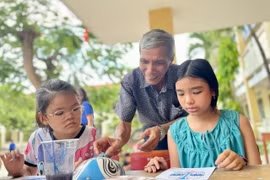
From traditional dishes and musical instruments to village customs and architecture, the videos created by young ethnic minority content creators in Gia Lai Province are attracting growing attention online, including from international viewers.
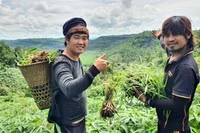
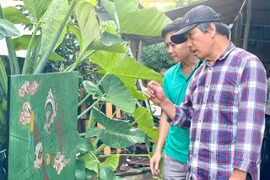
Rmah Tiêm, born in 1994 in Thơh Ga A hamlet in Chư Pưh commune, currently works as a doctor at the Ia Ko Commune Health Station. While studying at the University of Medicine and Pharmacy under Hue University in 2014, he dreamed of producing videos to promote his hometown, but financial difficulties forced him to postpone the idea.
His interest in learning English through books and online resources eventually became the foundation for his project, which he launched in 2026 by producing English-language videos introducing Jrai culture.
“Through these videos, I also want to set an example for my child. My wife and I are introducing our four-year-old daughter to English, starting with stories about our own ethnic culture,” Tiêm said.
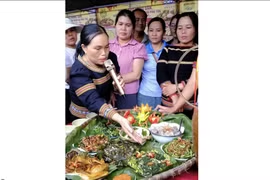
Since early 2026, he has produced numerous one- to two-minute videos with Vietnamese subtitles, focusing on Jrai customs, cuisine and daily life. Featured dishes include tang liang, stream fish and yellow ant salt.
Posted on his personal Facebook and TikTok accounts, some of the clips have reached nearly 15,000 views.
“I am very happy to see so many people watching the videos, including international friends. This helps spread Jrai culture to a wider audience”, he said.
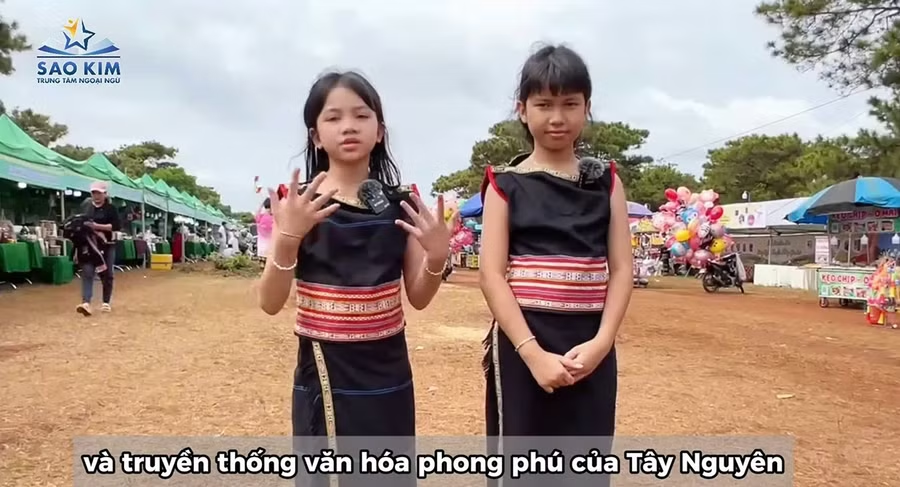
Rcom H’Srian, born in 2014 in Piơm village in Đak Đoa commune, has also been promoting Bahnar culture through English-language short videos.
Introduced to English at an early age by her father, who speaks the language fluently, and her sister, an English teacher, H’Srian won a bronze medal in the national round of the 2023 HIPPO International English Language Olympiad.
Working with her family, she develops, films and edits videos highlighting Bahnar culture. Her mother, Luăn, said the family was proud that H’Srian chose to introduce ethnic traditions in her own way.
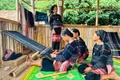
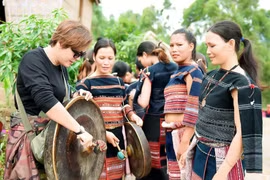
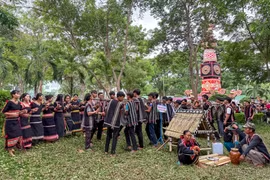
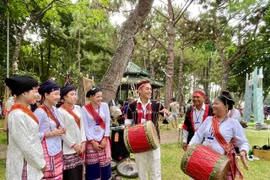
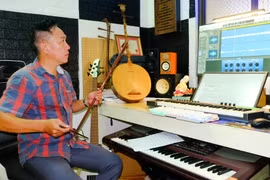
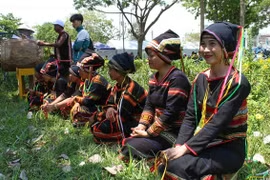
To create an authentic setting, H’Srian films at village wells, communal houses known as nhà rông, and rice fields while wearing traditional clothing. Her videos focus on cultural elements such as musical instruments and traditional architecture, making Bahnar heritage more accessible to younger audiences.
The one- to three-minute clips posted on her Facebook page have attracted thousands of views and positive feedback.
“I want more people to know about the beauty of the traditional culture of the Bana people in my hometown of Gia Lai. By sharing in English, I hope not only local people but also foreigners can gain some understanding of Bahnar culture,” H’Srian said.
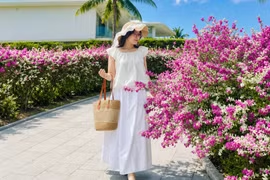
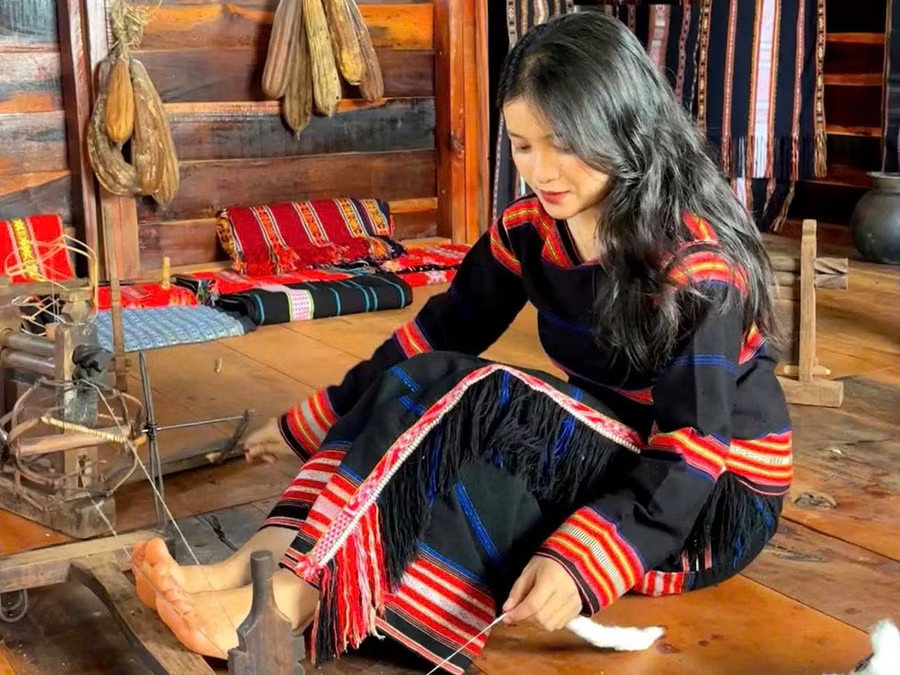
Nay H’Gơly, from Plei Chrung village in Phú Thiện commune, is a first-year Early Childhood Education student at the Gia Lai campus of Ho Chi Minh City University of Education. Since childhood, she has been passionate about traditional cooking and local forest products, which later became the inspiration for her online content.
Listening to her grandparents share khan epic tales and explain the significance of ancient gongs, jars and other cultural items deepened her understanding of Jrai heritage.
In January 2026, H’Gơly began posting videos about Jrai culture on TikTok and Facebook, focusing on cuisine, customs and village life. Her content quickly gained attention online.
Her grandmother, Nay H’Ơng, born in 1954, said the family fully supports her efforts to preserve and promote ethnic traditions.
H’Gơly taught herself filming and editing techniques, carefully selecting camera angles and storytelling styles to appeal to younger viewers. On her TikTok channel “MeiNur ở Pleiku,” one video about traditional cuisine attracted 124,000 views.
“Many friends had never heard of Jrai dishes or customs. After watching the videos, they became curious, asked questions, and wanted to learn more. That makes me very happy,” she said.
To ensure cultural accuracy, H’Gơly regularly consults elders and village chiefs before publishing her content. She is also studying traditional architecture, musical instruments and costumes to expand future projects.
“After graduating from university, I plan to continue studying ethnic musical instruments and brocade weaving, hoping to return to my hometown to work directly with artisans to pass on these traditions to the younger generation,” H’Gơly said.
She added that she also hopes to create a cultural experience space for visitors traveling to her village.