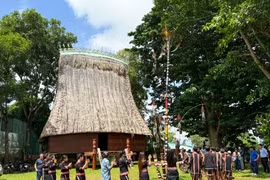
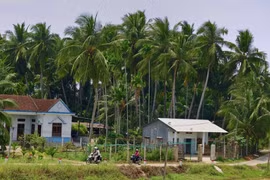
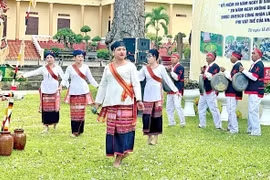
Pham Quoc Thinh, from Doan Ket hamlet in Po To commune, began his journey after recognising the untapped storytelling potential of his community’s cultural heritage.
As the owner of the Facebook channel “MC Quoc Anh Review,” he was inspired in 2016 after watching videos about ethnic traditions across Vietnam and questioning why his own village remained underrepresented.
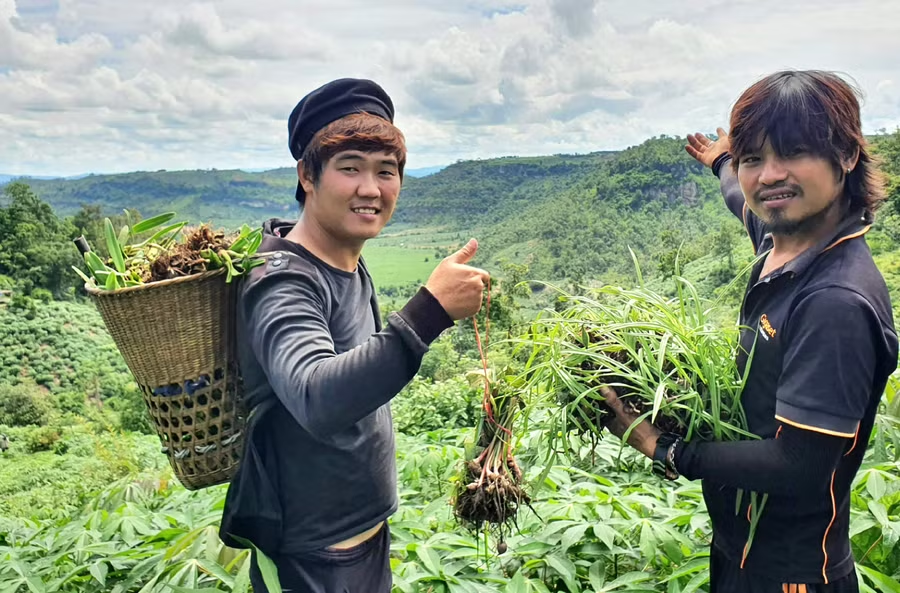
His work gained traction when he focused on Jrai wedding customs, particularly the “wife-taking” tradition, which he recreated in detail. To ensure accuracy, Thinh consulted village elders and shamans, producing videos that resonate with authenticity and emotional depth.
The strong audience response has encouraged him to expand his work. He now hopes to collaborate with tourism agencies to turn online engagement into tangible visitor flows, particularly during National Tourism Year - Gia Lai 2026.
Rah Lan H’Wĩ, from Kte Lớn A hamlet in Phú Thiện commune, has taken a similar path, focusing on traditional rituals through TikTok and Facebook. Despite graduating from Da Nang University of Sports and Physical Education, she shifted into online business, which led her to content creation.
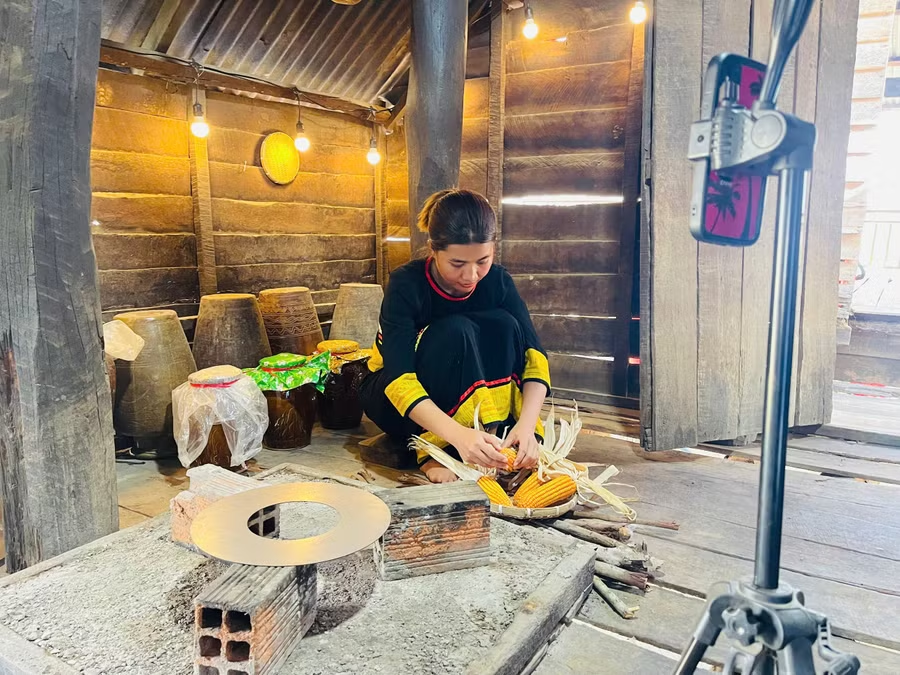
Identifying growing public interest in ethnic minority culture, H’Wĩ invested in filming equipment to document ceremonies such as bracelet rituals, ear-piercing rites and soul-calling practices. Her content has made these traditions more accessible to wider audiences.
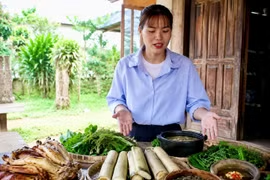
She has also expanded into culinary storytelling, using her family kitchen to feature dishes such as stir-fried cassava leaves, fish cooked in banana leaves and pickled eggplant. A recent video of her mother making traditional jar wine attracted significant attention and generated orders from multiple locations.
The response underscored the commercial potential of cultural storytelling. H’Wĩ now hopes authorities will provide training and branding support to help creators promote traditional products more effectively.
Meanwhile, Kpă Sa, from Ayun Pa ward, has built his TikTok channel “Sa AyunPa” around cuisine. Using minimal production, featuring a wood stove, cast iron pan and mortar and pestle, he has produced hundreds of videos that appeal to both domestic and international viewers.
His content stands out for its simplicity, relying solely on visuals and music without narration. Traditional dishes such as eggplant soup, grilled banana blossom and stir-fried cassava leaves evoke nostalgia while highlighting culinary heritage.
Looking ahead, Sa plans to professionalise his channel by adding multilingual subtitles and developing experiential tourism at his home, where visitors can take part in preparing traditional dishes. He believes that with better infrastructure and tourism training, his content can evolve into a viable attraction for visitors.