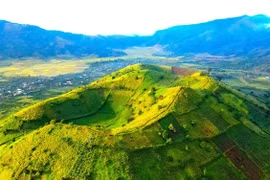
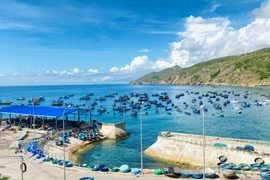
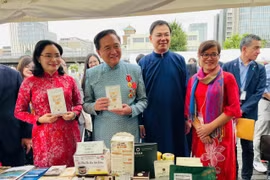
Hosting National Tourism Year - Gia Lai 2026 is being viewed as a pivotal opportunity for the province to strengthen its position on Vietnam’s tourism map and enhance links between the Central Highlands and the South Central Coast.
Below are perspectives from officials, experts and businesses on expectations for the sector’s next phase.
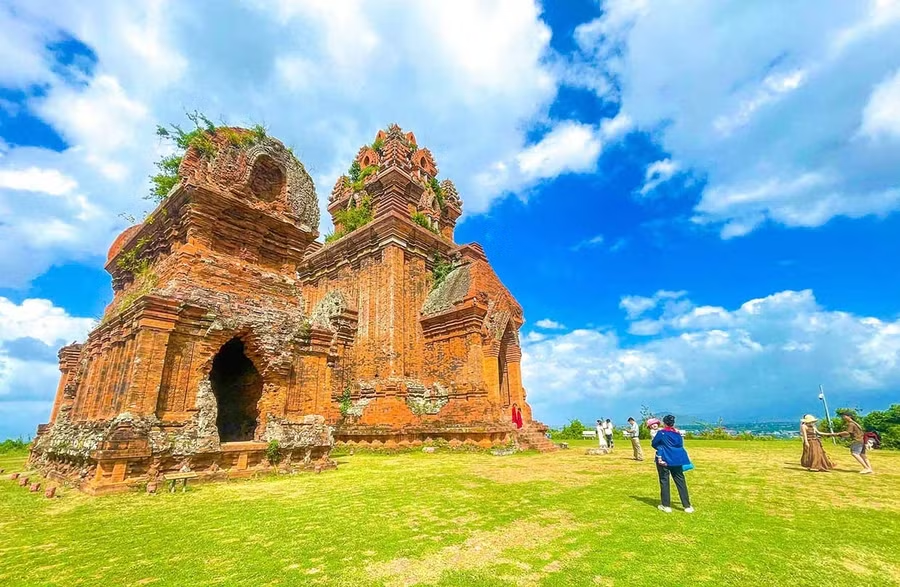
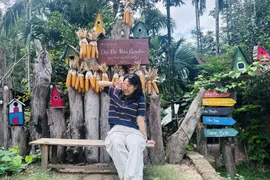
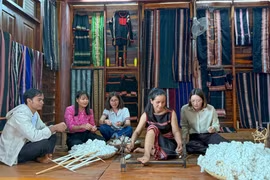
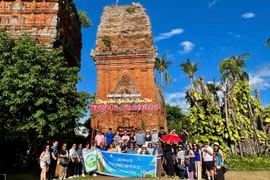
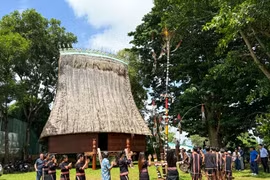
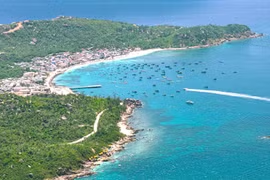
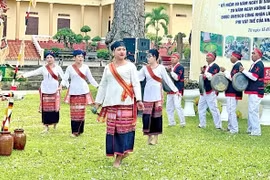
Developing cultural tourism is a promising direction for Gia Lai tourism. Photo: Doan Ngoc
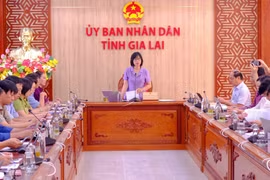
* Vice Chairwoman of the Provincial People's Committee Nguyen Thi Thanh Lich:
Vice Chairwoman of the Provincial People's Committee Nguyen Thi Thanh Lich. Photo: Quang Tan
The National Tourism Year - Gia Lai 2026 carries significance beyond tourism, contributing to broader socio-economic development. It offers a platform to promote the province’s image, people and cultural identity to both domestic and international audiences, thereby strengthening the brand of Gia Lai tourism.
The event is expected to accelerate the professional and sustainable development of tourism, while supporting related sectors such as services, trade and transport. It will also help generate jobs, raise incomes and attract investment into infrastructure and tourism facilities.
Authorities expect clear breakthroughs, including higher visitor numbers and revenue, more competitive tourism products, improved human resources and a stronger role for tourism in the local economy.
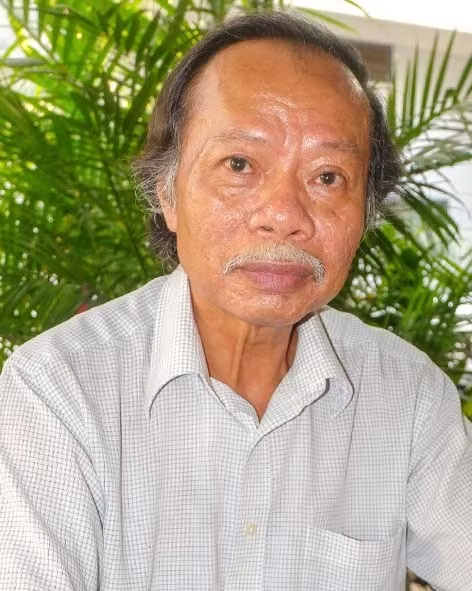
*Dr. Vu Dinh Chien, Head of Tourism Faculty, Quy Nhon College of Engineering and Technology:
Dr. Vu Dinh Chien. Photo: Provided by the subject
To build a tourism brand linked to the “great forest - blue sea” concept, the workforce must be capable of delivering compelling and professional destination narratives.
Training should focus on versatile personnel with inter-regional knowledge, able to design seamless travel experiences. Digital skills, including marketing and artificial intelligence applications, are increasingly essential.
Service quality must align with national and international standards, with stronger foreign language and intercultural communication skills. Developing local human resources, particularly among ethnic minorities and coastal communities, will help create distinctive tourism products rooted in identity.
* Researcher Nguyen Thanh Quang:
Researcher Nguyen Thanh Quang. Photo: Doan Ngoc
Gia Lai holds a significant advantage in its rich cultural and historical heritage, which forms a foundation for cultural tourism. However, the challenge lies in effectively leveraging these resources.
While preservation efforts have been positive, many heritage values remain underutilised, with investment and promotion lacking depth and coherence. The storytelling aspect, connecting cultural layers into engaging narratives, remains limited.
Greater investment and more effective promotion are needed to unlock this “treasure trove” and attract visitors seeking authentic experiences.
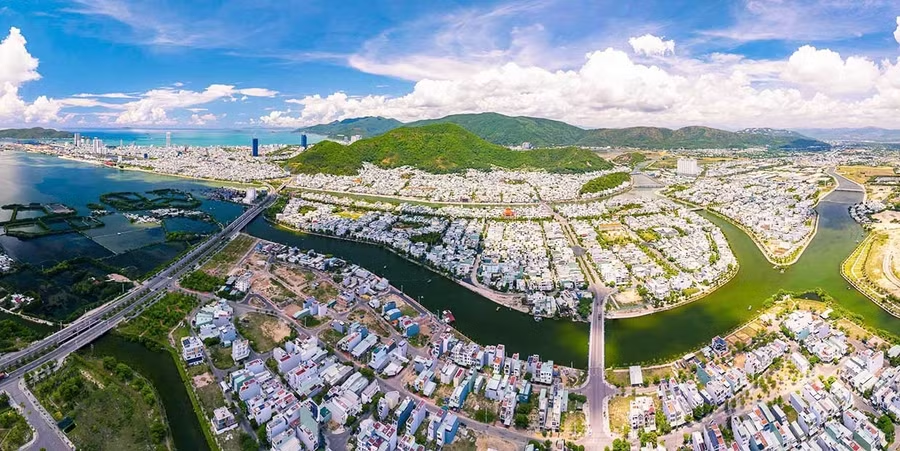
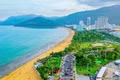
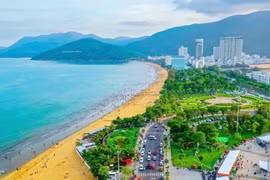
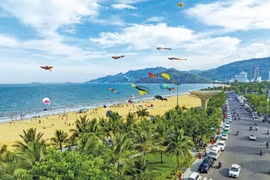
The main activities of National Tourism Year – Gia Lai 2026 held in Quy Nhon ward are an opportunity for the locality to welcome a large influx of visitors. Photo: Dung Nhan
* Mr. Nguyen Duc Toan, Chairman of the People's Committee of Quy Nhon Ward:
Mr. Nguyen Duc Toan. Photo: Provided by the subject
The event is expected to bring a surge in visitors to Quy Nhon ward, helping promote its image as a dynamic and welcoming coastal destination.
It will also support the professionalisation of services and improve tourism standards.
The Quy Nhon Pleiku tourism linkage is emerging as a key development direction, aligning with inter-regional tourism trends. Authorities plan to diversify tourism products, strengthen connections and enhance cultural exchanges between coastal and highland areas.
Efforts will also focus on attracting investment, improving human resources and advancing digital transformation to ensure sustainable growth.
* Mr. Huynh Vu Tri, Owner of Song Suoi Homestay (Quy Nhon Ward):
Mr. Huynh Vu Tri. Photo: Doan Ngoc
The homestay mainly serves international visitors, particularly from Europe and the Americas, who tend to stay longer and seek authentic cultural experiences.
Beyond accommodation, it offers activities such as visits to historical sites, craft villages and fishing communities, as well as local cuisine experiences, factors that leave strong impressions on foreign guests.
However, a key limitation is the lack of nighttime tourism products and spending opportunities. Increased investment in nightlife and large-scale cultural performances could help extend visitor stays and boost spending, especially as regional linkages strengthen under the 2026 tourism year.
Homestays and farmstays in western Gia Lai are upgrading facilities and expanding nature-based, culinary and cultural experiences as they prepare for the five-day National Day holiday beginning September 2.
To ensure a smooth journey while exploring Quy Nhon and Pleiku during the National Day holiday on September 2, travelers are advised to keep a list of essential phone numbers handy. This will allow them to quickly contact the appropriate services for assistance and other tourism-related needs.
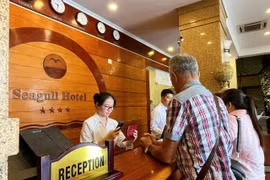
Hotels and accommodation providers in Quy Nhon are stepping up preparations for the September 2 National Day holiday, upgrading facilities, refining services and offering promotions as advance bookings continue to rise.
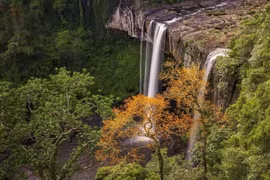
The five-day National Day holiday from August 29 to September 2 offers travelers an opportunity to explore Gia Lai through a journey linking its forests, cultural heritage and coastline.
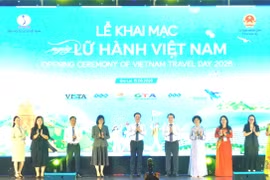
The 2nd Vietnam Travel Day 2026 opened in Gia Lai on August 15, bringing together tourism authorities, associations and businesses from Vietnam and overseas to strengthen market connections, develop new products and showcase the province’s evolving tourism landscape.
Hundreds of domestic and international tourism businesses surveyed attractions, cultural experiences and facilities in Gia Lai on August 14, exploring opportunities to develop new travel programs and partnerships in the province.
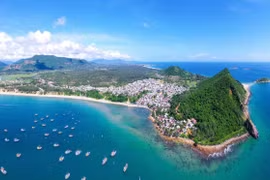
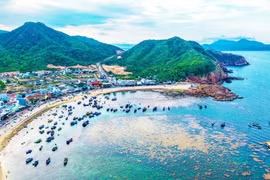
Mui Vi Rong, a dramatic rocky promontory jutting into the East Sea, is attracting a growing number of visitors to Phu My Dong, bringing new tourism opportunities to the centuries-old fishing community of Tan Phung.
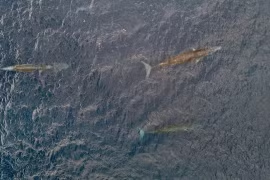
Three whales were spotted simultaneously hunting for food off the coast of Vũng Bồi in An Lương commune at around midday on August 5, marking a rare wildlife sighting that has attracted widespread public attention.
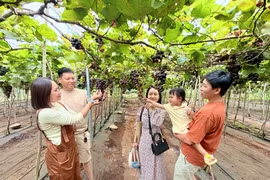
A 1.2-hectare organic vineyard in Gia Lai province has evolved into a leading agritourism destination, attracting between 20,000 and 30,000 visitors annually while demonstrating how organic farming and experiential tourism can generate sustainable rural livelihoods.
Ministry of Culture, Sports and Tourism has outlined its priorities for the second half of 2026, focusing on institutional reform, cultural development, tourism growth, digital transformation after reporting broad progress across the sector during the first six months of the year.
Gia Lai province will host the second Vietnam Travel Day from August 13 to 17, bringing together around 550 domestic and international businesses in an effort to expand international visitor markets, strengthen industry partnerships and develop new tourism products.
National Tourism Year 2026 offers Gia Lai more than an opportunity to attract visitors. It provides a foundation for the province to establish a lasting tourism brand by transforming its rich cultural and historical heritage into distinctive visitor experiences.
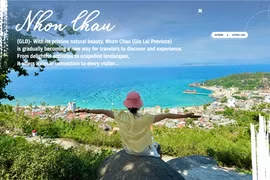
Nhơn Châu island commune is reshaping its tourism strategy by focusing on authentic cultural experiences, environmental protection and community participation, as it seeks to create a distinctive destination while preserving its natural and cultural heritage.
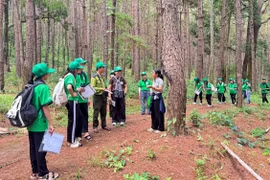
Deep inside the Kon Ka Kinh forest, students are leaving behind mobile phones and internet access to learn practical outdoor skills through immersive experiences as Kon Ka Kinh National Park develops a new school tourism program focused on life skills and nature conservation.
The People's Committee of Gia Lai Province has approved a 12-month pilot program for jet skiing and motorized paragliding in Quy Nhon Ward as part of efforts to promote marine tourism development. The pilot will begin once the activities receive official authorization to operate.
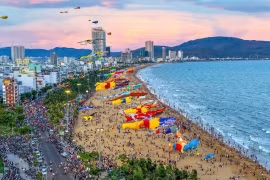
Hundreds of colorful kites, including giant whale, crocodile and stingray designs, filled the skies above Xuan Dieu Beach during the 2026 Quy Nhon-Gia Lai Artistic Kite Festival, drawing thousands of residents and tourists and adding to the city's summer tourism appeal.
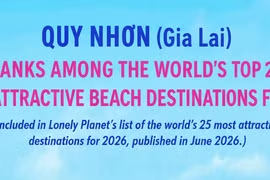
Quy Nhon, located in Gia Lai province, has been recognized as Vietnam's sole representative among the ideal destinations for beach exploration journeys, according to a recent announcement by Lonely Planet.
Authorities in Gia Lai Province have reviewed proposals to develop ecotourism, resort and entertainment projects at Kon Ka Kinh National Park and Kon Chư Răng Nature Reserve through 2030, with a long-term vision extending to 2045.
Gia Lai will officially launch its 2026 Summer Tourism Festival on June 20 at Nguyen Tat Thanh Square in Quy Nhon Ward, marking the start of a tourism campaign aimed at promoting its destinations and attracting visitors through a diverse programme of cultural, sports and tourism events.
Gia Lai province is intensifying international cooperation efforts to attract investment, expand tourism and create new drivers of economic growth, reflecting Vietnam’s broader policy of independent, self-reliant, multilateral and diversified foreign relations.
Gia Lai’s Hoài Nhơn Ward is seeking to transform its extensive coconut groves into a distinctive tourism asset, combining cultural heritage, community-based experiences and coastal attractions to create a unique destination in central Vietnam.
Authorities in Quy Nhon have launched a dedicated passenger pick-up and drop-off point at Mui Tan Wharf for tourist boats serving Nhon Chau Island, replacing the previous departure point at Ham Tu fishing port as part of efforts to improve service quality, enhance safety and tourism management.
The 6th Cham Ethnic Cultural Festival will be held in Khanh Hoa Province from June 26 to 28, 2026, bringing together Cham communities from seven provinces and cities across Vietnam to celebrate and promote their cultural heritage.
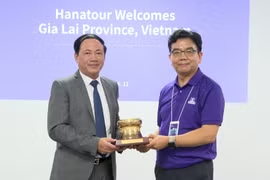
Gia Lai is seeking closer cooperation with South Korea’s leading travel company HanaTour to expand tourism links and promote charter flight services, as the province prepares to host Vietnam’s National Tourism Year 2026 and increase international visitor arrivals.