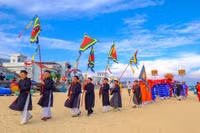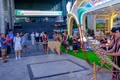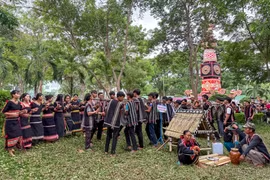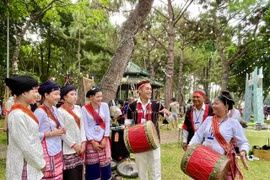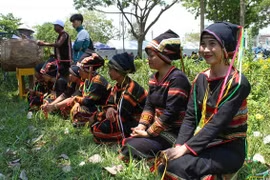
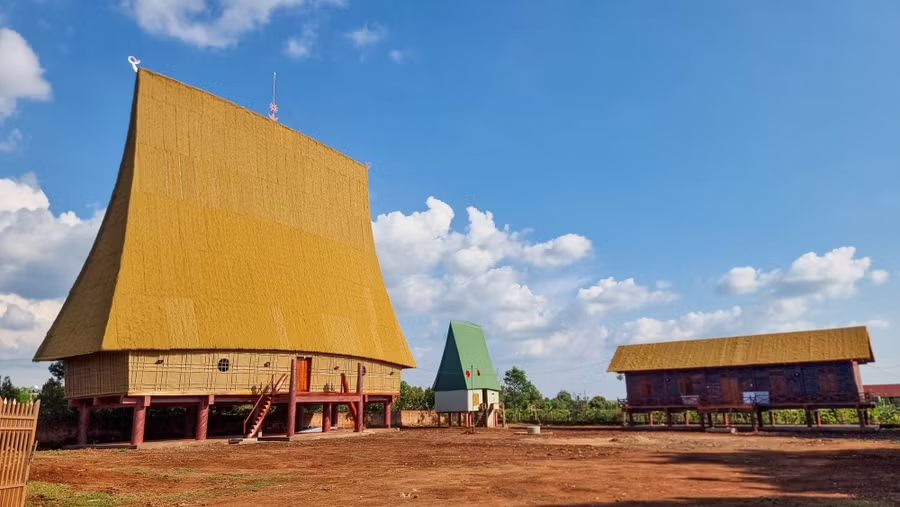
The newly completed communal house, or nhà rông, stands at the heart of the village and serves as both an architectural landmark and a spiritual symbol for the local Jrai community. Organisers say the event is designed to showcase indigenous culture while promoting community-based tourism.
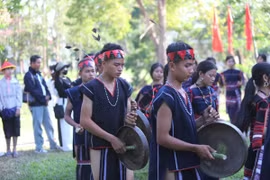
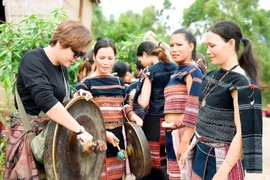
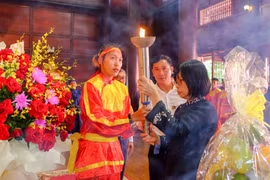
Festivities begin on the evening of March 20 with gong performances, followed by a series of rituals central to Jrai spiritual life. On the morning of March 21, villagers will erect the cây nêu, a ceremonial pole symbolising the connection between heaven and earth. Sacred rites will continue overnight into March 22.
The highlight of the event, the buffalo sacrifice ceremony, will take place at dawn on March 22 under the direction of village elders. A prayer ceremony for health and a good harvest will follow at midday.
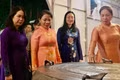
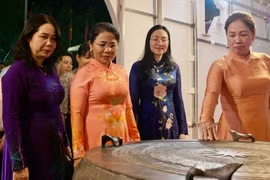
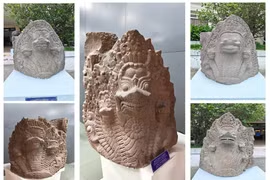
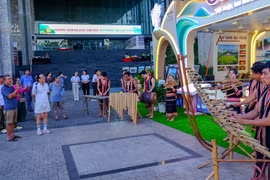
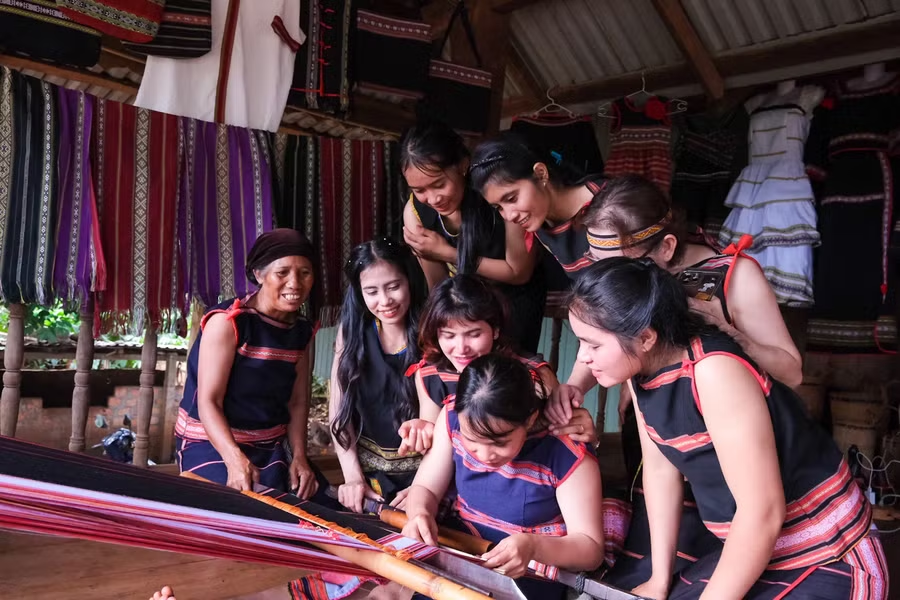
Alongside the rituals, visitors will be invited to take part in hands-on cultural activities, including rice pounding, brocade weaving and basketry with local artisans. An exhibition space will display Jrai cultural and historical artefacts, while demonstrations will introduce traditional processes such as cotton planting, spinning, dyeing and weaving.
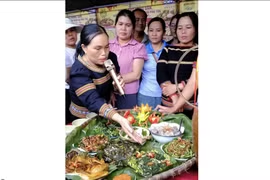
A culinary area will feature local specialties such as bamboo-tube rice, grilled chicken and stir-fried cassava leaves, offering visitors opportunities to engage directly with villagers.
The commune will also host the “Discover Kép Village” run on March 22, with 8 km and 21 km routes passing through key local landmarks, including Ia Mmông Lake, Công Chúa Waterfall, the Kép 2 village cemetery complex, the communal house and a Jrai cultural exhibition site.
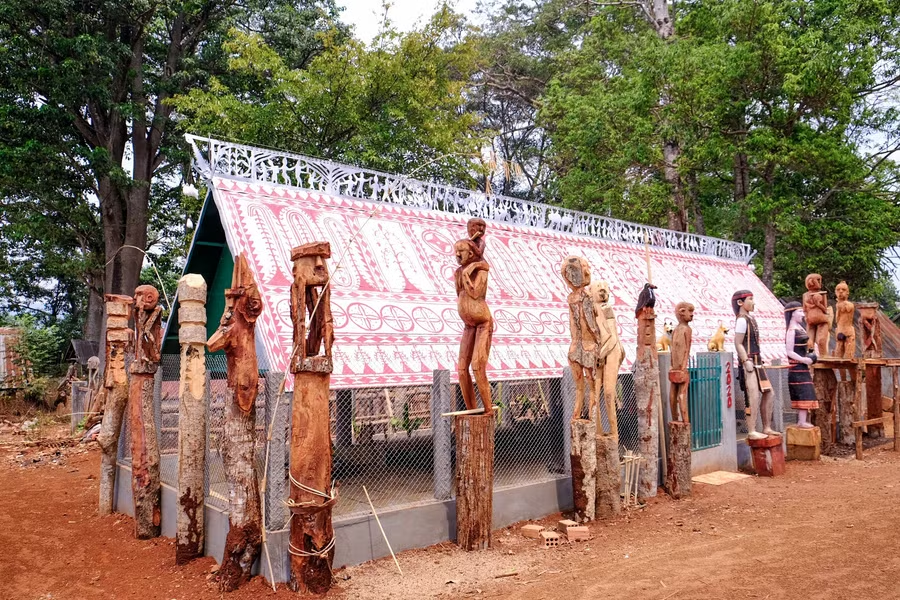
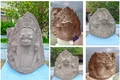
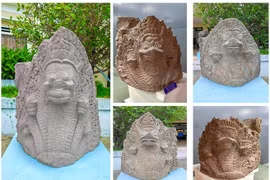
The communal house is part of a broader community tourism infrastructure project in Ia Ly Commune, funded by a loan from the Asian Development Bank. The project includes stilt houses, sanitation facilities, a cemetery statue garden and a water well, with total investment exceeding VND 5.79 billion ($232,000). A 3.43-km rural road connecting Kép 1 Village to A Mơng Village and Công Chúa Waterfall was also built at a cost of more than VND 6.6 billion ($264,000).
Local authorities expect the festival and associated activities to boost tourism and position Kép Village as a key destination ahead of Gia Lai’s hosting of the National Tourism Year in 2026.