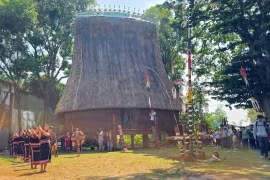
Beyond its spiritual significance, the ceremony to celebrate a new communal house (nhà rông) also embodies community cohesion, providing an occasion for villagers to express their hopes for peace and prosperity.
In the heart of Pleiku’s highland city, this cultural tradition continues to be preserved, passed down, and gradually promoted, forming a foundation for the development of community-based tourism.
Reenacting the communal house worship ceremony in village life
For the Jrai people, the nhà rông is not only a meeting place but also a sacred symbol of the village, closely tied to spiritual life and traditional rituals.
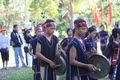
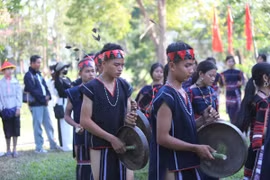
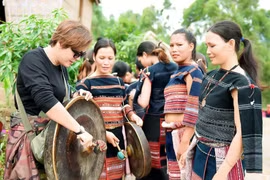
Upon completion of a nhà rông, villagers must hold a worship ceremony to give thanks to the Yang (deities), praying for favorable weather and a prosperous life. About a week before the ceremony, the village elder and respected community members convene to assign tasks, then beat gongs to notify the villagers to begin preparations.
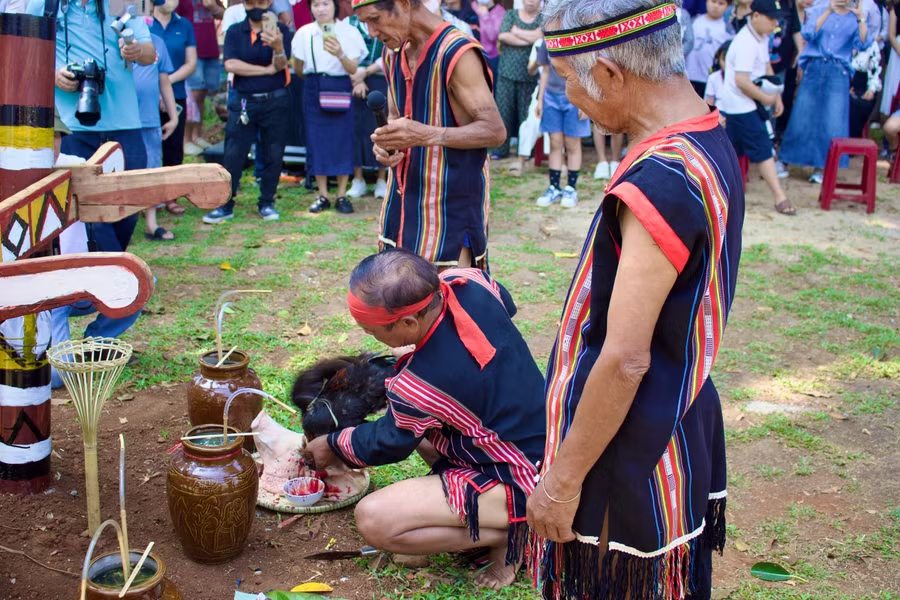
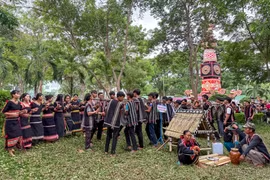
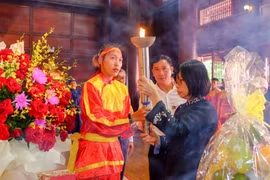
During the reconstructed ceremony, all rituals are faithfully reenacted with the direct participation of the village elder and the community. From preparing offerings to reciting prayers and sprinkling holy water for peace, every step is conducted solemnly and in accordance with tradition.
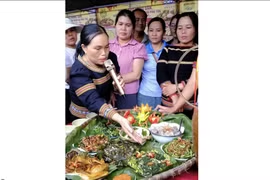
The festival preparations are imbued with a strong sense of community. Women gather wild vegetables, prepare food, and brew rice wine; young men erect the ceremonial pole and arrange the space. Offerings such as pigs, chickens, and rice wine are carefully selected, reflecting the villagers’ reverence for the deities.
Beneath the cây nêu, a symbol of connection between humans and the divine, offerings are displayed with great respect. According to tradition, the cây nêu serves as a “pathway” to deliver offerings to the deities, expressing wishes for peace and bountiful harvests.
In the process of reconstruction, certain rituals such as buffalo sacrifice have been omitted or replaced with symbolic gestures, adapting to modern conditions while preserving spiritual meaning.
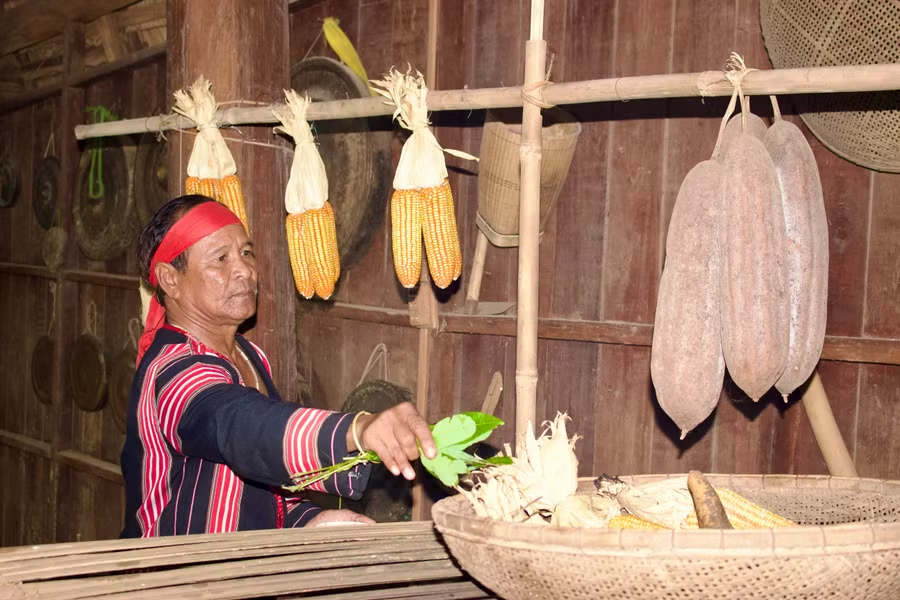
Village elder Siu Núi, who presides over the ceremony, performs the rituals in a solemn and reverent atmosphere. Amid the deep resonance of gongs, the elder recites: “Oh Yang of water, Yang of wind, Yang of fire, today the people of Ơp village offer thanks for the new communal house. We thank the Yang for helping us build this spacious nhà rông. Now, as the villagers gather in full, we pray for your blessings of favorable weather, abundant harvests, and a prosperous, peaceful village”.
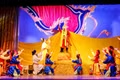
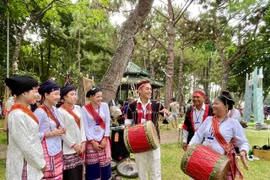
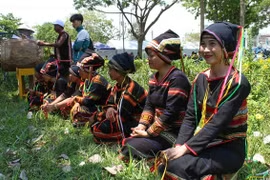
After the prayer, the elder and senior villagers sprinkle holy water throughout the communal house, wishing for peace and happiness for the community. The sound of gongs echoes around the ceremonial pole, traditional xoang dances form long circles, and the flickering fire by the hearth adds warmth and excitement to the festive atmosphere.
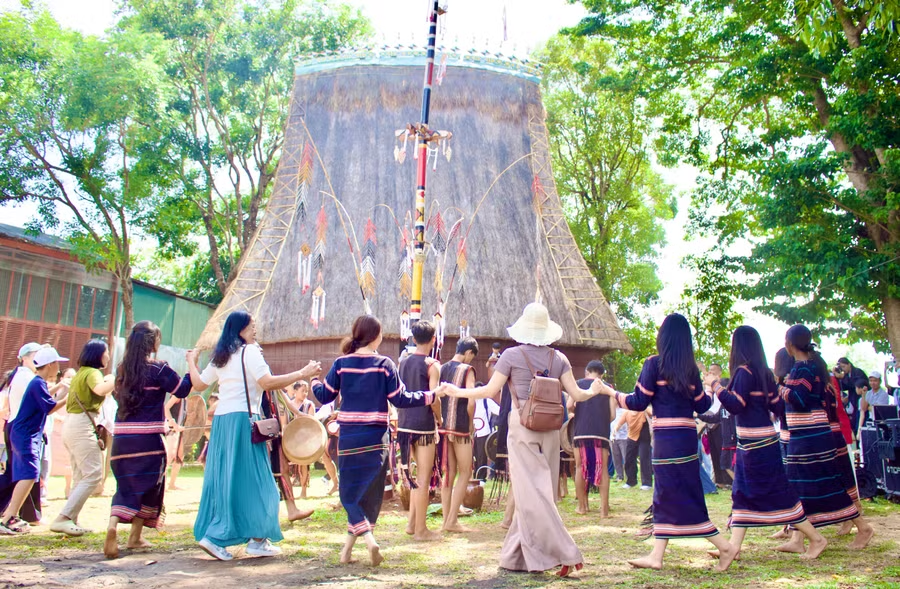
Elder Siu Núi shared: “The celebration of a new communal house is one of the traditional cultural values highly regarded by the Jrai people. The ritual expresses gratitude to the Yang for their support and prays for continued blessings of health and peace for the village”.
According to him, the nhà rông is not just an architectural structure but also the center of community life for the Jrai. Reenacting the worship ceremony helps younger generations understand and preserve their ancestral traditions.
Linking preservation with community tourism development
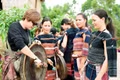
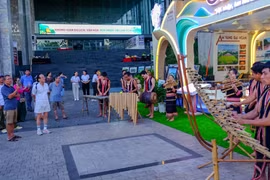
The cultural space in Ơp village extends beyond the ritual itself, offering a range of experiential activities for visitors. After the ceremony, locals and tourists join in xoang dances, enjoy rice wine, and learn about the daily life of the Jrai people.
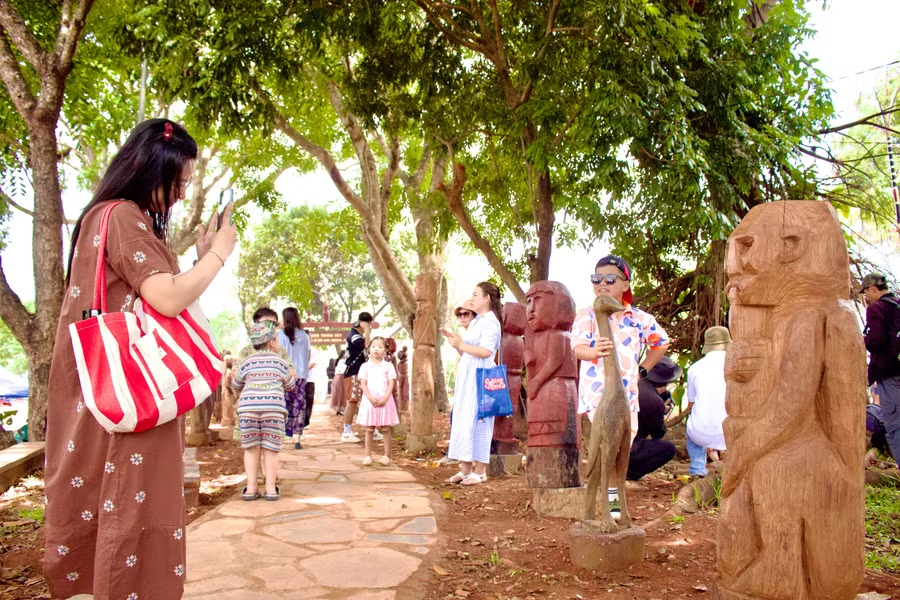
Additionally, visitors can explore the nhà rông—a distinctive architectural work with soaring roofs, constructed from natural materials such as wood, bamboo, and rattan. The interior features a central hearth, fostering community bonds and housing artifacts like gongs and traditional musical instruments.
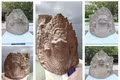
The sculpture garden within the communal house grounds also attracts much attention. The statues, recreated in the style of traditional grave house art, reflect the rich spiritual life of the Jrai people.
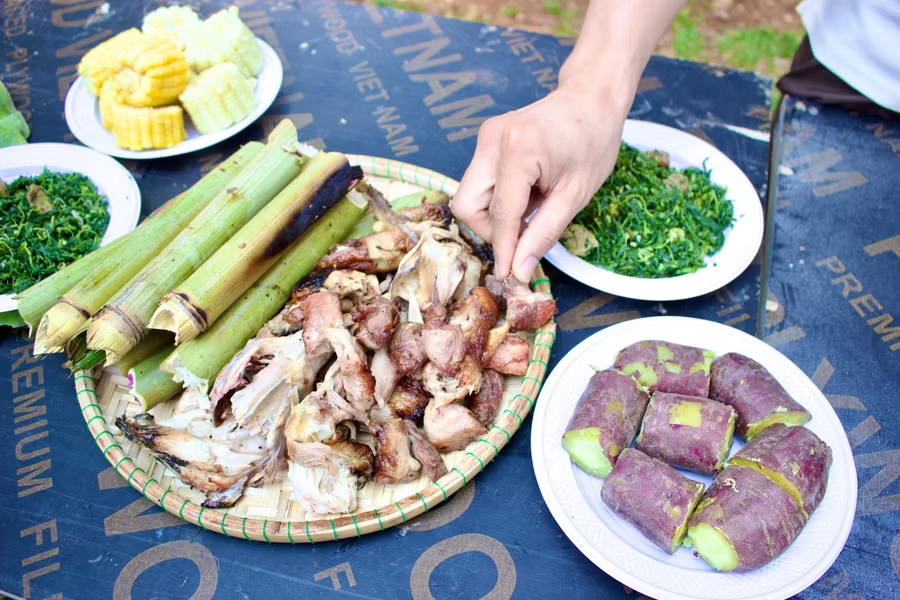
Traditional cuisine is a highlight of the experience, with signature dishes such as bamboo-tube rice, grilled chicken, and cassava leaf porridge, all imbued with the flavors of the mountains and forests.
Huỳnh Anh Kiệt, a visitor from Quảng Ngãi province, shared: “This is my first time attending the new communal house celebration. I found it fascinating to experience Jrai culture and hope there will be more activities like this. Visiting the nhà rông, the sculpture garden, enjoying the food, and joining in gong performances are truly memorable experiences”.
Not only tourists, but the younger generation in the village is also becoming more interested in tradition by directly participating in xoang dances, preparing offerings, and engaging in community activities.
Puih H’Thảo (from Ơp village) said: “I was born and raised in Ơp village. Today, I’m very happy to see everyone dancing, eating, chatting, and learning about Jrai culture together. As a young person, I feel it’s my responsibility to preserve our ethnic traditions”.
Through these activities, the reconstruction of the worship ceremony not only helps preserve customs but also opens up new development opportunities for the locality.
Nguyễn Ngọc Thông, Vice Chairman of the People’s Committee of Pleiku Ward, said: “The reconstructed communal house worship ceremony in Ơp village is part of a series of events in response to the National Tourism Year - Gia Lai 2026, aiming to restore, preserve, and promote the traditional culture of the Jrai people. At the same time, it contributes to tourism development, especially community-based tourism, attracting visitors from within and outside the province”.
The reconstruction of the new communal house worship ceremony not only helps preserve traditional values but also paves the way for sustainable development in the village, ensuring that the sounds of gongs and sacred rituals continue to resonate in daily life for generations to come.