Local officials say the designation not only affirms the historical and cultural significance of the sites but also creates momentum to transform heritage into a driver of sustainable growth.
An Cuu Communal House, located in Tuy Phuoc Bac Commune, has long served as a spiritual and cultural center for local residents. Established before the 19th century, it is dedicated to the village’s tutelary deity and the revered eunuch Bach Ma, according to historical records and village elders.
The site preserves a range of valuable artifacts, including royal decrees, lacquered boards and parallel sentences. Notably, five intact royal decrees from the Nguyen Dynasty remain, providing tangible evidence of the community’s historical development.
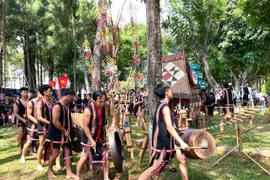
Annual rituals held at the communal house, such as the traditional đình festival, continue to play a central role in community life, reinforcing cultural identity while fostering social cohesion.
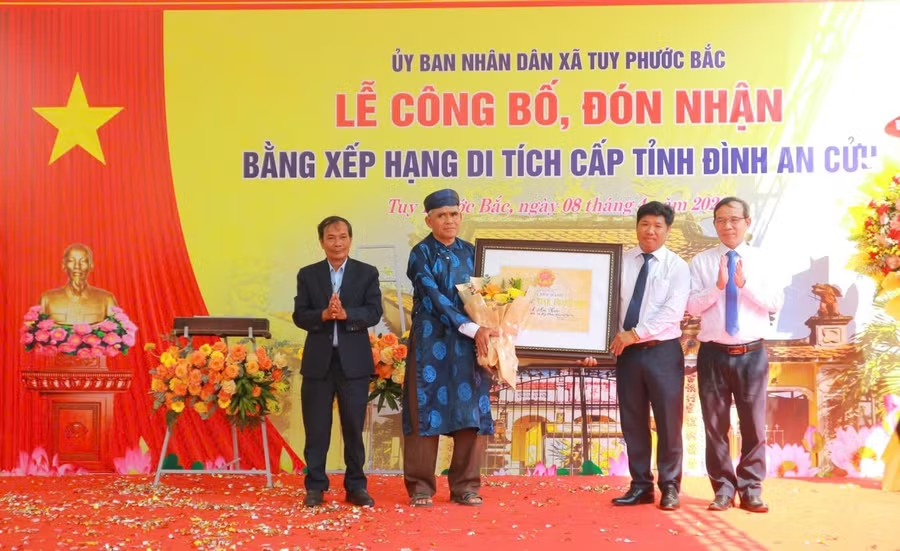
Following its official recognition, local authorities have prioritized conservation. Management plans are being implemented to protect the site while maintaining its original features, alongside efforts to raise public awareness, particularly among younger generations, about the importance of heritage preservation.
Officials say community engagement and social resource mobilization will be key to restoring and enhancing the site, while integrating it into broader cultural tourism strategies.
“Our orientation is to link heritage preservation with cultural tourism development”, said a representative of Tuy Phuoc Bac Commune, adding that the site is expected to evolve into a destination for visitors seeking authentic local culture.

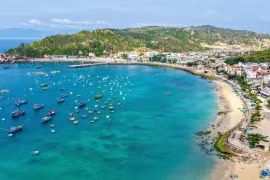
Meanwhile, the Mui Vi Rong - Tan Phung Mountain area in Phu My Dong Commune is emerging as a complementary attraction, known for its striking coastal landscape and cultural significance.
The site features a unique formation resembling a dragon stretching toward the sea, with rocky mountains juxtaposed against clear blue waters. Natural caves and rugged rock formations contribute to its appeal, attracting visitors for sightseeing, photography and water-based activities.
The area is also associated with local legend, including the story of Tang Dynasty geomancer Cao Bien, adding a layer of spiritual and historical intrigue.
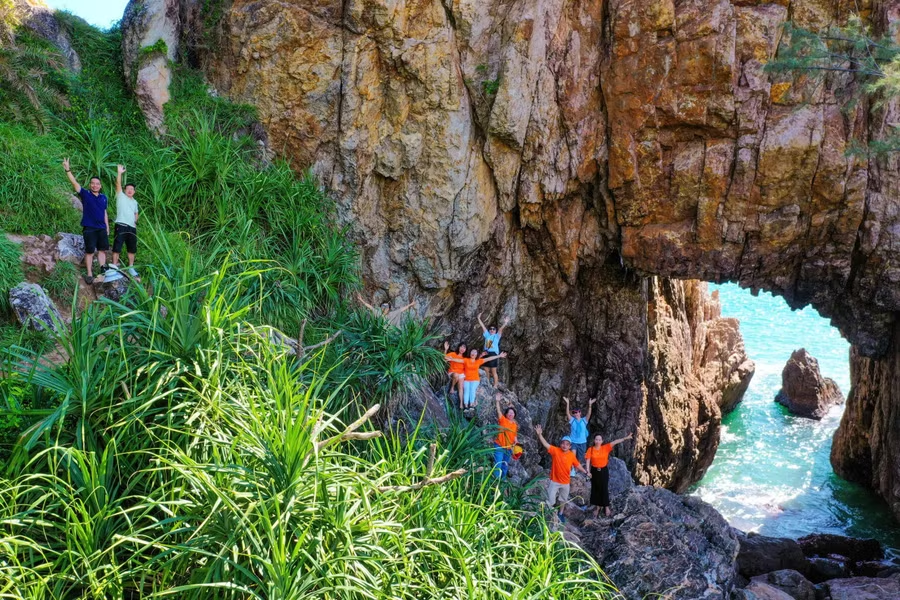
Authorities are now working to develop the site into a sustainable tourism hub while preserving its natural environment. Plans include upgrading access roads, improving infrastructure and introducing experiential tourism products.
East Phu My Commune aims to connect Mui Vi Rong with nearby attractions and traditional craft villages, including fishing communities and OCOP product hubs, to diversify tourism offerings and encourage longer visitor stays.
Digital promotion and branding efforts are also being stepped up, alongside calls for private investment to support systematic development.
Local officials say these initiatives are designed not only to enhance the visitor experience but also to create jobs and improve livelihoods, positioning heritage as a cornerstone of long-term economic growth.
Currently, the province boasts 200 ranked historical, cultural, and scenic sites, including four special national relics (the Tây Sơn Thượng Đạo Complex, Tây Sơn Tam Kiệt Temple Complex, Dương Long Tower, and the Rộc Tưng – Gò Đá relic site), 44 national relics, and 152 provincial-level sites.