Gia Lai is moving to implement new policies that put ethnic minority communities and cultural bearers at the center of efforts to safeguard traditional heritage, with a stronger focus on passing cultural practices to younger generations.
Decree No. 269/2026/NĐ-CP, which took effect on July 1, 2026, establishes mechanisms for preserving and promoting the traditional cultures of ethnic minorities.
In Gia Lai, home to 47 ethnic groups, the decree is expected to provide a clearer framework for transmitting traditional values across generations while linking cultural preservation with sustainable development.
A key provision of the decree formally identifies the people involved in maintaining and transmitting cultural traditions, including “core cultural bearers,” “successor cultural bearers” and “potential cultural bearers.”
Core cultural bearers are people with knowledge, standing and practical skills who preserve and pass on their ethnic group’s traditional cultural values within their communities. Successor cultural bearers are those who want to learn, practice and inherit those traditions and are selected by core bearers or their communities.
Potential cultural bearers are defined as people who demonstrate talent and a desire to learn and practice their ethnic group’s traditional culture.
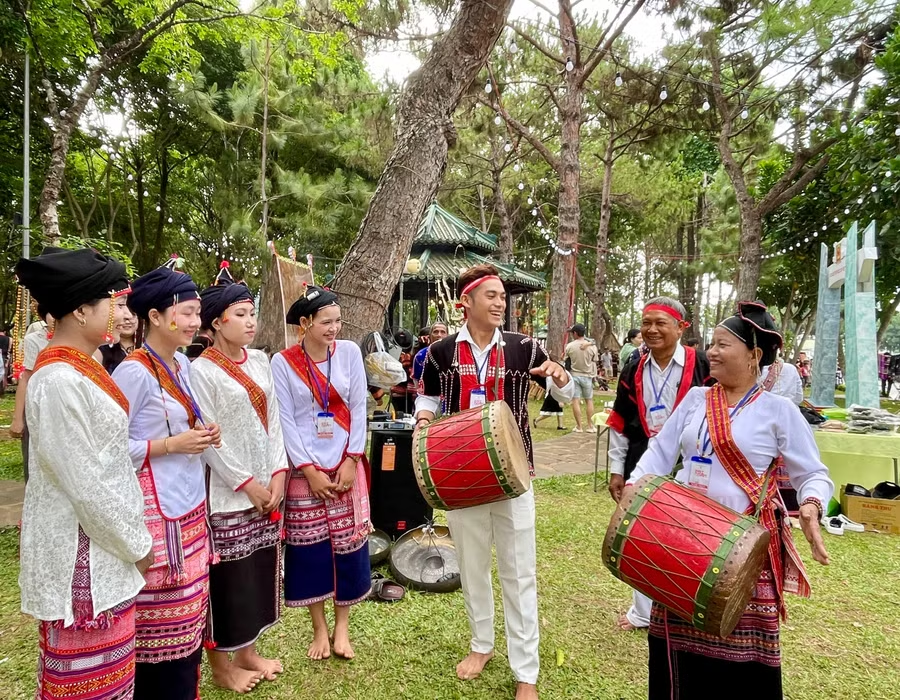
The decree also establishes ethnic minority communities as the principal actors in efforts to restore, preserve and promote their cultural heritage, with an emphasis on respecting the authenticity, integrity and distinctive characteristics of traditional practices.
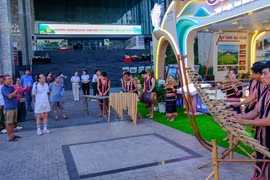
Communities will play a central role in identifying and assessing cultural traditions at risk of disappearing, as well as approving lists of those requiring preservation. The policy also provides for cultural experience spaces at schools and in residential communities and encourages traditional culture to be promoted alongside tourism and sustainable livelihoods.
Under Article 12, cultural bearers who directly participate in government or public-service programs and projects to restore, preserve and promote ethnic minority traditions are eligible for session-based financial support.
The decree also provides for monthly support under approved programs, projects or assignments, with provincial People’s Councils responsible for determining the specific form and level of assistance.
The provisions do not apply to artisans, Meritorious Artisans or People’s Artisans who already receive benefits under policies established by the Law on Cultural Heritage.
Dr. Nguyễn Thị Kim Vân, former Director of the Pleiku Museum and a long-time researcher of Central Highlands ethnic minority cultures, said Gia Lai has for years prioritized the preservation and promotion of traditional culture while recognizing cultural bearers and supporting artisans who actively practice and transmit their heritage.
She said Decree 269 provides clearer guidance and more precisely identifies eligible groups, helping cultural workers overcome practical difficulties when implementing support policies.
Dr. Kim Vân also highlighted the decree’s recognition of successor and potential cultural bearers, saying the approach could help ensure cultural traditions continue to be passed from one generation to the next.
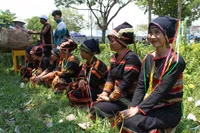
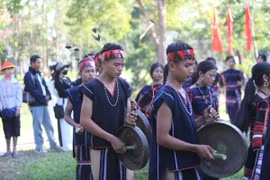
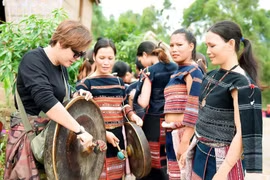
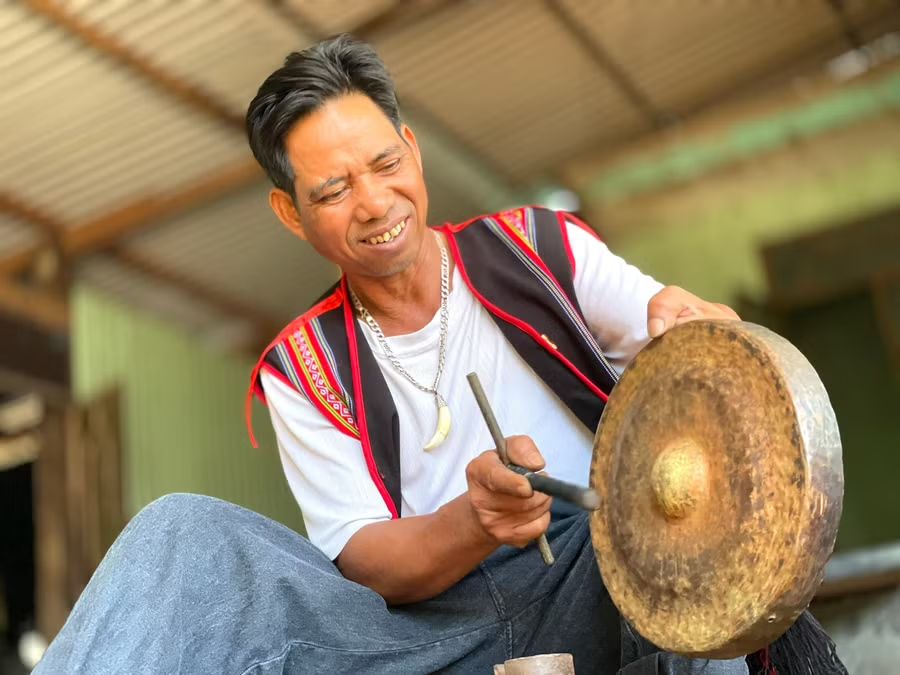
That generational transmission is already visible in Blang 3 village in Ia Hrung commune, where artisan Puih Dup makes traditional musical instruments, carves wood, and teaches and tunes gongs.
Recognized as a core cultural bearer under Decree 269, Puih Dup leads the Blang 3 village gong team, which has nearly 40 young members.
He welcomed provisions prioritizing the restoration of endangered cultural traditions, bringing ethnic minority culture closer to young people and providing support to those directly involved in preserving and transmitting cultural identity.
Puih Dup said he had received support in recent years while participating in gong performances, teaching and tuning activities organized by provincial departments and agencies.
He expects implementation of the decree to provide further encouragement to artisans working to safeguard traditional culture.
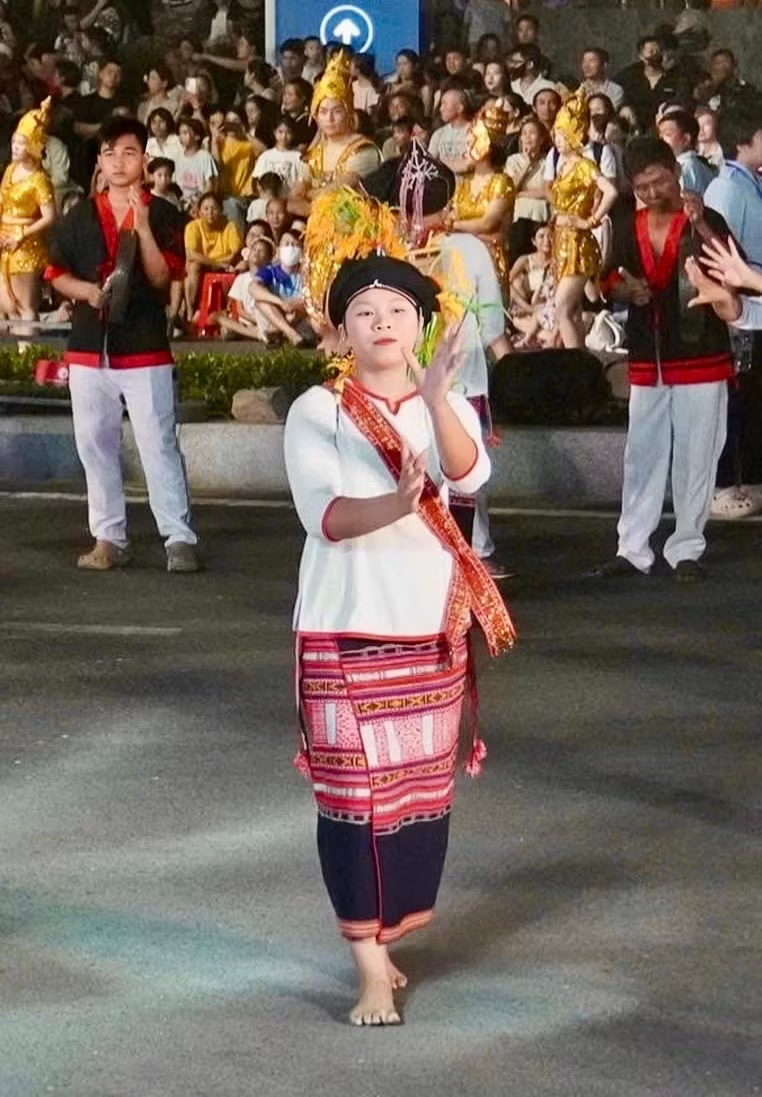
For 17-year-old Lê Thị Thu Huế of Suối Đá hamlet in Canh Vinh commune, cultural preservation is also a family inheritance.
A successor cultural bearer, Huế developed her passion for the xoang dance and Chăm Hroi folk songs through her grandmother. She has been an active member of the Canh Vinh commune gong team for years and has performed at cultural events inside and outside the province.
Huế welcomed the new regulations and said she intends to continue practicing and passing on Chăm Hroi traditions to future generations while helping more people understand the community’s cultural identity.
The Gia Lai Department of Culture, Sports and Tourism has issued Official Letter No. 3124/SVHTTDL-QLVHGĐ to commune- and ward-level People’s Committees, specialized departments and affiliated public service units on implementing Decree 269.
Following guidance from the Department of Ethnic Culture under the Ministry of Culture, Sports and Tourism, the provincial department is also preparing further recommendations for the Gia Lai People’s Committee aimed at ensuring comprehensive and effective implementation of the decree.