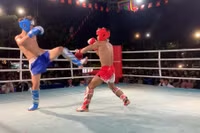
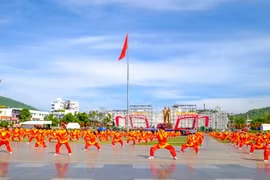
The 9th International Vietnamese Traditional Martial Arts Festival officially opened on Sunday at Nguyen Tat Thanh Square in Quy Nhon Ward, bringing together martial arts masters, practitioners from Vietnam and abroad in a celebration of traditional martial arts and its international presence.
Thousands of spectators attended the opening ceremony, themed "Vietnamese Traditional Martial Arts – Shining Essence," which was jointly organized by the Gia Lai Provincial People's Committee, the Ministry of Culture, Sports and Tourism, the Vietnam Traditional Martial Arts Federation and the World Federation of Vietnamese Traditional Martial Arts.
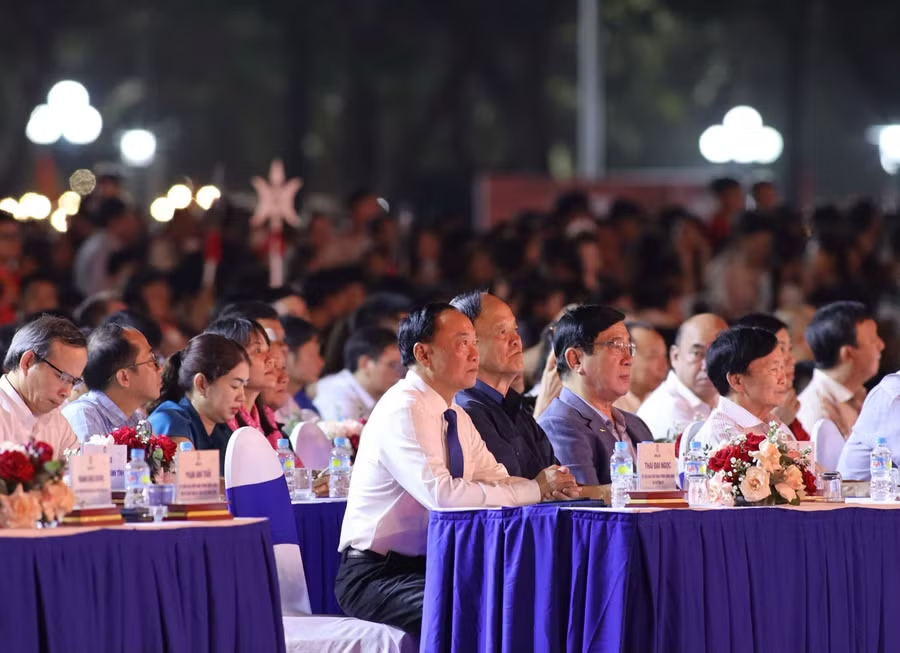
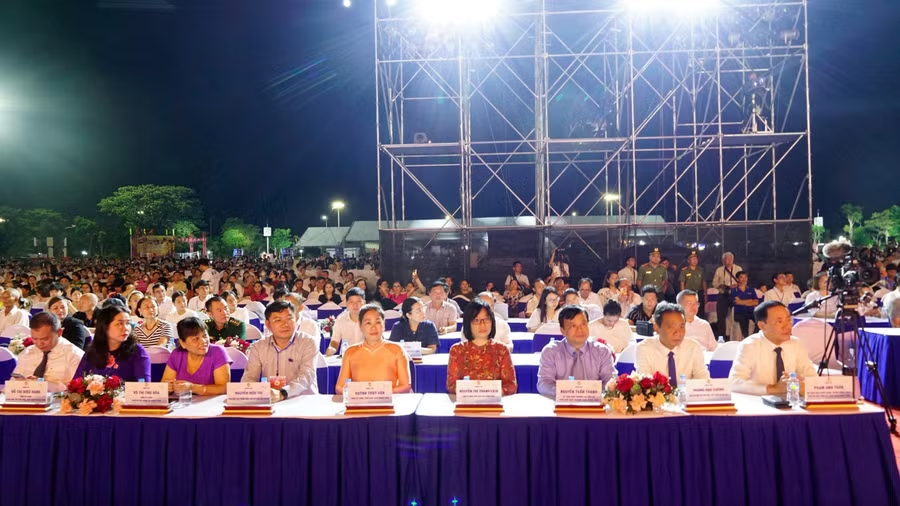
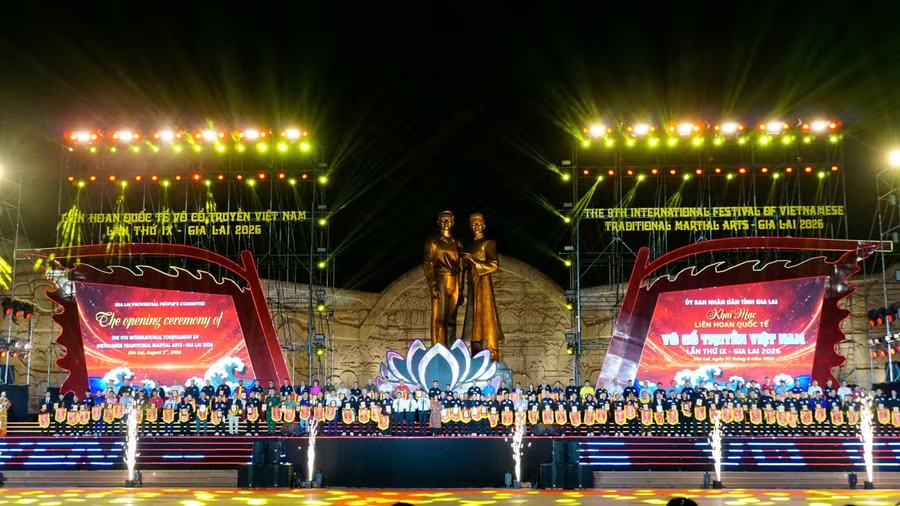
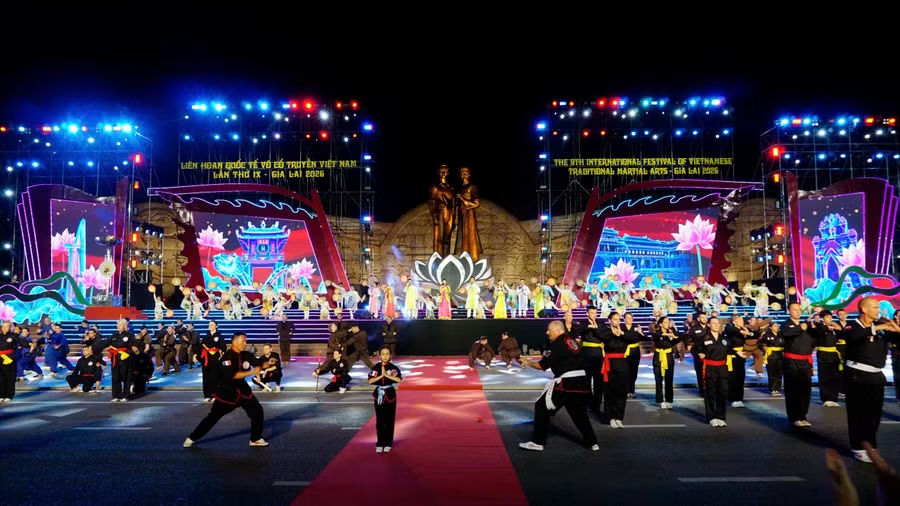
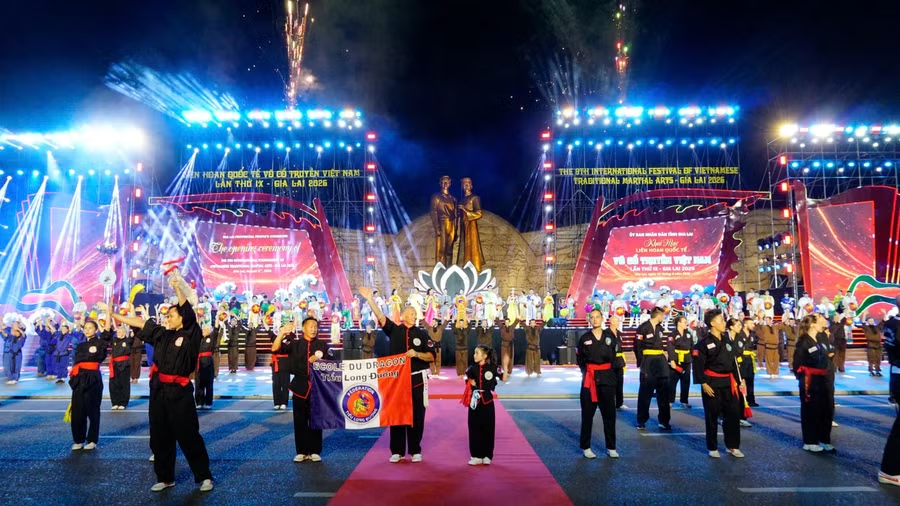
Delegates attend the opening ceremony. Photo: H.V - N.D
Among those attending were Deputy Minister of Culture, Sports and Tourism Hoàng Đạo Cương; Gia Lai Provincial Party Secretary Thái Đại Ngọc; Gia Lai Provincial People's Committee Chairman Phạm Anh Tuấn; provincial leaders; representatives of domestic and international martial arts organizations; and local residents and visitors.
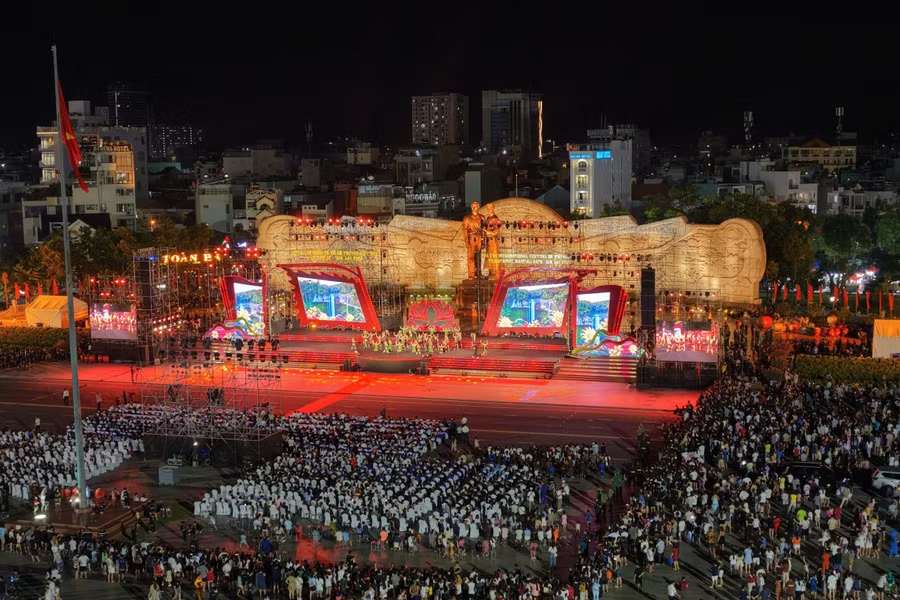
Nguyễn Tất Thành Square (Quy Nhơn Ward) – the venue for the opening ceremony of the 9th International Vietnamese Traditional Martial Arts Festival – Gia Lai 2026. Photo: Nguyễn Dũng
Representatives of martial arts federations included Nguyễn Ngọc Anh, President of the Vietnam Traditional Martial Arts Federation; Lê Ngọc Quang, Executive Vice President of the World Federation of Vietnamese Traditional Martial Arts; Iurii Popov, Vice President of the World Federation and President of the Vietnamese Traditional Martial Arts Federation in Russia; and Oliver Barbey, Deputy Secretary General of the World Federation and President of the International Sơn Long Quyền Thuật School.
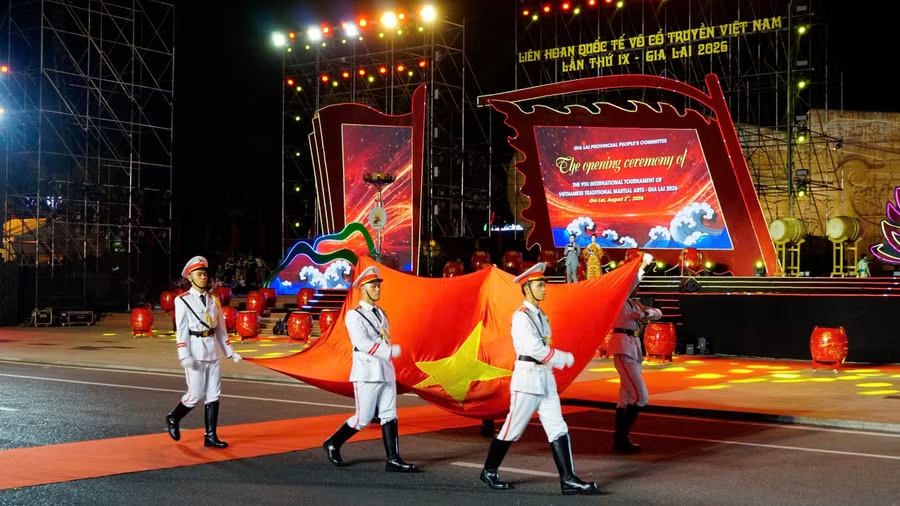
The national flag contingent leads the parade. Photo: H.V
The ceremony began with a parade under the message "Convergence – Exchange – Spread – Development," featuring the national flag procession, the festival emblem, red flag contingent, international and domestic martial arts delegations and the host Gia Lai team.
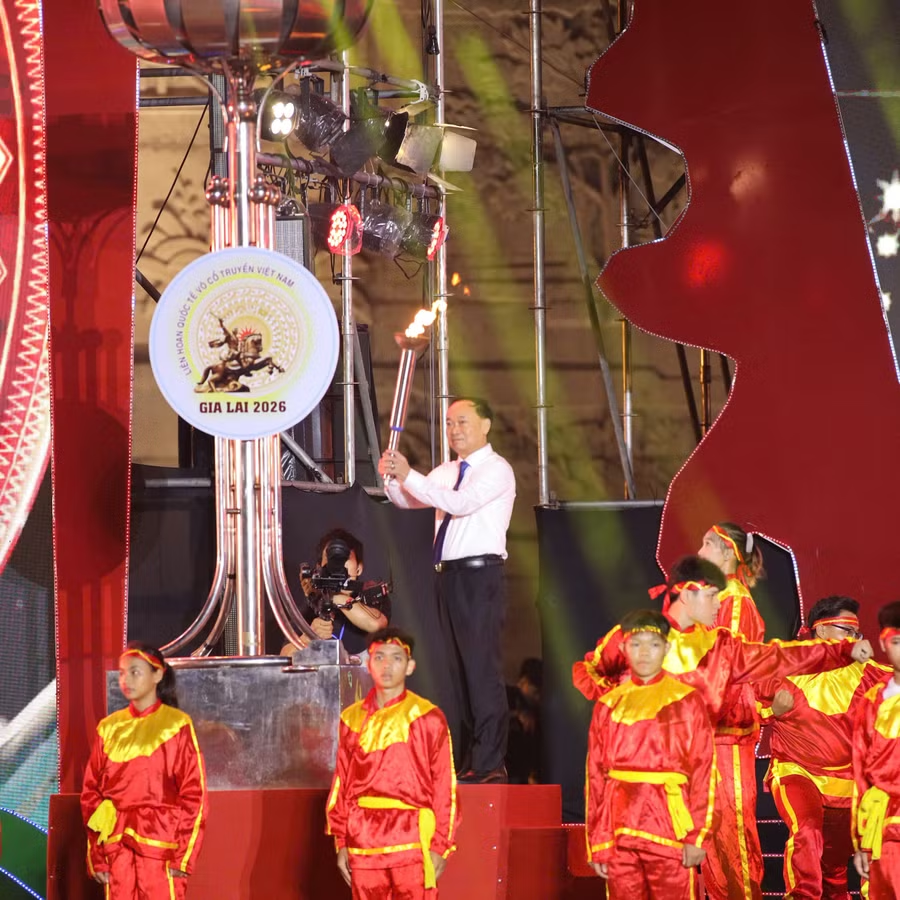
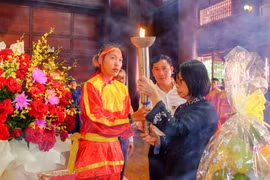
A traditional torch-lighting ceremony formed the centerpiece of the opening event. The flame, brought from the Tây Sơn Tam Kiệt Temple, the homeland of national hero Quang Trung – Nguyễn Huệ, symbolized both the opening of the festival and the enduring martial spirit shaped throughout Vietnam's history.
The Organizing Committee presents commemorative medals and flags to representatives of participating martial arts delegations. Photo: H.V
Organizers said Vietnamese traditional martial arts, rooted in the country's long tradition of nation-building and national defense, have become an integral part of Vietnam's cultural identity while continuing to evolve through community efforts.
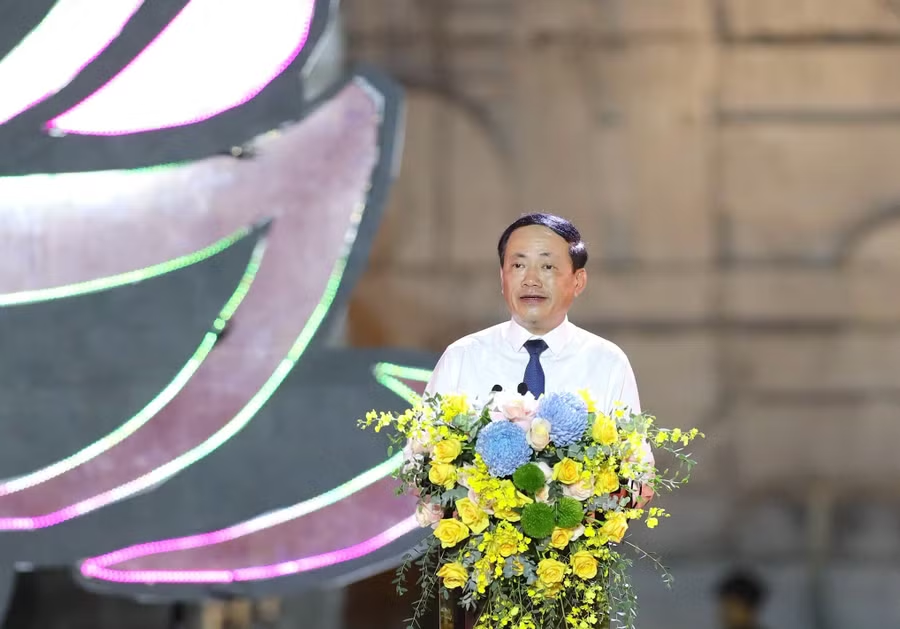
Addressing the ceremony, Gia Lai Provincial People's Committee Chairman Phạm Anh Tuấn described the province as a meeting point between the martial traditions of Bình Định and the cultural heritage of the Central Highlands.
Chairman of the Gia Lai Provincial People’s Committee Phạm Anh Tuấn delivers remarks at the opening ceremony. Photo: Nguyễn Dũng
He said preserving and promoting traditional martial arts means safeguarding not only a martial discipline but also a vital part of the nation's history, resilience and cultural identity.
Phạm Anh Tuấn said the province would continue expanding opportunities for traditional martial arts instruction within local communities while encouraging younger generations to embrace its values.
He added that Gia Lai aims to strengthen links between martial arts, culture, education, sports and tourism, positioning traditional martial arts as a distinctive cultural product and tourism highlight for the province.
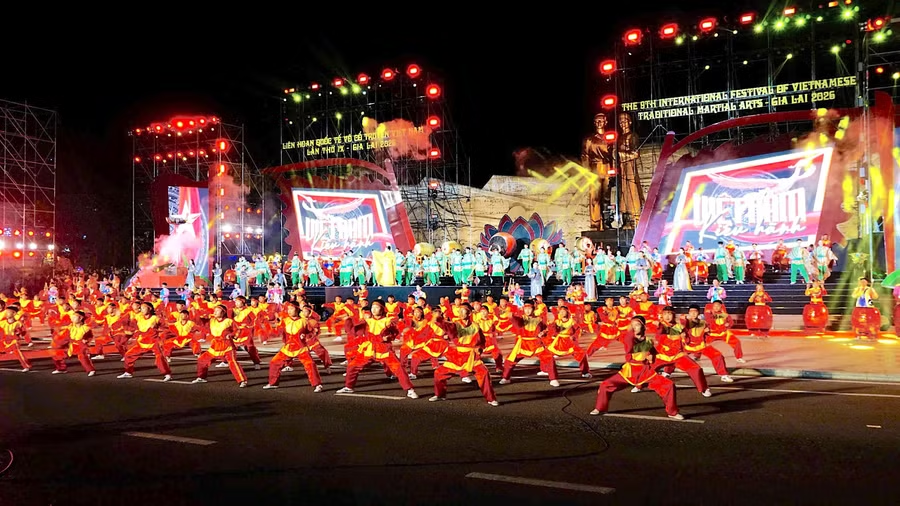
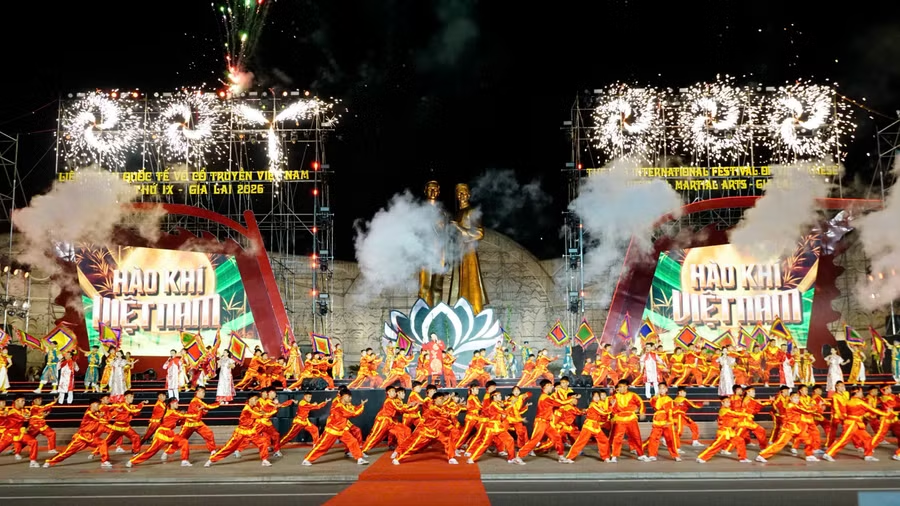
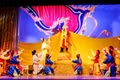
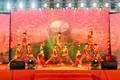
Artistic performances, singing, dancing, and martial arts displays opened the program, recreating the roots of culture and the martial spirit of the nation. Photo: H.V
He also called on martial arts organizations, masters and practitioners from Vietnam and overseas to continue sharing experience and working together to preserve and promote Vietnamese traditional martial arts internationally.
Following the traditional "Honoring the Founders" ritual, the opening ceremony featured a three-part artistic program comprising "Echoes of Vietnamese Heroism," "Bình Định Traditional Martial Arts – Convergence and Spread," and "Vietnamese Traditional Martial Arts – Radiant Essence."
Provincial Party Secretary Thái Đại Ngọc performs the torch-lighting ritual, officially opening the 9th International Vietnamese Traditional Martial Arts Festival – Gia Lai 2026. Photo: Nguyễn Dũng
The performances combined martial arts demonstrations, traditional weapons, music, dance and stage technology to illustrate the development of Vietnamese martial arts from its historical origins to its contemporary international presence.
The program emphasized Vietnamese traditional martial arts as more than a system of self-defense, portraying it as a cultural tradition that promotes morality, compassion, resilience and aspirations for peace.
The first chapter depicted the nation's history of defending and expanding its territory through large-scale martial arts performances that reflected the martial spirit and determination of generations of Vietnamese people.
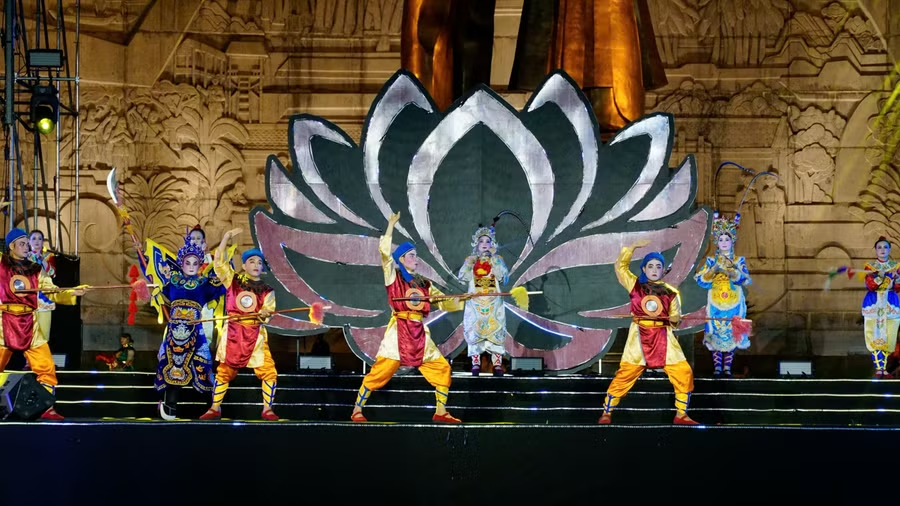
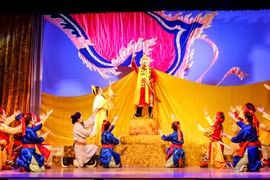
Performance of the traditional opera “Diễn Trường luyện quân” by artists from the Gia Lai Traditional Arts Theater. Photo: H.V Singing, dancing, and martial arts performances set to the song “Hào khí Việt Nam.” Photo: H.V
The second chapter highlighted Bình Định as the cradle of Vietnamese traditional martial arts, portraying the preservation, inheritance and development of martial traditions across generations.
According to organizers, Vietnamese traditional martial arts are now practiced in about 45 countries and territories through more than 400 centers, schools and clubs, supported by over 1,000 masters and coaches and approximately one million practitioners worldwide.
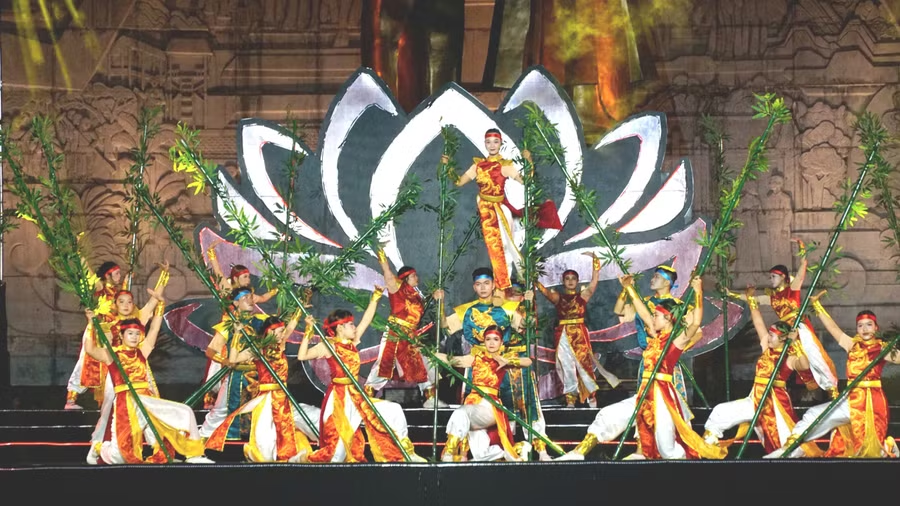
Performance titled “The Call from the Great Highlands.” Photo: H.V
The performances underscored that, despite differences in language, culture and nationality, practitioners share common values of respect, compassion, self-improvement and the pursuit of truth, goodness and beauty, helping transform Vietnamese traditional martial arts into a bridge for international friendship and cultural exchange.
The final chapter showcased masters and practitioners from Vietnam and overseas performing together, illustrating the continued international integration of Vietnamese traditional martial arts.
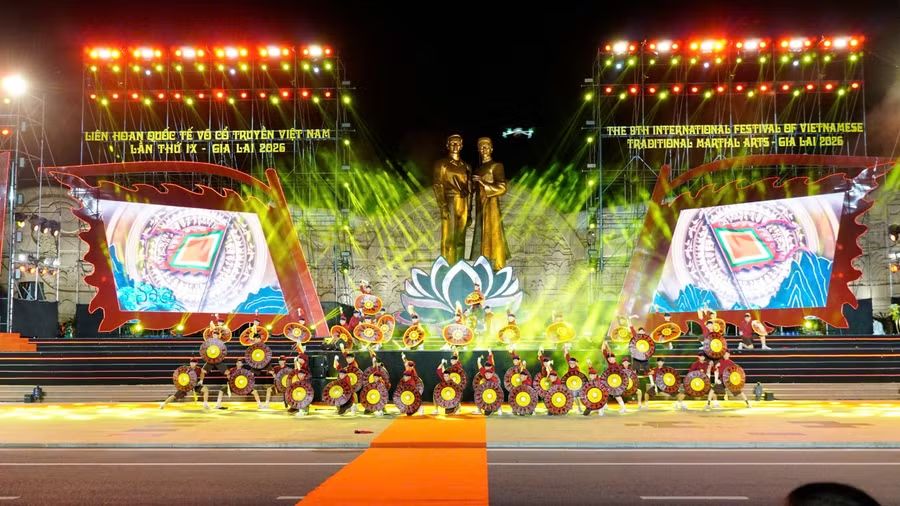
Martial arts performance “Lăn khiên đao.” Photo: H.V
The closing performance combined large-scale choreography with modern lighting effects to convey the message that Vietnamese traditional martial arts continue to evolve while preserving their heritage, connecting people across continents through the shared values of martial spirit, compassion and the pursuit of peace.
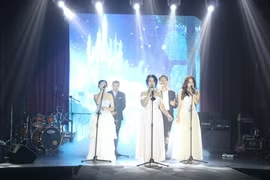
The performance “Prosperous, Radiant Vietnam,” featuring singers, actors, martial arts masters, practitioners, and international delegations, concluded the opening night. Photo: H.V
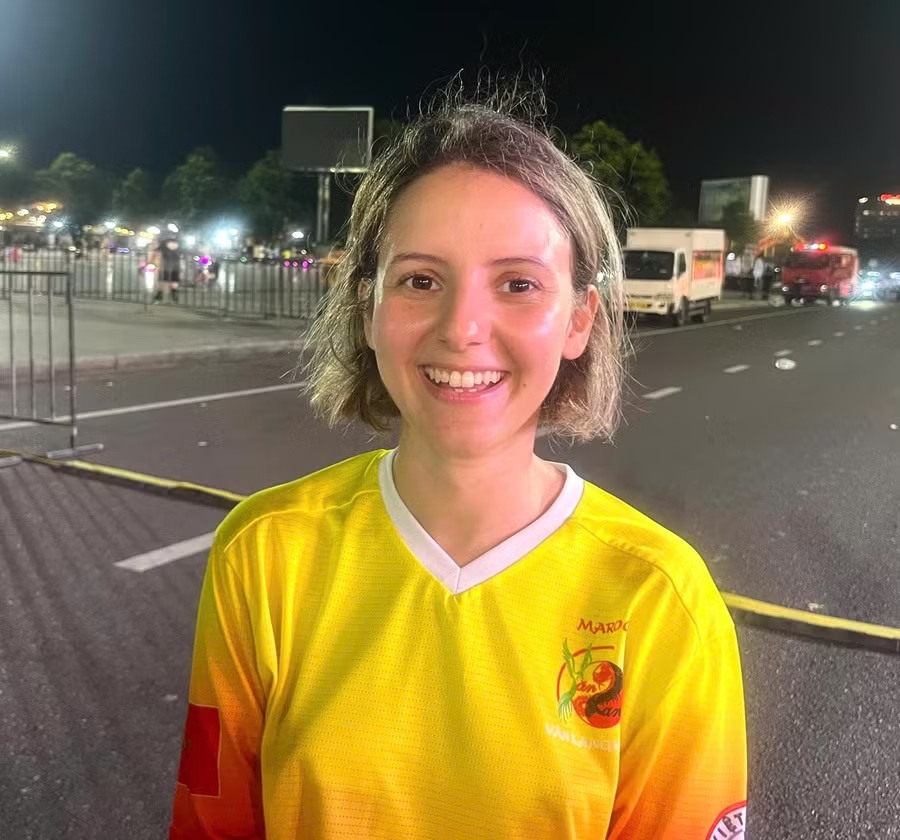
Martial arts practitioner Hala El Hsissen. Photo: H.V
Hala El Hsissen – practitioner of Văn Lang Võ Đạo in Morocco:
This is my third time participating in the International Vietnamese Traditional Martial Arts Festival, and I always feel honored to return to Quy Nhơn.
I have been practicing martial arts for 23 years, since I was just three years old. Thanks to Vietnamese traditional martial arts, I have had the opportunity to meet many international friends who share the same passion.
We hope to exchange, spread cultural values, happiness, and our love for martial arts. The emotions this festival brings are truly hard to put into words.”
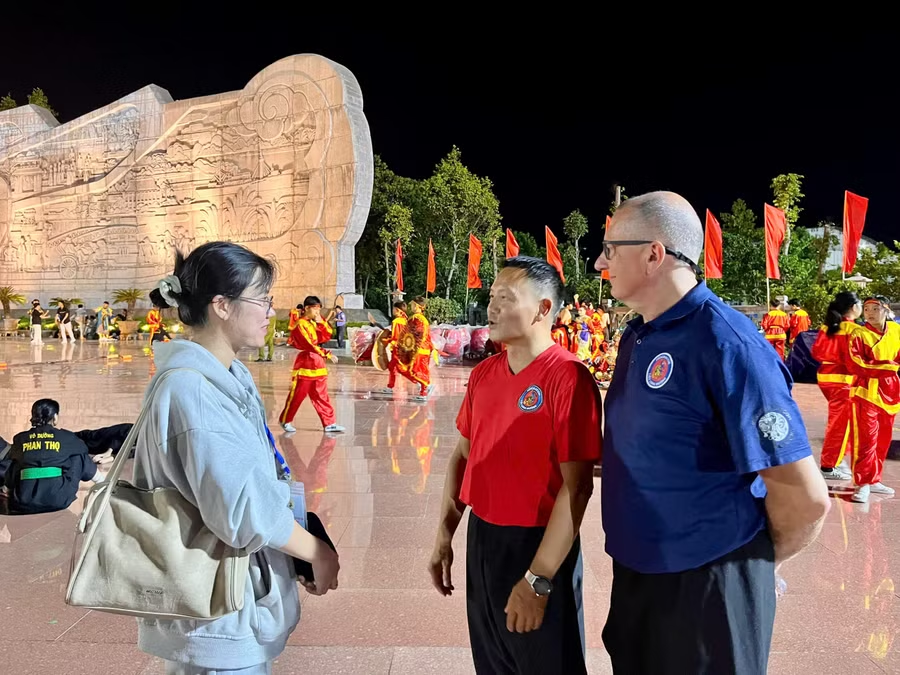
Master Stéphane Lesoil – Head of Tiểu Long Đường, Vietnamese Traditional Martial Arts in France:
In France, there are currently many practitioners training and nurturing a special love for Vietnamese traditional martial arts.
Reporter interviews Master Stéphane Lesoil (far right) and student Grand Louis (center). Photo: Minh Nguyệt
Although this martial art features many difficult techniques and requires high concentration and discipline during training, it is precisely these qualities that make it uniquely appealing and foster long-term commitment.
The festival is an opportunity for schools from countries such as France, Russia, Morocco, and others to meet and exchange, and I hope Vietnamese traditional martial arts will become even more widespread around the world.
For me, this martial art holds special meaning because my teacher is Vietnamese and also my closest friend.
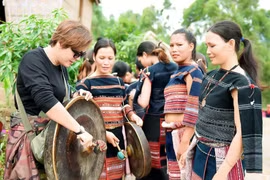
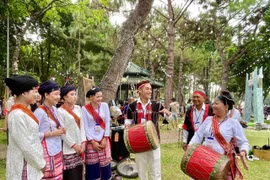
Traditional culture is being brought closer to children in Gia Lai through hands-on activities that allow them to experience gong music, xoang dances and hát bội art rather than simply learn about them through lessons.
Bitterness is the defining taste of traditional Jrai cuisine in Phu Tuc, where forest leaves, bitter vegetables and distinctive cooking methods have shaped dishes closely tied to the community’s way of life.
Gia Lai is seeking to shift its approach to culture from preservation alone towards sustainable promotion of heritage values, with provincial leaders calling for cultural resources to be transformed into distinctive products that support socio-economic development.
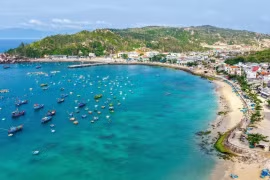
Gia Lai has significant potential to turn its centuries-old connections between the Central Highlands and the sea into a new source of economic growth, with maritime heritage, tourism and cultural industries forming part of an integrated development strategy.
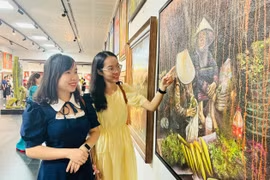
Gia Lai artists have emerged as leading contributors to the 30th Regional Fine Arts Exhibition for Region V - South Central and Central Highlands, accounting for three of the nine award-winning artists and the largest number of works submitted by any participating locality.
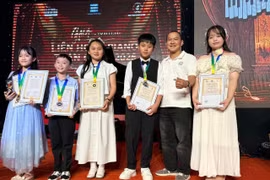
Two young pianists from Gia Lai won gold medals at the finals of the 2026 National Piano Festival, held in Buon Ma Thuot Ward, Dak Lak Province, from August 4 to 9.
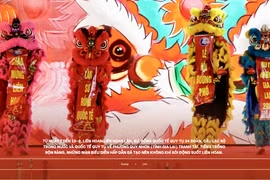
Thirty-four troupes and clubs from Vietnam and abroad gathered in Quy Nhon Ward, from August 7-10 for the International Lion, Unicorn and Dragon Dance Festival, delivering four days of energetic performances and closely contested events.
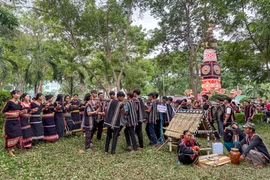
Gia Lai is moving to implement new policies that put ethnic minority communities and cultural bearers at the center of efforts to safeguard traditional heritage, with a stronger focus on passing cultural practices to younger generations.
The 9th International Vietnamese Traditional Martial Arts Festival officially began on Sunday with an incense offering ceremony and a sacred flame procession, bringing together martial arts delegations from across the country and overseas for the opening of the 4-day cultural and sporting event.
Nearly 20 artists from across Gia Lai Province are taking part in a 10-day lacquer painting workshop, where they are learning traditional techniques, exchanging creative ideas and deepening their appreciation for one of Vietnam's most enduring artistic mediums.
The FLC Quy Nhon Flower Festival 2026 will be held from Aug. 15 to Sept. 15 at the FLC Quy Nhon Resort Complex as part of the National Tourism Year - Gia Lai 2026, organized by FLC Group Joint Stock Company in coordination with the provincial People's Committee.
The HV Music Club of Hung Vuong High School for the Gifted held its ninth annual minishow, titled "Thăng" (Ascend), on the evening of July 21 in Pleiku Ward, bringing together student performers and guest artists in an event that also supports the club's annual charitable activities.
Musician Trần Kim Vân has been awarded a Certificate of Merit for his outstanding contributions at the 2026 National Three-Region Folk Singing and Instrumental Festival.
Phu Tuc Commune in Gia Lai Province will host its first Ethnic Minority Cultural and Sports Festival alongside an Agricultural Market introducing local OCOP products on August 8, marking the first anniversary of the commune's establishment.
The seventh episode of Say Hi Rực Rỡ will see contestants compete in a series of team-based challenges that test strategy, coordination and endurance, while continuing to blend competition with light-hearted entertainment.
Large crowds of residents and tourists gathered in South Quy Nhon Ward, Gia Lai Province, on the evening of July 10 for the “South Quy Nhon - Call of the Sea” street carnival, a cultural and tourism event showcasing the coastal area’s traditions and ambitions for marine tourism development.
In early July 2026, the Vietnam Rice Industry Association (VIETRISA) presented awards in Ho Chi Minh City for the “Vietnamese rice - Origins and future” creative writing contest.
Hidden beneath the dense forest canopy of the Bích Kê mountain range, the Phú Hà ancient stone rampart is emerging as an important archaeological site that researchers believe dates to the early 19th century and once served as a storage and collection point for agricultural goods.
Students in Gia Lai province are using digital technology, QR codes, audiobooks and online libraries to promote reading and expand access to books, as the 2026 Provincial Reading Culture Ambassador Contest encourages contestants to combine traditional reading with digital innovation.
As rapid urban development continues, two centuries-old Jrai villages, Ơp in Pleiku Ward and Pleiku Roh in Diên Hồng Ward, continue to safeguard their cultural identity, preserving traditions, communal life and heritage despite expanding roads, new residential areas and growing urbanisation.
Artists from the Pleiku Calligraphy Club in Gia Lai have developed an innovative way to combine traditional calligraphy with the Central Highlands' signature coffee culture by creating paintings and calligraphic works using ink made from recycled coffee grounds.
Eight Jrai artisans from Xoa village in Bien Ho commune, Gia Lai province, brought the distinctive cultural heritage of Vietnam's Central Highlands to the "Return to Nha Trang" art exchange program on June 28, as part of the Vietnam Family Day 2026 celebrations in Khanh Hoa province.
A Vietnamese artisan has spent nearly two years creating a light sculpture of the late General Secretary Nguyễn Phú Trọng, transforming a simple piece of pine burl into a tribute reflecting his admiration and gratitude for the late leader.