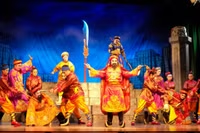
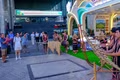
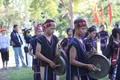
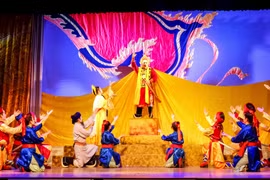
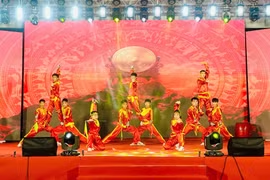
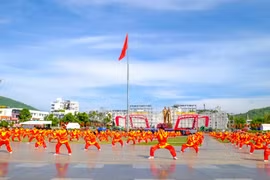
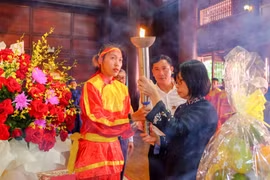
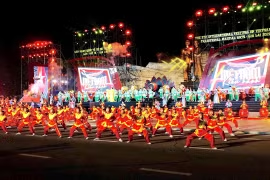
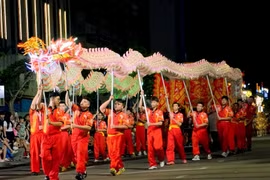
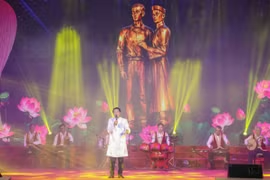
The "Hào khí Tây Sơn" martial arts performance was delivered by masters and students from the Bình Định Traditional Martial Arts Center. Photo: Vũ Thảo
A unique fusion of martial arts and strategy took centre stage in Pleiku on April 26, as Gia Lai hosted a human chess match combined with a Tây Sơn martial arts performance during its first Provincial Ethnic Culture Festival in 2026.
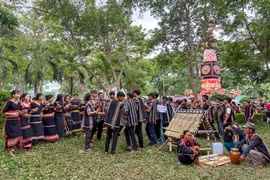
Held at Đại Đoàn Kết Square, the programme brought together intellectual sport and traditional performance in a format debuting in the Central Highlands city. The event aimed to highlight Gia Lai’s cultural identity and the unity of its multi-ethnic communities.
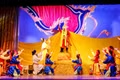
The highlight was a human chess match between Võ Quốc Thịnh of Quy Nhơn, representing the Red Team, and Đặng Bá Vinh of Pleiku, representing the Blue Team. Instead of conventional pieces, martial artists and students embodied each role, executing movements in synchrony with the players’ strategies.
After nearly two hours of play marked by contrasting styles, Thịnh’s aggressive tactics and Vinh’s measured defence and counterattacks, the match ended in a draw, reflecting a balanced contest of skill and composure.
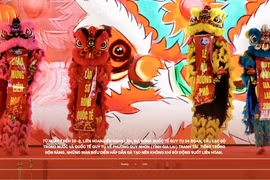
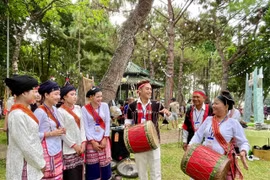
The event opened with the “Hào khí Tây Sơn” (Tay Son’s heroic spirit) performance, where martial artists from the Bình Định Traditional Martial Arts Center delivered choreographed routines accompanied by drumbeats. The display evoked historical martial traditions and introduced audiences to Bình Định martial arts, recognised as a national intangible cultural heritage.

Commentary by veteran chess player Phan Văn Hùng helped spectators follow the match’s tactical complexity. He described both competitors as highly skilled, likening their level to “colonel rank” in folk classification.

Audience members praised the immersive nature of the performance. Spectators noted that the realism of martial artists enacting chess captures enhanced the experience, making each move vivid and engaging even for those unfamiliar with the game.

Participants also highlighted the added challenge of the format. Vinh said the large playing space and live pieces required greater concentration, while Thịnh noted the difficulty of tracking positions while observing martial arts movements.

Organisers and experts said human chess has long been a traditional activity in Bình Định, often staged during festivals and Tet celebrations. Its introduction in Pleiku is expected to broaden its appeal and attract visitors.
Beyond entertainment, the programme underscored efforts to preserve and promote traditional culture. Officials said integrating martial arts into interactive formats can strengthen cultural awareness, particularly among younger generations, while supporting tourism development.

The event forms part of a broader push to position Gia Lai as a destination for experiential and culturally distinctive tourism, showcasing both heritage and community cohesion.