Since its late-March premiere, the film has drawn large crowds nationwide. In Quy Nhon, cinemas have added multiple daily screenings to meet demand, with theaters frequently near capacity, including international viewers following English-subtitled versions.
According to Box Office Vietnam, the film grossed nearly VND 64 billion (approximately USD 2.56 million) within its first ten days, maintaining the top position at the box office with around 3,000 screenings daily. On April 5 alone, it attracted more than 100,000 viewers and generated close to VND 10 billion (approximately USD 400,000) in a single day.
Beyond its commercial success, the film is drawing attention for its portrayal of central Vietnam’s landscapes and cultural sites. Set in the 1990s, the story follows a romance between a Catholic woman and a non-Catholic man, weaving emotional narratives with striking visuals of real locations.
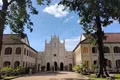
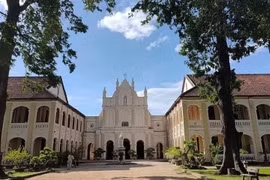
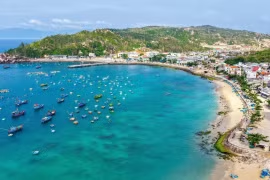
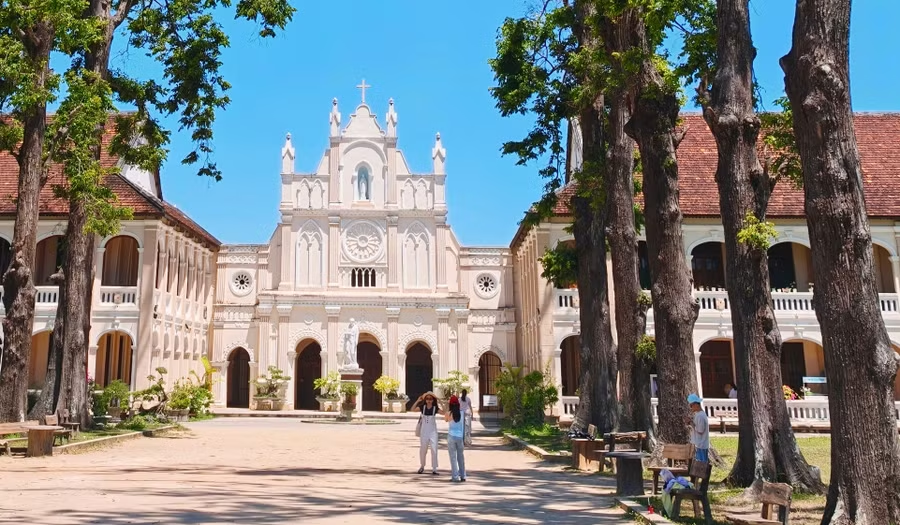
Prominently featured is the Lang Song Minor Seminary in Tuy Phuoc Commune, whose ancient architecture and tranquil surroundings appear in both the opening and closing scenes. The film also highlights Quy Hoa leprosy village in Quy Nhon, depicting humanitarian activities and the quiet life of its coastal community.
Audience reactions suggest the film is already influencing travel behavior. Many viewers have taken to social media to express newfound interest in visiting Quy Nhon, with some noting they had not previously considered the destination. Online discussions and travel guides to filming sites have proliferated, reinforcing the area’s appeal.
Local tourism stakeholders see an opportunity to convert cinematic exposure into visitor growth. If leveraged effectively, the film’s popularity could drive increased arrivals, particularly during the upcoming April 30 and May 1 holidays, with potential for themed tours linking Quy Nhon and Tuy Phuoc.
The featured sites also carry historical and cultural significance. Lang Song Minor Seminary once housed one of the earliest Vietnamese-script printing houses, while Quy Hoa village is known for its distinctive architecture and its association with the final years of poet Han Mac Tu.
Officials and tourism operators are now looking to capitalize on the film’s momentum, positioning it as a catalyst for new travel experiences. As interest builds, “See you on the day of the eclipse” may offer a direct pathway from the cinema screen to real-world journeys, supporting broader tourism ambitions for Gia Lai in 2026.