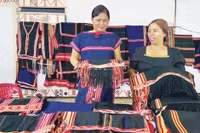
In Dôr 2 village of Đak Đoa commune and Phung village of Biển Hồ commune, artisans weave more than garments and bags. Each thread carries memories, cultural identity and stories passed down through generations.
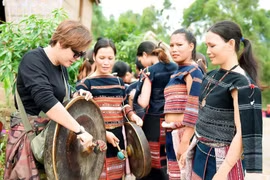
Across the villages, brocade patterns reflect everyday life and spiritual traditions. Motifs often depict communal houses, gongs, bronze drums, flowers, animals and geometric shapes rooted in folk wisdom.
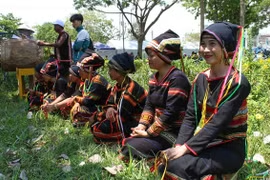
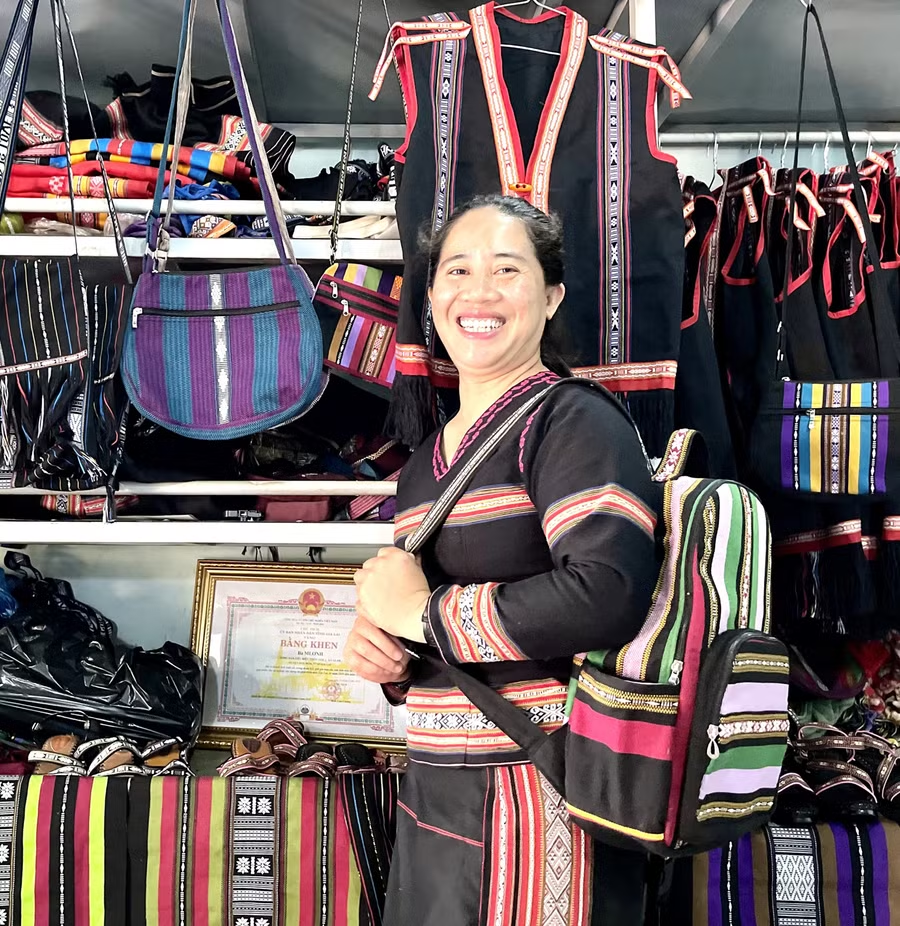
Jrai brocade typically features restrained colours on a black background, highlighted with white, red, yellow and blue patterns arranged in precise lines. Bana brocade, by contrast, incorporates more varied background colours and vibrant motifs. Beyond preserving a traditional craft, villagers are increasingly linking weaving to community-based tourism, where each product tells a cultural story.
Craft learned through patience
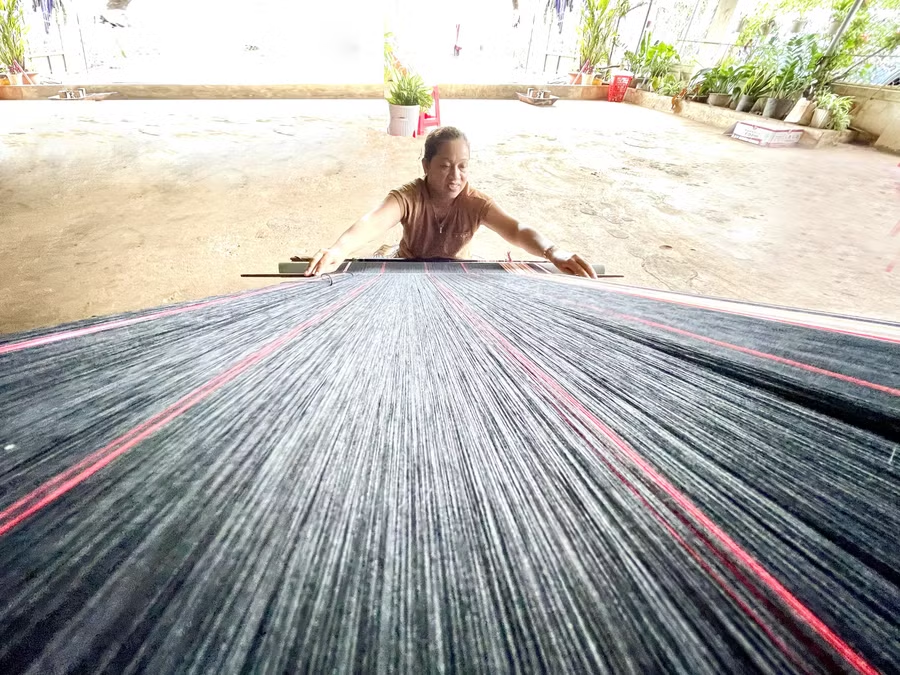
In Phung village, the sound of the loom begins early each morning in the home of artisan Pel, head of the Phung Village Weaving Club. The club has 23 members, all Jrai women.
Pel recalls how her fascination with weaving began when she was 12 years old, watching her mother work the shuttle for hours. At first she observed quietly, memorising every movement. Once she touched an unfinished piece and was scolded for fear of tangling the threads.
Without thread to practise, she used fibres torn from banana stems to imitate weaving. The coarse strands often broke, but they helped her learn rhythm and hand control. Seeing her persistence, her mother eventually allowed her to weave small pieces with real thread.
Over time, Pel learned to combine colours and create motifs, sometimes spending an entire day perfecting a single pattern.
After four decades at the loom, the rhythmic clatter remains part of her daily life. Each thread represents memories of family and village life, shaped through countless hours of patient work.
While speaking with visitors, her hands move quickly to finish a piece of fabric for a customer’s dress. She explains that today most weavers use industrial thread instead of hand-spun cotton.
“In the past, thread was precious”, Pel says. “Villagers bought cotton, spun it by hand and dyed it with leaves, bark or turmeric. Sometimes they even burned oyster shells to make colours. It could take months just to prepare the thread”.
Today, although weaving itself remains manual, modern materials and machine sewing have reduced production time. A piece of cloth about 60–70 centimetres wide and roughly three metres long can now be completed within five to seven days.
Passing the craft to a new generation
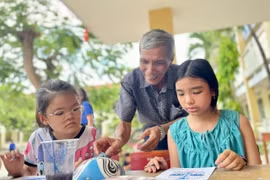
In Dôr 2 village, artisan M’lốp, now over 60, no longer weaves regularly due to fading eyesight and declining strength. Yet she continues to guide learners, correcting their hand movements and adjusting misplaced threads.
For her, weaving is more than work. After more than 50 years with the craft, she has opened classes for her children and other women in the village with support from local authorities and related agencies.
From these simple lessons, many younger women have developed a passion for weaving and continue the tradition.
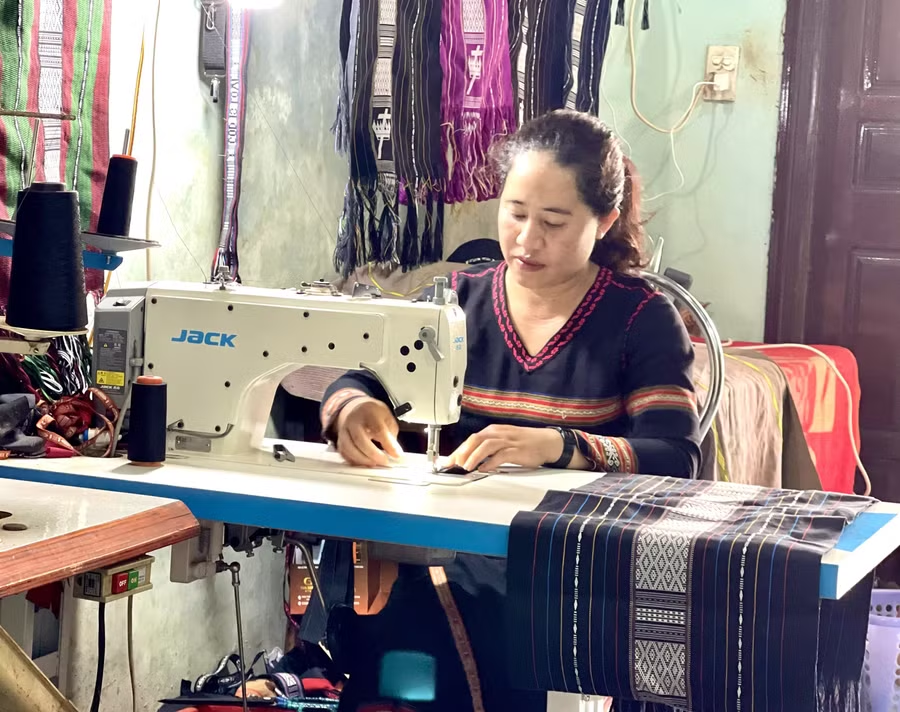
Building on that foundation, the Glar Agricultural and Brocade Weaving Cooperative in Đak Đoa commune was established to develop the craft further. The cooperative has 30 members, all Bana women.
By bringing weaving households together, the cooperative helps maintain traditional skills while linking production, standardising designs and expanding markets.
Tradition meets modern design
M’lơnh, the 43-year-old daughter of M’lốp, represents the next generation of artisans. She has been weaving for more than 30 years and now introduces new ideas to the craft.
Without abandoning traditional motifs, she experiments with more complex and diverse patterns to suit modern tastes.
Previously, brocade products were mainly made for everyday use, including clothing and baby carriers. Today artisans produce a wider range of items such as backpacks, handbags, crossbody bags, shoes and sandals.
“We preserve our traditional identity but must innovate to stay relevant,” M’lơnh says.
One of the cooperative’s products, the Glar brocade bag, has received a three-star certification under Vietnam’s One Commune One Product (OCOP) programme. The recognition confirms brocade’s value not only as a cultural symbol but also as a commercial product.
Growing orders provide additional income for village women and encourage younger generations to learn the craft.
Tourism offers new opportunities
Local authorities say weaving can only survive if it supports livelihoods.
Dang Khanh Toan, Vice Chairman of the Bien Ho Commune People’s Committee, notes that visitors are increasingly interested in handmade products with strong local identity.
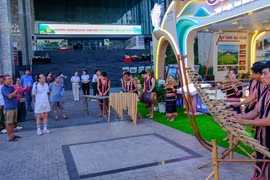
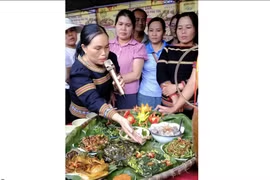
During the recent Tet holiday, the commune organised a booth at the Bien Ho Tourist Area to display woven products made by women in Phung village. Bags and scarves sold well and created opportunities to link weaving with community-based tourism.
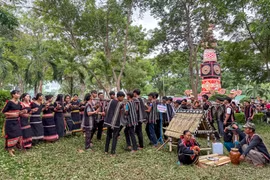
Gia Lai province is set to host Vietnam’s National Tourism Year in 2026, and brocade weaving is expected to become part of the visitor experience. Tourists may watch artisans at work, try weaving themselves and learn about the stories behind each motif.
“When products are placed in the right cultural setting and their stories are told properly, their value goes beyond utility,” Toan says. “They become experiences.”
Revival of a fading craft
There was a period when brocade weaving declined as young villagers left for other jobs and the sound of the loom faded.
But as interest in authentic cultural experiences grows and community-based tourism expands, the craft is finding new life.
For artisans such as Pel and M’lốp, the sound of the shuttle remains the rhythm of their lives. After decades of weaving through farming seasons and festivals, they no longer remember how many pieces they have created.
What matters most, they say, is not only preserving a traditional craft but ensuring that the next generation inherits both a livelihood and a cultural identity.
In Dôr 2 and Phung villages, the loom continues to sound steadily. Thread by thread, Jrai and Bana women weave memories, sustain tradition and keep a cultural legacy alive within the region’s evolving tourism economy.