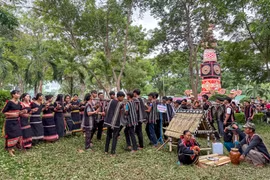
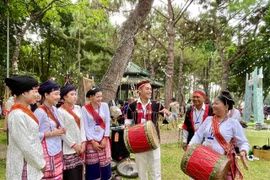
The first Gia Lai Provincial Ethnic Culture Festival 2026, held at the end of April, was more than a cultural celebration. The event also reflected a new development approach by the province, treating heritage as a “living asset” linked to tourism and the creative economy.
Speaking to Gia Lai Newspaper and Radio & Television, Vice Chairwoman of the Gia Lai Provincial People’s Committee Nguyễn Thị Thanh Lịch outlined the province’s vision for integrating culture into sustainable development.
* Following the success of the First Gia Lai Provincial Ethnic Cultural Festival 2026, how does the province view the role of culture in the current phase of development?
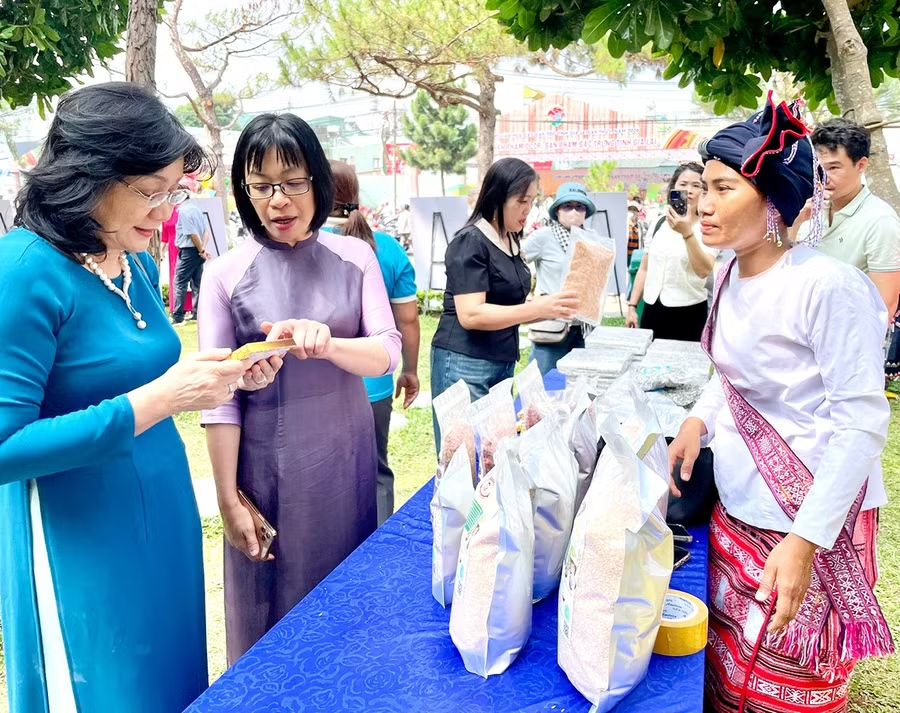
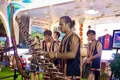
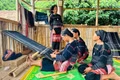
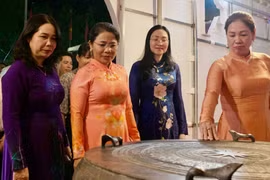
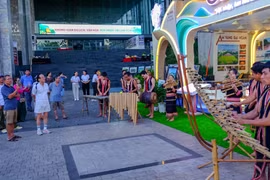
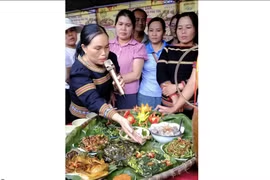
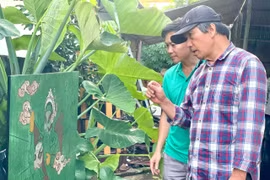
Vice Chairwoman of the Provincial People’s Committee Nguyễn Thị Thanh Lịch (second from left) visits the local specialties booth of the Chăm H’roi artisan group from Vân Canh Commune at the First Gia Lai Provincial Ethnic Cultural Festival 2026. Photo: Phương Duyên
- The recent Festival demonstrated that culture is not only a spiritual value but also a driving force for development in this new era. Through the event, Gia Lai reaffirmed culture as a foundation for strengthening identity and national unity, which are essential for long-term stability and development.
At present, culture also helps raise the province’s profile and promote the image of Gia Lai and its people, thereby attracting investment and expanding cooperation opportunities.
Importantly, the province sees culture as opening up major opportunities for economic growth, particularly in tourism, services and the creative economy.
Cultural values such as the gong cultural space, festivals, cuisine and traditional crafts can become signature products if developed systematically, creating sustainable livelihoods for local communities.
* How can culture be integrated into other provincial development plans to ensure coherence?
- We do not consider culture a separate sector. Culture is a “soft resource” that shapes human development and improves spiritual life quality, thereby supporting sustainable development rather than only economic growth.
Culture should be consistently integrated into urban and rural planning, education and especially tourism.
From the experience of organizing the Festival, Gia Lai is shifting from a mindset focused solely on “cultural preservation” to one that leverages culture as a development driver. Culture is both a goal for building a high-quality spiritual life and an endogenous force for sustainable economic growth.
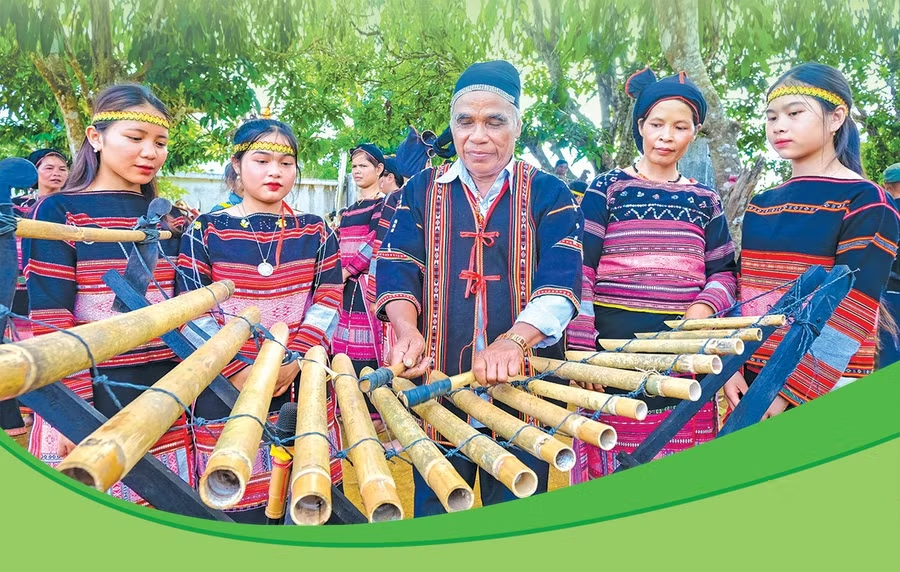
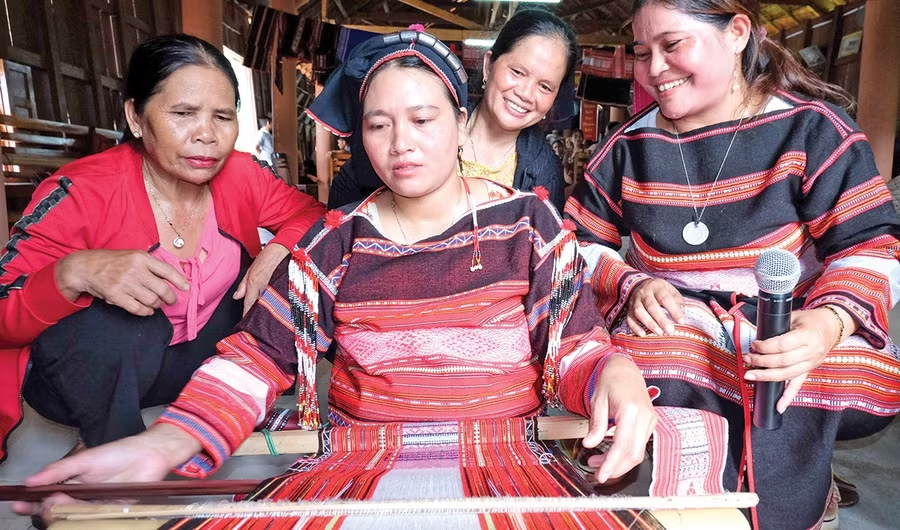
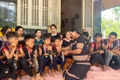
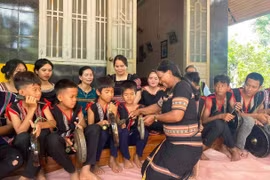
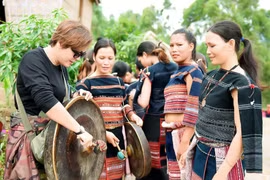
Artisans—these “living treasures”—play a pivotal role in practicing and passing on heritage to younger generations. Photo: Ngọc Nhuận
* Could you elaborate on the province’s conservation strategy so that heritage truly becomes a resource?
- A key part of the province’s strategy is moving from “static preservation” to “dynamic preservation,” turning heritage into “living assets”.
Static preservation means placing heritage in museums or archives. Dynamic preservation allows heritage to exist within contemporary life. Heritage should not only appear in museums, relic sites, festivals or performances, but also in tourism, education, arts and community activities.
The province has identified cultural tourism, particularly community-based tourism, as a central direction. Local people are the main actors in preservation. They take pride in their identity and, importantly, should directly benefit economically from heritage.
When culture generates economic value, communities will preserve and promote it voluntarily and sustainably.
* Artisans are often described as “living treasures.” Does the province have specific solutions to support them in preserving and teaching heritage?
- The province will continue implementing practical support policies for artisans. Honouring them is important, but more importantly, opportunities must be created for them to participate in tourism activities, performances and the teaching of younger generations.
This is essential to prevent heritage from fading away.
Another important direction is accelerating heritage digitization. Inventorying, documenting and building databases will support long-term preservation while also creating foundations for promoting tourism and cultural products in the digital environment.
The province also encourages the use of cultural materials in creative industries such as design, handicrafts, cuisine and performance arts in order to increase added value.
All these measures share a common goal: heritage should not only be protected but should also generate livelihoods and contribute directly to socio-economic development while preserving cultural identity over the long term.
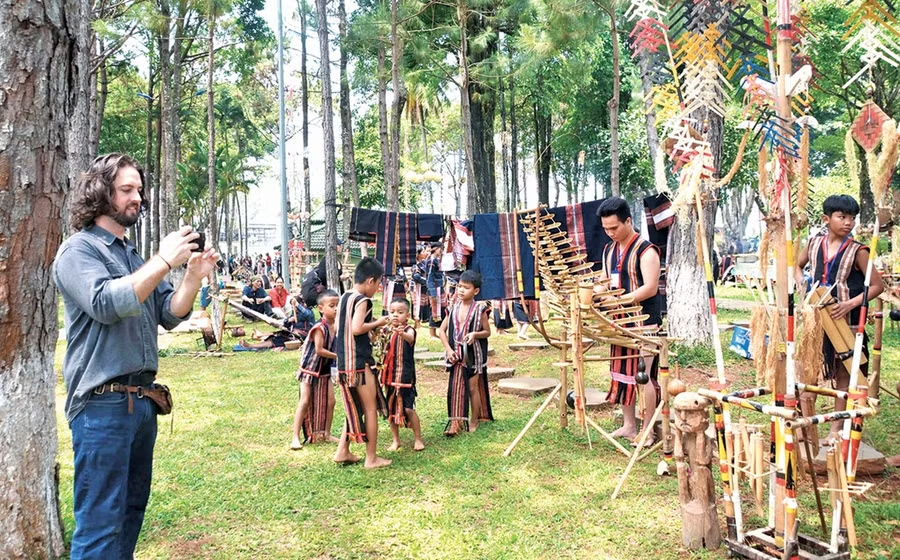
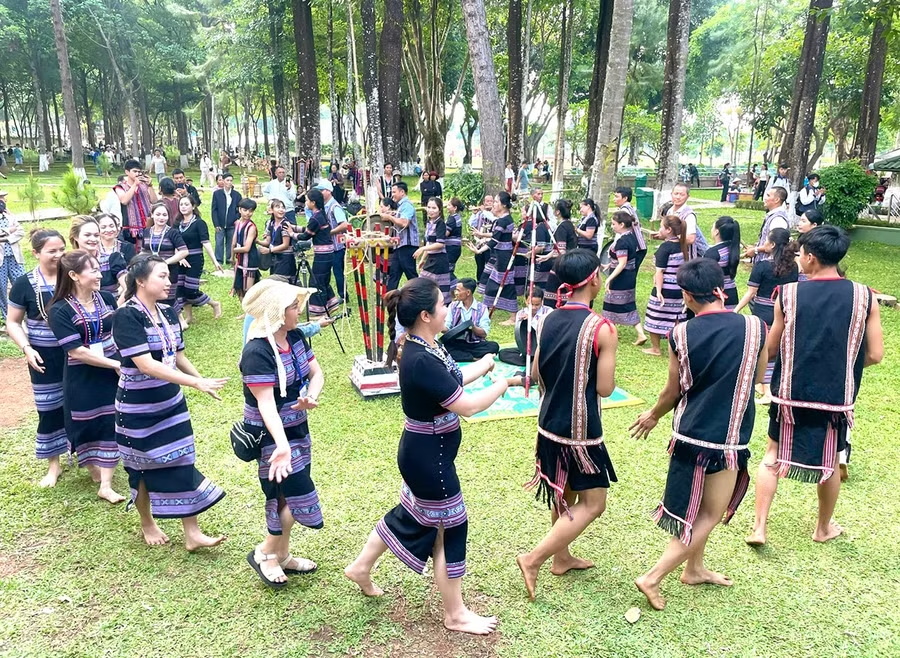
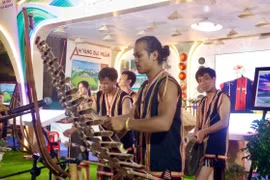
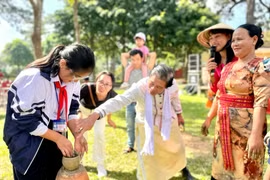
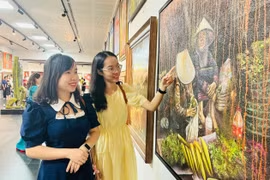
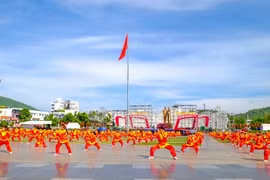
The First Gia Lai Provincial Ethnic Cultural Festival 2026 sends a strong message about heritage preservation in harmony with contemporary life. Photo: Phương Duyên
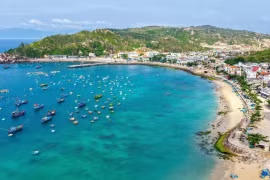
* Gia Lai has strengths in both forests and seas. How will the province realize its tourism vision connecting the “great forests - blue seas” space?
- The province aims to develop cultural tourism in a connected, distinctive and sustainable manner, focusing on the “great forests – blue seas” space as a unique advantage.
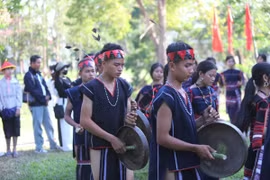
In the Central Highlands area, tourism products will highlight the gong cultural space, festivals, traditional crafts and the community life of ethnic groups.
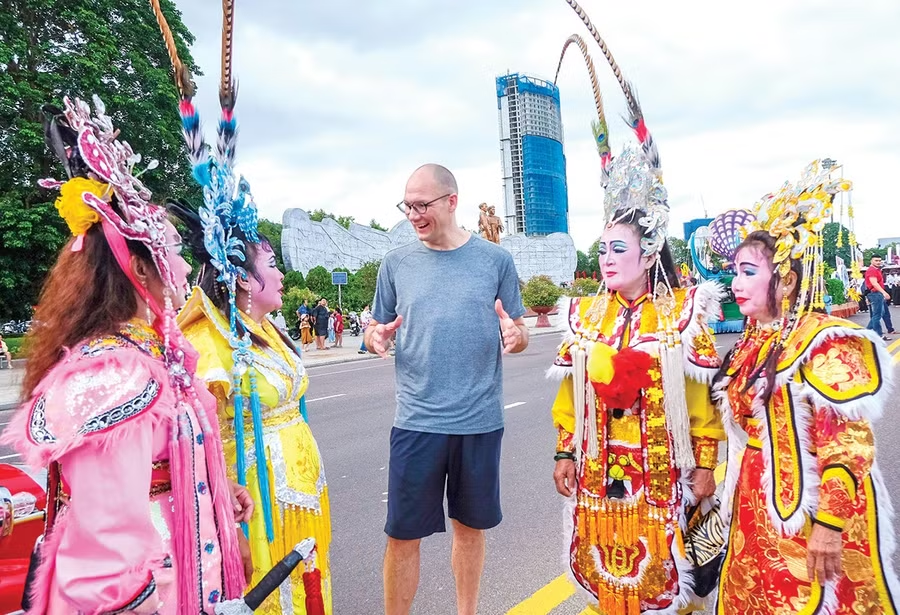
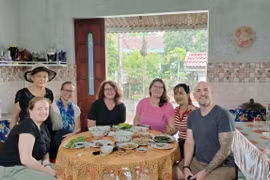
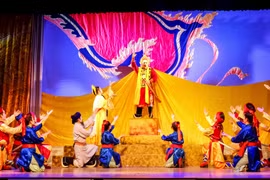
Foreign visitors explore the art of Bình Định hát bội (classical opera). Photo: Ngọc Nhuận
Meanwhile, coastal areas will focus on marine culture, fishermen’s festivals, Bả Trạo rituals, Bình Định traditional martial arts, hát bội and bài chòi folk singing.
The combination of forest landscapes and coastal culture will help create interconnected tourism routes and offer visitors a diverse “forest – highland – sea” experience.
Linking Gia Lai with coastal provinces in central Vietnam is expected to extend visitor stays and increase tourism value. However, the guiding principle remains that preservation must go hand in hand with development, and tourism benefits must return to local communities.
*What solutions will the province prioritize to ensure culture becomes an endogenous strength?
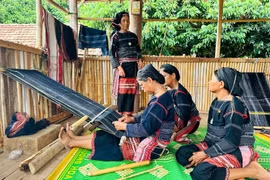
Culture-driven livelihoods help people both preserve their crafts and improve their incomes. Photo: Ngọc Nhuận
- The province’s long-term orientation is to build culture as a solid spiritual foundation that serves as both a goal and a driving force for sustainable development.
Culture must be placed on par with the economy, politics and society in development strategies. All policies should take cultural factors into account to ensure development does not erode identity but instead honours and promotes traditional values.
We identify people as the centre of development. Building a Gia Lai citizenry with a strong sense of identity and pride in their roots will create long-term strength.
A key task is continuing the shift from simple “preservation” to “promotion”, bringing heritage into daily life, tourism and the creative economy. At the same time, the province will intensify promotion and integration efforts to introduce Gia Lai culture to wider audiences and raise the province’s profile.
When culture truly permeates all aspects of life, it becomes the strongest endogenous force for Gia Lai’s sustainable and distinctive development.
*Thank you for the conversation!
The First Gia Lai Provincial Ethnic Cultural Festival 2026 sends a strong message about heritage preservation in harmony with contemporary life. Photo: Phương Duyên
First and foremost, culture must be placed on par with the economy, politics, and society in development strategies”.
Vice Chairwoman of the Provincial People’s Committee Nguyễn Thị Thanh Lịch
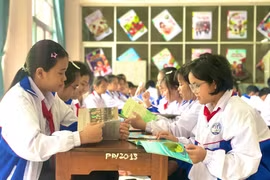
Nearly 100 sixth-grade students in Pleiku Ward, Gia Lai Province, took part in a Mid-Autumn Festival program on September 22 combining books, traditional games and activities designed to promote reading.
Gia Lai province will promote the Vietnamese language and the cultural heritage associated with its development, including the destination described as the “birthplace of the romanized Vietnamese script”, under a new program targeting overseas Vietnamese communities from 2026 to 2030.
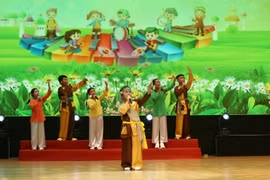
Gia Lai Province will hold its first province-wide singing contest in October, seeking to discover promising vocal talent and promote cultural and artistic activities across the province.
The first “Hà Thanh Colors - Radiance on Both Banks” Festival has created a new community space along the Hà Thanh River, bringing residents of Quy Nhơn and Quy Nhơn Đông wards together through cultural, sports and recreational activities.
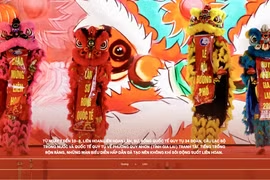
Gia Lai is embracing the Mid-Autumn Festival with colorful lantern displays, lion dance performances and hands-on craft workshops, giving children and families new ways to enjoy the traditional celebration.
A cultural exhibition in Gia Lai is bringing together heritage, traditional crafts, local specialties and artistic performances from across Vietnam, creating a platform to promote destinations and strengthen links between culture and tourism.
Traditional theater in Gia Lai is turning to history not simply to recount heroic figures and events, but to connect a younger generation with the past through the distinctive language of hát bội and bài chòi opera.
Lê Kiều Oanh was crowned Miss Vietnam Entrepreneur Talent and Beauty 2026 on September 10, as the seventh edition of the pageant concluded at the Gia Lai Provincial Convention Center.
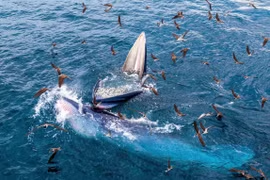
Three Bryde’s whales spotted hunting off Vũng Bồi in Gia Lai have highlighted the ecological richness of the Đề Gi estuary while underscoring the fishing communities’ longstanding culture of respecting and protecting the sea.
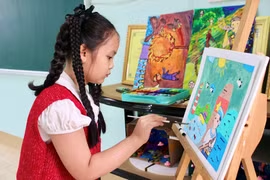
Dương Kim Thiên An, a second-grade student at Nguyen Van Troi Primary School in Gia Lai Province, has won four national art awards in 2026, marking a promising start to her journey in painting.
Traditional culture is being brought closer to children in Gia Lai through hands-on activities that allow them to experience gong music, xoang dances and hát bội art rather than simply learn about them through lessons.
Bitterness is the defining taste of traditional Jrai cuisine in Phu Tuc, where forest leaves, bitter vegetables and distinctive cooking methods have shaped dishes closely tied to the community’s way of life.
Gia Lai is seeking to shift its approach to culture from preservation alone towards sustainable promotion of heritage values, with provincial leaders calling for cultural resources to be transformed into distinctive products that support socio-economic development.
Gia Lai has significant potential to turn its centuries-old connections between the Central Highlands and the sea into a new source of economic growth, with maritime heritage, tourism and cultural industries forming part of an integrated development strategy.
Gia Lai artists have emerged as leading contributors to the 30th Regional Fine Arts Exhibition for Region V - South Central and Central Highlands, accounting for three of the nine award-winning artists and the largest number of works submitted by any participating locality.
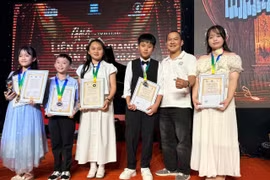
Two young pianists from Gia Lai won gold medals at the finals of the 2026 National Piano Festival, held in Buon Ma Thuot Ward, Dak Lak Province, from August 4 to 9.
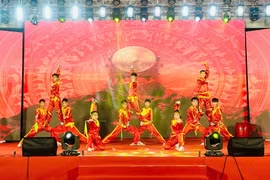
Hundreds of martial artists gathered at Nguyen Tat Thanh Square in Quy Nhon Ward on Sunday to perform synchronized demonstrations of Vietnamese traditional martial arts as part of the 9th International Vietnamese Traditional Martial Arts Festival - Gia Lai 2026.
(GLO) – Foreign Trade University beauty queen Le Phuong Nghi (an alumna of Hung Vuong High School for the Gifted, Gia Lai province) has officially advanced to the preliminary round of the Miss Vietnam 2026 pageant.
The 9th International Vietnamese Traditional Martial Arts Festival officially began on Sunday with an incense offering ceremony and a sacred flame procession, bringing together martial arts delegations from across the country and overseas for the opening of the 4-day cultural and sporting event.
The 9th International Vietnamese Traditional Martial Arts Festival officially opened on Sunday at Nguyen Tat Thanh Square in Quy Nhon Ward, bringing together martial arts masters, practitioners from Vietnam and abroad in a celebration of traditional martial arts and its international presence.
Nearly 20 artists from across Gia Lai Province are taking part in a 10-day lacquer painting workshop, where they are learning traditional techniques, exchanging creative ideas and deepening their appreciation for one of Vietnam's most enduring artistic mediums.
The FLC Quy Nhon Flower Festival 2026 will be held from Aug. 15 to Sept. 15 at the FLC Quy Nhon Resort Complex as part of the National Tourism Year - Gia Lai 2026, organized by FLC Group Joint Stock Company in coordination with the provincial People's Committee.